
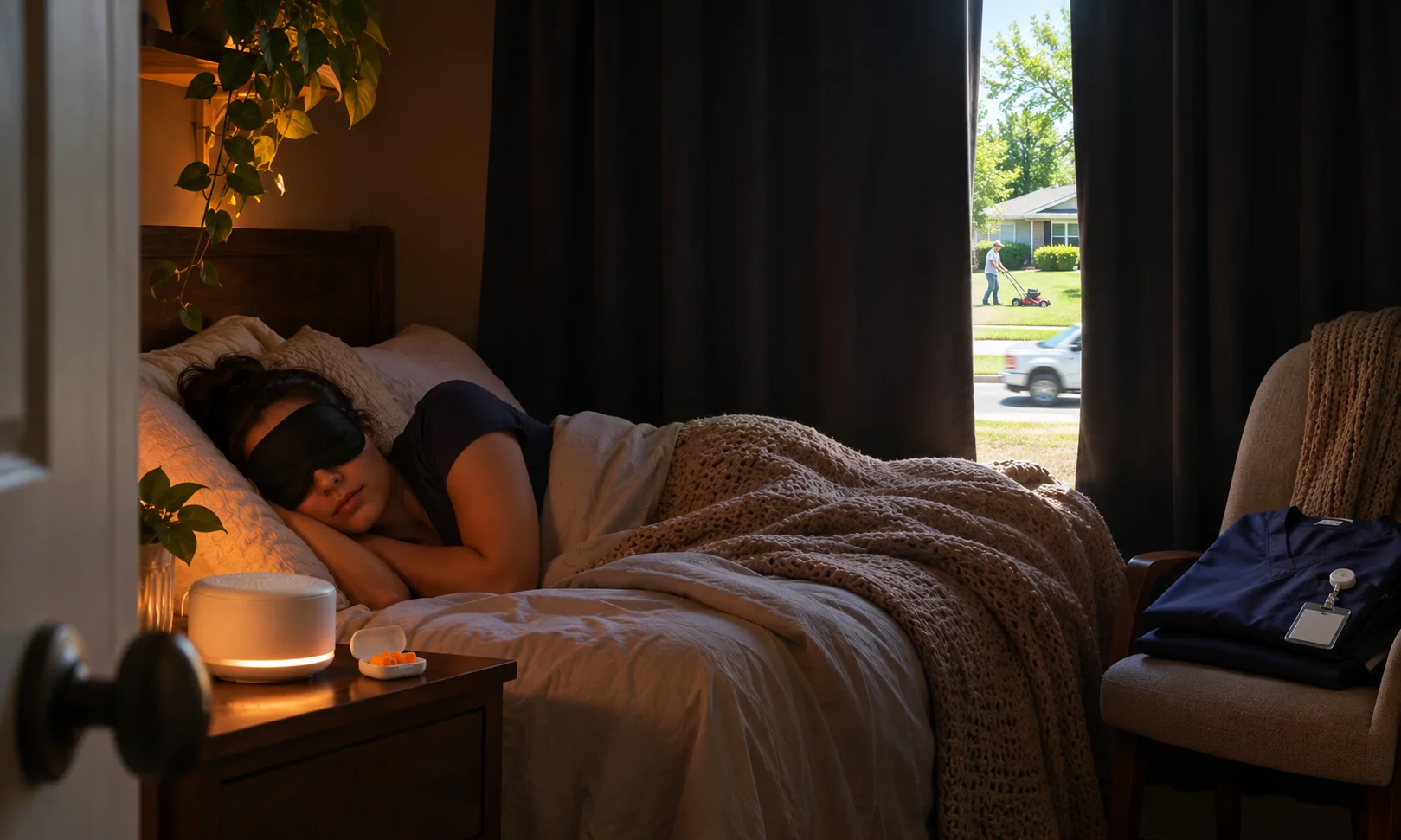
At 1:10 p.m., the leaf blower starts next door. At 2:30 p.m., the doorbell rings. By 3 p.m., you are lying in bed doing the math on how many hours you got.
Day sleep is noisy sleep. The whole world is awake while you are trying not to be. So you search white noise vs brown noise for sleep, find a hundred opinions, buy a machine, and still wake up when the school bus goes by.
The problem is that most advice skips the first step: finding out which sounds actually wake you. A high-pitched dog bark and the low rumble of a garbage truck need different fixes. Some sounds no machine can cover, and that is where earplugs come in.
This guide walks you through it in order. You will track the sounds that wake you, sort them by pitch, and match them to the right noise color. Then you will test it for free before you spend a dollar, pick earplugs that fit your ears, and learn when to use both together.
Plan on about 1 week, since you test your setup over a few real sleeps. Hands-on time is about 1 hour in total.
TOTAL
1 Week
ACTIVE
1 Hour
LEVEL
Beginner
What You Need
FOR SOUND
White noise machine or a box fan
Free sound app on a spare phone
Free decibel meter app
Small speaker (optional)
FOR YOUR EARS
Foam earplug variety pack
Silicone or wax earplugs
Small earplug case
Vibrating alarm or smartwatch
Plus a notebook and pen by the bed
At a Glance
From Noisy Days to Quiet Sleep
1. List Every Sound That Wakes You Up
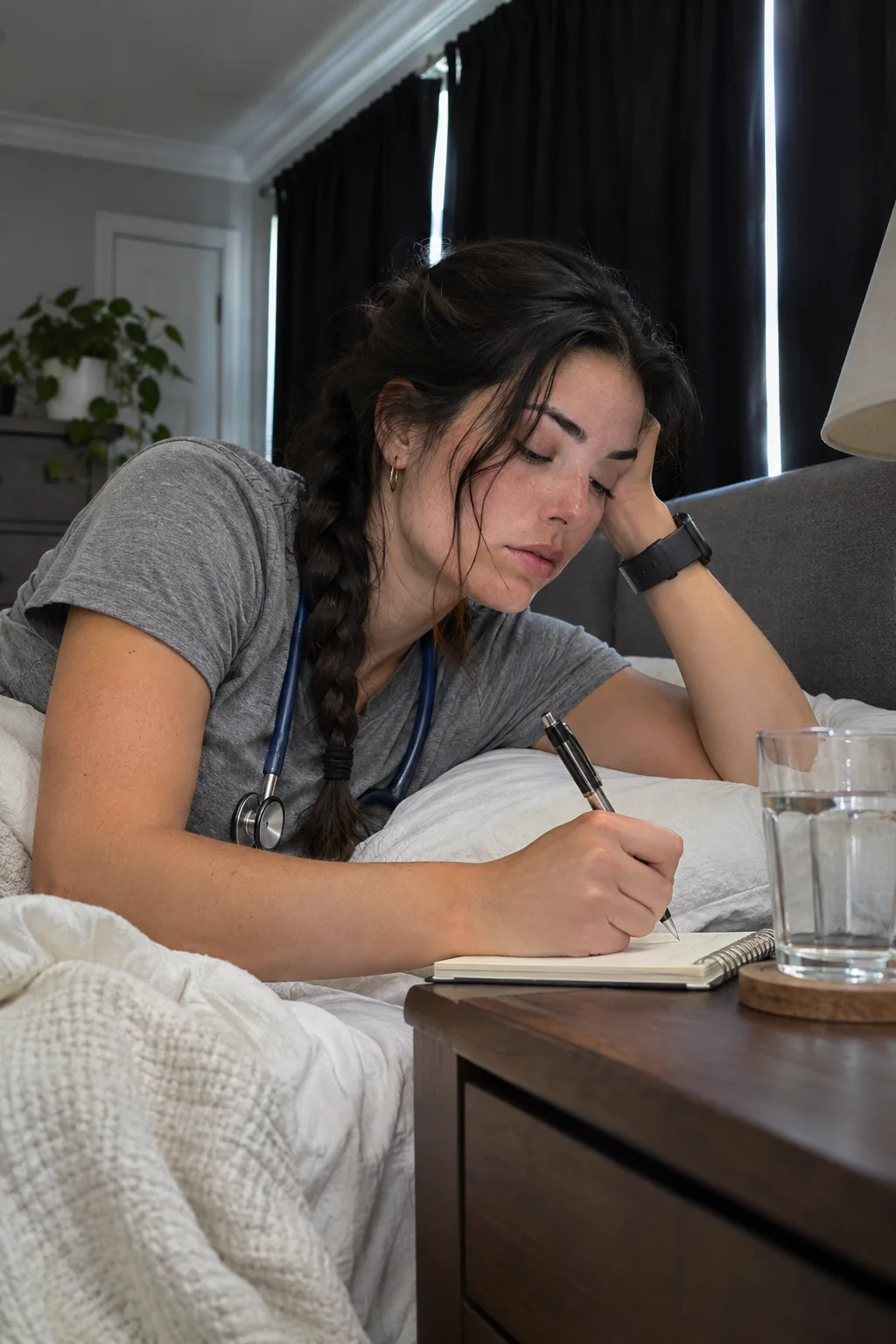
Guessing leads to the wrong fix. You might blame the neighbor’s dog when it is really the furnace kicking on every hour.
Keep a notebook and pen on the nightstand for your next 3 sleeps. Every time you wake up, write down:
- The time
- The sound, if you know it
- Whether it was steady or sudden
- How long it took to fall back asleep
Write it right away, even half asleep. By evening, you will not remember the 11:40 a.m. wake-up at all.
EXAMPLE
One Day’s Sound Log
The right column matters most. Long wake-ups point to the sound to fix first.
2. Sort Each Sound by Pitch: High, Low, or Sudden
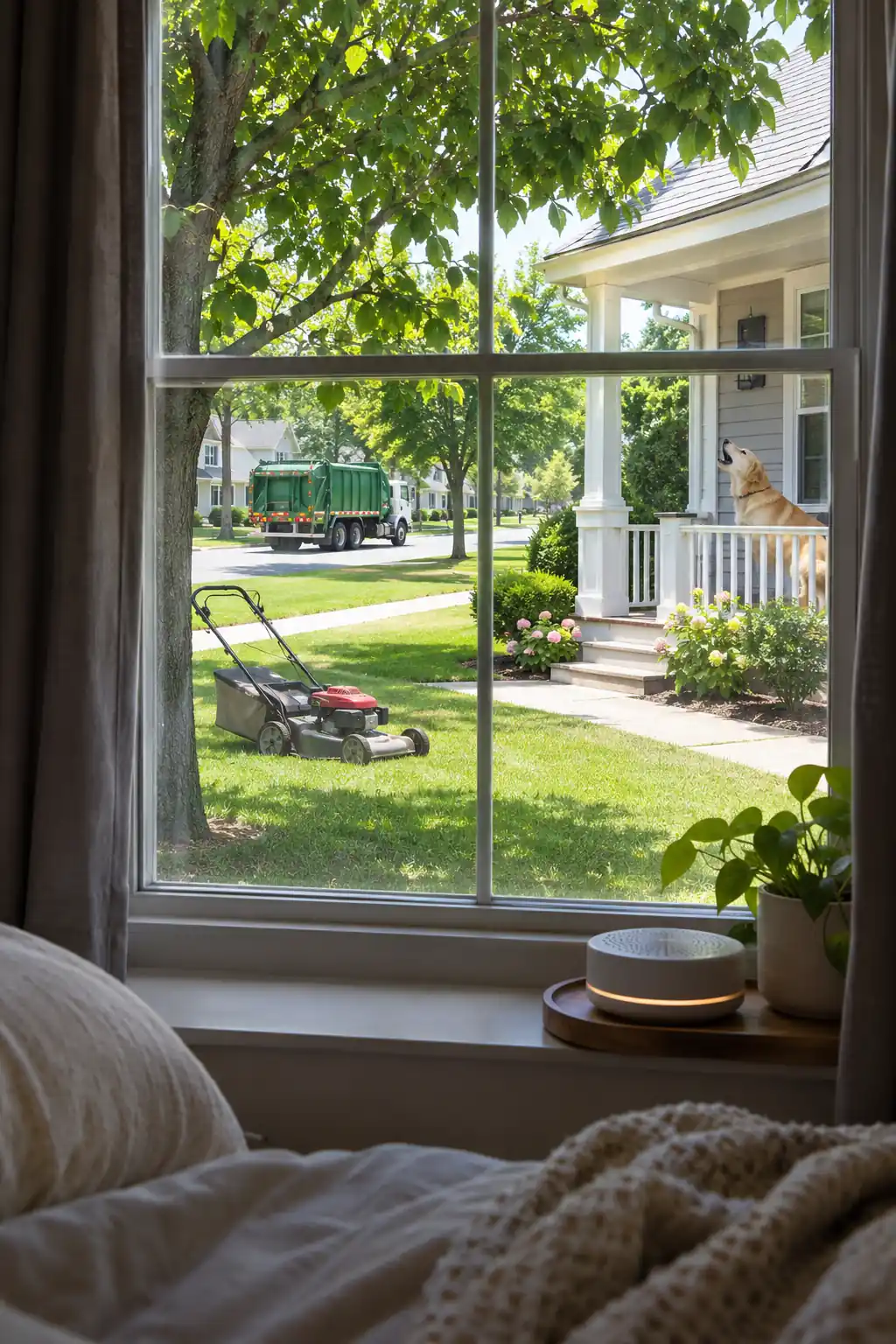
This one step decides everything that comes after it. Each type of sound has a different fix.
Go through your log and put every sound in one group:
| Group | Common day-sleep examples | Best first fix |
|---|---|---|
| High pitch | Voices, kids playing, dog barks, phone pings | White or pink noise |
| Low pitch | Traffic, trucks, lawnmowers, a neighbor’s bass | Brown noise |
| Sudden and loud | Door slams, car alarms, the doorbell | Earplugs, often with sound |
Most nurses end up with a mix. Circle the group that cost you the most time awake.
The Pitch Sorter
HIGH
Voices, barking, kids, pings
LOW
Trucks, traffic, mowers, bass
SUDDEN
Doorbell, slams, alarms
3. Choose Between White Noise vs Brown Noise for Sleep Using Your List
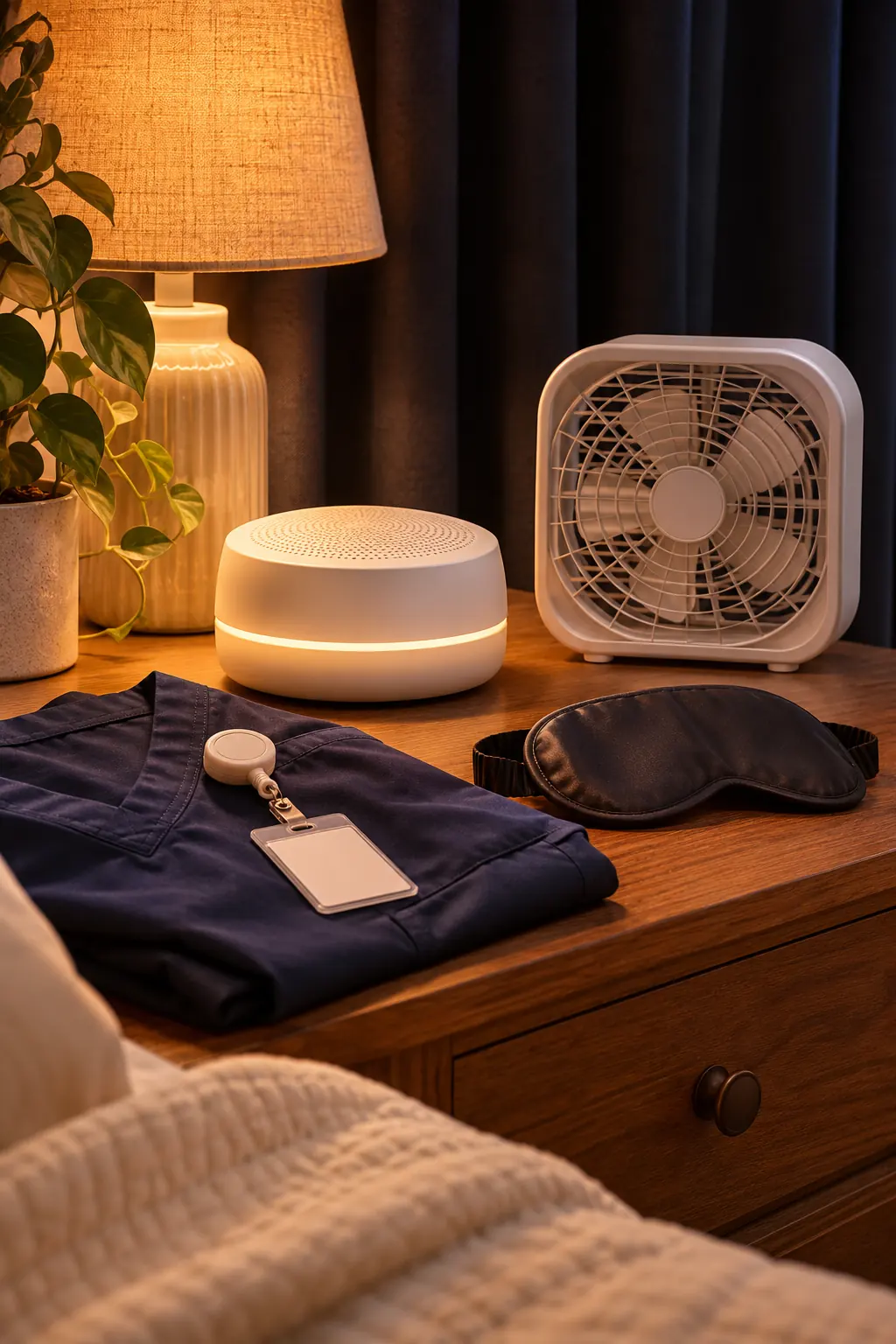
White noise spreads sound evenly across every pitch, so it sounds bright and hissy, like TV static. Brown noise puts more power into the low end, so it sounds deeper, like a waterfall or a distant rumble. Pink noise falls in between.
Match the color to your biggest problem group from Step 2:
- Mostly high sounds: start with white or pink noise
- Mostly low rumbles: start with brown noise
- A mix of both: start with pink noise
- Mostly sudden sounds: plan on earplugs too, which Steps 7 to 9 cover
Research on noise colors is still small, so there is no single winner. The best one is the one you can sleep through and still like hearing.
SPECIAL GUIDE
The Sound Color Showdown
White
Sounds like TV static
Covers: voices, barks
Best for: busy homes
Pink
Sounds like steady rain
Covers: a mix of both
Best for: first-timers
Brown
Sounds like a waterfall
Covers: trucks, mowers
Best for: busy streets
Is brown noise better than white noise for sleep?
Not for everyone. Brown noise often feels softer and covers low rumbles like traffic and lawnmowers better. White noise does a better job covering higher sounds like voices and barking. Pick the one that matches the sounds that wake you, then test it for a few sleeps.
4. Test Your Sound With a Free App for 3 Sleeps
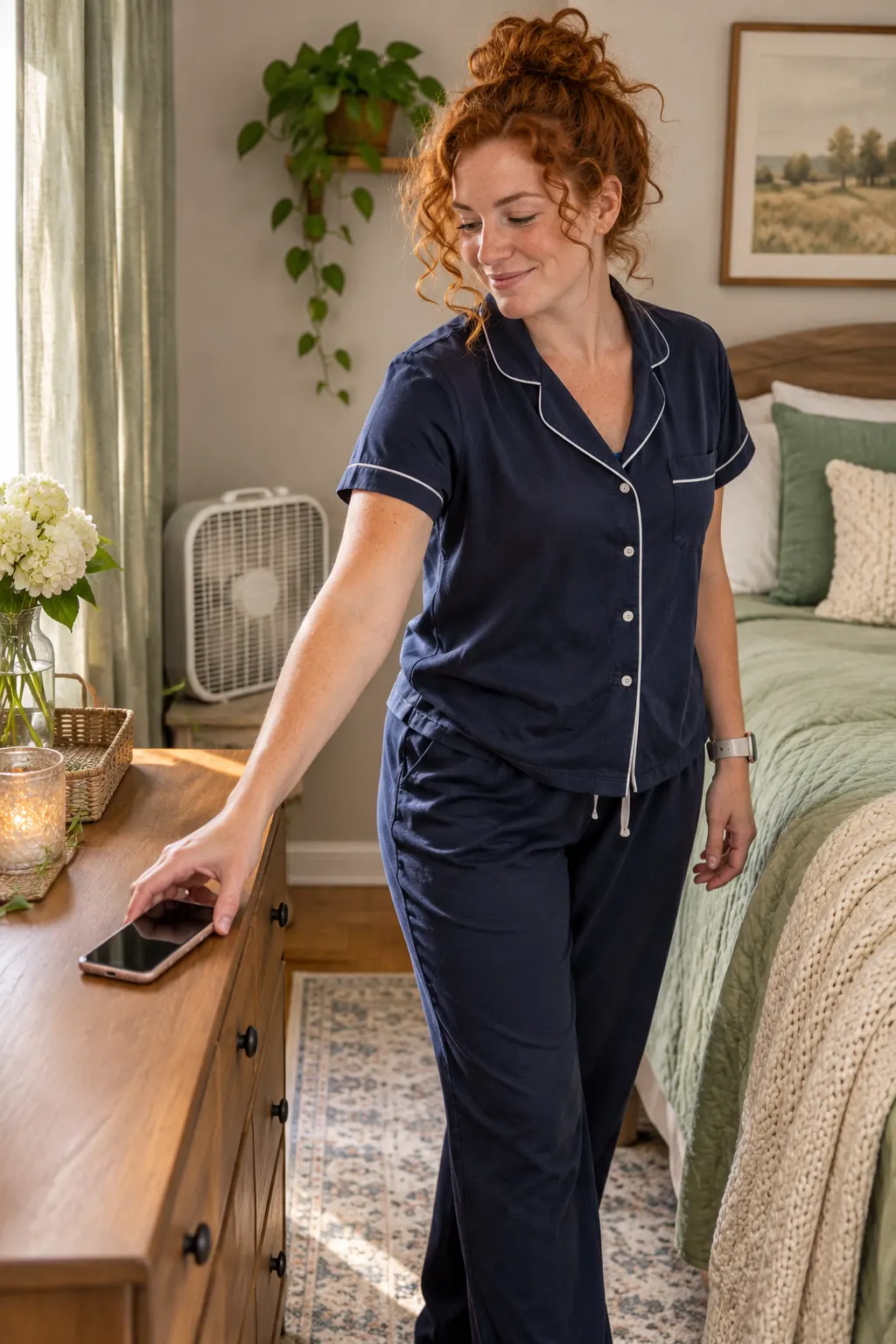
If you buy a $60 machine before you test anything, you might find out on day two that the sound drives you crazy. Test first, for free.
Play the sound from an app on a spare phone in airplane mode, so no texts light up the screen or ping you awake. A box fan counts as a free white noise test too.
| Sleep | Play this | Write this down |
|---|---|---|
| Sleep 1 | Your first-choice color | Wake-ups and how the sound felt |
| Sleep 2 | The same color | Was it easier to ignore? |
| Sleep 3 | The next color over | Better or worse than Sleep 1? |
Once you know your color, look for a machine with a sound that does not loop. You can hear the gap in a short loop at 2 p.m.
The 3-Sleep Sound Test
SLEEP 1
First pick
SLEEP 2
Same again
SLEEP 3
Next color
Phone in airplane mode the whole time.
5. Set the Volume Below Conversation Level
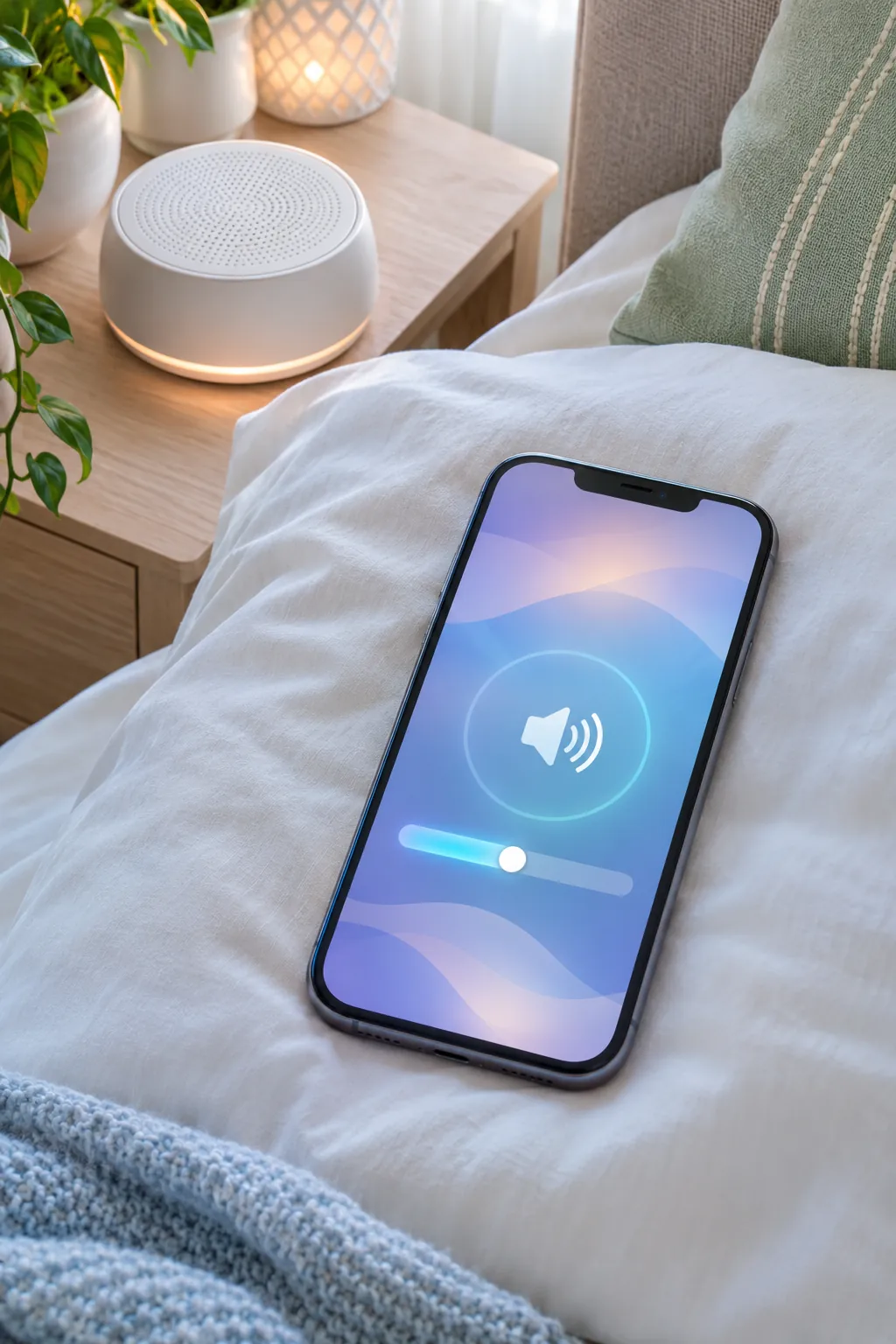
Louder is not better. A sound loud enough to drown out the street for 7 hours every day can start to wear on your hearing.
Use a free decibel meter app to set it once:
- Lay your phone on your pillow, where your ear will be
- Turn the sound on and slowly raise the volume
- Stop at about 50 to 60 decibels, close to a quiet conversation
- Stay under 70 decibels, the level health agencies flag for long daily exposure
If 60 is not enough to cover the noise, that is your sign to add earplugs, not more volume.
Your Volume Sweet Spot
Too soft 50 TO 60
Sweet spot 70 PLUS
Too loud
Measure at the pillow, not at the machine
6. Place the Machine Between You and the Noise
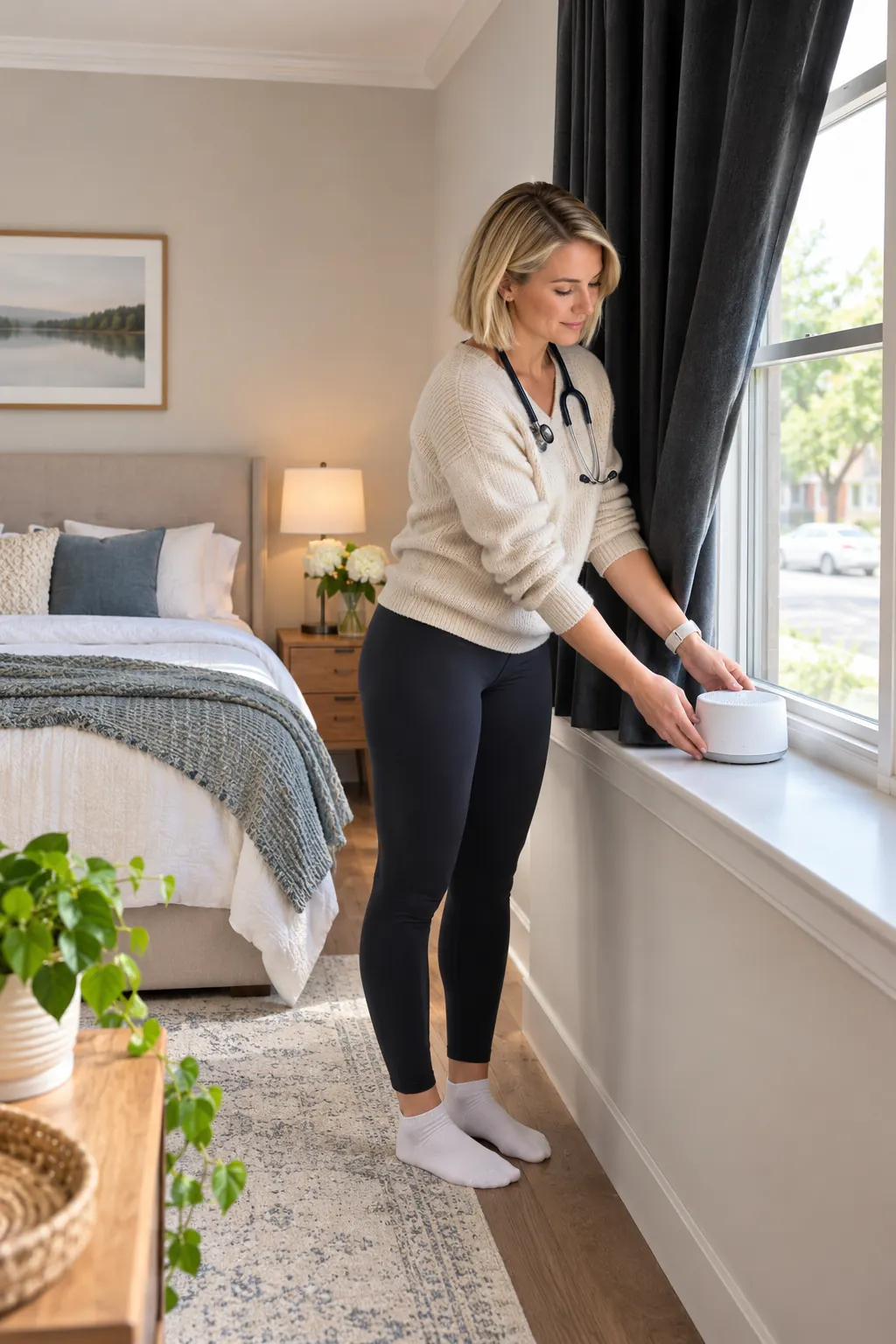
A sound machine works like a wall of sound. It covers the noise best when it sits in the path the noise takes to reach you.
For street noise, set it on the windowsill or a table by the window.
For house noise, put it near the bedroom door, the spot where hallway sounds come in.
Keep some distance. About 3 to 6 feet from your head works for most rooms. Right next to your ear is louder than it needs to be.
Sound machines cover noise, but they do not block it. To cut noise at the source, pair this with this guide on how to soundproof a bedroom for day sleep.
Top View
Where the Machine Goes
3 to 6 feet from your head, in the path of the noise.
TIP Loud household? Run a fan or a second small machine in the hallway outside your door too. It covers the noise before it ever reaches your room.
7. Match an Earplug Type to Your Ears
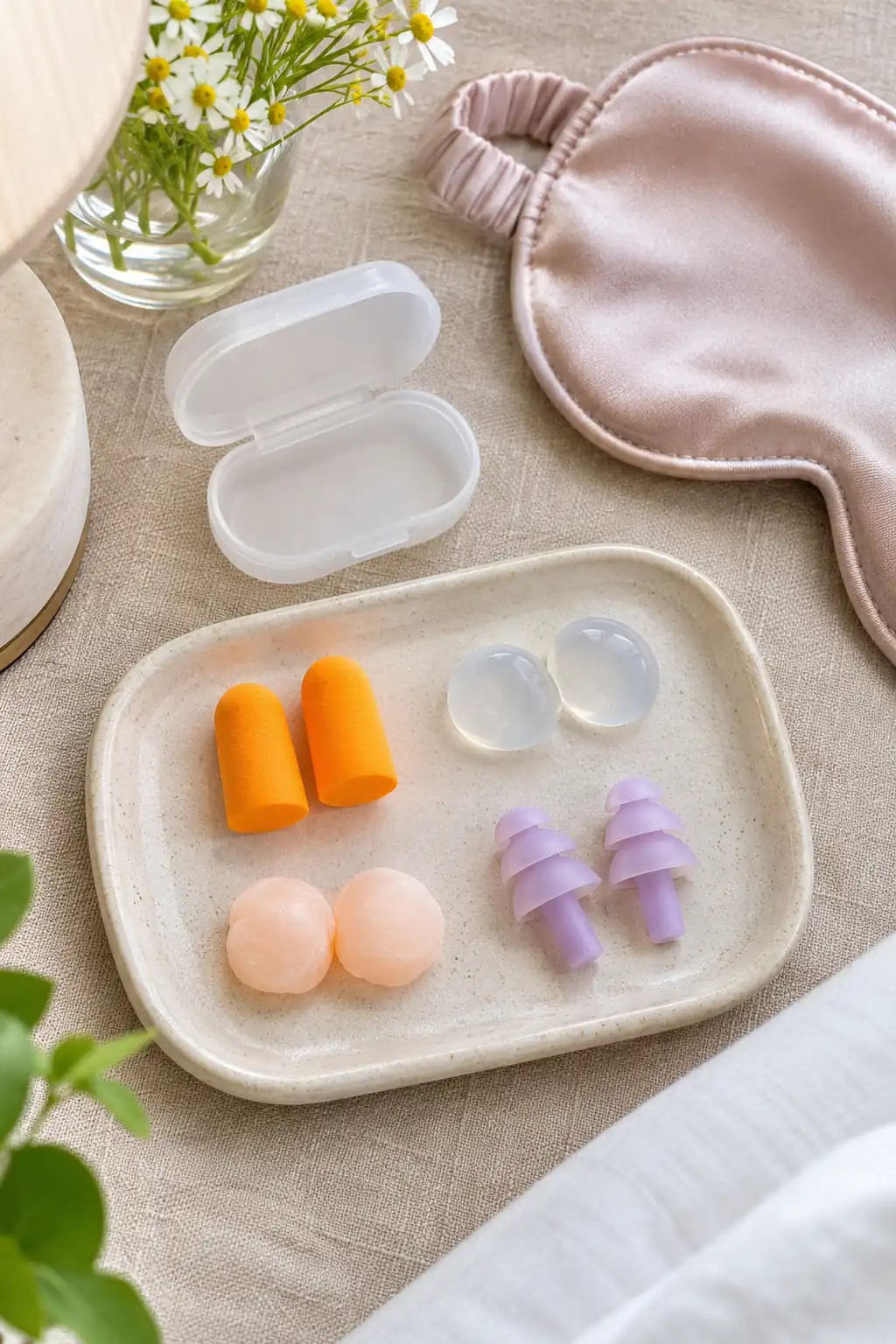
Every box of earplugs has an NRR, or noise reduction rating. The higher the number, the more sound it blocks. Most foam plugs sit near the top, around 29 to 33, while silicone and wax block a bit less but often feel softer.
Before you buy, answer these:
- Do you sleep on your side? Flatter silicone or wax plugs press less when your ear is on the pillow.
- Do foam plugs make your ears ache? Try a smaller foam size before giving up on foam.
- Is the noise very loud, like construction or a busy road? Foam is your best start.
- Do you hate tossing plugs every few days? Look at reusable flanged plugs.
A cheap variety pack lets you try four types in one week instead of guessing.
SPECIAL GUIDE
Find Your Earplug Match
Tap each type to see if it fits you
Foam
Moldable Silicone
Wax
Reusable Flanged
Sleep Earbuds
The bar shows blocking power. Check the NRR on the box for exact numbers.
8. Insert Foam Earplugs With the Roll, Pull, Hold Method
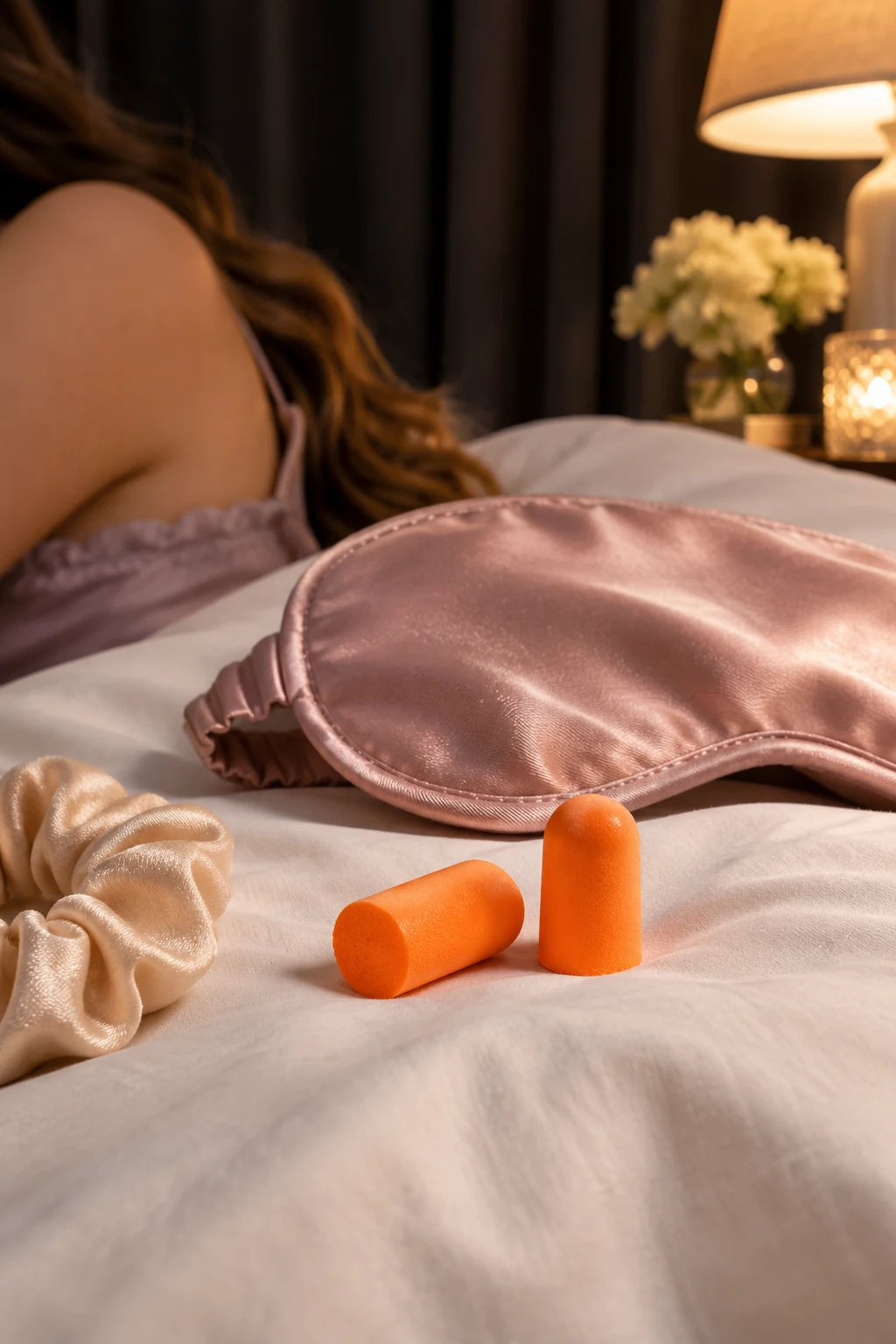
Most people say foam earplugs “don’t work” because they only push them halfway in. A plug sticking out of your ear cannot seal, so sound slips right past it.
Roll. With clean hands, roll the plug between your fingers into a thin, tight tube with no creases.
Pull. Reach over your head with your other hand and gently pull the top of your ear up and back. This straightens the ear canal.
Hold. Slide the plug in, then hold a fingertip over it for 20 to 30 seconds while it expands.
To test the fit, cup your hands over your ears. If the room sounds about the same, the seal is good. If it gets much quieter, roll and try again.
1. Roll
Thin, tight, no creases
2. Pull
Top of ear, up and back
3. Hold
Fingertip on it while it expands
Fit test: cupping your ears should change almost nothing
9. Layer Earplugs and Sound on the Loudest Days
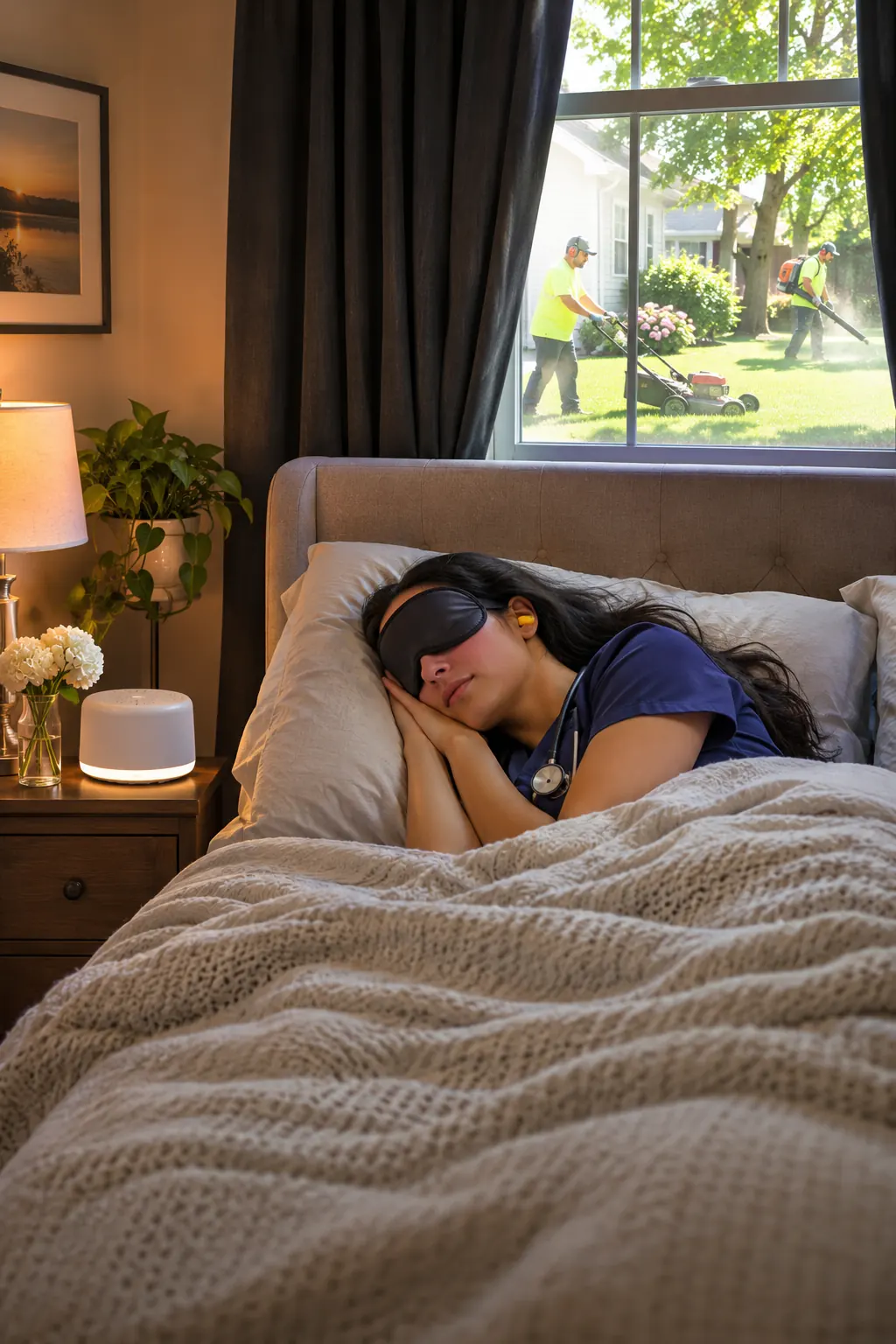
Some days, one tool is not enough. Trash day, a neighbor’s roof job, or kids home on a snow day can beat any single fix.
Plan your setup by the kind of day it is:
| Kind of day | Your setup |
|---|---|
| A quiet weekday | Sound machine only |
| Lawn day or trash day | Brown noise plus foam earplugs |
| Kids or family home | Sound by the door, earplugs, and a “sleeping” sign |
| Construction nearby | Foam earplugs, brown noise, and the quietest room in the house |
Earplugs cut the volume, and the sound fills the gap, so a sudden bang stands out less. Tell your household which days need extra quiet with these tips on how to tell your family not to wake you after a night shift.
The Noise Day Ladder
QUIET DAY
Sound
LAWN DAY
Sound + plugs
FULL HOUSE
+ door sign
CONSTRUCTION
+ quietest room
Climb only as high as the day needs.
10. Keep One Way to Hear a Real Emergency
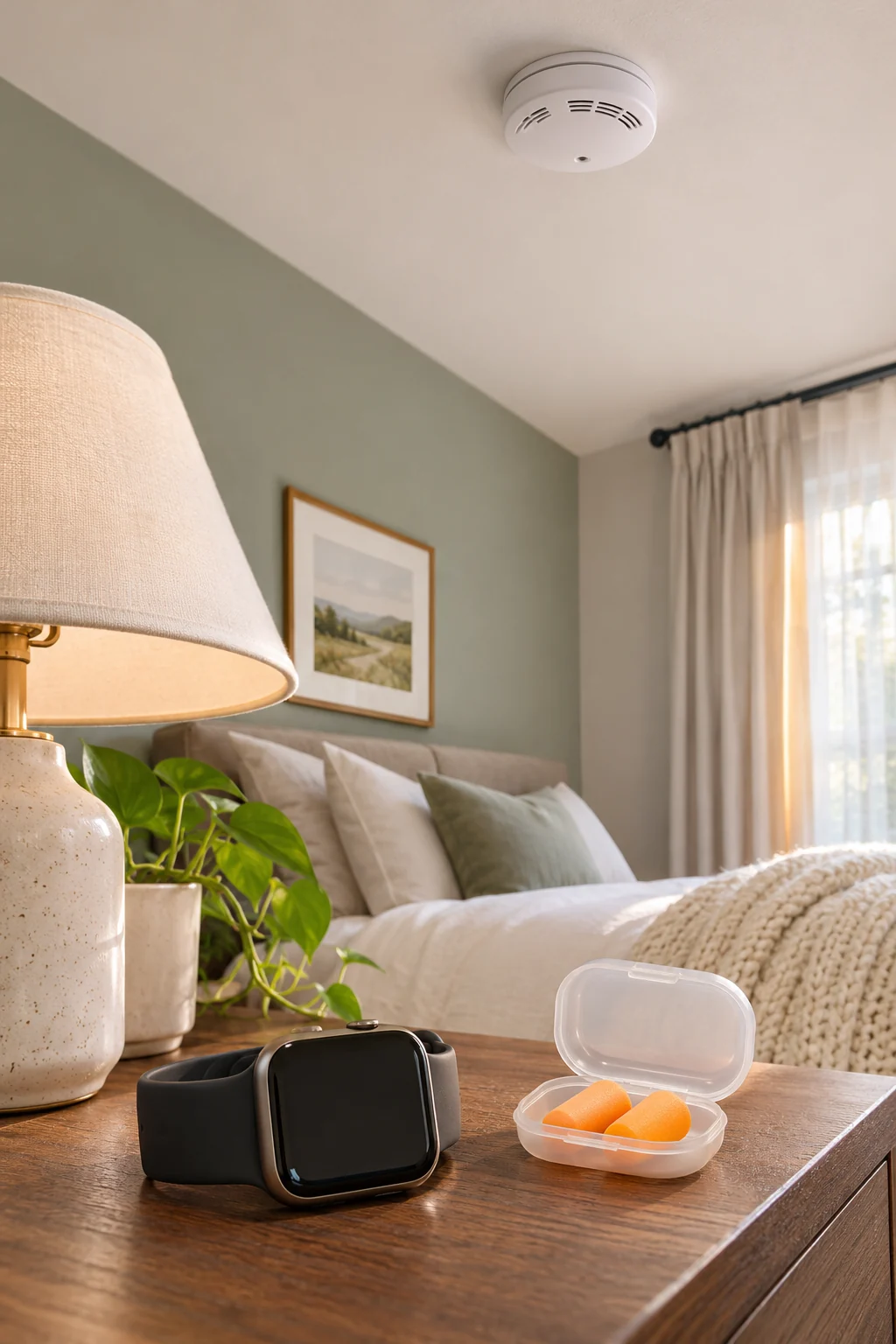
Earplugs and a loud machine can muffle more than the leaf blower. They can also muffle a smoke alarm, a child calling, or your phone.
Build a safety net before you lie down:
- Wear a smartwatch or use an under-pillow shaker for your alarm
- Let calls from your favorites ring through Do Not Disturb
- Test your smoke alarm once with earplugs in and the machine on
- Skip earplugs if you are the only adult home with young kids
If you could not hear the smoke alarm, look into an alarm that also alerts your phone or shakes the bed. These nightstand setup ideas for night shift nurses show where to keep your watch and phone.
HEADS UP
Quiet sleep still needs a safety net
11. Clean and Replace Your Earplugs on a Schedule

Dirty earplugs block less sound, and they can irritate your ears over time. How long each type lasts depends on what it is made of.
Foam. Toss them after a few uses, or sooner if they stop puffing back up or look dirty.
Silicone and wax. Replace them once they get fuzzy, sticky, or stop holding their shape.
Reusable flanged. Wash them with warm water and mild soap after each sleep, then let them air dry.
All types. Keep them in a case, not loose on the nightstand, and never share them.
If your ears start to itch, ache, or drain, stop using earplugs and get them checked by your doctor.
How Long Each Type Lasts
Skip These
6 Mistakes That Keep Day Sleepers Awake
Cranking the volume to cover everything
Fix: Stay at 50 to 60 decibels and add earplugs instead.
Buying a machine before testing
Fix: Run the free 3-sleep app test, then buy one with a non-looping sound.
Pushing foam plugs in halfway
Fix: Roll, pull, hold for 30 seconds, then do the cupped-hands test.
Setting the machine right by your head
Fix: Move it 3 to 6 feet away, between you and the noise.
Playing sound from your main phone
Fix: Use a spare phone in airplane mode, or a real machine.
Using the same dirty plugs for weeks
Fix: Replace foam after a few uses and keep every pair in a case.
Frequently Asked Questions
Quiet Answers
Day Sleep Sound FAQ
Is it safe to sleep with white noise every day?
For most adults, yes, at a moderate volume. Keep it around 50 to 60 decibels at your pillow and a few feet from your head.
Can I wear earplugs every time I sleep?
Many day sleepers do. Keep them clean, replace them often, and see a doctor if your ears feel blocked, itchy, or sore.
Is a box fan as good as a machine?
It works well as steady, white-noise-style sound and keeps you cool. You cannot switch it to pink or brown noise, though.
What if my partner hates the sound?
Try sleep earbuds or a soft headband with flat speakers. You get your sound, and the room stays quiet for them.
Which is better for day sleep, earplugs or white noise?
It depends on your noise. Sound covers steady noise well, and earplugs handle loud or sudden noise better. Many nurses end up using both.
Sleep Through the Noisy Part of the Day
You now know which sounds wake you, which noise color covers them, and how to make earplugs actually seal.
Choosing white noise vs brown noise for sleep is not about the trendiest sound. It is about matching the sound to your street, your house, and your ears.
Next, block the light the same way you blocked the noise with these blackout bedroom ideas for nurses. Sleeping next to someone on a different schedule? These bedroom ideas for nurse couples who work opposite shifts help too.
Save this to your day sleep board so it is ready the next time the leaf blower starts.
Your sound mix, tuned for day sleep.
