

Your body does not care that your schedule flipped.
You worked three nights in a row and your patients needed you sharp. Now it is your day off and you are wide awake at 3 a.m., staring at the ceiling.
Or worse, you slept the whole day and missed everything. Sound familiar?
Here is the good news. Learning to flip your sleep schedule for nurses is not about willpower.
It is about giving your body clock the right signals in the right order. Light tells your brain when to be awake. Darkness and timing tell it when to sleep.
Once you control those signals on purpose, the flip stops feeling like a fight.
This guide takes you through the full round trip. First you will shift onto nights before a work stretch, so your first shift does not wreck you.
Then you will reset back to a normal day schedule on your off days, without losing your whole weekend to a dark bedroom.
Be honest with yourself about the time. Each direction takes about two to three days to feel natural, and it works only if you stay consistent.
The daily effort is small. The payoff is real sleep, a clearer head at the bedside, and days off you actually get to enjoy.
Grab a few basics and let’s get your clock working with you.
- Blackout curtains or a padded eye mask
- Wraparound or dark sunglasses
- Foam earplugs or a white noise machine
- Coffee, tea, or your usual caffeine
- A phone with two or three alarms set
- A fan or a cool, dark room
- A water bottle for your shift
- Melatonin (optional, ask your pharmacist first)
- Push your bedtime later the two days before
- Sleep in as late as you can before night one
- Take a long afternoon nap before your first shift
- Flood your eyes with bright light early in the shift
- Stop caffeine by the middle of your shift
- Wear dark sunglasses for the drive home
- Black out your bedroom before you sleep
- Run the same wind-down routine every morning
- Skip the sunglasses after your last night
- Cap your after-shift sleep at a short nap
- Get outside for daylight that afternoon
- Go to bed on a normal schedule and protect it
1. Push Your Bedtime Later the Two Days Before

The flip starts before your first shift, not on it. For the two days leading up, stay up about two to three hours later than normal and sleep in that much later too.
This nudges your body clock toward the night without shocking it. If you normally sleep at 11 p.m., aim for 1 or 2 a.m.
You will not fully adjust in two days, and that is fine. The goal is a head start, so your first night does not feel like hour 20 of being awake.
2. Sleep In as Late as You Can Before Your First Night

Morning light is the enemy on the day of your first shift. Keep the room dark and stay in bed as late as your body allows, even if that means 10 or 11 a.m.
Every extra hour of morning sleep is an hour you will not be fighting for at 4 a.m. on the unit.
3. Take a Long Afternoon Nap Before Your First Shift
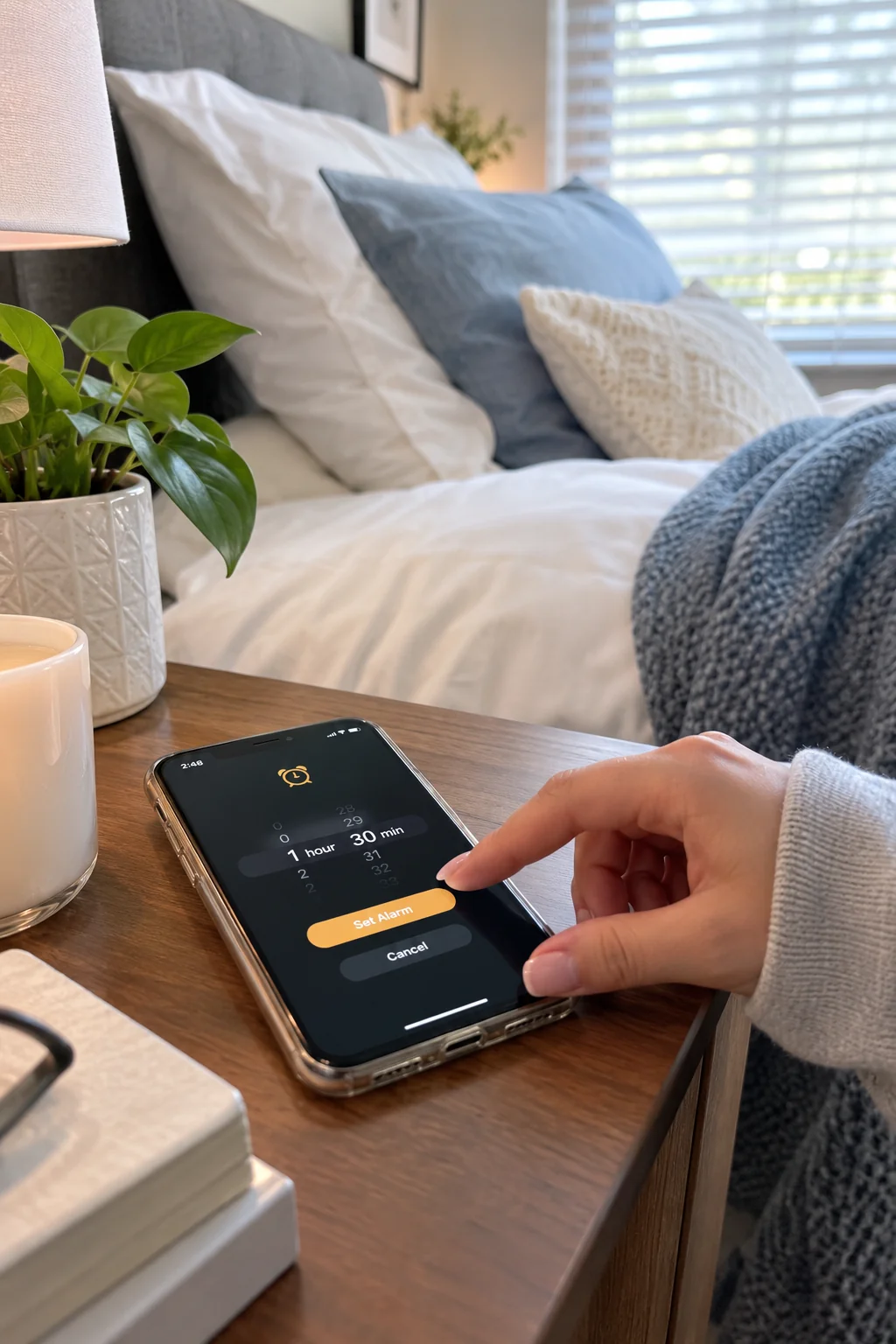
Even after sleeping in, a first night asks more from you than one sleep can cover. A nap in the afternoon banks extra rest so you stay sharp past midnight.
Set yourself up for a solid one:
- Lie down by 2 or 3 p.m., no later
- Set an alarm for 90 minutes so you wake between sleep cycles
- Close the blinds and put your phone across the room
Skipping the alarm backfires here. Sleeping a full three hours now steals from the deep sleep you need after your shift, and you wake up groggy instead of rested.
4. Flood Your Eyes With Bright Light Early in the Shift

When you clock in, treat the first few hours as your wake-up window. Bright light is the strongest signal you can send your brain to say stay awake now. Keep the break room lights on full, work near the brightest part of the unit when you can, and resist the urge to dim things during the quiet hours.
The trickiest stretch is 3 to 5 a.m., when your body wants to shut down hardest. Light is what carries you through it.
5. Stop Caffeine by the Middle of Your Shift

Caffeine sticks around far longer than the buzz you feel. Half of it is still working in your body about five to six hours after your last cup. Drink coffee early in the shift when you need it, then switch to water once you pass the halfway mark.
A 12-hour shift that starts at 7 p.m. means your caffeine cutoff lands around 1 a.m. After that, anything with a kick is borrowing energy from the sleep you need at sunrise.
6. Wear Dark Sunglasses for the Drive Home

Sunrise on your drive home is the single biggest thing that undoes a good night’s work. That morning light tells your brain the day has started, right when you need it winding down.
Put on wraparound or dark sunglasses before you step out of the building, and keep them on until you are inside with the blinds shut. Cheap ones are fine. Blocking the light matters more than the brand.
7. Black Out Your Bedroom Before You Sleep
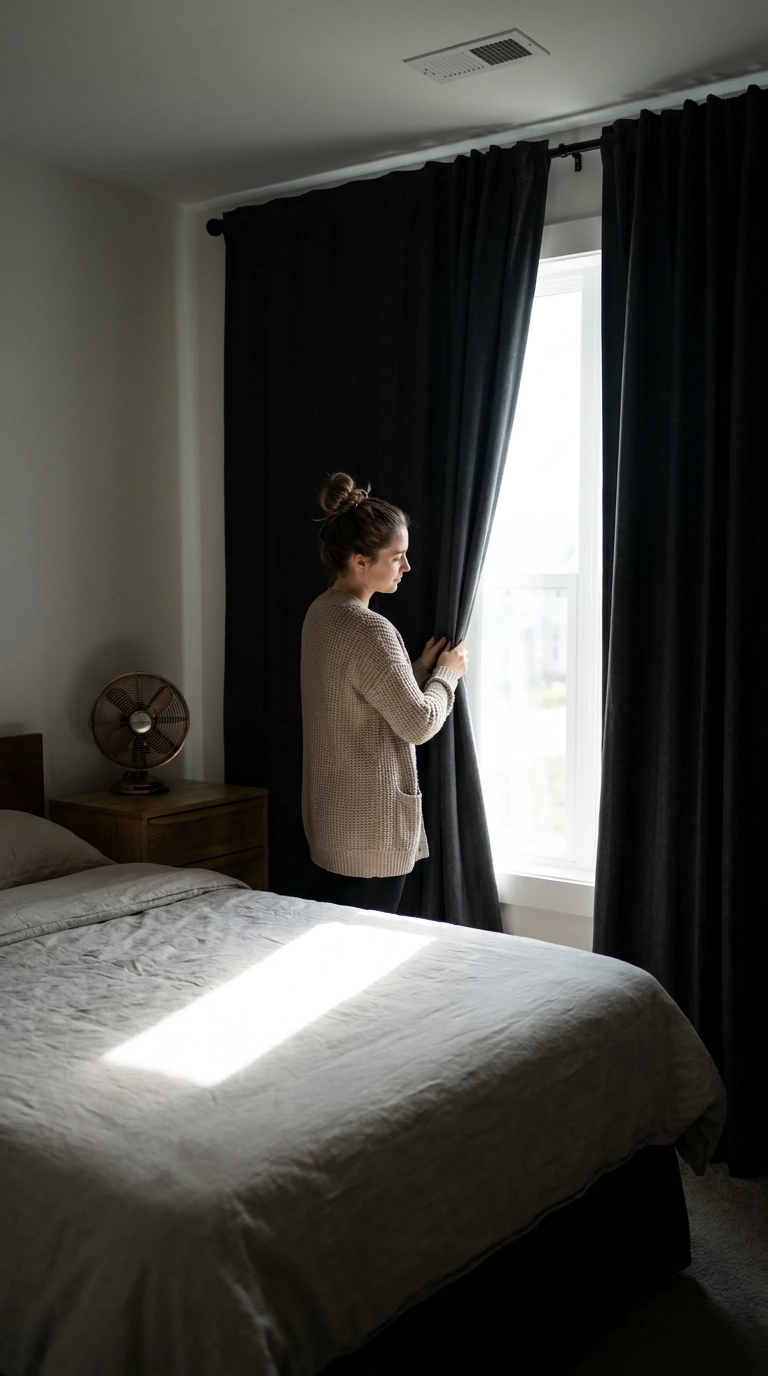
Your bedroom has to convince your brain it is midnight at noon. Even thin daylight through the curtains keeps your body from settling into deep sleep. Before you crawl in, do a quick blackout pass:
- Pull blackout curtains fully shut, or clip an eye mask ready by the pillow
- Cover or turn away any glowing lights, chargers, and clocks
- Put in earplugs or switch on white noise to cover daytime sounds
Cooler is better too. A room around 65°F with a fan running helps you fall asleep faster and stay under longer. If light or noise is your big problem, this renter-safe guide to soundproofing a bedroom for day sleep walks through fixes that do not need drilling.
8. Run the Same Wind-Down Routine Every Morning

Doing the exact same steps in the exact same order after every shift teaches your body that this sequence means sleep. It could be a warm shower, dim lights, ten minutes of reading, then bed. The order matters more than what is on the list.
Keep it short and repeat it every single morning of your stretch, even weekends inside the work block. Consistency is what turns it into a signal instead of a chore. If you want a ready-made version to copy, here is a full wind-down routine after a night shift for nurses you can adapt.
9. Skip the Sunglasses After Your Last Night

Everything you did to protect your sleep now goes in reverse. After your final shift of the stretch, do the opposite of Step 6: leave the sunglasses in your bag and let the morning sun hit your face on the drive home.
That light is now your friend. It starts nudging your clock back toward daytime the moment your last shift ends, so the reset begins before you even get home.
10. Cap Your After-Shift Sleep at a Short Nap

Here is the part that feels wrong but works. As tired as you are, do not sleep the whole day after your last night. A long sleep now locks you back onto a night schedule and wastes your first day off.
Set the alarm and keep it short:
- Get in bed soon after you’re home, by 9 or 10 a.m.
- Sleep only 3 to 4 hours, no more
- Wake up by early afternoon, even though it hurts
Yes, you will feel rough when that alarm goes. Push through it. One rough afternoon buys you a normal evening and a real night’s sleep, instead of three days of feeling scrambled.
11. Get Outside for Daylight That Afternoon

The fastest way to convince your body it is daytime is to stand in actual daytime. After your short nap, get outside for 20 to 30 minutes of real sunlight, ideally before it starts getting dark.
A walk, a coffee on the porch, or running errands all count. Outdoor light on a cloudy day is still far stronger than anything indoors, so skip the excuse about the weather. Move your body a little while you’re out there and the afternoon slump gets easier to beat.
12. Flip Your Sleep Schedule Back by Protecting a Normal Bedtime

The reset is not done until you sleep one normal night. Aim for a slightly early but realistic bedtime that first evening, around 10 or 11 p.m., and treat it as non-negotiable.
You might lie awake a bit from the short nap earlier. That is okay and expected. Keep the room dark, stay off your phone, and let your tired body do the rest. Wake at a normal morning hour the next day, and you are back on a day schedule with the whole rest of your time off ahead of you.
Frequently Asked Questions
Two to three days each way. Plan on a couple of days in each direction, as long as you stay consistent. The first day is always the hardest, and it eases from there. Skipping steps is what drags it out.
Should I take melatonin to switch faster?
A low dose can nudge your timing, but it is not a knockout pill, and more is not better. Ask your pharmacist or doctor about the right dose and timing for you, especially if you take other medications.
What if I only work one or two nights?
For just a shift or two, a full flip may not be worth it. Many nurses stay closer to a day schedule and lean on a solid afternoon nap and smart caffeine timing to get through instead.
Can I catch up on all my lost sleep on day one?
One slightly longer recovery sleep is fine, but sleeping the whole day locks you back onto nights. A short nap plus real daylight resets you far faster than a marathon sleep.
Is constantly flipping my schedule bad for me?
Rotating shifts are genuinely hard on the body, and these habits soften that toll rather than erase it. If you deal with ongoing sleep problems, low mood, or exhaustion that rest does not fix, talk to your doctor.
- Push bedtime 2 to 3 hrs later, two days before
- Sleep in late before night one
- Nap 90 min in the afternoon
- Get bright light early in the shift
- Cut caffeine by the halfway mark
- Sunglasses on for the drive home
- Black out the bedroom before sleep
- Same wind-down routine every morning
- No sunglasses after your last night
- Cap recovery sleep at 3 to 4 hrs
- Get 20 to 30 min of daylight that afternoon
- Normal bedtime at night, protect it
You Can Flip Your Sleep Schedule Without the Crash
You now know how to flip your sleep schedule in both directions, using light, nap timing, and caffeine as your three main levers.
The trick is not fighting your body. It is sending the right signals in the right order, then staying consistent for a couple of days.
Start with the one change that fits your next stretch, whether that is the sunglasses on your drive home or a capped nap on your first day off. Small and steady wins here.
If this helped, pin it to your nurse life board so it is ready before your next rotation. Steady hands deserve a steady clock.
