
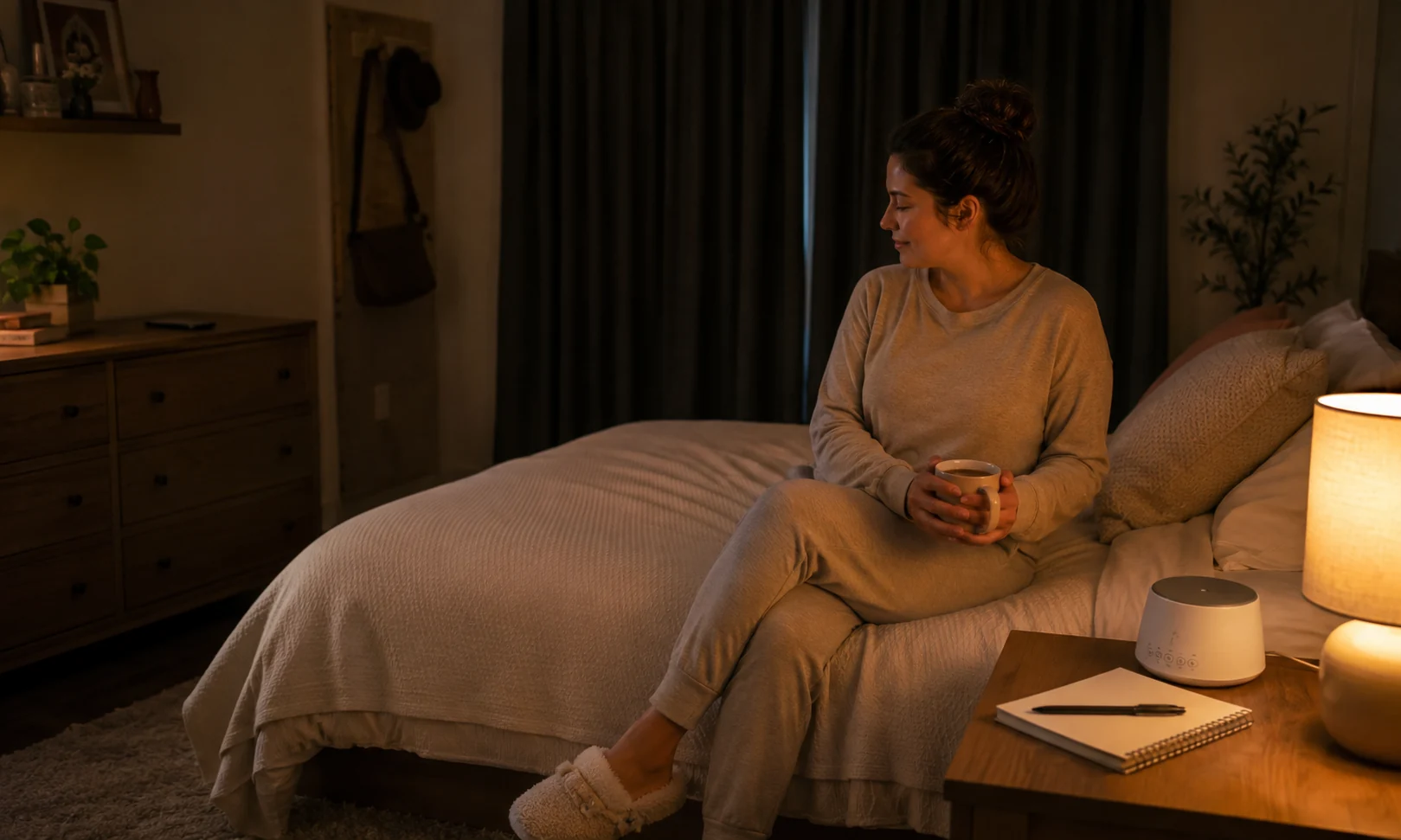
Your shift ends at 7 a.m., but your body did not get the memo. You are still buzzing from the last code, the charting, and the coffee you drank at 3 a.m. to stay sharp. You get home, lie down, and stare at the ceiling while the sun climbs higher.
A good routine after night shift for nurses closes that gap between clocking out and actually sleeping during the day. The problem is not that you are bad at sleeping. Your body still thinks it is daytime and time to be awake.
This guide walks you through a wind-down routine, one small step at a time, from the moment you leave the unit to the moment you close your eyes. Each step is a cue that tells your brain the shift is over and rest is coming. None of it needs special gear.
The whole routine runs about 45 minutes, and most of it feels good after a hard night. Do it in order the first few times, then keep what works for you. Grab your sunglasses before you clock out, and let’s get you to real, deep daytime sleep.
What You Need
- Dark, wraparound sunglasses
- A light snack on hand
- A dimmer switch or warm lamp
- A small notebook and pen
- Comfortable sleep clothes
- Blackout curtains
- A white noise machine or phone app
- A warm shower
At a Glance: The 9 Steps
- Put on sunglasses before you leave
- Eat a light snack, not a big meal
- Take a warm shower to cool down
- Dim the lights and switch to warm lamps
- Silence your phone and set it aside
- Write the shift out of your head
- Slow down with one calming activity
- Make your room dark, cool, and quiet
- Start a steady sound and settle in
1. Put On Sunglasses Before You Leave the Hospital

Morning light is the enemy of daytime sleep. The moment it hits your eyes, your brain stops making melatonin and starts your internal clock for a fresh day.
Slide on dark, wraparound sunglasses before you step outside, not after. Wear them for the whole drive home, even on a cloudy morning, since daylight pushes through clouds. The goal is to keep your brain in night mode until you are home with the curtains closed.
Forgot yours in your locker? Pull a hood low or shade your eyes with one hand on the walk to the car.
2. Eat a Light Snack Instead of a Big Meal

Hunger can wake you two hours in, but a heavy meal keeps you from dropping off at all. A small snack threads that needle.
Reach for a little protein and carbs, like yogurt with berries, a banana with peanut butter, or crackers with cheese. Keep it under 200 calories.
Steer clear of caffeine, alcohol, and sugar before bed. Each one wrecks your sleep in its own way.
3. Take a Warm Shower to Cool Your Body for Sleep

Here is the part most people get backward: a warm shower does not heat you up for sleep, it cools you down. When you step out, your body temperature drops, and that drop is one of the strongest sleep signals your body has.
Keep the water warm and the shower short, around 10 minutes. Dim the bathroom light or flip on a small nightlight so you are not hit with brightness. Let this be the moment you rinse the shift off, the smells, the stress, all of it.
4. Dim the Lights and Switch to Warm Lamps
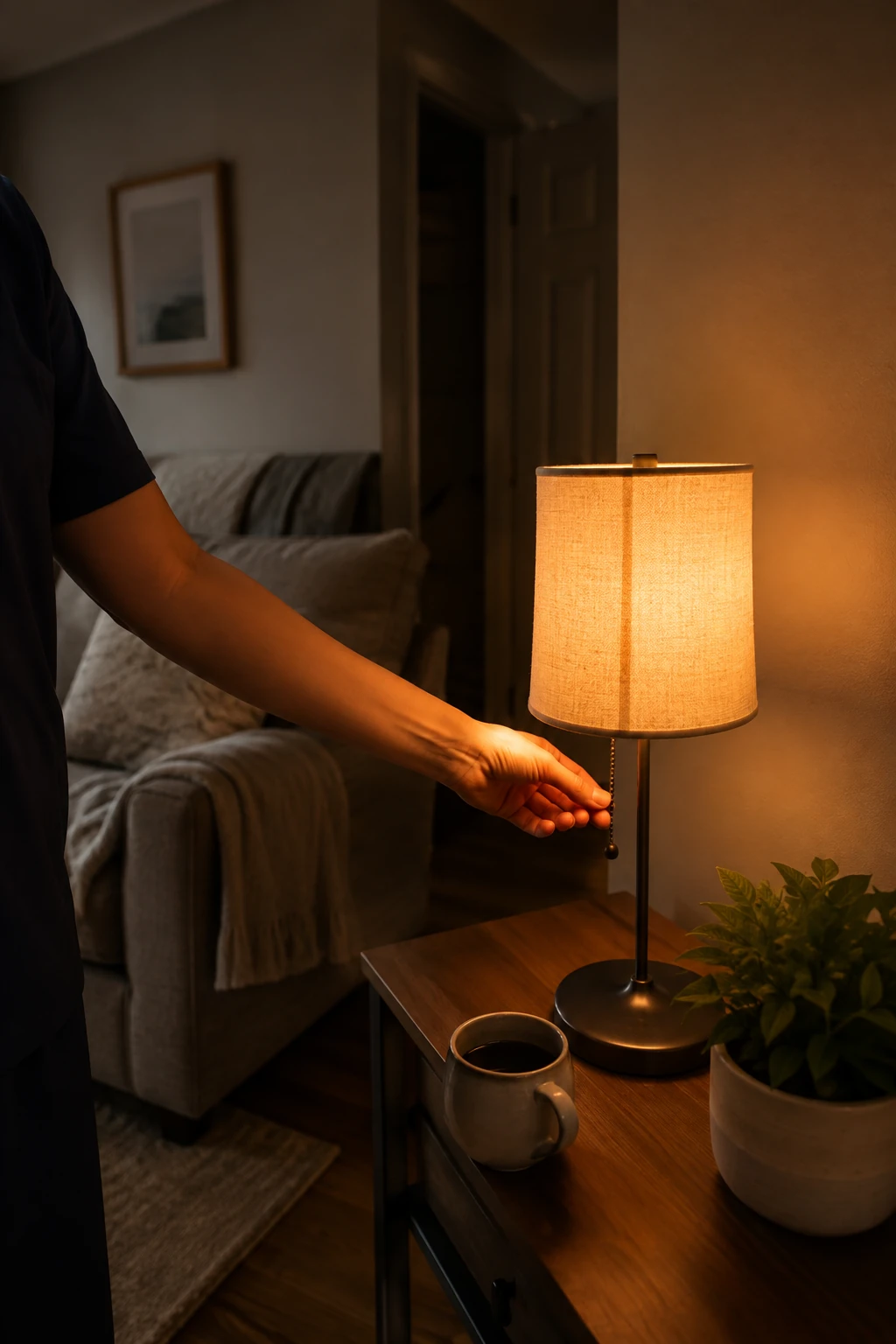
Kill the overhead lights the second you walk in. Bright white bulbs overhead are the daytime signal your brain is watching for, and they undo the sunglasses you just wore home.
Switch to low, warm lamps instead. A soft bulb in the 2700K range or lower reads as sunset, not noon. Move through your home in this low light for the rest of your routine, and your body keeps drifting toward sleep instead of snapping awake.
Renting and stuck with a bright fixture? A cheap plug-in lamp with a warm bulb solves it without touching the wiring.
5. Silence Your Phone and Set It Aside
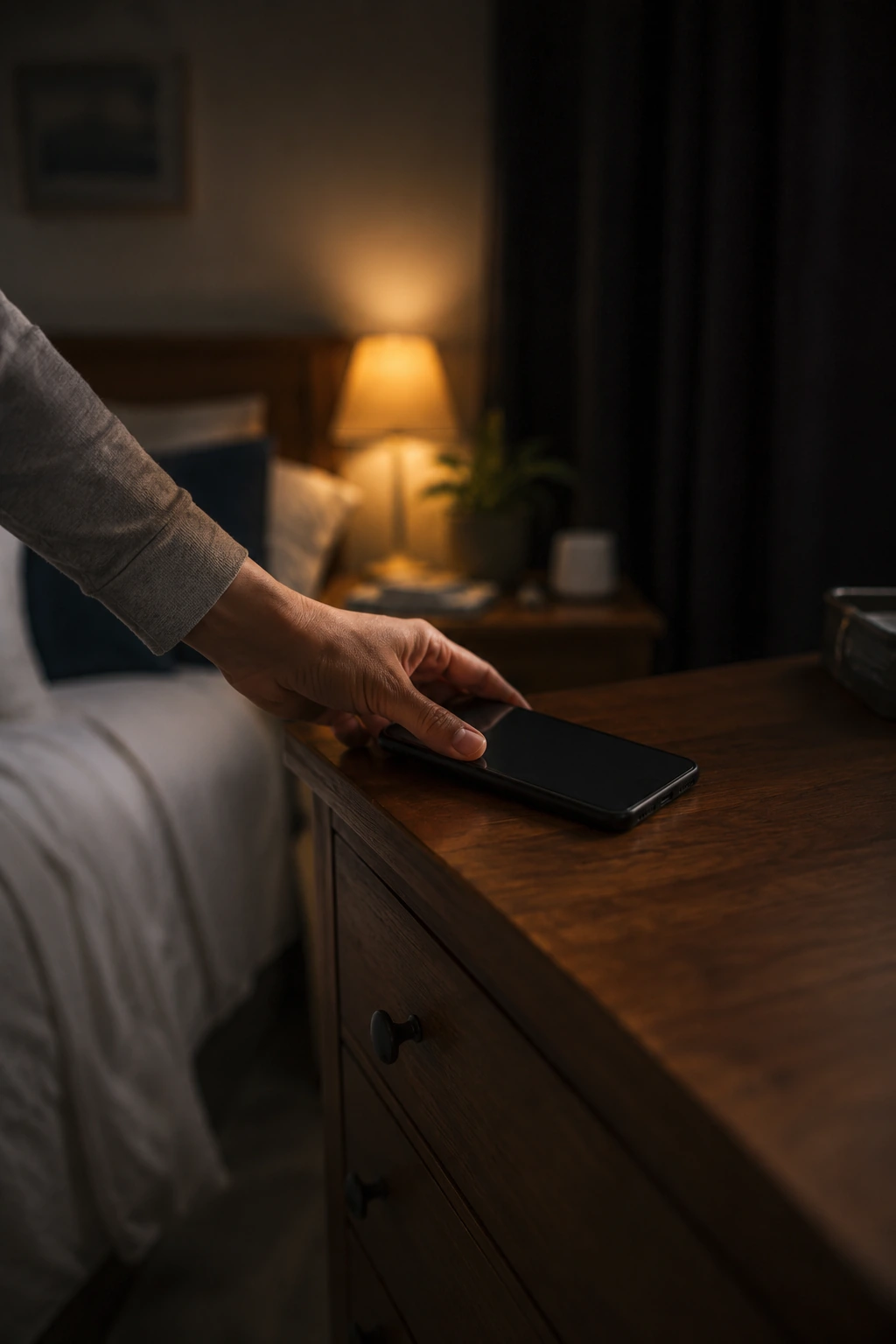
Ever tell yourself you will check one thing and lose thirty minutes? The phone is the biggest threat to your wind-down, twice over. The screen light fakes daylight, and the content keeps your mind racing.
Set it to do-not-disturb, turn the screen face down, and put it across the room. If you use it as an alarm, set the alarm first, then walk away.
⚠️ Heads Up
Do not keep the phone on your nightstand to break the habit. If it is in reach, you will check it when you stir at noon, and that one glance can cost you an hour of sleep. Charge it in another room if you can.
6. Write the Shift Out of Your Head Onto Paper

A rough shift does not clock out when you do. The patient you worried about, the thing you forgot to chart, the comment from a coworker, all of it loops while you lie there.
Keep a notebook by your bed and spend 5 minutes emptying your head onto the page. Write what happened, what is still nagging you, and anything you need to remember for next shift.
You are not journaling for anyone. You are handing the loop to the paper so your brain can let it go.
💡 Pro Tip
End the page with one line about something that went right. Even a small win, like a scared patient who calmed down because of you. It shifts the last thought of your shift from stress to something steadier.
7. Slow Down With One Calming Activity

Going straight from writing to lying in the dark rarely works. Your mind needs a soft landing between the two, something quiet that keeps your hands busy and your eyes off a screen.
Pick one thing and keep it low-key:
- Read a few pages of a paper book
- Stretch gently or do slow, gentle yoga
- Sip a warm, caffeine-free tea like chamomile
- Follow a short breathing or meditation track
Give it 10 to 15 minutes. Doing it in the same spot each day, like a small decompression corner, turns the habit into a cue your body starts to trust.
8. Make Your Room Dark, Cool, and Quiet
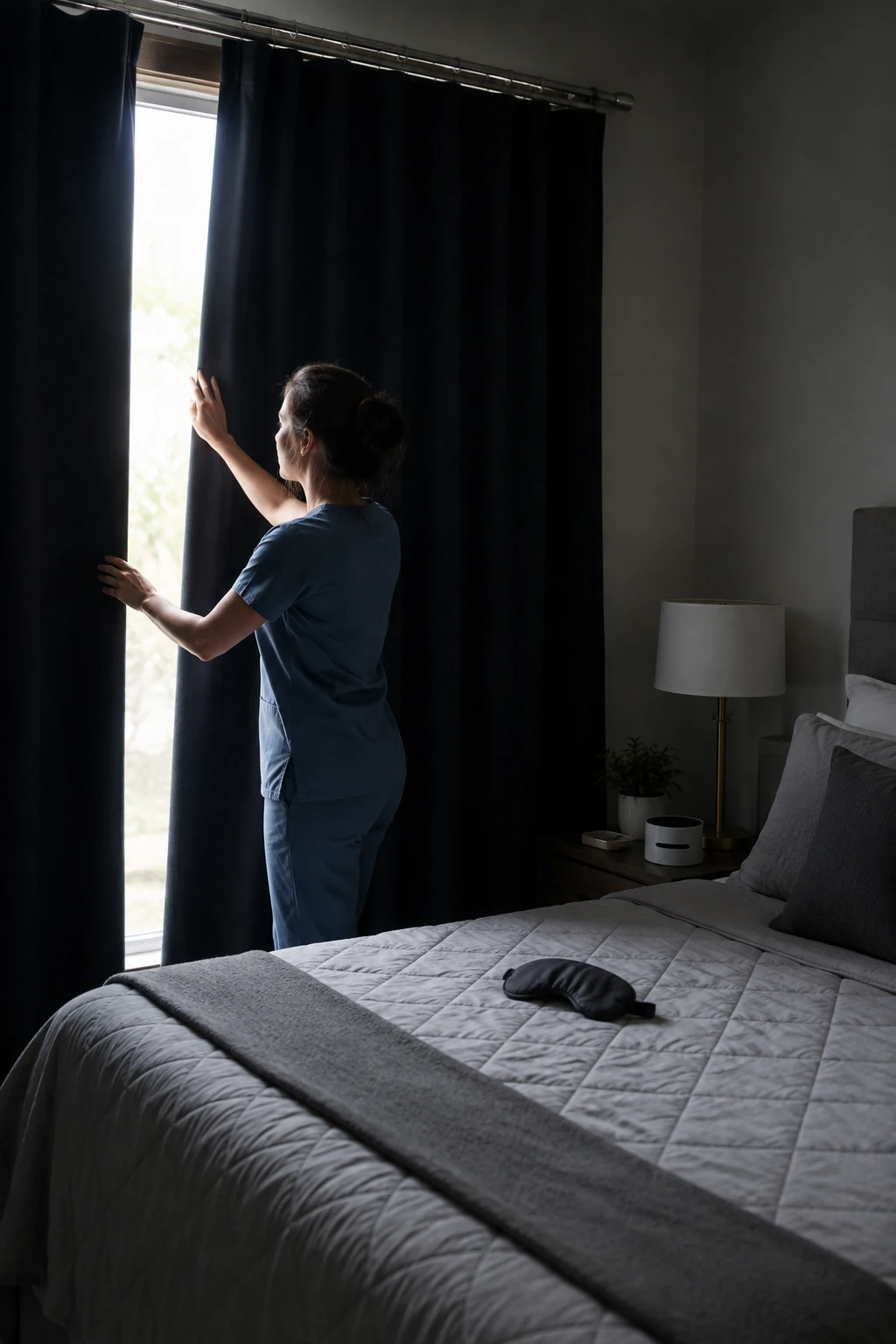
Your body reads three signals to know it is time for deep sleep, and daytime fights all three. Handle them before you get in bed, not after.
Pull the blackout curtains until the room is dark enough that you cannot see your hand clearly. Set the temperature between 65 and 68°F, since a cool room helps that sleep-triggering temperature drop. Close the door against household noise.
💡 Pro Tip
If a sliver of light still sneaks past the curtains, a sleep mask closes the gap. Cheaper than new curtains, and it travels with you for shifts away from home.
9. Start a Steady Sound and Settle Into Bed

The last step gives your ears something even to hold onto. A daytime world is full of sudden sounds, and a steady background hum covers them so nothing jolts you awake.
Turn on a white noise machine, a fan, or a phone app set to white or brown noise. Keep it low and constant.
Now get in bed. Let the sound, the dark, and the cool room carry you down. You built every signal your body needs, and it will take the hint.
| If This Happens | Try This |
|---|---|
| You lie awake wired after the whole routine | Give it time and keep the lights low. Do not watch the clock. Try slow breathing, in for 4 counts and out for 6, until your body catches up. |
| You wake after 3 to 4 hours and cannot drift back | This is common with day sleep. Keep the room dark, leave the phone alone, and let the white noise carry you. A planned split sleep can also work. |
| Morning light keeps waking you early | Add a sleep mask and check the curtain edges for gaps. Even a thin line of light at eye level can pull you out of deep sleep. |
| Your mind keeps racing after journaling | Write for a few minutes longer, then follow a guided body scan. It moves your focus from your thoughts to your body and quiets the loop. |
| Hunger wakes you partway through | Make your pre-bed snack a little bigger, with more protein. A spoon of nut butter or a boiled egg holds you longer than carbs alone. |
The Capsule Edition
Mastering the Night Shift Wind-Down
🌙How long before bed should I start winding down?Reveal Strategy ↑
Give yourself about 45 minutes from the time you get home. If your shift ends especially rough, start winding down in the car with your sunglasses and a calm playlist.
💊Can I take melatonin with this routine?Reveal Strategy ↑
Many night shift nurses use a low dose to nudge their clock, but check with your own provider first. The routine works with or without it, and good light control does much of the same job.
📵Do I really have to give up my phone?Reveal Strategy ↑
The screen light and the scrolling are the two things fighting your sleep hardest. You do not have to lose the phone forever, only park it across the room during your wind-down and while you sleep.
🔁What about my days off, when my schedule flips?Reveal Strategy ↑
Try to keep one anchor sleep block that overlaps your work-day sleep, even on days off. Fully flipping back and forth each week is what leaves you feeling jet-lagged.
⏱️How long until this routine actually works?Reveal Strategy ↑
Give it one to two weeks of doing the steps in order. A routine works by repetition, so the same cues each day are what teach your body to power down on schedule.
Quick Reference Card
Save or screenshot this before your next shift.
Have Ready
- Sunglasses
- Light snack
- Warm lamp or dimmer
- Notebook and pen
- Blackout curtains + sleep mask
- White noise machine or app
Do These in Order
- Sunglasses on before you leave
- Light snack, no caffeine
- Warm 10-minute shower
- Dim to warm lamps
- Phone on DND, across the room
- Write the shift out
- One calming activity
- Dark, cool, quiet room
- Steady sound, settle in
Your Shift Ends, Your Rest Begins
You now have a full routine after night shift for nurses, from the sunglasses at clock-out to the steady hum as you fall asleep. Each step is one small cue, and together they tell your body the shift is over.
Give it a week or two before you judge it. Real daytime sleep takes practice, and your body learns the pattern faster than you think.
Next, make your bedroom itself work harder for you, with better light control and a quieter room.
Pin this to your night shift board so it is ready before your next stretch of nights.
