
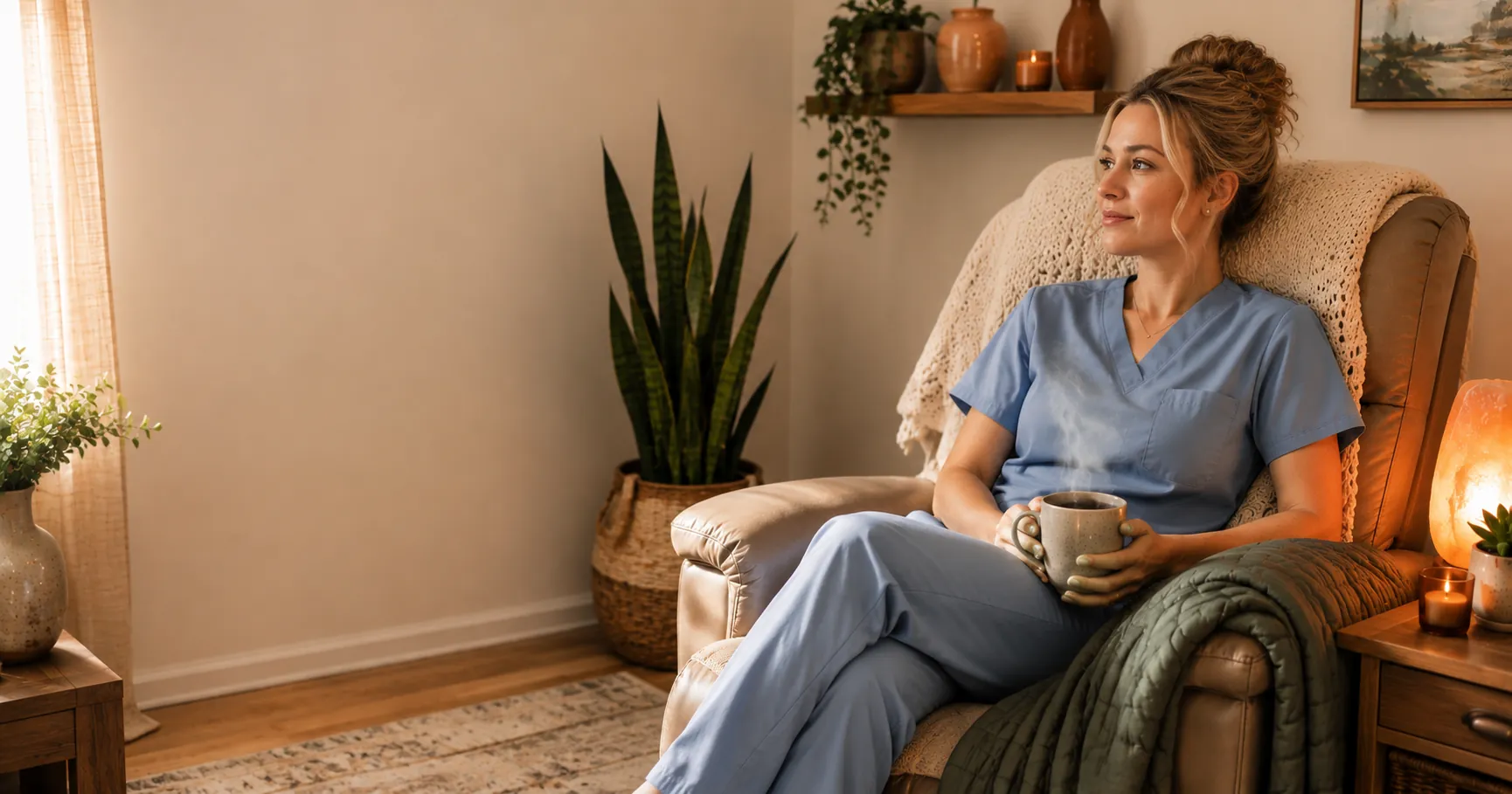
You just worked twelve hours. Your feet ache, your scrubs smell like the unit, and your brain is still running every alarm and call light you answered.
You sit down, scroll your phone for an hour, and somehow do not feel any better. That gap between clocking out and calming down is where a lot of nurses lose the good part of their evening, or their morning if you work nights.
A decompression corner closes that gap. It gives you one small, dedicated spot to land, breathe, and come back to yourself before real life starts asking for things again.
It does not need a spare room or a big budget. A chair, a warm lamp, a few soft things, and a little intention will do it. These decompression corner ideas for nurses are built around how shifts actually feel: tired feet, a racing mind, sore shoulders, and the odd hours you keep.
1. A Recovery Recliner That Actually Supports Twelve-Hour Legs
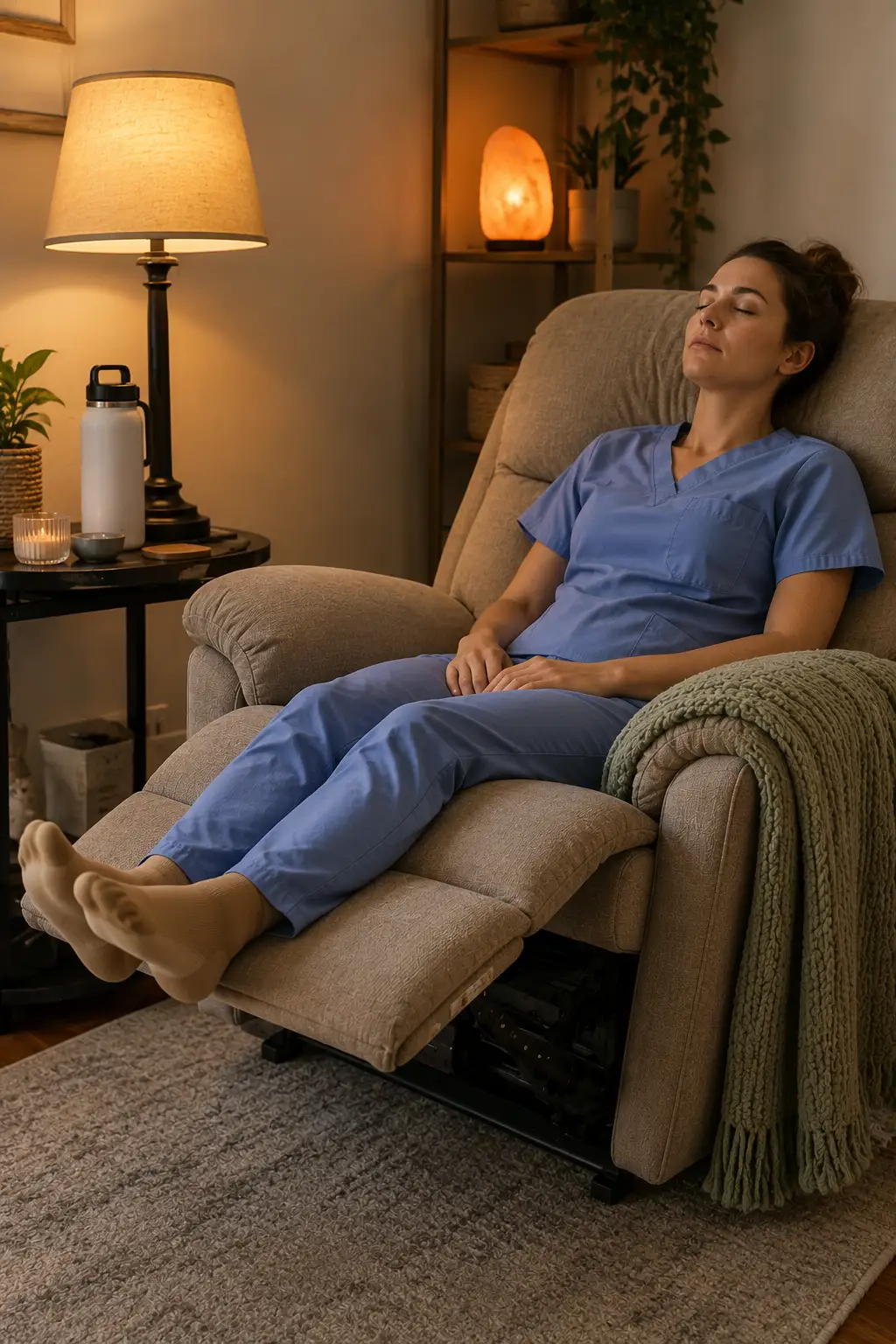
After twelve hours of walking, bending, and standing on hard floors, your legs come home swollen and heavy.
The seat you sink into should do more than look nice. Skip the stiff accent chairs. What tired legs need is a recliner with real lumbar support and a footrest that lifts your legs level with your hips.
You do not need the priciest model. A basic padded recliner beats a designer chair that leaves your calves dangling. Look for three things:
- A seat deep enough that your whole thigh rests flat
- Lumbar support that meets your lower back, not your shoulders
- A footrest that raises high enough to ease the swelling
A stiff upright chair. Your feet stay flat on the floor and your calves keep throbbing an hour after you finally sit.
A reclined seat with your legs lifted and supported. The swelling starts to settle and your lower back finally lets go.
2. A Dimmable Amber Lamp That Finally Kills the Hospital Glare
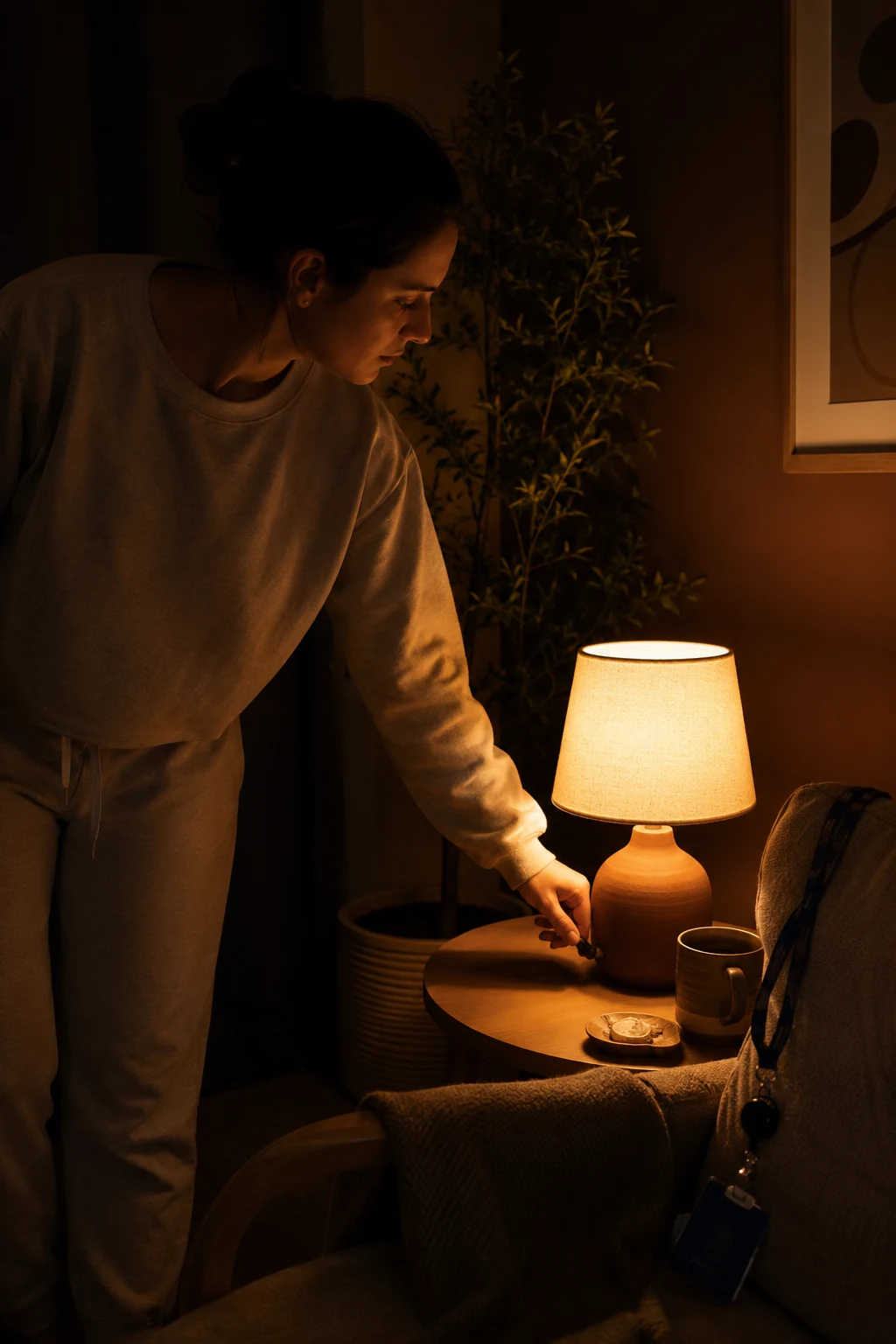
Hospital light is bright, flat, and everywhere. The last thing your eyes want after a shift is more of it.
Swap the ceiling light for a single lamp with a warm bulb, a small step that makes daytime sleep easier. The whole corner softens in seconds.
Two quick moves and you are set:
- Fit a warm-white bulb in the 2200K to 2700K range, the kind labeled soft white
- Put it on a dimmer or a smart plug so one tap drops it low as you unwind
💡 Quick Tip
If you work nights and sleep by day, set that smart plug to click the lamp on low before you get home. Walking into soft light instead of flipping a harsh switch makes a real difference to a tired brain.
3. A Muted Earth-Tone Palette That Reads as Calm, Never Code Red
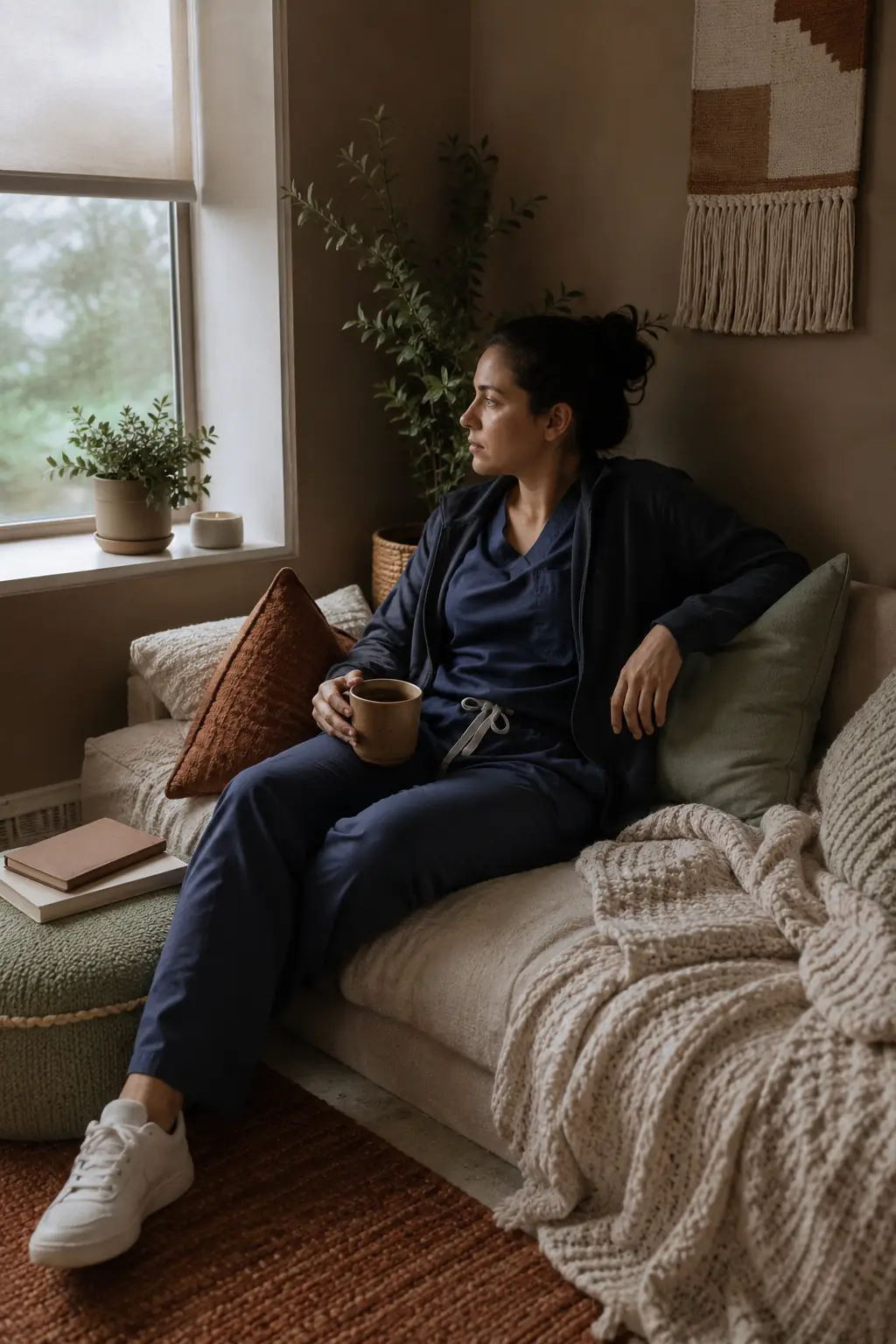
You stare at bright whites, sterile blues, and warning reds all shift long. Bringing those same colors home keeps your nervous system on alert.
The fix is calmer, grounded tones your eyes read as safe.
You do not have to repaint anything. Three swaps carry the whole feel:
- A throw in oatmeal or warm brown
- A cushion in sage or muted clay
- A rug in deep terracotta
| Keeps You Wired | Helps You Settle |
|---|---|
| Bright white, the color of every wall at work | Warm oatmeal and soft cream |
| Clinical blue and sterile grey | Sage green and muted clay |
| Alarm red and high-alert yellow | Deep terracotta and warm brown |
4. A White-Noise Wall That Drowns the Beeps Still in Your Ears

Silence is not always calming. After a shift full of alarms and call bells, total quiet can leave your ears straining for the next beep.
A gentle, steady sound gives your mind something soft to settle on. You do not need fancy gear.
Set it once so it runs on autopilot:
- Pick one sound and stick with it
- Keep the volume just above the room’s hum
- Start it the second you sit down
5. A Single Signature Scent That Flips Your Brain Off Duty

Smell reaches the memory part of your brain faster than almost anything else. Use that.
One consistent scent, kept only for this corner, becomes a switch your body learns to flip. Over a week or two, that first breath starts to mean rest before you have even sat down.
Any of these hold a scent well:
- A candle for slow evenings you are around to watch
- A diffuser for hands-off scent that fills the whole corner
- A linen spray for a quick hit on the throw
One scent, one place, one meaning. When lavender or cedar lives only in your corner, your brain stops guessing and starts unwinding the moment it hits.
6. A Legs-Up-the-Wall Spot That Drains Twelve Hours of Standing
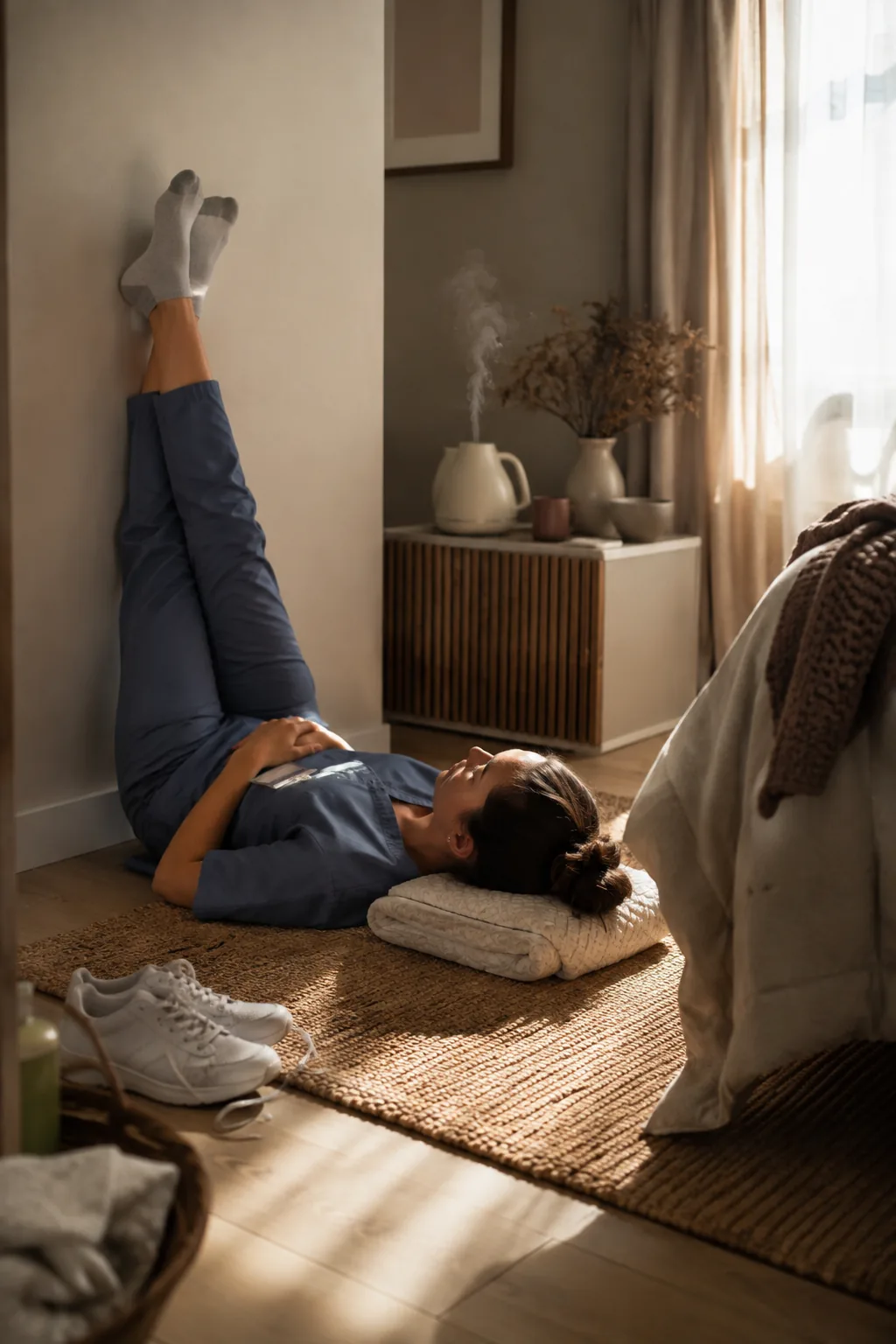
Twelve hours on your feet leaves fluid and ache pooled in your lower legs. Putting your legs up higher than your heart helps that drain back.
It feels incredible after a long shift, and you do not need a fancy recliner. A clear wall is enough.
The whole thing takes ten minutes:
- Sit close to a clear wall and lie back on the floor
- Walk your legs up until they rest against it
- Stay there while the kettle boils
7. A Ready-Stocked Foot Basket You Reach Without Standing Up
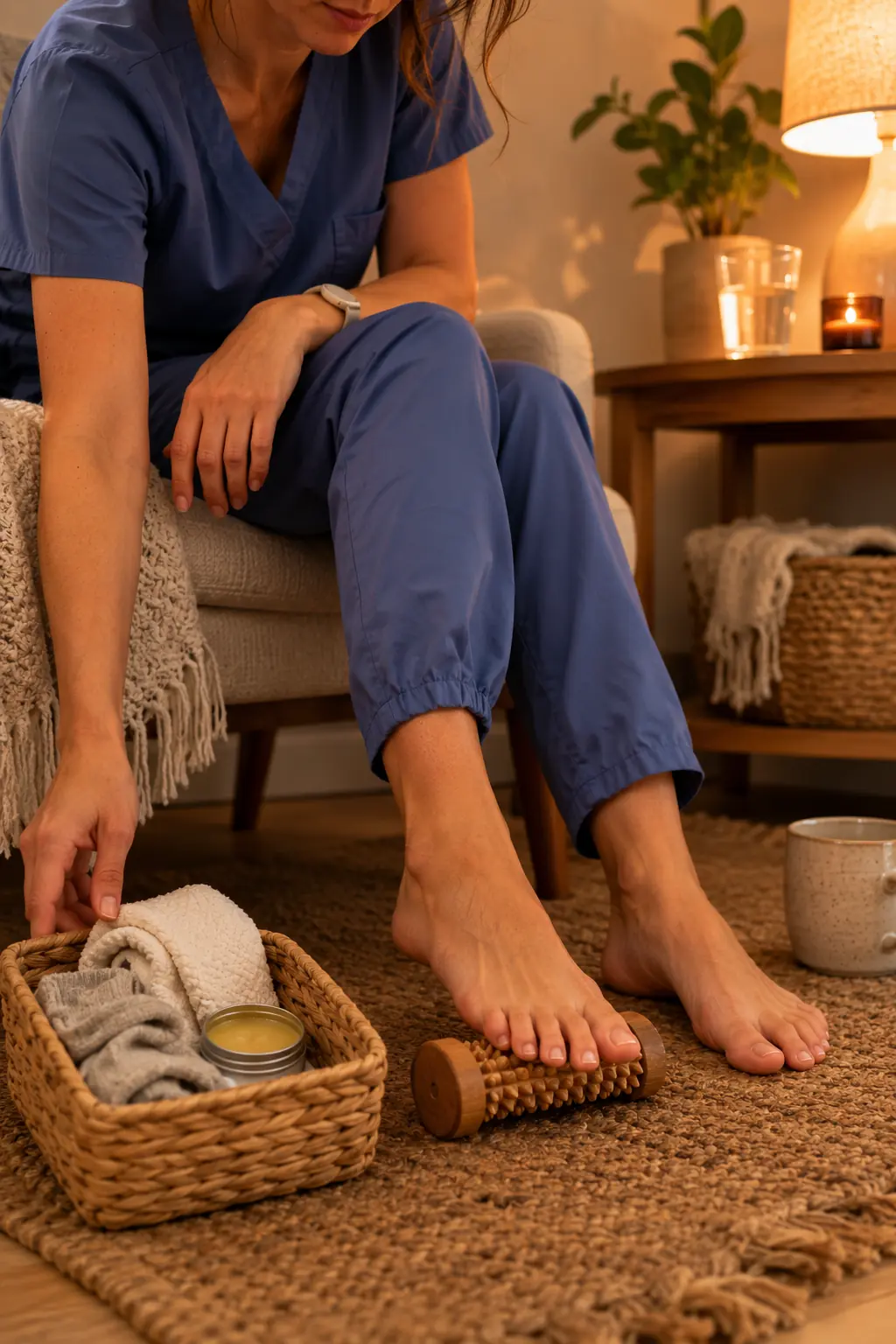
Feet take the worst of a shift, yet they are the last thing most people tend to.
Fix that with a small basket parked beside your chair, stocked for exactly this moment. When you sit down, everything you need is already at your feet.
Your feet earn this more than any other body part:
- Hours on hard, unforgiving floors
- Shoes built for grip, not for cushioning
- Barely a chance to sit the whole shift
What lives in the basket
8. A Weighted Blanket That Hugs the Buzz Out of Your Chest

A weighted blanket does something a regular throw cannot. The steady, even pressure signals your body to settle, the same way a firm hug does.
For a wound-up nurse who cannot switch off, that quiet weight can be the difference between spinning thoughts and real calm.
Keep it folded over the back of your chair, not buried in a closet. The weight matters more than the size, so use the common 10 percent guide to pick:| Your Weight | Blanket Weight |
|---|---|
| Around 120 lb | About 12 lb |
| Around 150 lb | About 15 lb |
| Around 180 lb | About 18 lb |
9. A Pile of Soft Layers That Feel Like the Opposite of Scrubs

Scrubs are practical, but they are not soft. All shift, your skin lives against stiff, functional fabric.
Your corner is the place to flip that. Surround yourself with textures that feel indulgent, and the contrast alone tells your body it is off duty.
Mix a few feels rather than matching them:
- Something chunky, like a heavy knit throw
- Something smooth, like washed linen
- Something plush, like velvet or fleece
10. A Charging Spot Across the Room That Puts the Ward on Mute
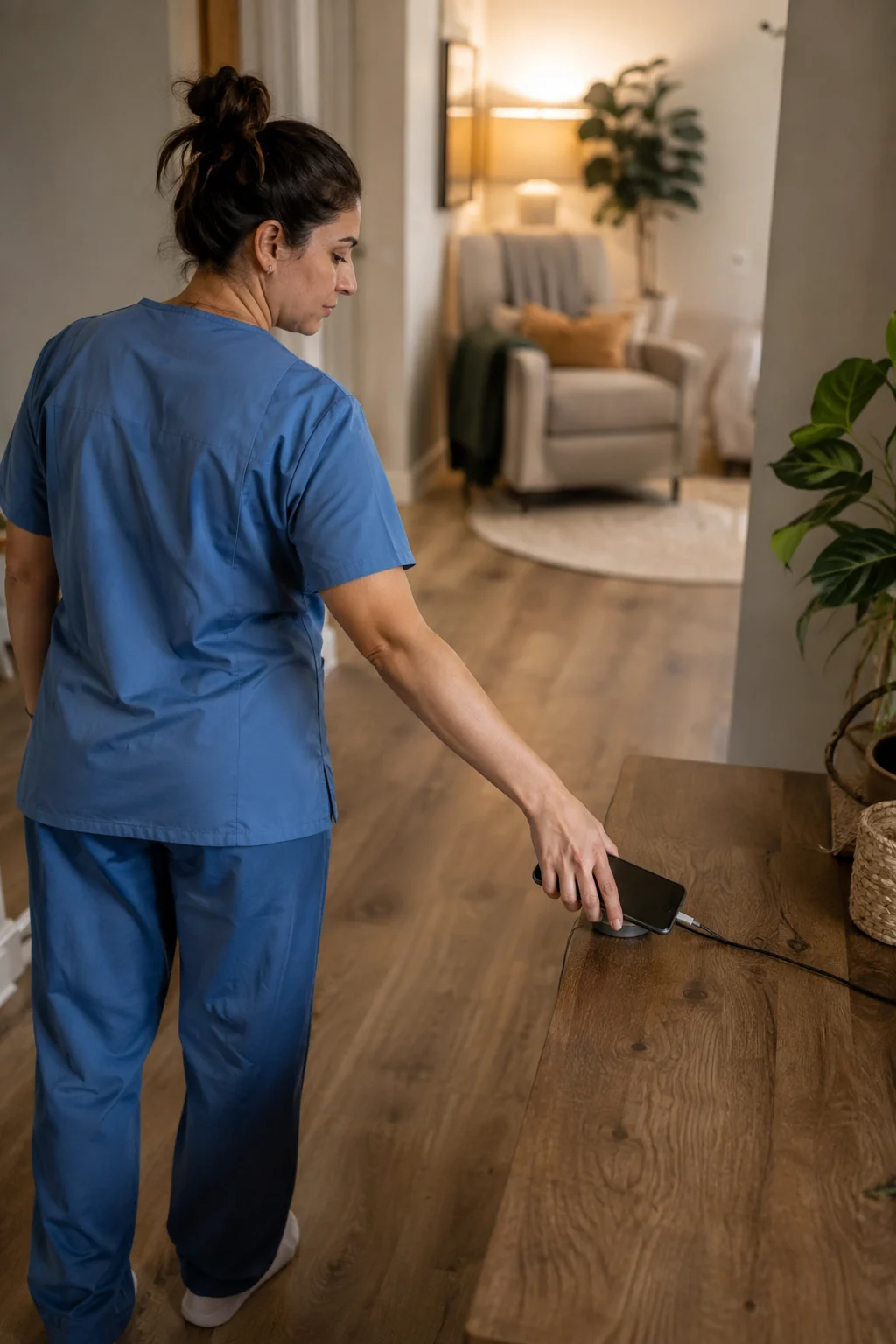
Here is the quiet saboteur of every wind-down: the phone charging right by your chair.
The moment it is in reach, you are back in messages and half at work again. The corner cannot calm you if the whole ward can still buzz in your pocket.
The fix is almost too simple. Move the charger, and let the distance do the work:
- Pick a charging spot in another room
- Set the phone down screen-first
- Walk back to your corner empty-handed
Charge the phone across the room, screen down.
Let it be a small walk to check it, not a reflex.
Do not keep it on the armrest by your hand.
Do not leave work notifications live during rest.
11. A Brain-Dump Notebook That Empties the Shift From Your Head

Some shifts follow you home. The patient you keep replaying. The thing you meant to chart. The worry with no name yet.
Left in your head, all of it loops. Written down, it stops.
You are not journaling for anyone. Three lines is plenty:
- The moment that still has a grip on you
- Anything you need to remember next shift
- One thing that actually went right
Write the one thing from the shift that is still stuck to you.
Jot anything you need to remember, then let it be the notebook’s job.
Close the cover. That small motion tells your brain the shift is filed away.
12. A Simple Household Signal That Buys You Fifteen Silent Minutes
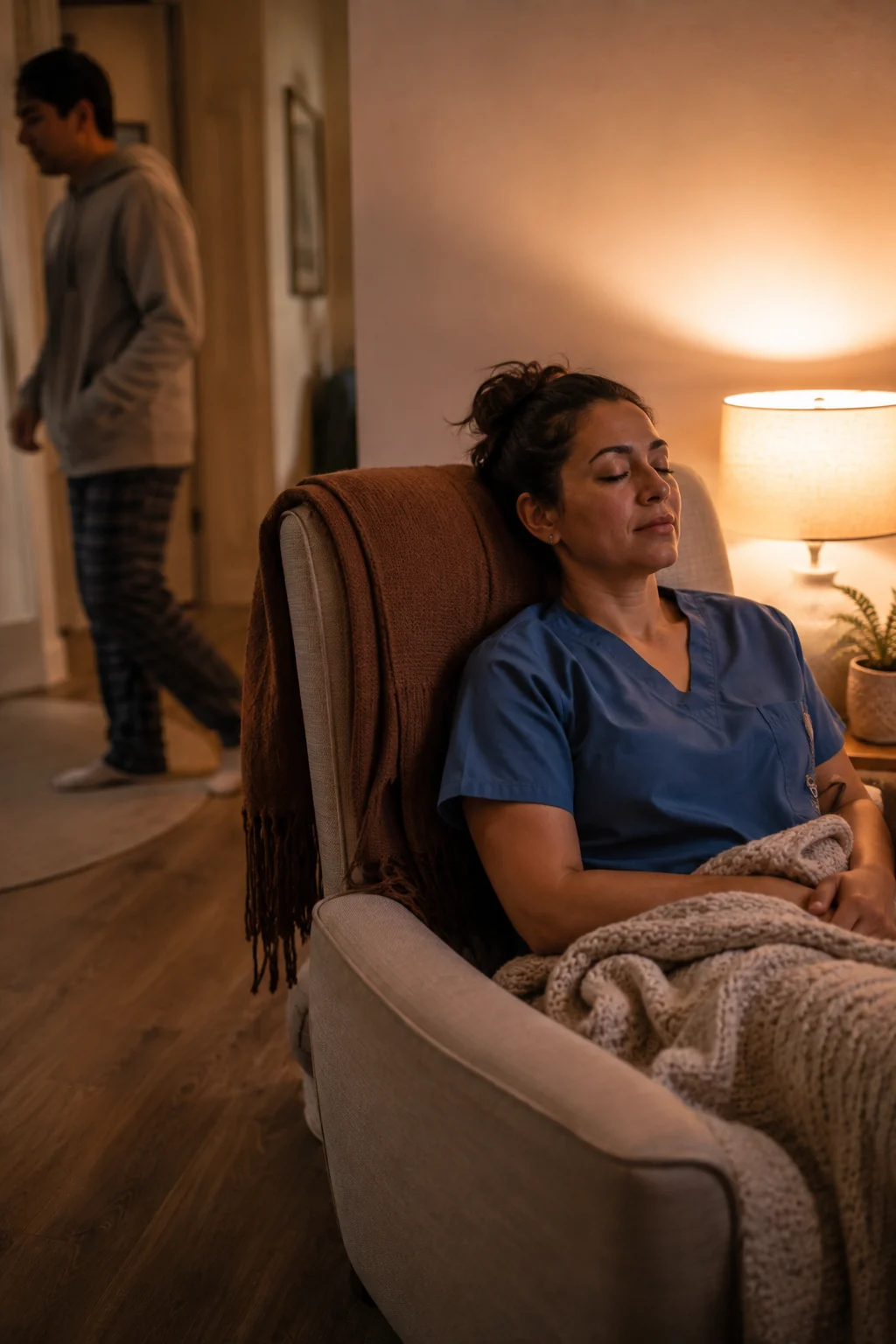
If you live with other people, your corner needs a rule they can see.
Nothing kills a wind-down faster than a well-meaning “how was work?” the second you sit down. A simple, agreed signal buys you the fifteen quiet minutes you need.
Make it stick in three steps:
- Agree on one signal with the household
- Keep it the same every single time
- Trade it for fifteen minutes, then come back to them
Signals the whole house can read
13. A Slow Candle Flame That Talks Your Breath Down From Alert

Thoughts race hardest right when you want them to stop.
A visible cue gives your breath something to follow, and your mind comes along with it. A slow, counted breath is one of the fastest ways out of alert mode.
Give your eyes something slow to follow:
- A candle flame swaying
- Your own hand rising on your chest
- A slow, spinning object on the shelf
Breathe in for four, out for six. A longer exhale than inhale is the signal your body reads as safe. Watch the candle, match the count, and let the shift drain out.
14. A Side Table Holding the Five Things You Won’t Get Up For

A corner falls apart when everything you want lives somewhere else. You end up half-resting, half-getting-up, and the calm never lands.
A little side table fixes that. It holds the few things your hand reaches for on autopilot, so you settle once and stay put.
Be strict about what earns a spot. This is a landing pad, not storage:
| Belongs Here | Leave It Elsewhere |
|---|---|
| Warm drink and a glass of water | Work bag and badge |
| Hand cream or lip balm | Laptop and chargers |
| Notebook, pen, and your speaker control | Bills and paperwork |
15. A Hard-to-Kill Plant Even Your Schedule Can Keep Alive

Something green and alive does quiet things to a tired mind.
You do not need a jungle. And you definitely do not need one more thing to keep alive on your schedule. One low-maintenance plant, set where your eyes naturally rest, is plenty.
Placement does half the work:
- Where your eyes land when you sit, not in a forgotten corner
- Off the floor if you have pets or keep odd hours
- Near the lamp so it catches a little light
📌 Good To Know
Three plants forgive dim light and missed waterings: a snake plant, a pothos, or a ZZ plant. Any of them will hold up to odd hours and a corner that does not get much sun, so you get the calm without the guilt.
16. A Folding Screen That Turns the Corner Into a Private Hideaway
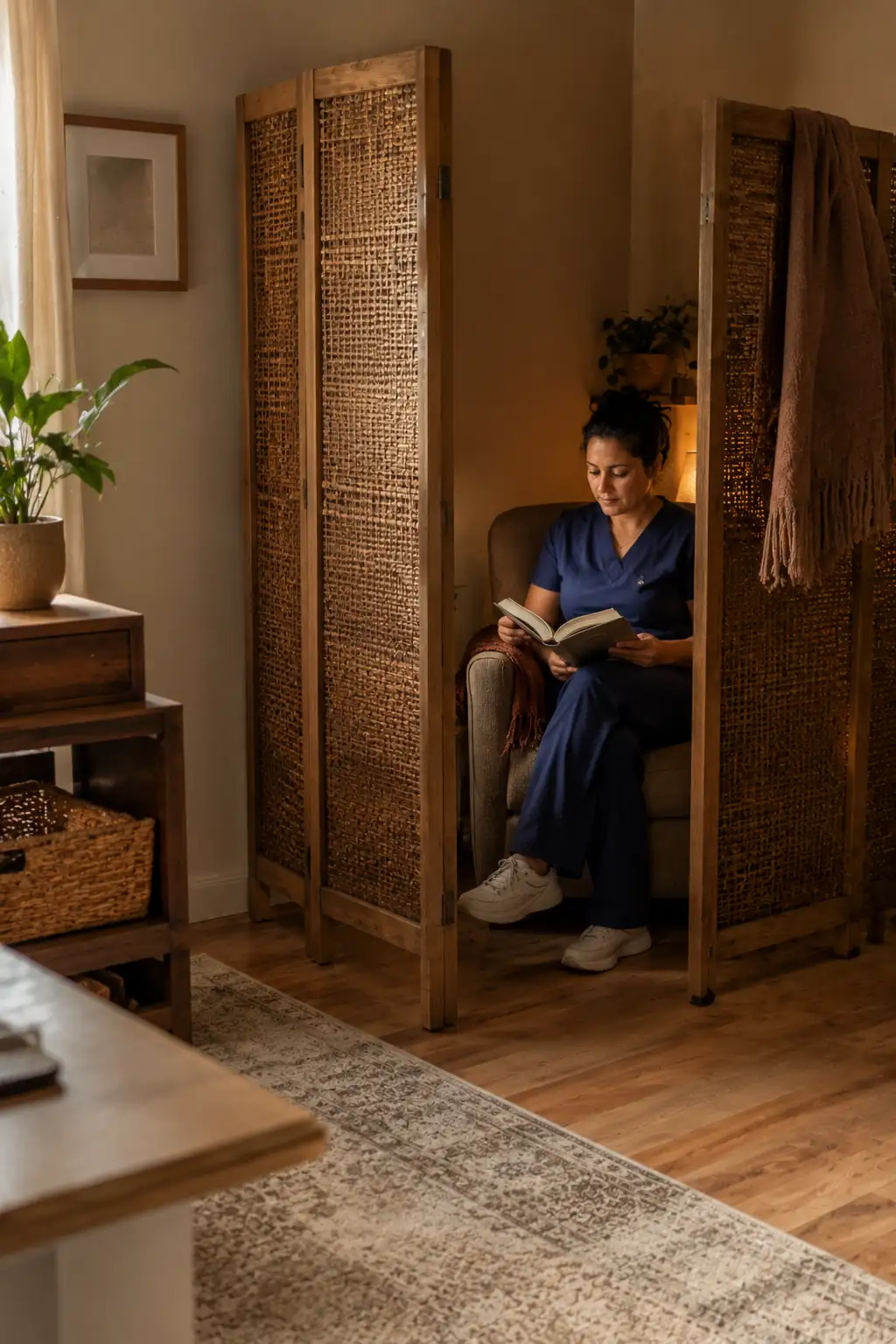
An open corner in a busy room never fully feels like a retreat. A divider fixes that fast.
Edges are what turn a chair-in-a-room into a nook you disappear into. The visual break tells your brain that stepping behind it means stepping away.
You have options at every budget:
- A folding screen for a clean, solid break
- A tall plant for a softer edge
- A curtain on a tension rod for renters
A chair sitting out in the open, exposed to the whole room, every passing person, and every mess in your eyeline.
A tucked-away nook with its own edges, where stepping behind the screen feels like closing a door on the day.
17. A Window-Facing Seat That Resets Your Clock After Nights

Coming off a night shift scrambles your body clock. Light is the strongest tool you have to steady it.
Angle the chair toward a window so a little daylight reaches you while you wind down, then block it out completely when it is time to sleep.
Two kinds of morning, two moves:
- Need to stay up a while: face the light and let it land on you
- Heading straight to bed: drop the blind and cut it fast
18. A By-the-Door Landing Spot That Leaves the Shift at the Threshold
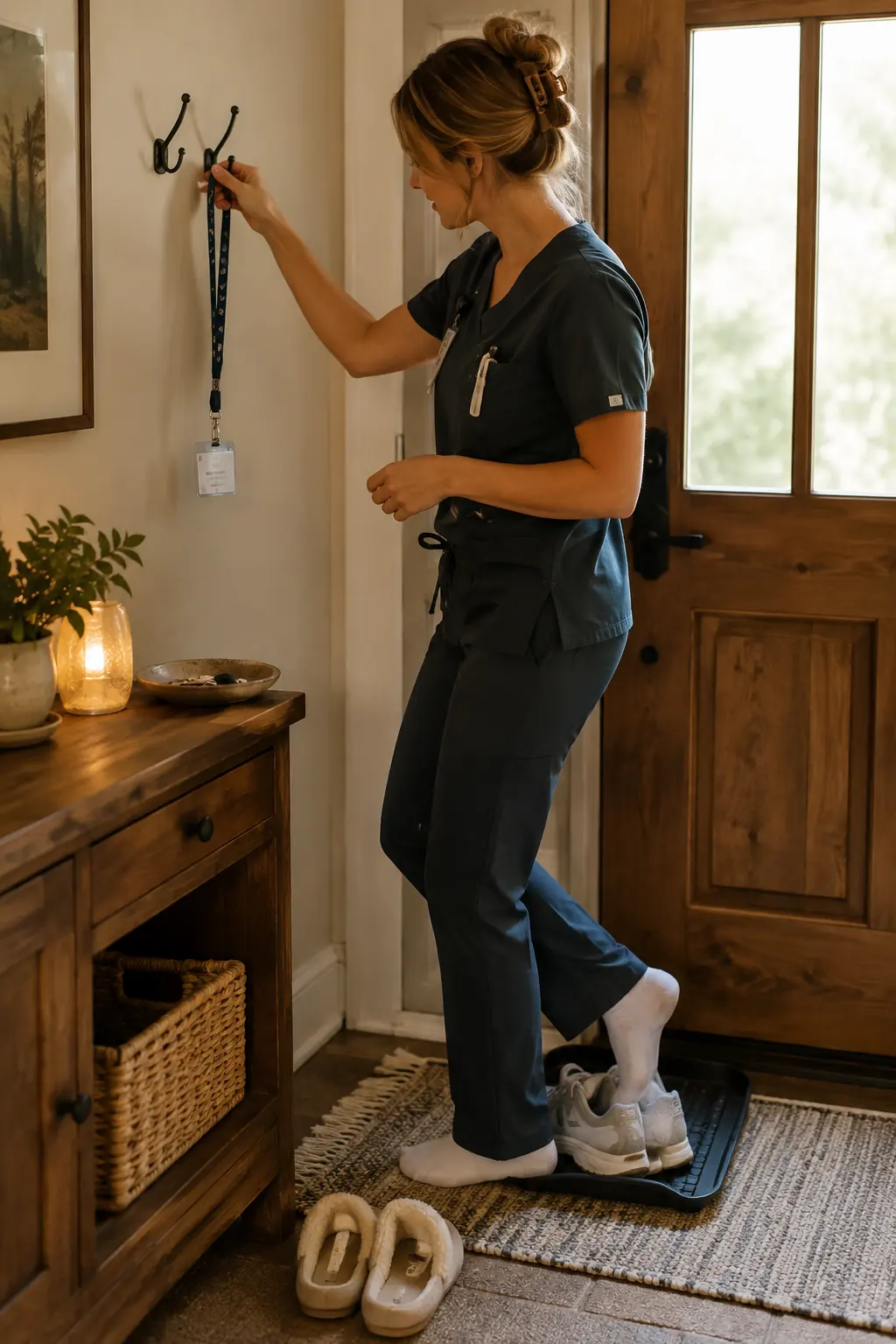
The physical act of taking off your work things is a signal in itself. A small landing spot by the corner gives that ritual a home.
Do it in the same order every time, and it becomes a routine your body knows means the shift has ended.
Everything that touched the ward stays put:
- Badge and lanyard on a hook
- Watch and work jewelry in a small dish
- Shoes on a tray, never on the rug
Badge and lanyard off first, hung on a hook so it is ready for next time.
Watch and any work-only jewelry into a small dish beside it.
Work shoes off and parked here, never carried onto the rug.
Empty your pockets of pens, tape, and the day’s clutter to close the ritual.
The Corner Is Yours
Your corner does not have to be big, expensive, or perfect. It just has to be yours, waiting for you when the shift finally lets go.
The point of these decompression corner ideas for nurses is not decoration. It is one small place where you can put the ward down, breathe out, and be a person again.
If you are starting from nothing, begin with three things:
- The chair, cleared and always ready
- One warm lamp on a low setting
- A blanket within arm’s reach
You do not build the whole corner in a day. Start with one thing that catches you when you walk in, and let the rest grow around it shift by shift.
