
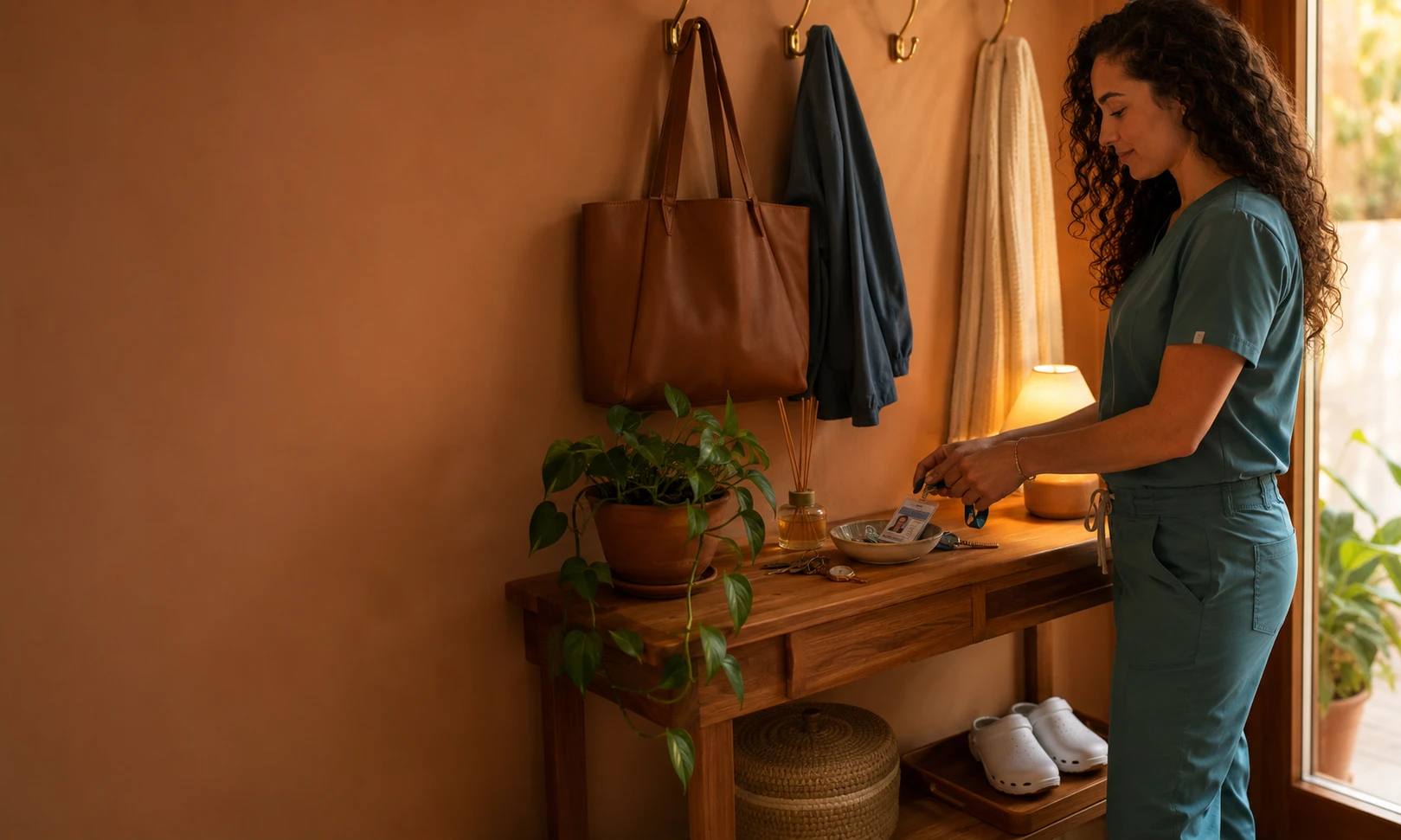
You unlock the door still carrying the whole shift.
Scrubs that smell like the unit. Shoes that walked those floors for twelve hours. A bag full of the day, and a badge lost somewhere in a pocket. Most homes have no plan for that moment, so it all spills onto the couch and the counter, and the shift follows you in.
A drop zone by the door fixes that. It gives every single thing you carry a place to land the second you’re home, so you can shed the shift instead of trailing it through the house.
For a nurse, it does double duty. It handles the normal keys-and-bag clutter, and it keeps hospital shoes, worn scrubs, and germs contained right at the threshold where they belong.
These entryway drop zone ideas for nurses range from a full built-in locker wall to a single fold-down shelf for a tiny rental. Some are about containment, some about staging tomorrow, some about making the first step home feel calm. Pick the ones that fit your space and your door.
1. The Console Where Your Badge, Keys, and Watch Land the Second You’re In
You come through the door with your hands full and your head still on the unit.
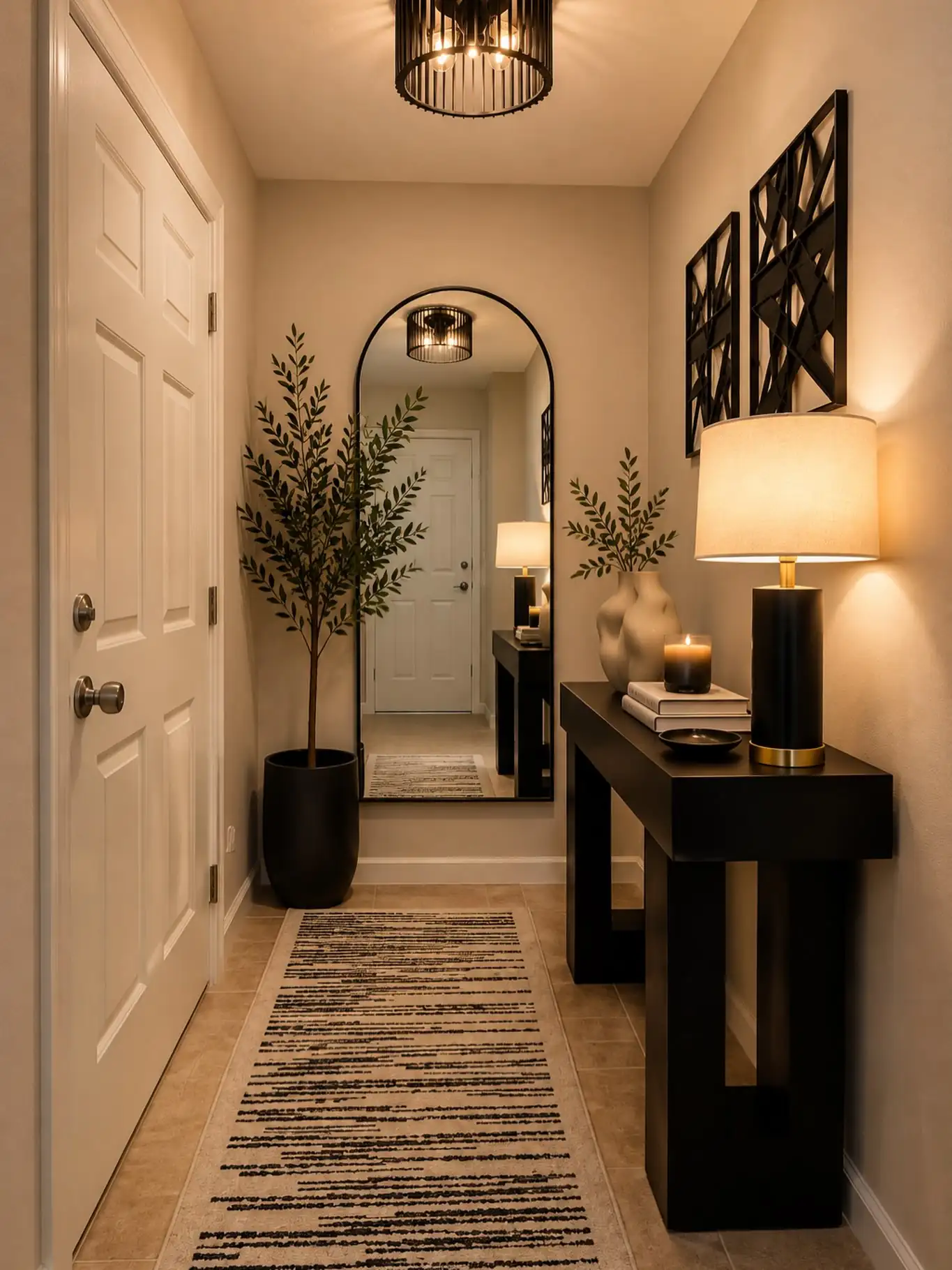
A slim console right inside the door gives every loose thing a home. This narrow black one fits a tight hallway without crowding the walk.
Set a small tray on top for your badge, lanyard, keys, and watch, so tomorrow’s set is staged in a single glance. The arched mirror above earns its keep too, a fast last look on your way out for the next shift.
Badge in one pocket, keys in another, phone lost in the bag. Every morning starts with a five-minute hunt.
One tray by the door holds all four. You drop them walking in and grab them walking out.
2. Your Own “Home Locker” Cubby for Everything You Drop at the Door
You already have a locker at work. This gives you one at home too.
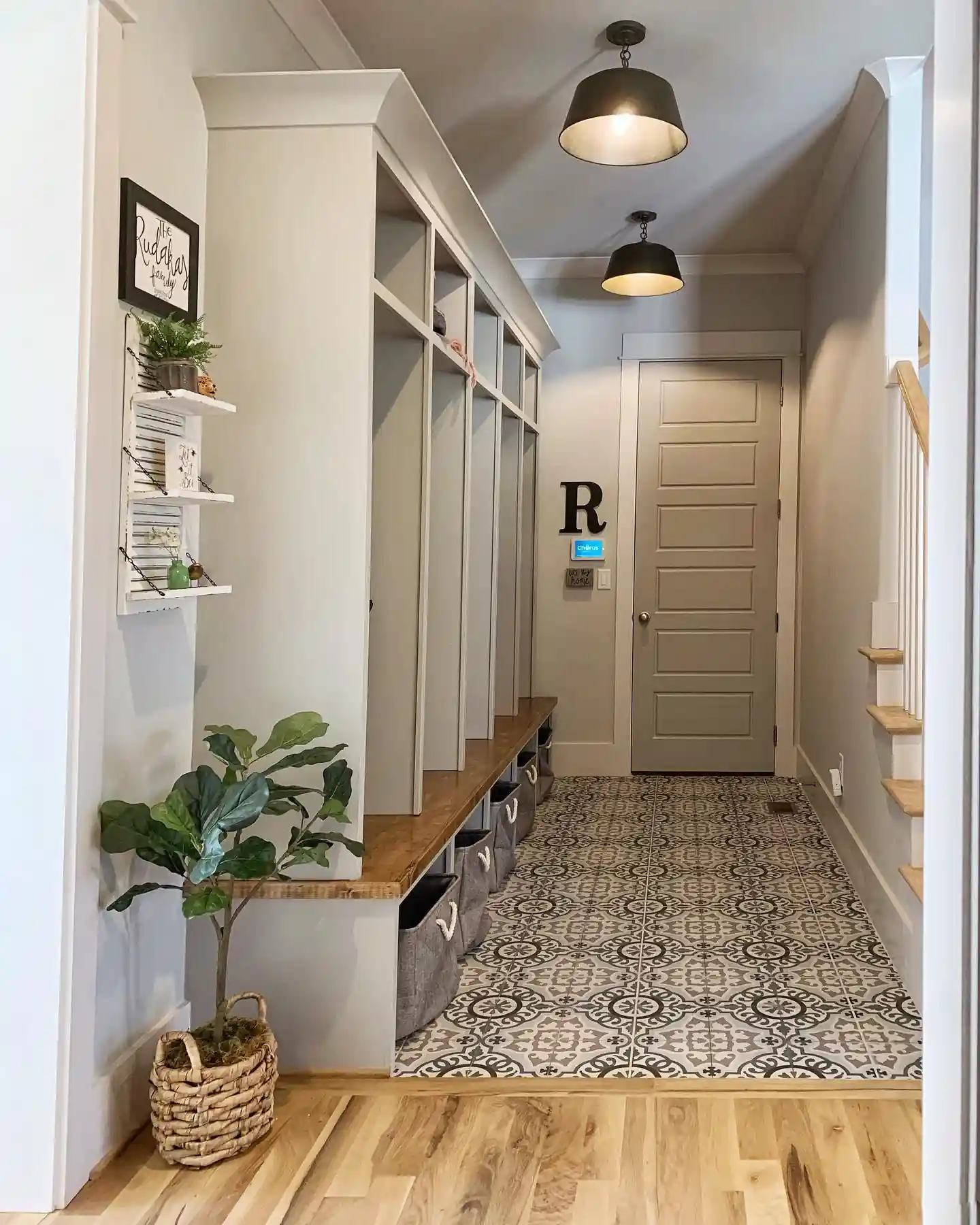
These open cubbies with bins below turn the entry into a personal drop station. Claim one column as yours.
The bin takes whatever falls out of your pockets, the hook holds your bag, the shelf holds tomorrow’s badge and keys. Everyone in the house gets their own, so the shift you carry in never tangles with anyone else’s clutter.What your column holds
3. A Soft-Lit Bench That Gives You One Place to Stop and Downshift

Between the door and the rest of your night, you need one place to stop.
This bench, lit low from underneath, is built for exactly that pause. Sit, unlace your shoes, hang your bag on the slat wall behind you, and let your shoulders drop before you take another step in.
The sitting is the whole point. A shift ends when your body finally stops moving, not the second you unlock the door.A place to sit turns coming home into a ritual instead of a rush. Peel off the shift at the bench, and the rest of the house stays yours.
4. A Closed Cabinet That Hides the Work Bag Out of Sight and Mind
Closed cabinet doors do something open shelves cannot. They put the whole shift out of view.
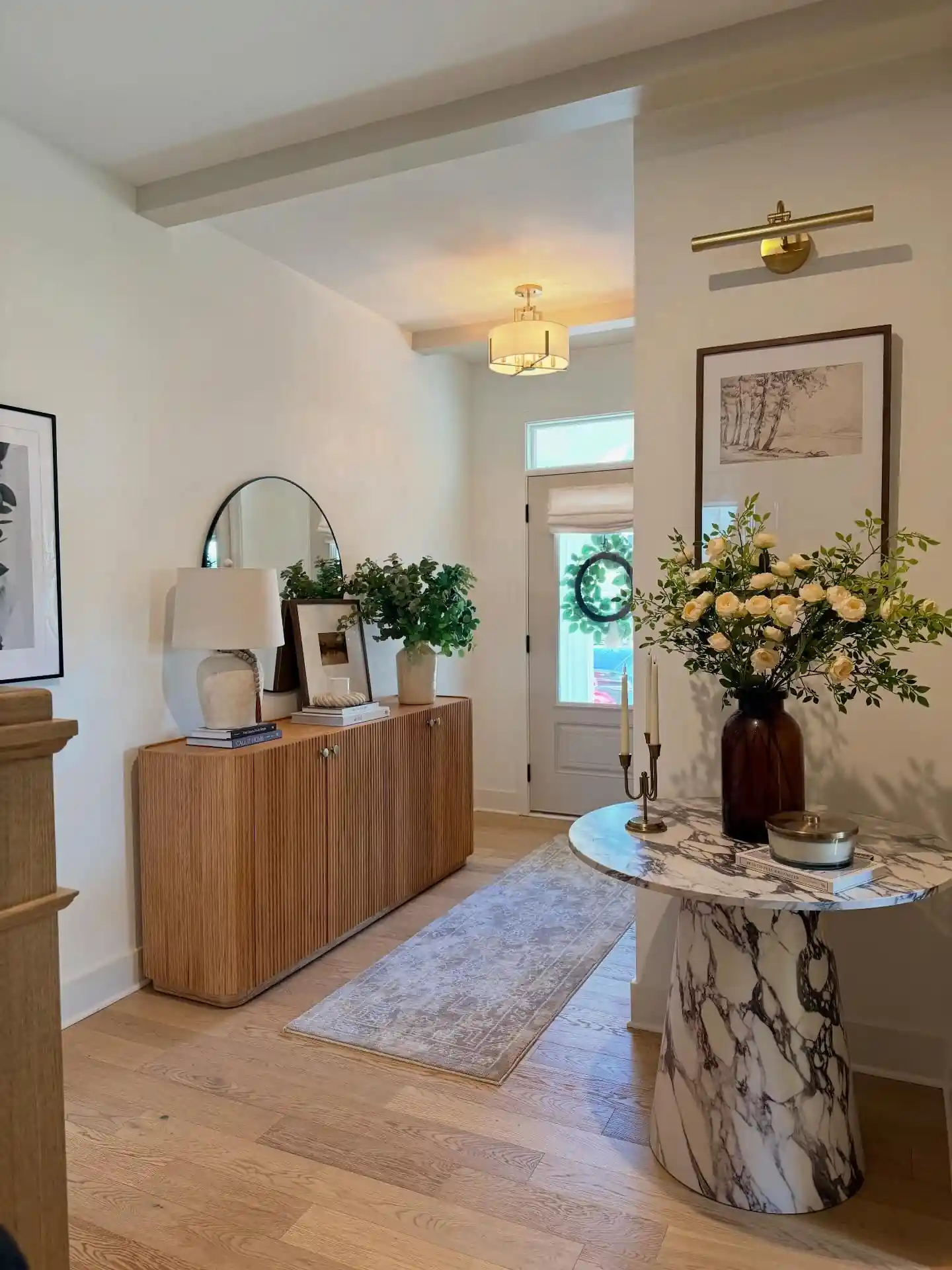
This fluted wood cabinet keeps a calm, clean face in the entry while the clutter lives behind the doors. Tuck your work bag, spare clogs, and the odds and ends of a twelve-hour day inside.
The first thing you see at home is not a heap of hospital gear.📌 Good To Know
Give one shelf inside to work-only items: the bag, spare clogs, a folded set of scrubs. Keeping them apart from your home things makes the line between work and home easier to hold.
5. A Peg Rail That Hangs the Work Bag High, Never on the Couch
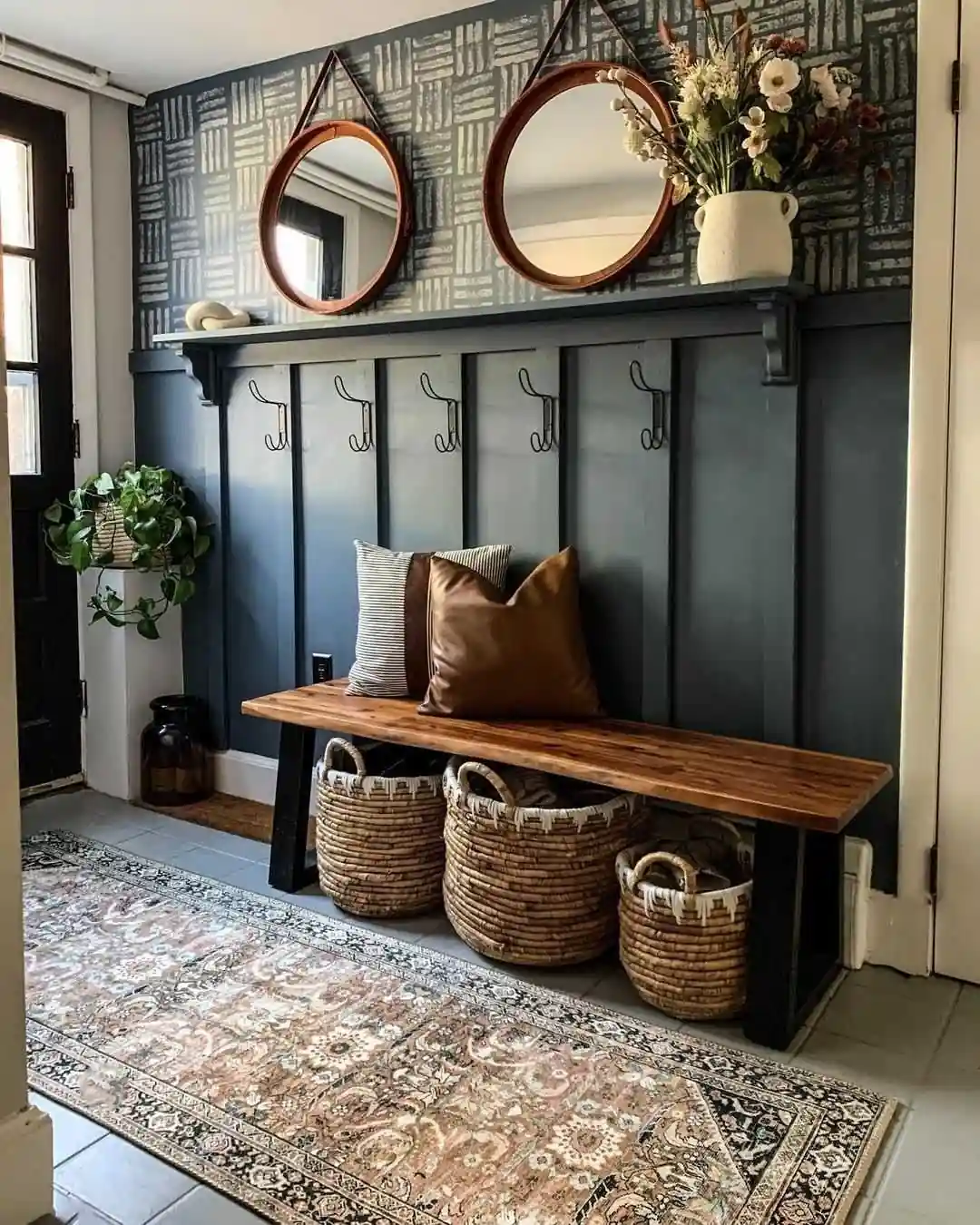
The work bag has a way of ending up on the couch, then a kitchen chair, then the floor.
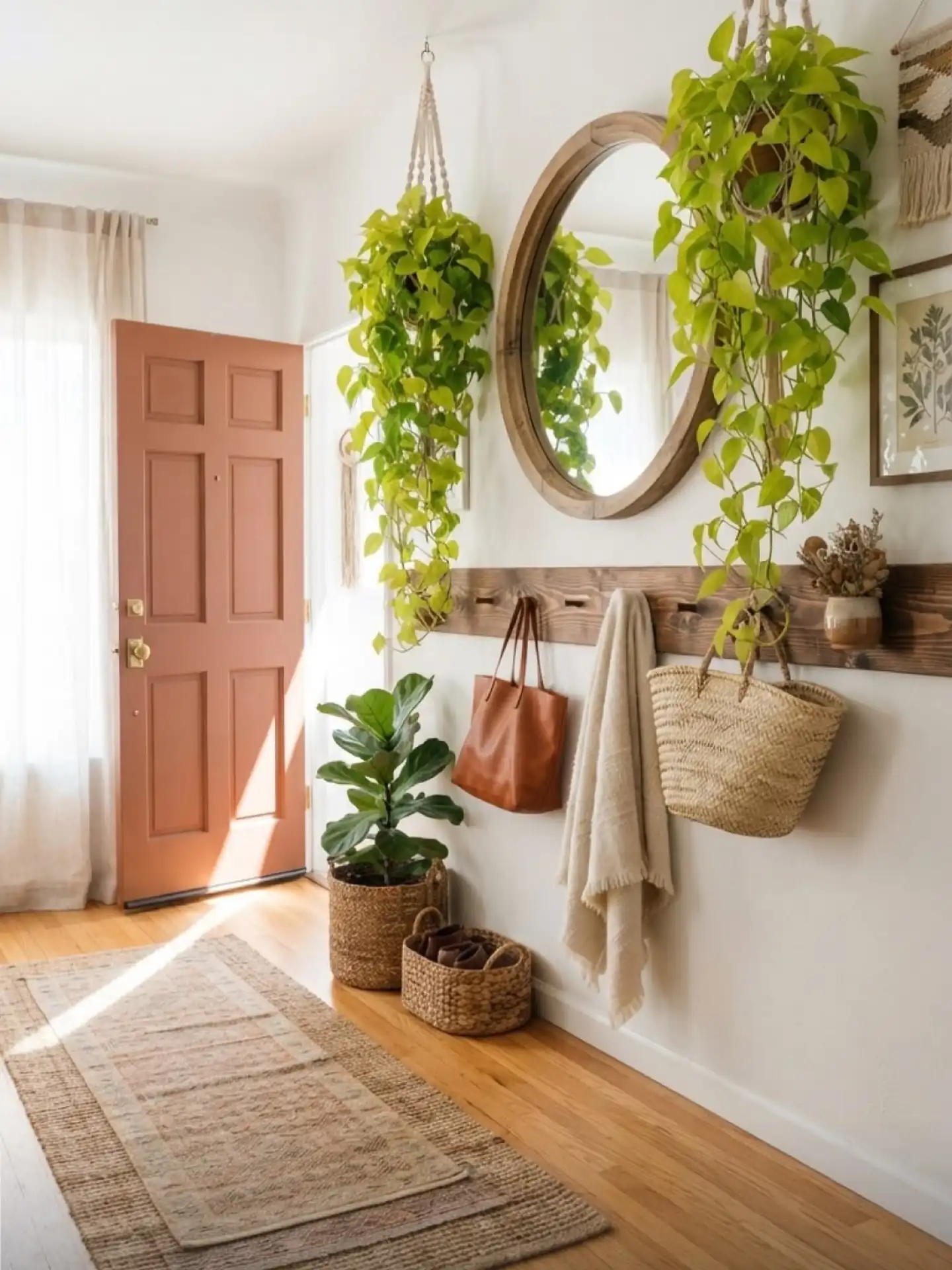
A peg rail ends that trail at the door. This wood rail holds a tote, a basket bag, and a throw on simple pegs, all up off the ground.
Hang your bag the moment you’re in, and it never migrates through the house. The greenery around it makes the first thing you see feel alive, not clinical.The bag lands on the couch, then a chair, trailing the shift through the whole house.
One peg by the door holds it high. The bag stays put and the rest of your home stays yours.
6. A Row of Sturdy Hooks That Take the Jacket and Coat First
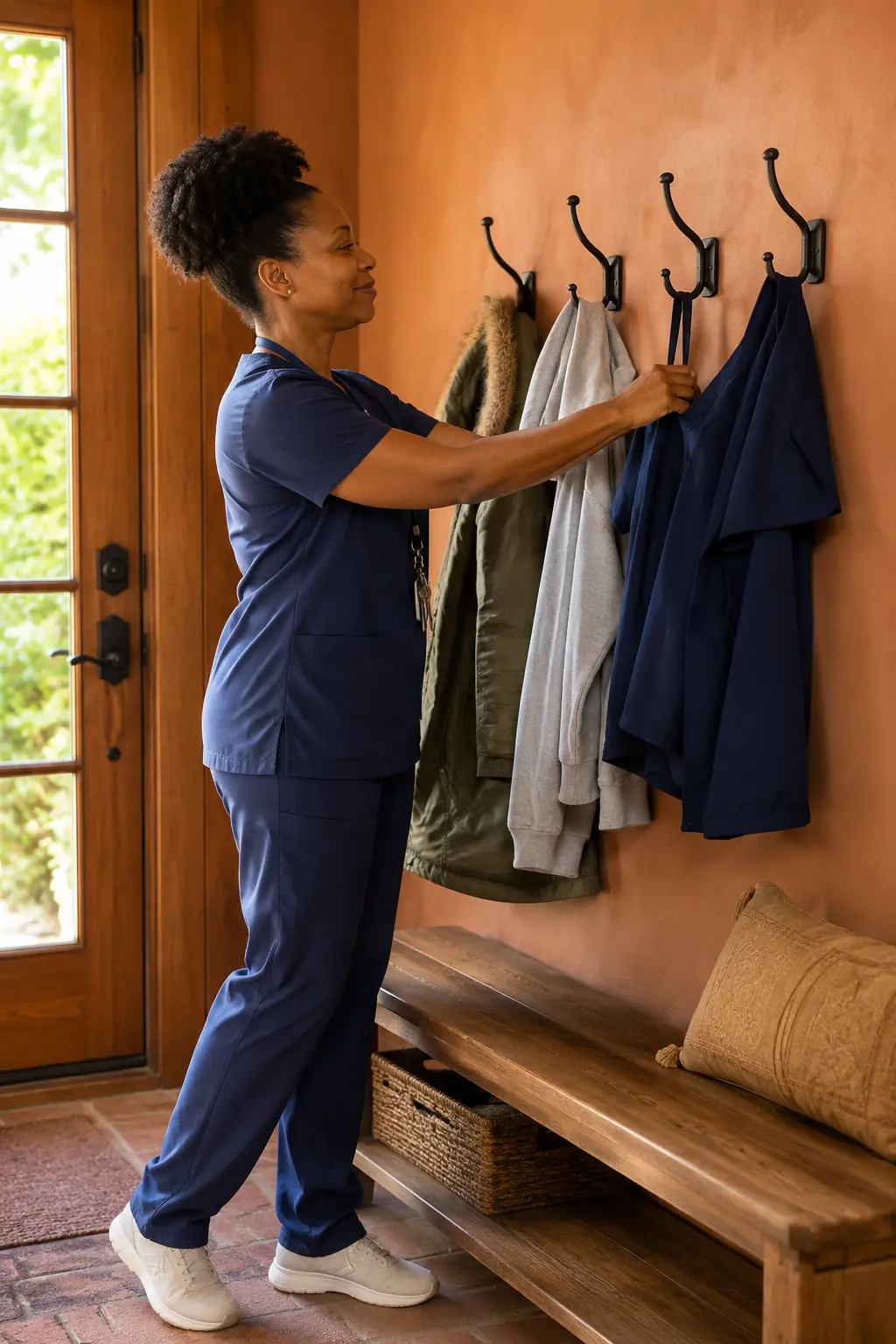
The coat comes off before almost anything else. Give it the easiest possible home.
A row of strong wall hooks by the door means your jacket lands the second you’re in, not over a chair back. Space them wide enough for a bulky coat, a hoodie, and a scrub jacket all at once.
Put the whole family’s outerwear here and the entry stops being a pile-up.Hooks beat hangers at the door because they take one second, not ten. The lower the effort, the more likely the coat actually lands there after a long shift.
7. A Sole-Scrubbing Doormat Setup That Stops Germs at the Threshold
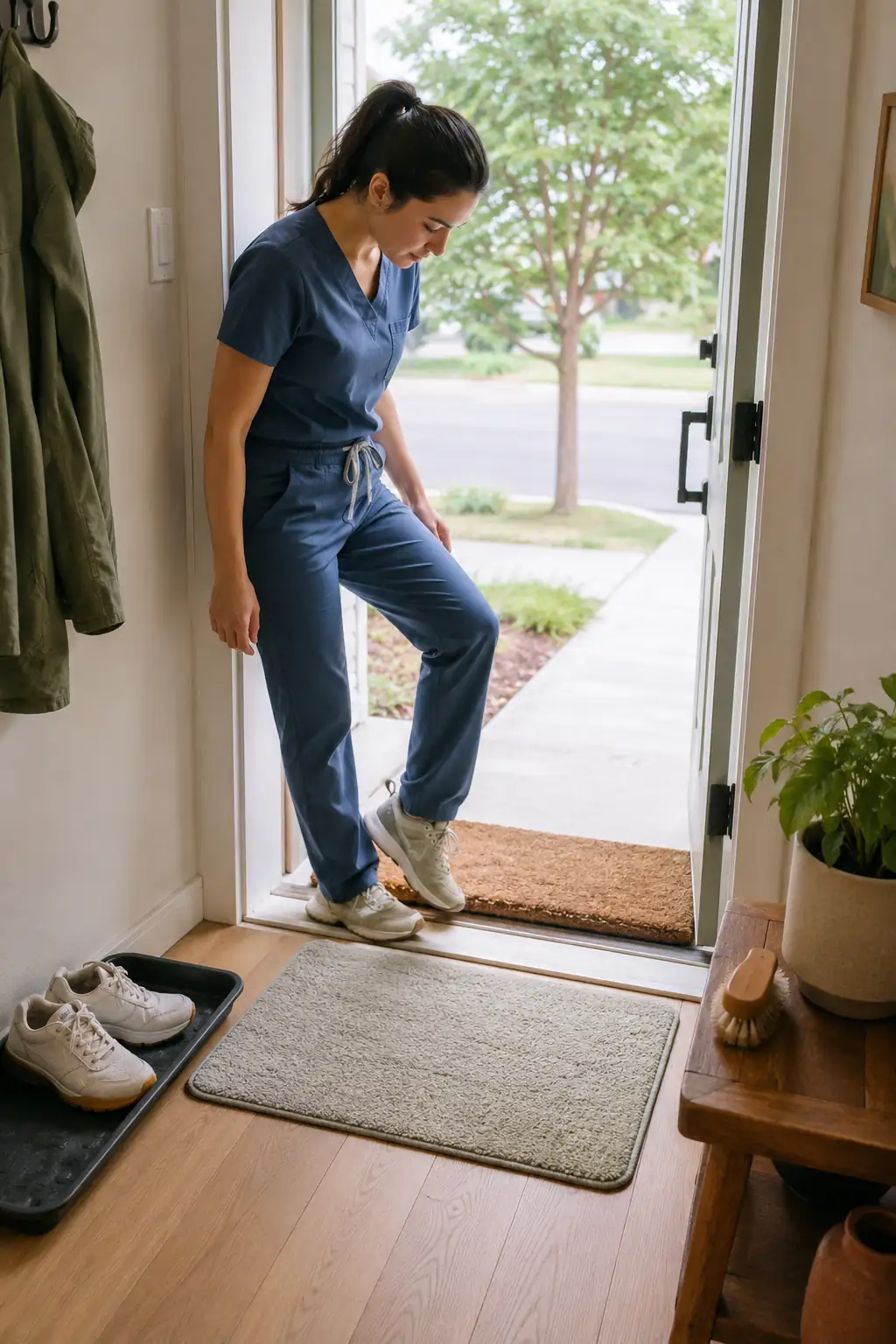
What’s on your soles after a shift shouldn’t cross the threshold with you.
Build a two-mat system at the door. A coarse scraper mat outside knocks off the worst, and a washable mat just inside catches the rest.
For work shoes you keep wearing home, a quick sole wipe here means the unit floor stops at the mat, not the hallway.| 🚪 Outside the Door | 🏠 Just Inside |
|---|---|
| Coarse scraper mat for the worst grime | Soft washable mat for the last of it |
| A boot brush for treads and soles | A tray for shoes that come off here |
| Weatherproof, hosed off as needed | Machine washed on laundry day |
8. A Closed Shoe Cabinet That Keeps Hospital Floors Out of Your House
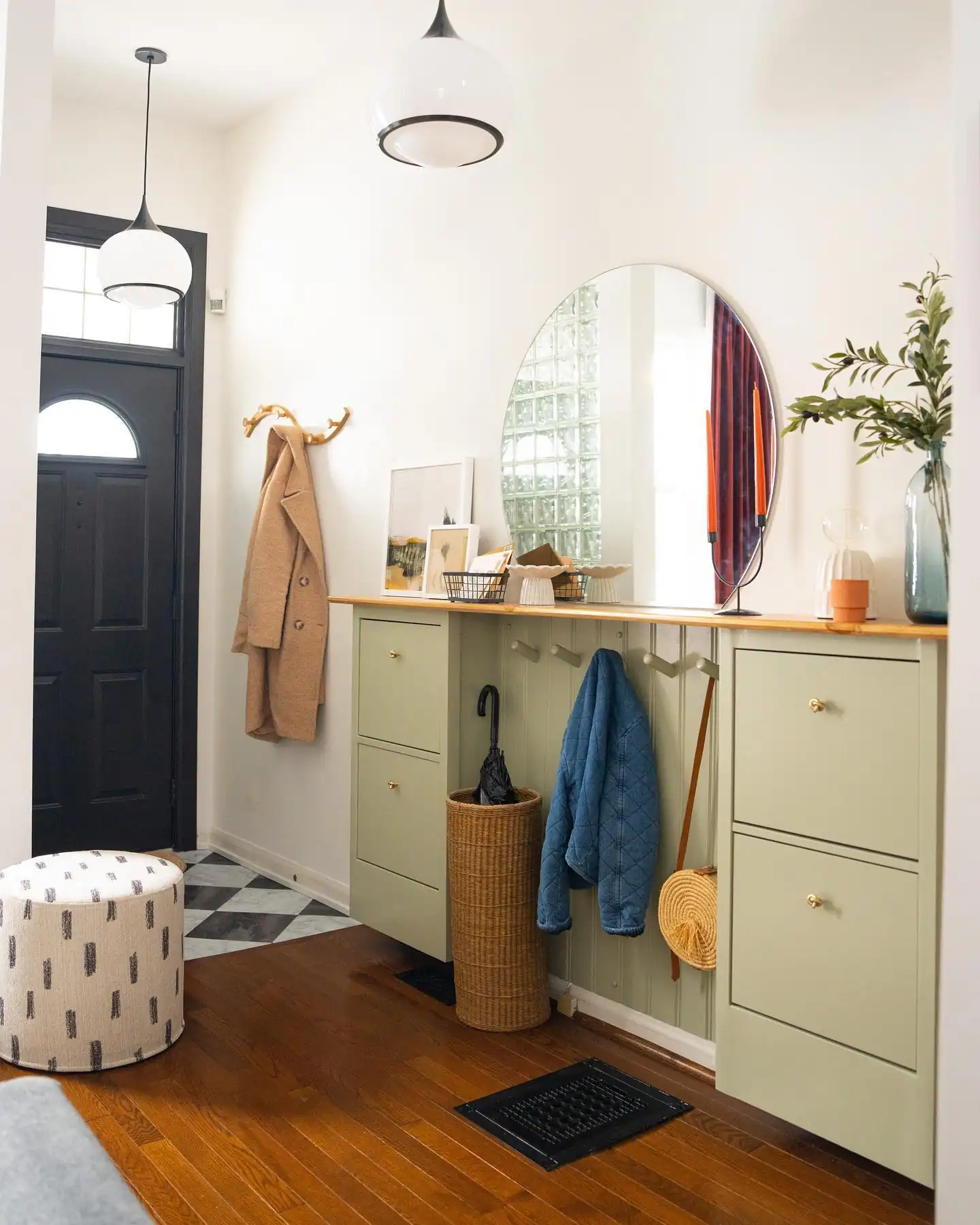
Work shoes carry the unit home on their soles.
A closed shoe cabinet stops them at the door. This sage built-in swallows several pairs behind flat doors, so nothing tracks past the entry.
Make one rule and keep it: work shoes come off here and go no further in. Step into house shoes from the same spot, and the floors you walked all shift stay by the mat.
Take work shoes off here every time, no exceptions.
Wipe the soles down before they go in the cabinet.
Do not walk hospital shoes across your living space.
Do not store clean house shoes in the same cubby as dirty work ones.
9. An Open Shoe Cubby That Airs Out Work Shoes Between Shifts
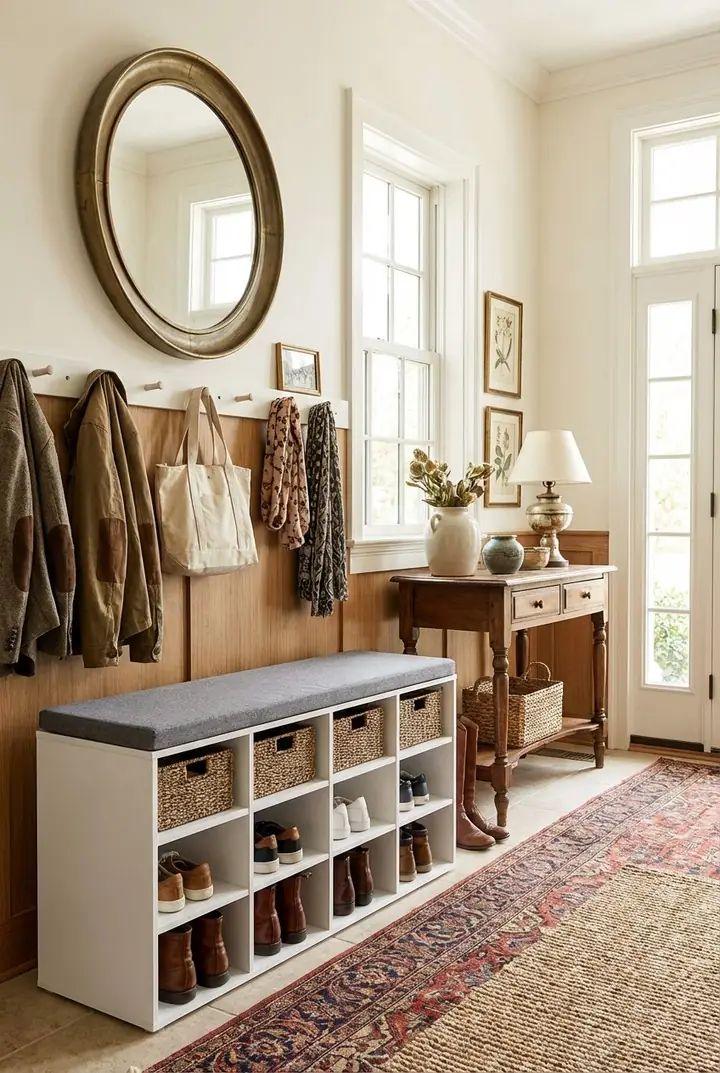
Not every pair by the door should go back on tomorrow. Work shoes need to breathe.
This open cubby bench gives each pair its own slot, out in the air instead of sealed in a box. Sit on the cushioned top to unlace, and park the day’s shoes to dry.
The baskets alongside sort the rest, clean kept well apart from worn.| 👟 Air Out Here | 🚪 Keep Elsewhere |
|---|---|
| Today’s work shoes, still warm | Clean house slippers |
| A damp pair that needs to dry | Rarely worn good shoes |
| Backup clogs for the next shift | Seasonal boots in storage |
10. A Hands-First Sanitizer Station Before You Touch Anything Else
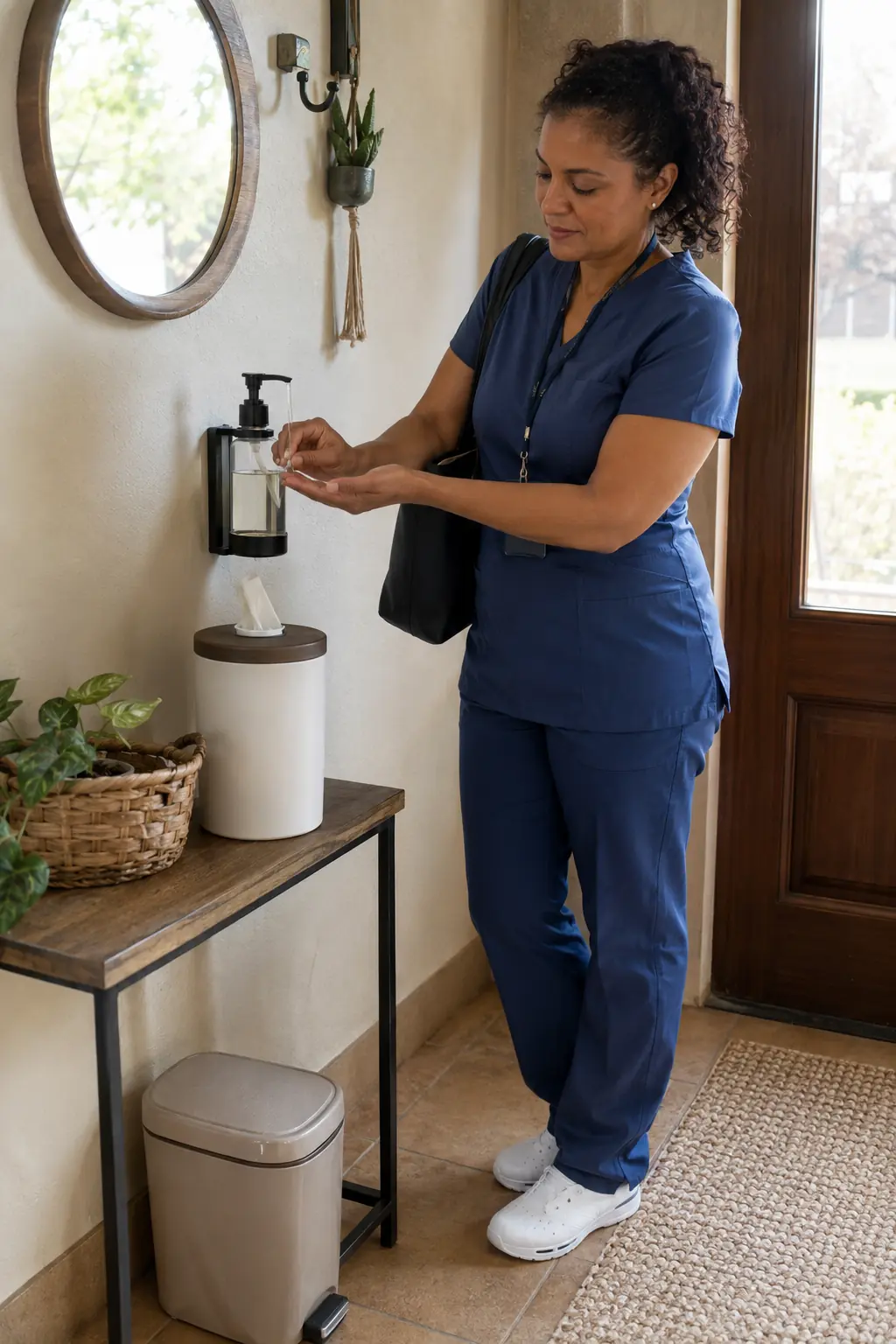
The first thing you touch at home should not be a light switch you’ll clean later.
Mount a small sanitizer or wipe station right at the door, at hand height. A wall pump, a covered wipe canister, and a small lidded bin for the used ones keep it tidy.
Make it the step before keys, before the bag, before hugs. One pump on the way in, and the shift stops at your hands.Sanitize hands the moment the door closes, before you touch anything.
Wipe down anything that came home with you: phone, badge, lunch bag.
Drop used wipes in a small lidded bin kept just for this spot.
11. A Straight-to-Wash Scrub Hamper You Never Carry Through the House
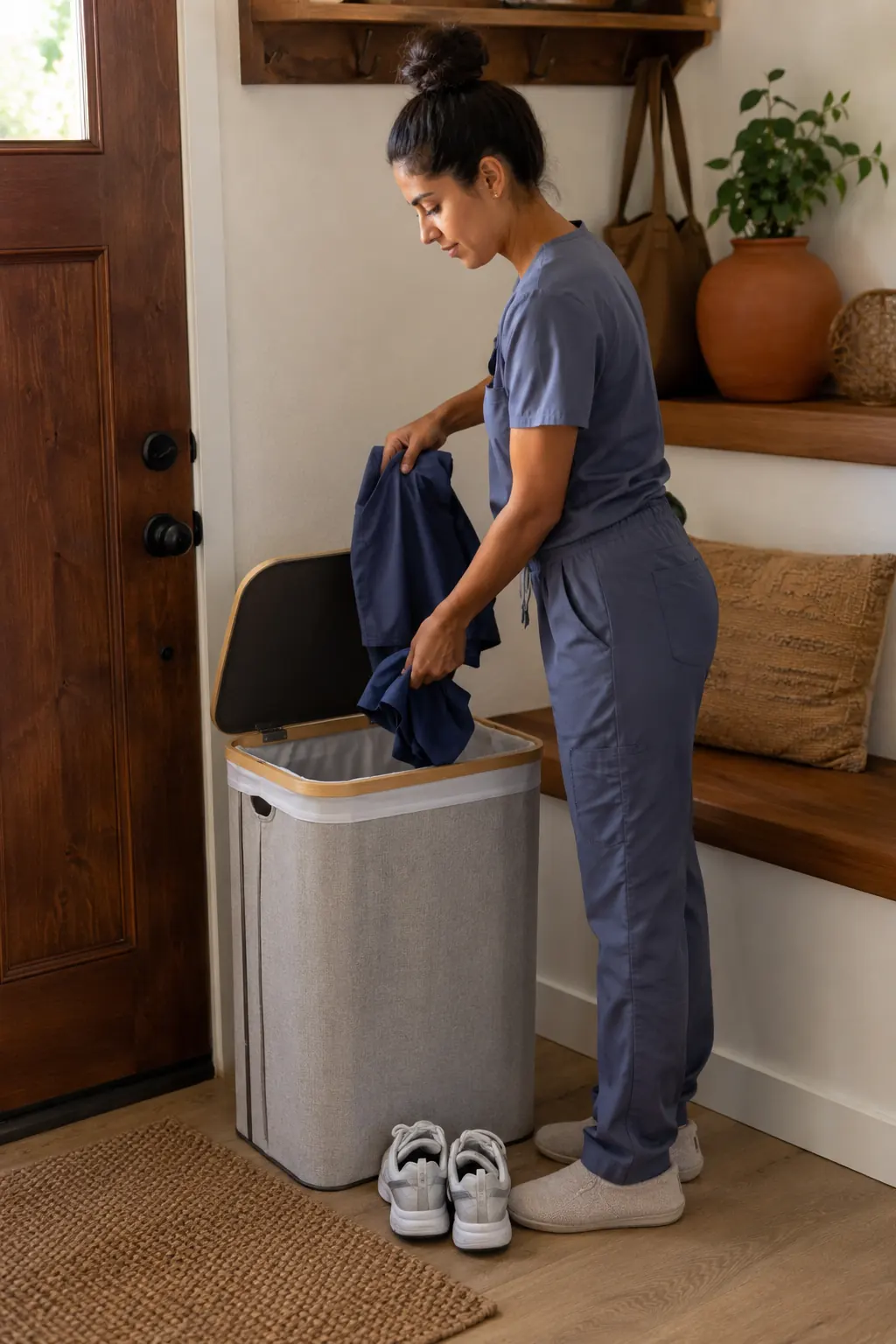
Scrubs should never take a lap of the house on their way to the laundry.
Park a dedicated hamper right in the entry so worn scrubs come off near the door and go straight in. A lidded basket keeps them out of sight, and a liner bag lifts the whole load to the machine without touching it twice.
Keep this hamper for work clothes only, separate from the family wash.⚠️ Watch Out
Keep the scrub hamper for work clothes only. Mixing them with the household laundry basket undoes the whole point of stopping the shift at the door.
12. A Lidded Bin for Masks and PPE You Don’t Bring Past the Door
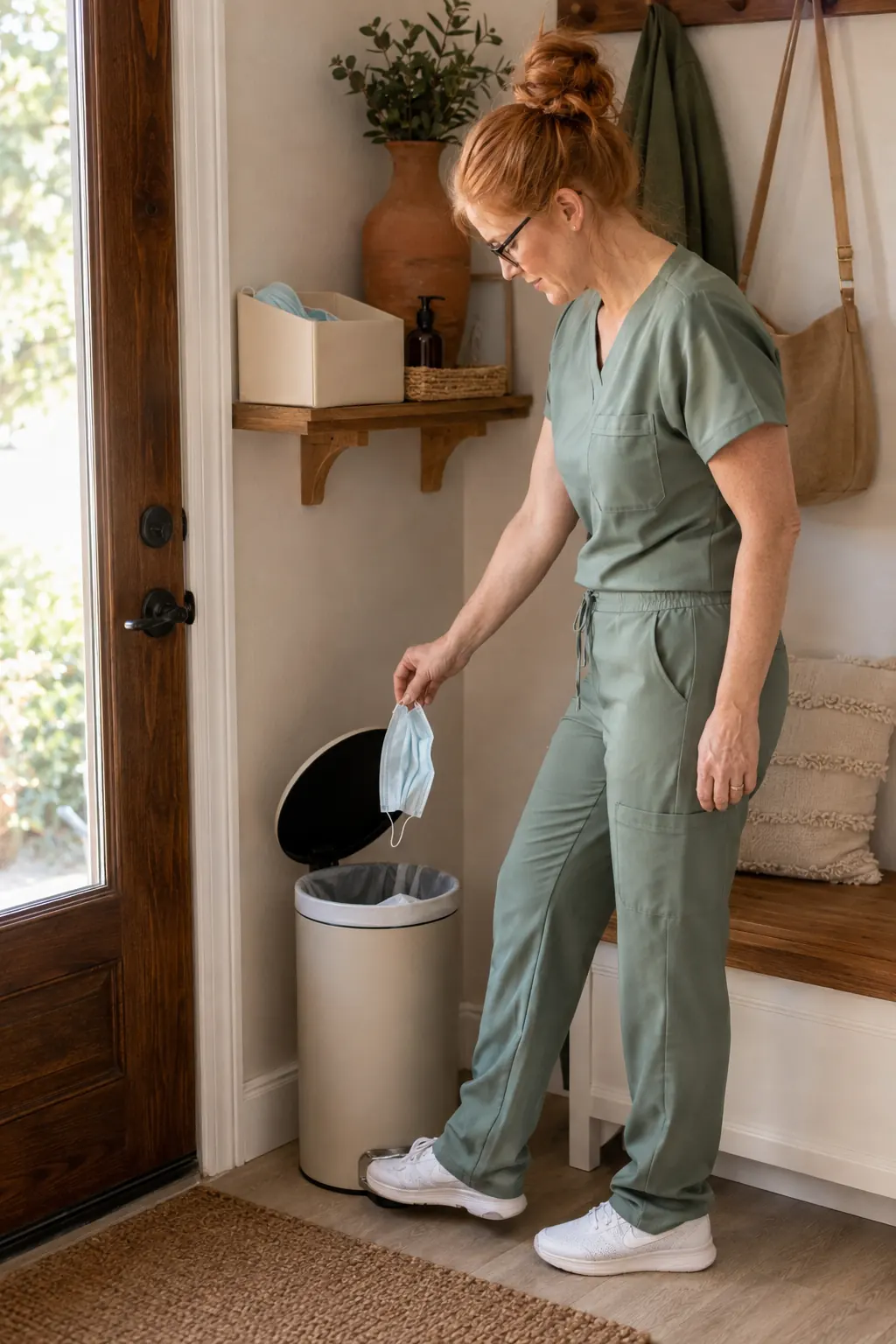
Used masks and disposable gear shouldn’t ride around in your pocket or land on the counter.
Set a small lidded bin at the entry just for them. A step-open lid means no touching, and a paper bag inside lifts out for easy disposal.
Keep a small stash of fresh masks on a shelf above, so you restock your bag on the way out. Used goes in, clean comes off, all at the door.Use a step-open lidded bin so hands stay off it.
Keep a small box of fresh masks on the shelf above to restock.
Do not leave used masks loose in your bag or pockets.
Do not toss them where the household bin gets handled by everyone.
13. Labeled Key and Badge Hooks So Nothing Vanishes Before an Early Shift
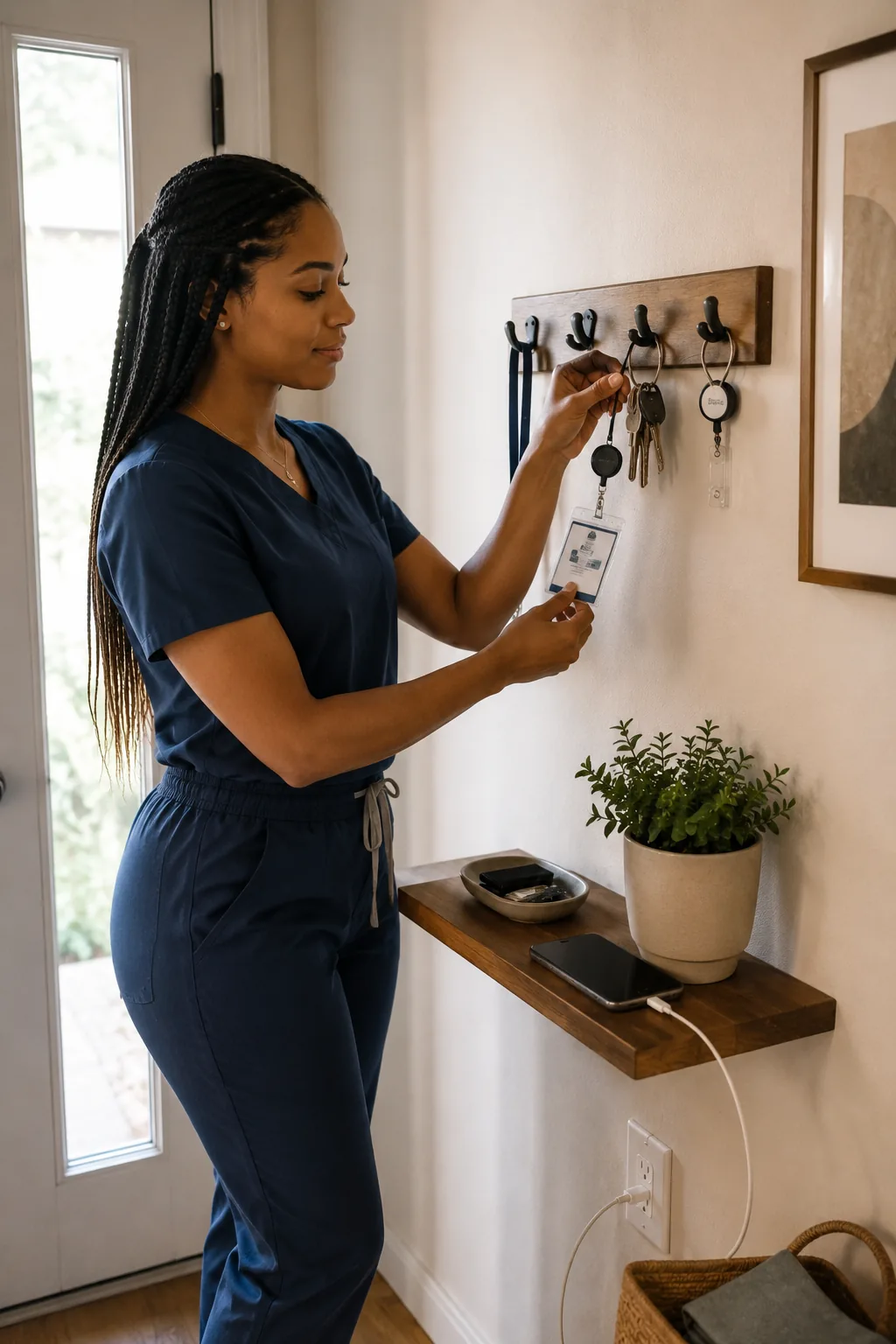
At 5 a.m. in the dark, a lost badge can nearly cost you the shift.
A row of dedicated hooks fixes the badge and keys in one exact spot. Give each its own labeled hook, so your hand finds them without the lights on.
When the badge lives on a hook instead of a pocket, it never rides through the wash or hides in yesterday’s bag.Give each hook one job
14. A Small Landing Dish for the Watch and Rings You Take Off First
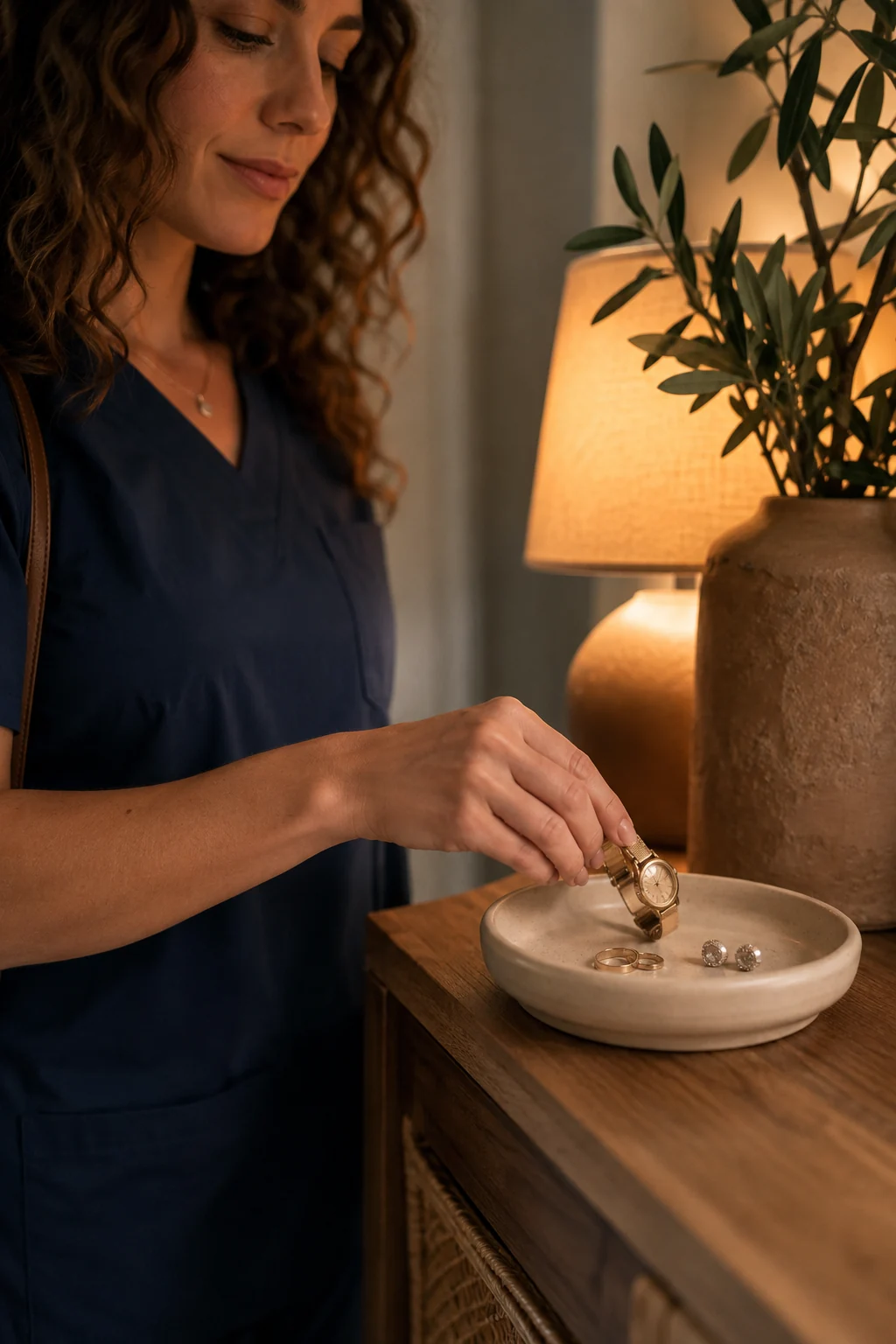
Off come the watch, the rings, and the stud earrings, usually somewhere they’ll get lost.
Give them one little dish by the door instead. A shallow tray on the console catches the small metal things you shed the moment you’re home.
It sits right where you already drop your keys, so taking off your watch becomes part of the same easy motion.💡 Quick Tip
Pick a dish with a raised lip and a smooth base so rings can’t skate off the edge. One near the door and one by your sink covers the two spots you actually take them off.
15. A Charging Shelf That Powers Your Phone and Watch Overnight
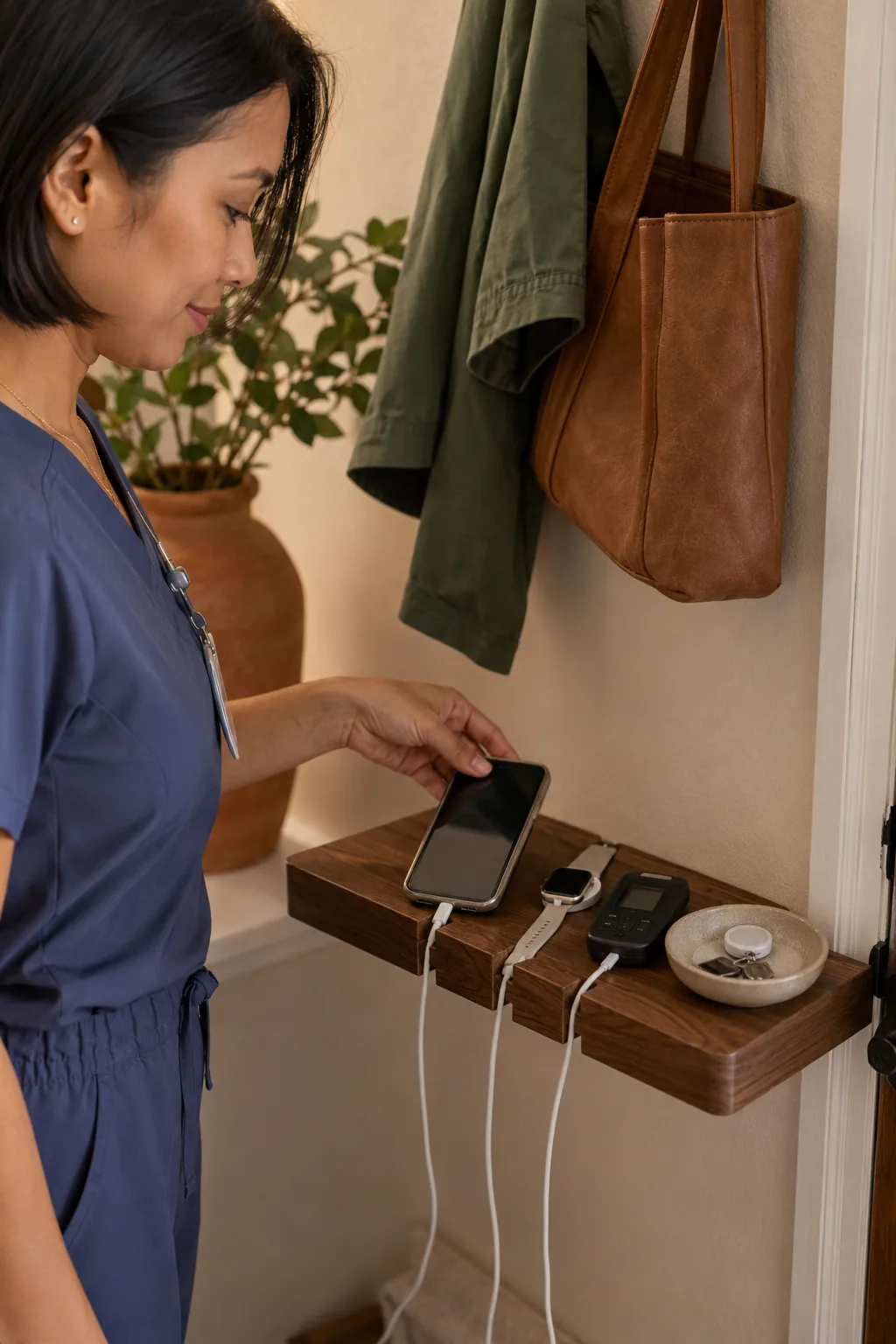
A dead phone before a shift is its own small emergency.
Set up one charging shelf by the door so devices land and power up the second you’re home. A shelf with a cord slot keeps your phone, smartwatch, and pager in one place.
Plug in on the way past, and everything you grab for the next shift is full and waiting where you left it.16. A Drawer Sideboard That Stages Tomorrow’s Clean Scrubs by the Door
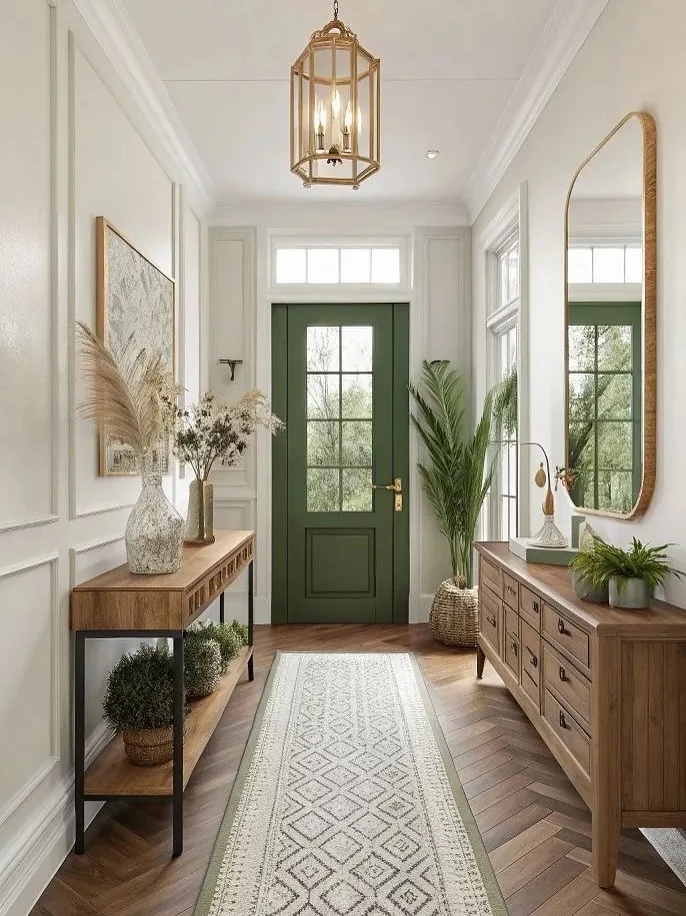
The worst scramble is the one at 5 a.m. when you can’t find a clean set.
A sideboard with real drawers heads that off the night before. This wood one sits near the door with closed storage below.
Give one drawer to a folded, ready set of scrubs and the small things you always forget: pens, a spare hair tie, a badge reel, wipes. Restock it the night before, so the morning is one open-and-go.Fold one full clean set of scrubs into the drawer on laundry day.
Add the easy-to-lose extras: pens, hair ties, a badge reel, wipes.
Restock it the night before, so the morning is one open-and-go.
17. A Wall-Mounted Mail Slot That Keeps Paper Off Every Surface
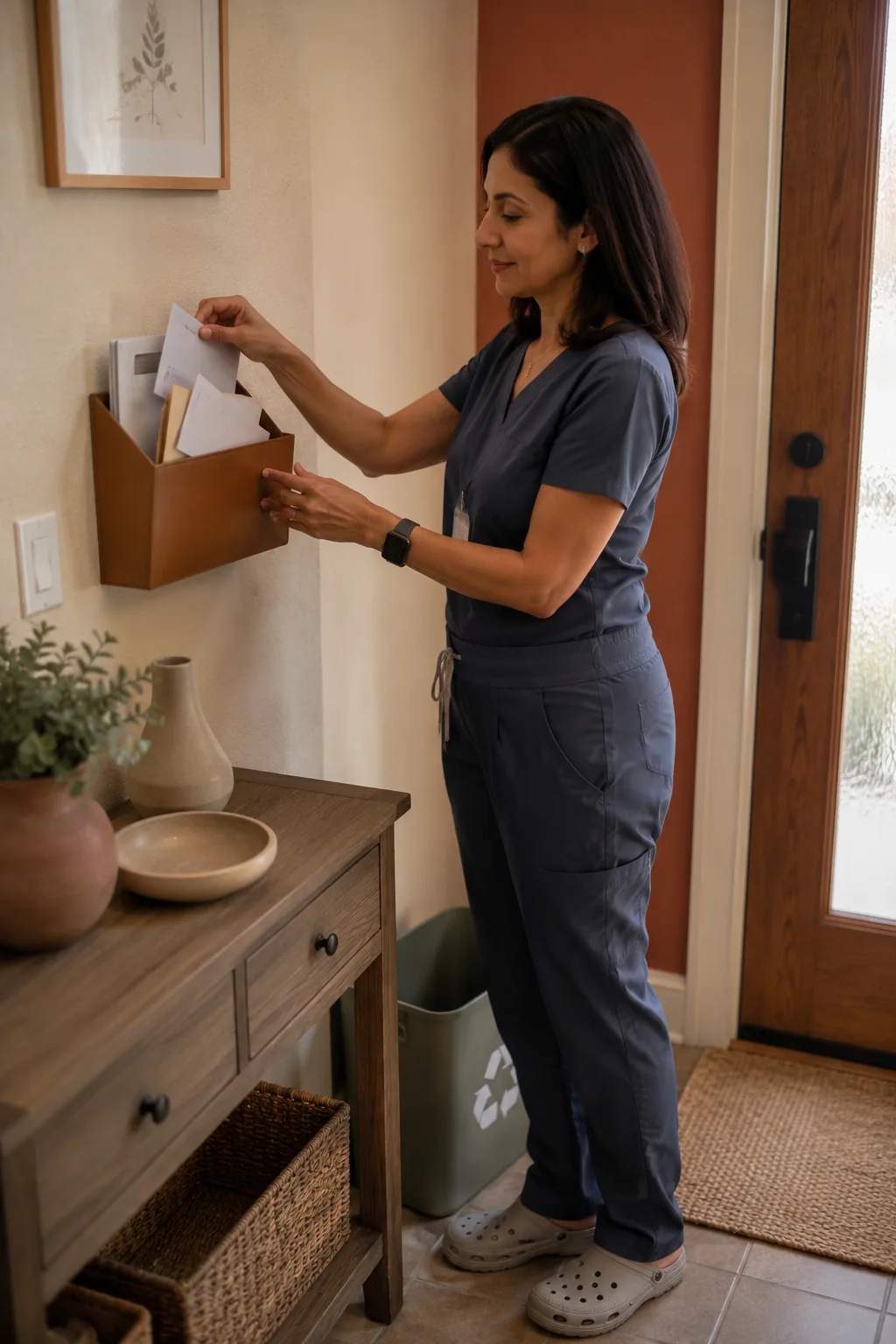
Mail is the clutter that breeds. One day it’s a couple of envelopes, then it’s the whole console.
Hang a slim wall file or mail slot by the door so paper has a place that isn’t a flat surface. Sort as you walk in: bills in the pocket, junk straight to recycling.
For a nurse juggling odd hours, a clear entry means one less thing nagging at you the moment you get home.- ▸A wall file pocket for bills and anything to deal with later
- ▸A small recycling bin below for junk, sorted on the spot
- ▸A clip or board for the one thing you truly can’t forget
18. A Whole Drop Zone in One Wall for a Small Apartment Entry
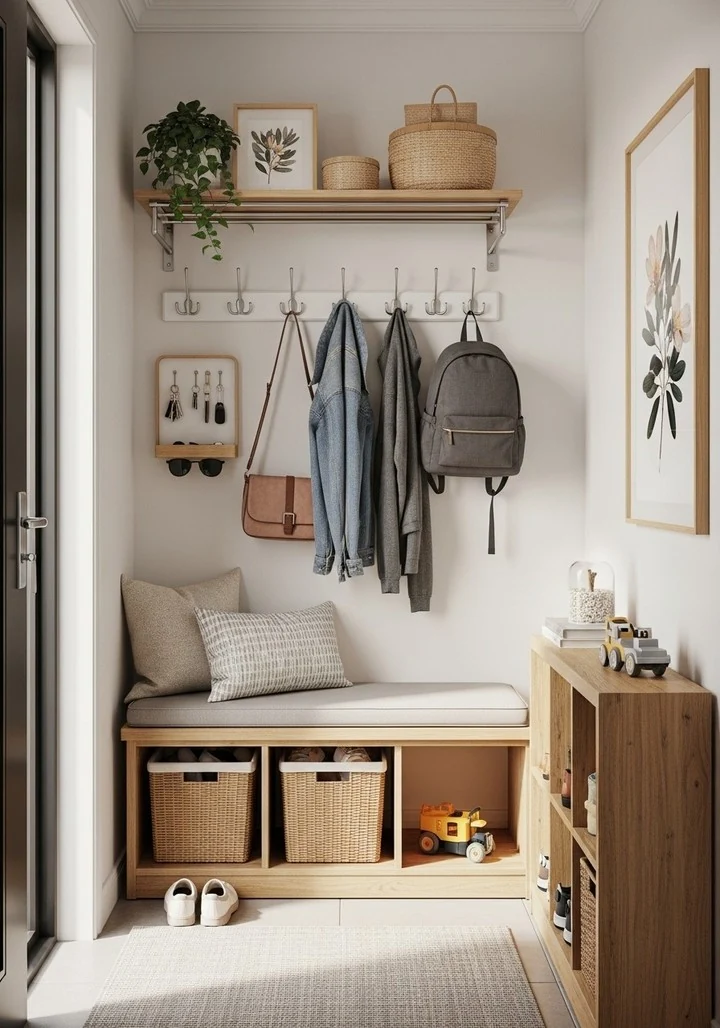
A small apartment doesn’t get a mudroom. It gets one clever wall.
This little nook stacks every job into a few feet. A hook rail takes the bag and jacket, and a tiny shelf holds keys so they never vanish before an early shift.
A padded bench with baskets below handles shoes and dump-it items. Nothing here asks for floor space you don’t have.19. Floating Shelves That Keep a Narrow Entry Clear From the Floor Up
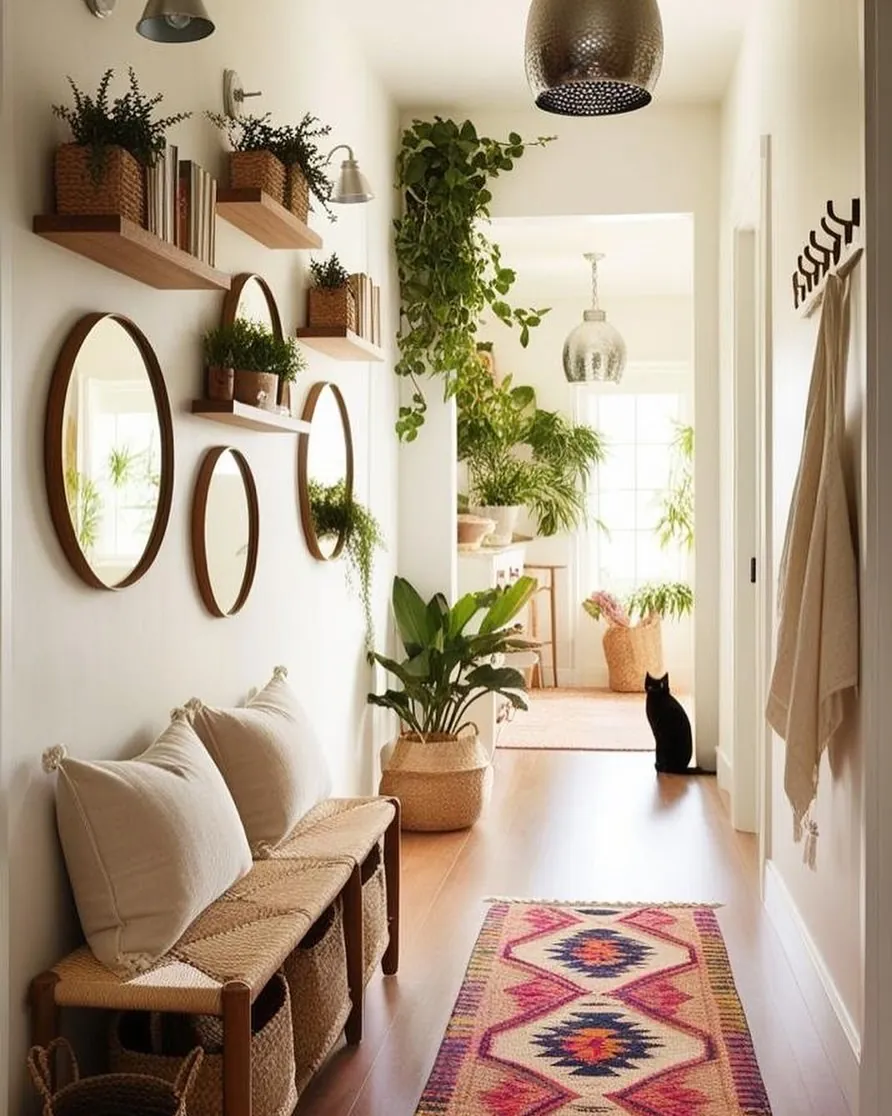
Narrow entries don’t leave room for furniture. So go up the wall instead.
These floating shelves hold baskets, keys, and a little green without stealing a step of floor. For a nurse home on tired legs, keeping things at hand height matters.
A hook nearby holds a soft robe, so changing out of scrubs can start the moment you’re through the door.- ▸Top shelf: a basket for mail and things you rarely touch
- ▸Eye level: keys, badge, and a small dish so nothing rolls away
- ▸A hook below: a robe or clean layer to change into first
20. A Fold-Down Wall Drop Zone for a Rental With Zero Floor Space
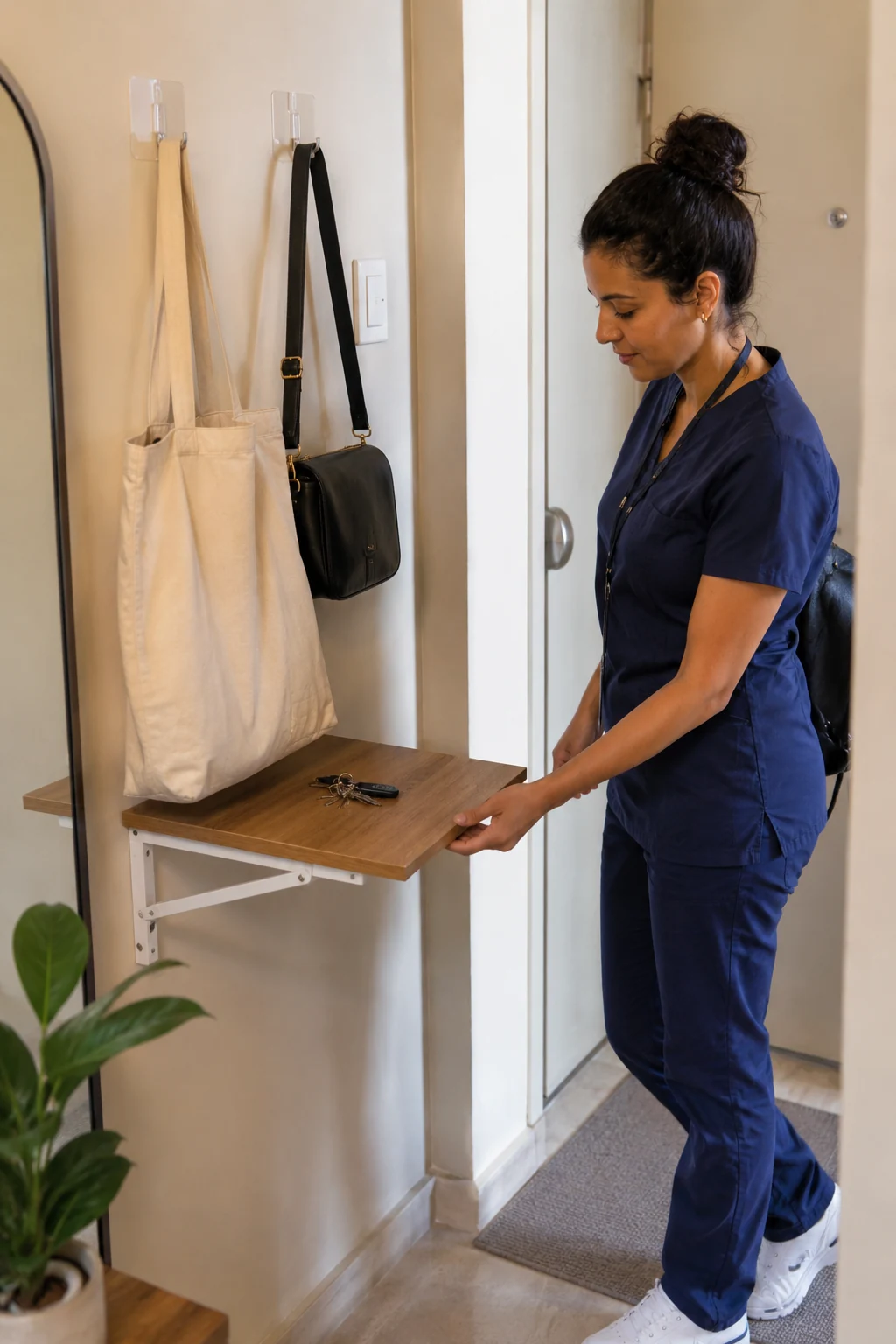
Some entries are so tight there’s no room for furniture at all. So put the drop zone on the wall and fold it away.
A wall-mounted fold-down shelf gives you a surface for keys and a bag drop, then tucks flat when you don’t need it.
Pair it with adhesive or over-the-door hooks that leave no holes, and a renter gets a full landing spot without touching the lease.A cramped rental entry with no room for a console. Keys and bag hit the floor by the door.
A fold-down shelf and damage-free hooks give you a full drop spot that vanishes when you head out.
21. A Row of Baskets Under a Bench That Sort the Shift by Job
Everything gets dropped somewhere, so let baskets decide where.
Under this bench, a row of woven baskets turns a dumping ground into a simple sorting system. Give each basket one job and the drop becomes automatic, no thinking required after a long shift.
The hooks above take the bag and coat, so nothing ever lands on the floor.- ▸Basket one: scrubs and socks headed straight to the wash
- ▸Basket two: clean, folded towels or a change of clothes
- ▸Basket three: the odds and ends every pocket collects
22. A Tucked-Away Pet Corner So the Dog Greeting Doesn’t Wreck the Reset
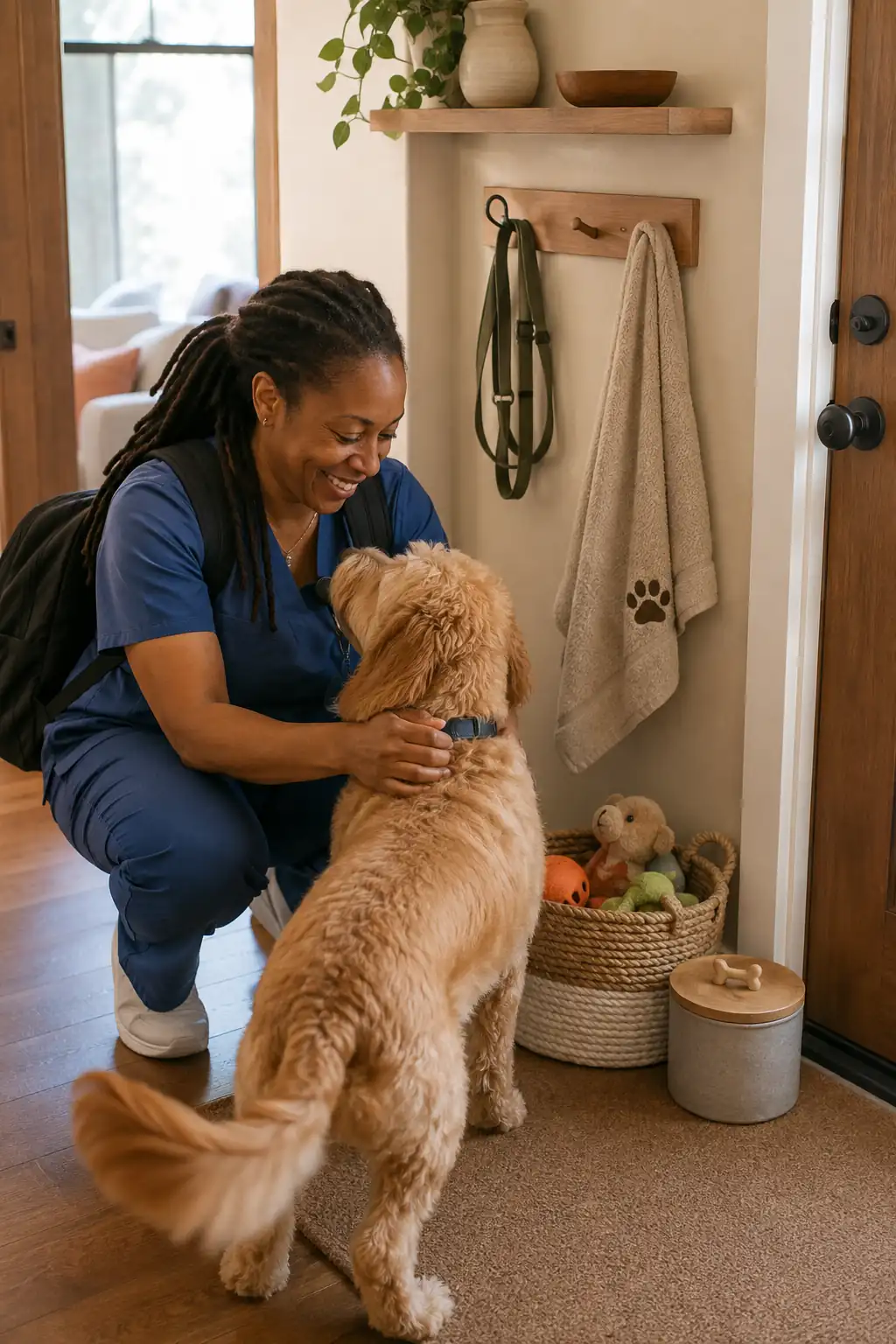
If a dog meets you at the door, the leash, treats, and muddy paws are part of coming home too.
Carve out a small pet corner in the entry so that chaos has a place. A hook for the leash, a basket for toys, a towel for wet or dirty paws.
For a nurse who just wants to change out of scrubs, having the dog’s gear contained here keeps the happy greeting from becoming one more mess to clean.A hook at the door for the leash and harness.
A basket for toys and a sealed tin of treats.
A hanging towel to wipe muddy paws before they hit the floor.
23. A Kids’ Cubby at Their Height So Nurse Parents Skip the After-Shift Pickup
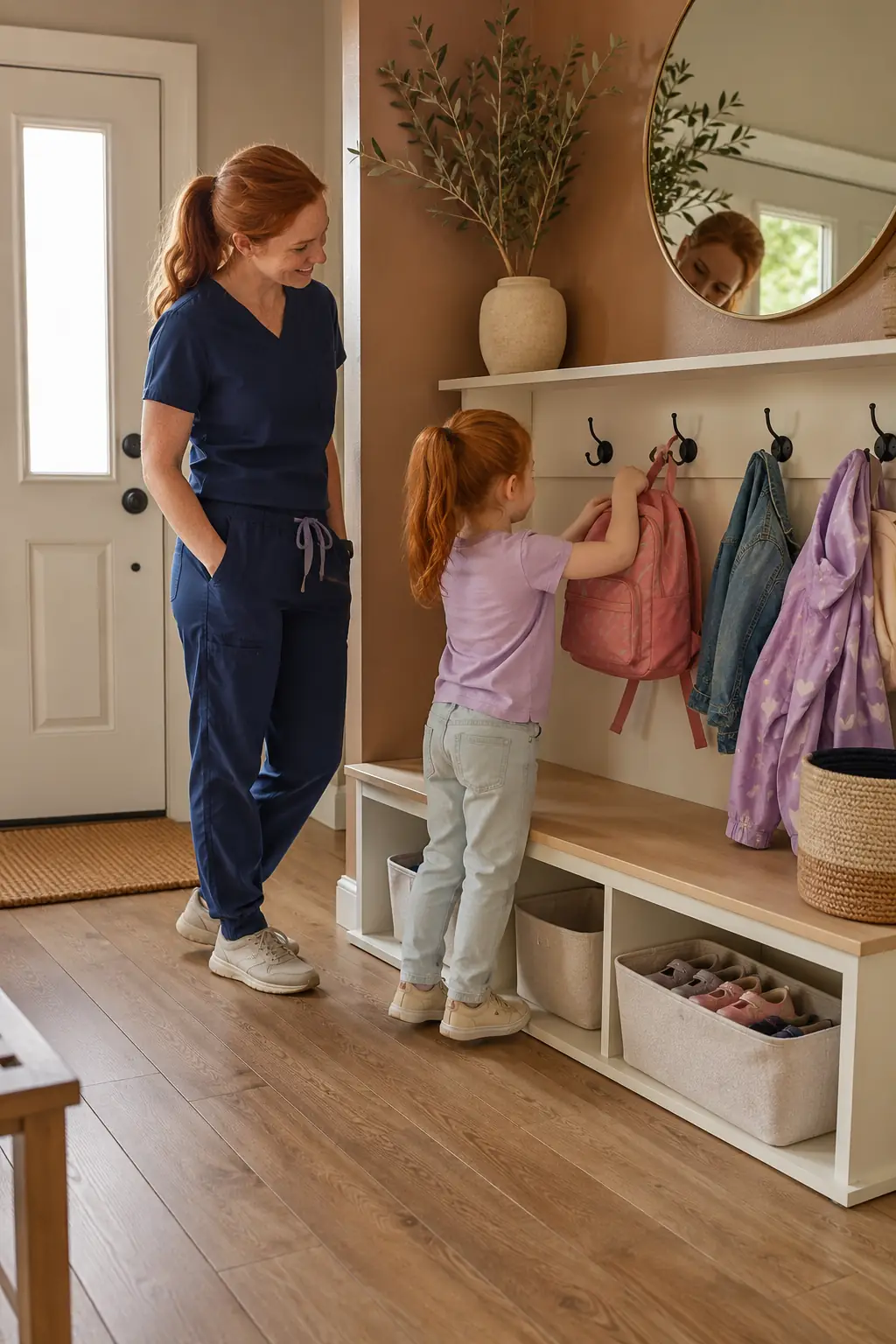
When you’re the parent walking in wiped out, the last thing you need is a floor of scattered kid gear.
Give the little ones their own low cubby by the door, set at their height. Low hooks for backpacks and coats, a bin for shoes, a basket for the odds and ends.
When the kids drop their own things in their own spot, a nurse parent comes home to a clear entry instead of a cleanup shift after the real one.📌 Good To Know
Mount the hooks low, around your child’s shoulder height, so using them is effortless. A cubby they can reach is one they’ll actually use, which means less picking up for you.
24. A Bright, Cheerful Corner That Resets a Heavy Shift at the Door
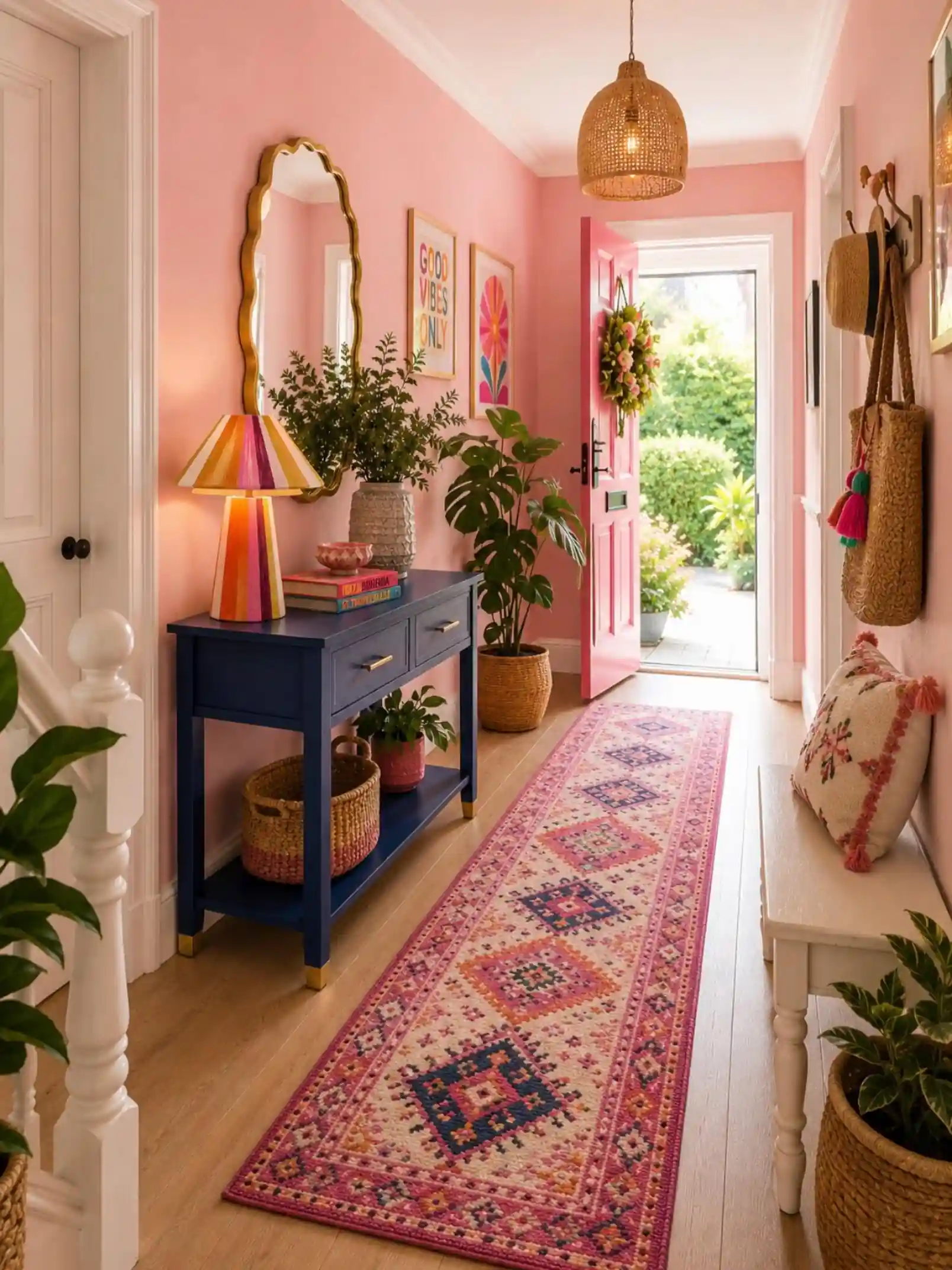
Some shifts leave you flat before you even reach the car. A door zone in warm, happy color can lift that first minute at home.
This pink hallway with its bold runner and striped lamp is loud on purpose, and it works.
The setup is practical under all the cheer. Hooks take your bag and jacket, and a woven basket on the console’s lower shelf swallows shoes in one drop.25. A Small Plant and Warm Light That Make the First Step In Feel Like Home
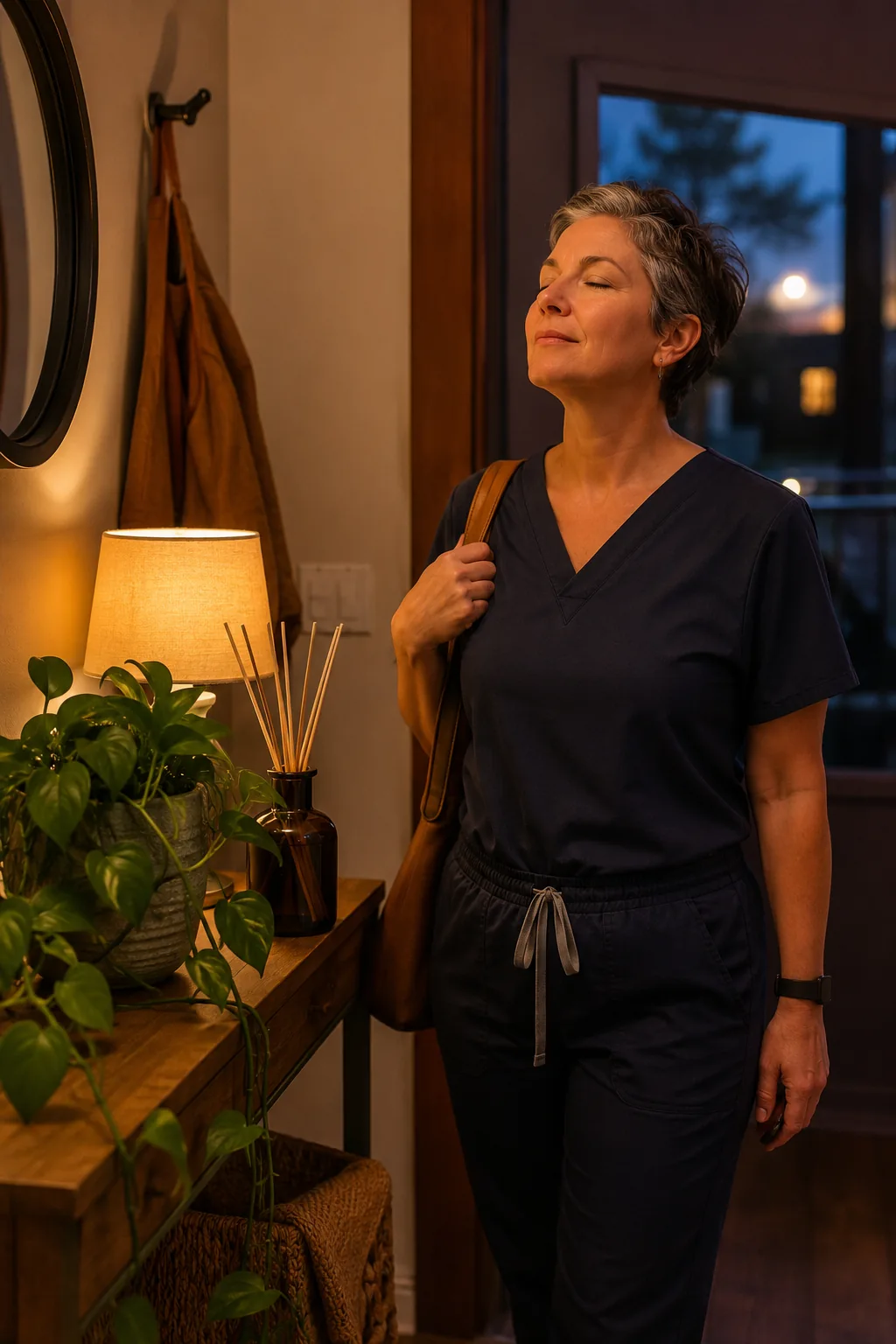
After a fluorescent-lit shift, the first thing you see at home should feel nothing like the unit.
Soften the entry with one living plant and a low, warm light on a timer. A trailing pothos brings something alive to the door, and a lamp on a timer means you never walk into a dark hallway.
Add a low-key scent, a reed diffuser or a candle you light once you’re settled, and the entry greets you instead of just storing your stuff.A drop zone stores your things, but a plant and a warm light greet you. That small welcome is what turns walking in from the end of a shift into the start of being home.
The Door Is Where the Shift Ends
Your entry does more work than any other few feet of your home. It’s a spot that catches the shift so you don’t carry it any further, even if you’re working with one small place.
Start with one piece. A hook for the bag, a tray for the badge, a bin for worn scrubs, and build from there as you learn what your walk-in actually needs.
The goal isn’t a magazine entryway. It’s a spot that catches the shift so you don’t carry it any further. Set it up once, keep the habit, and coming home gets easier every single time.
Build your drop zone in three steps
