

The dishes are from Tuesday. It is Friday.
There is a laundry pile on the chair that has been there long enough to have layers. The bathroom needs doing. The floors need doing. Everything needs doing, and you have three shifts starting tomorrow.
So you tell yourself you will handle it on your days off. And then your days off arrive and you spend six hours fixing a week of neglect instead of resting.
Figuring out how to keep a clean house as a nurse is not about cleaning harder on your days off. It is about never letting the house get bad enough to need a whole day.
The system is 15 minutes a day. Not a deep clean. Not a checklist with twenty boxes. Fifteen minutes, same time, every day, aimed at the three rooms that actually change how you feel when you walk in.
The reason it works with a 3×12 schedule is that it scales down on shift days instead of stopping. Five minutes on a work night keeps the baseline. Fifteen on a day off moves it forward. Nothing ever compounds into a crisis.
By the end of this guide you will have a routine that fits inside your real life, protects your days off, and stops the Friday dishes from being a Tuesday problem.
- A timer (your phone works)
- All-purpose spray, one bottle per room
- Microfiber cloths, at least six
- A small caddy or basket per bathroom
- Disinfecting wipes for the kitchen and bath
- A laundry hamper in every bedroom
- One catch-all basket for stray items
- Dish soap and a sink caddy
- A broom or stick vacuum kept accessible
- Trash bags stored inside the bin itself
- Pick the three rooms that actually affect your mood
- Set a single 15-minute timer every day
- Put cleaning supplies in every room you clean
- Clear surfaces before you clean anything
- Run one load of laundry start to finish
- Reset the kitchen before you sleep
- Do a 5-minute version on shift days
- Never go to bed with a full sink
- Add one deeper task on each day off
- Protect the reset so the system holds
1. Pick the Three Rooms That Actually Affect Your Mood

Not every room deserves your 15 minutes.
For most nurses it comes down to three: the kitchen, the bathroom you use, and whichever room you land in when you get home. Everything else can wait a week without changing how your house feels to live in.
Pick yours by asking a simple question. Walking into which room makes the day feel worse?
That is your list. Three rooms, no more. A guest bedroom nobody enters does not make the cut, no matter how much the closed door bothers you.
2. Set a Single 15-Minute Timer Every Day
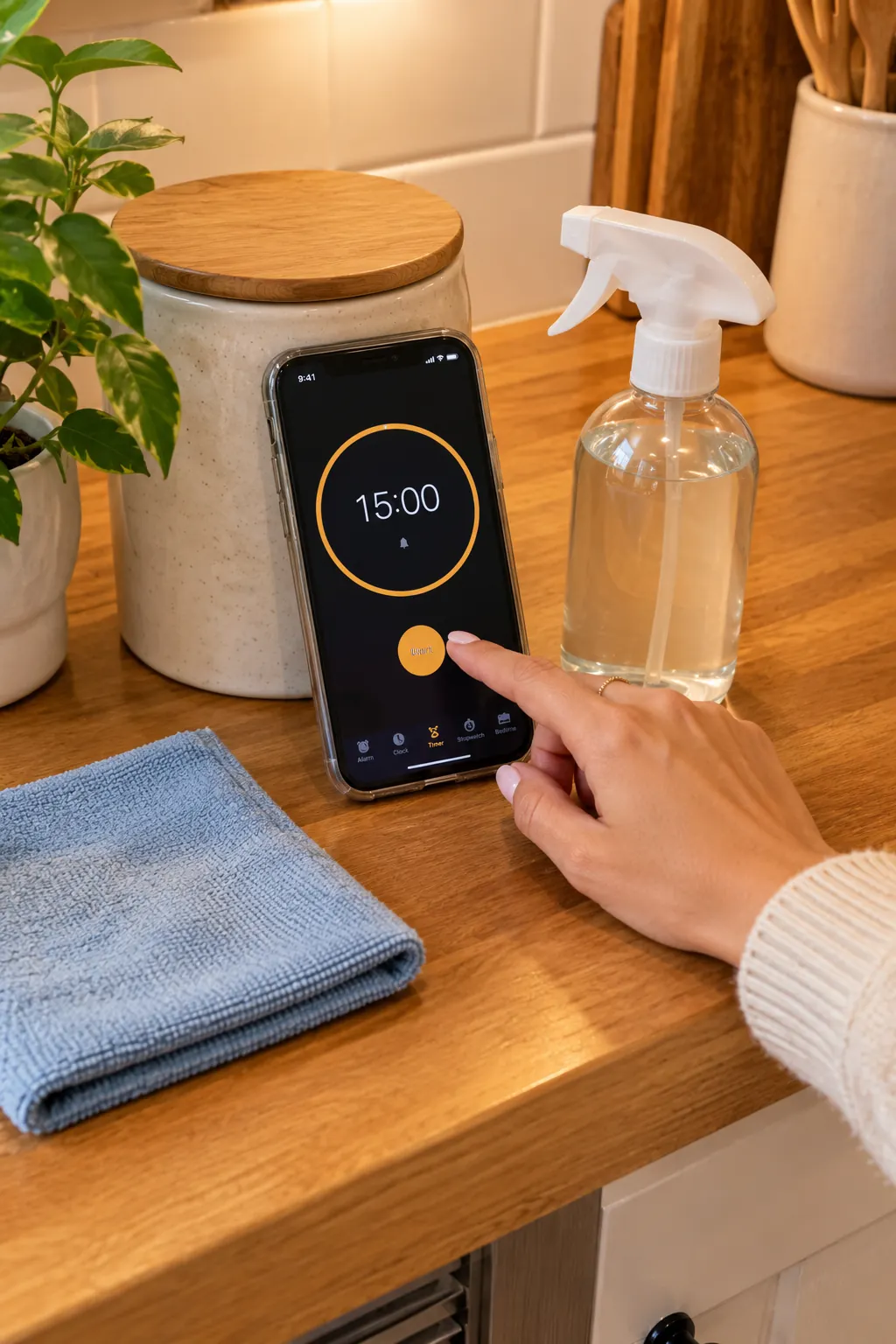
The timer is not a suggestion. It is the entire structure.
Without it, cleaning either stops after four minutes or expands into an hour you did not have. Fifteen minutes, set on your phone, at roughly the same time daily.
Pick a time attached to something you already do. After dinner. Before your shower. Right when you get home and change. Anchoring it to an existing habit is what makes it survive week three, when motivation is gone.
When it rings, you stop. Even mid-task. Especially mid-task.
One laundry load moved forward
Dishes into the dishwasher or washed
Floor of one room swept or vacuumed
3. Put Cleaning Supplies in Every Room You Clean
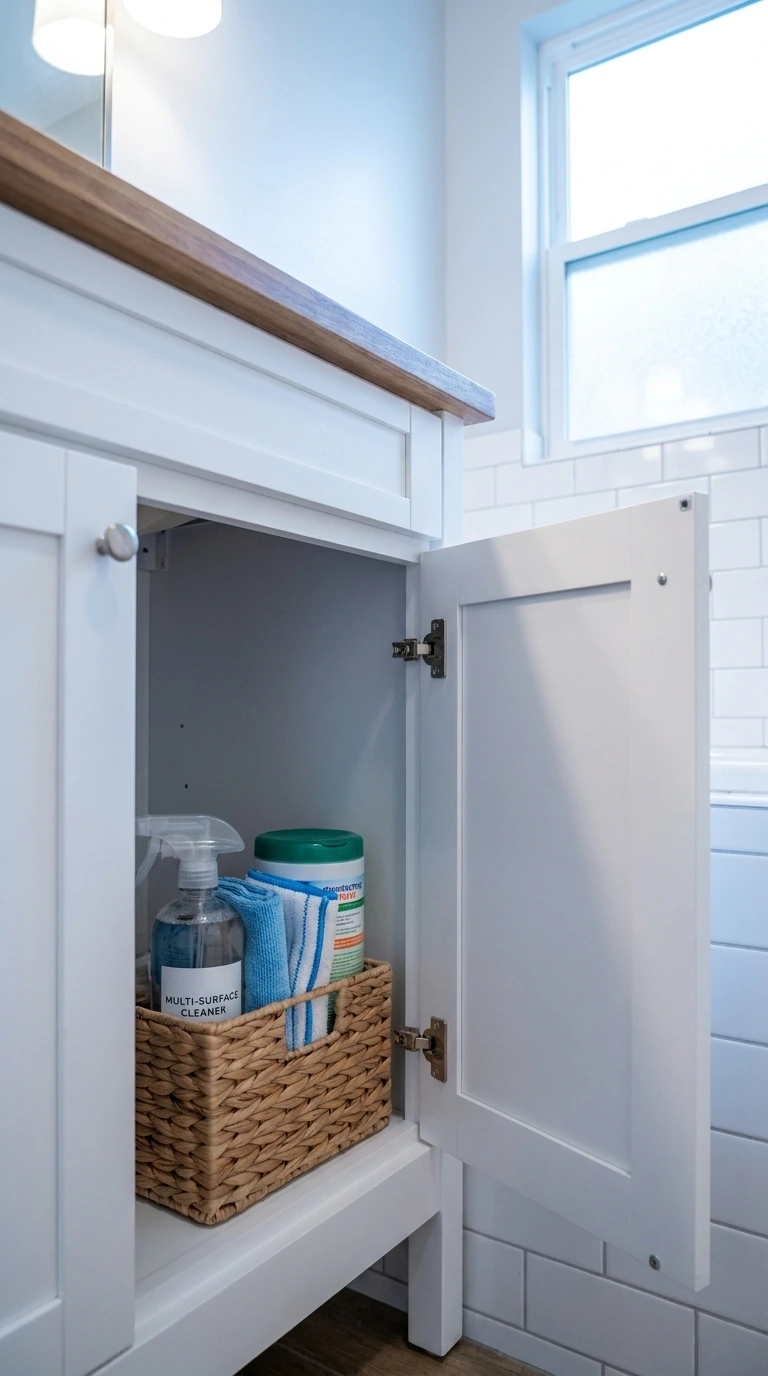
Walking to the closet for a spray bottle is where 15-minute cleans die.
You lose two minutes each way, and worse, you break the momentum. Half the time you end up doing something else entirely on the way back.
So duplicate the supplies. It costs about twenty dollars total:
- A spray bottle and two cloths under each bathroom sink
- Spray, cloths, and wipes in a kitchen cabinet
- A small basket in the living room with a duster and cloth
- Trash bags stored at the bottom of each bin, under the current liner
The last one sounds minor and saves more time than the rest combined. You pull the full bag and the next liner is already there.
4. Clear Surfaces Before You Clean Anything

A wiped counter with six things on it still reads as messy. An empty counter with a bit of dust reads as clean.
Surfaces are what your eye registers, so they come first every time.
Grab the catch-all basket and do a fast lap of the room. Anything that does not live there goes in the basket. You are not putting things away yet, you are getting them off the surface. That distinction is what keeps this under three minutes instead of turning into a twenty-minute reorganization.
Then wipe. Now the room is actually clean rather than clean underneath clutter.
5. Run One Load of Laundry Start to Finish

One load. Washed, dried, and out of the machine the same day.
Laundry is the task that quietly eats a whole day off, and it does that because half-finished loads pile up. A basket of clean unfolded clothes is still laundry you have not done.
Start it first, before the timer, so it runs while you clean. Move it to the dryer during your 15 minutes. Take it out when the dryer stops, even if you only dump it on the bed for later.
Scrubs get their own separate load on your last day off, washed the right way so they hold up, then straight into your closet return slot instead of a chair. A laundry setup that keeps everything in one place makes this the fastest part of the 15 minutes.
6. Reset the Kitchen Before You Sleep
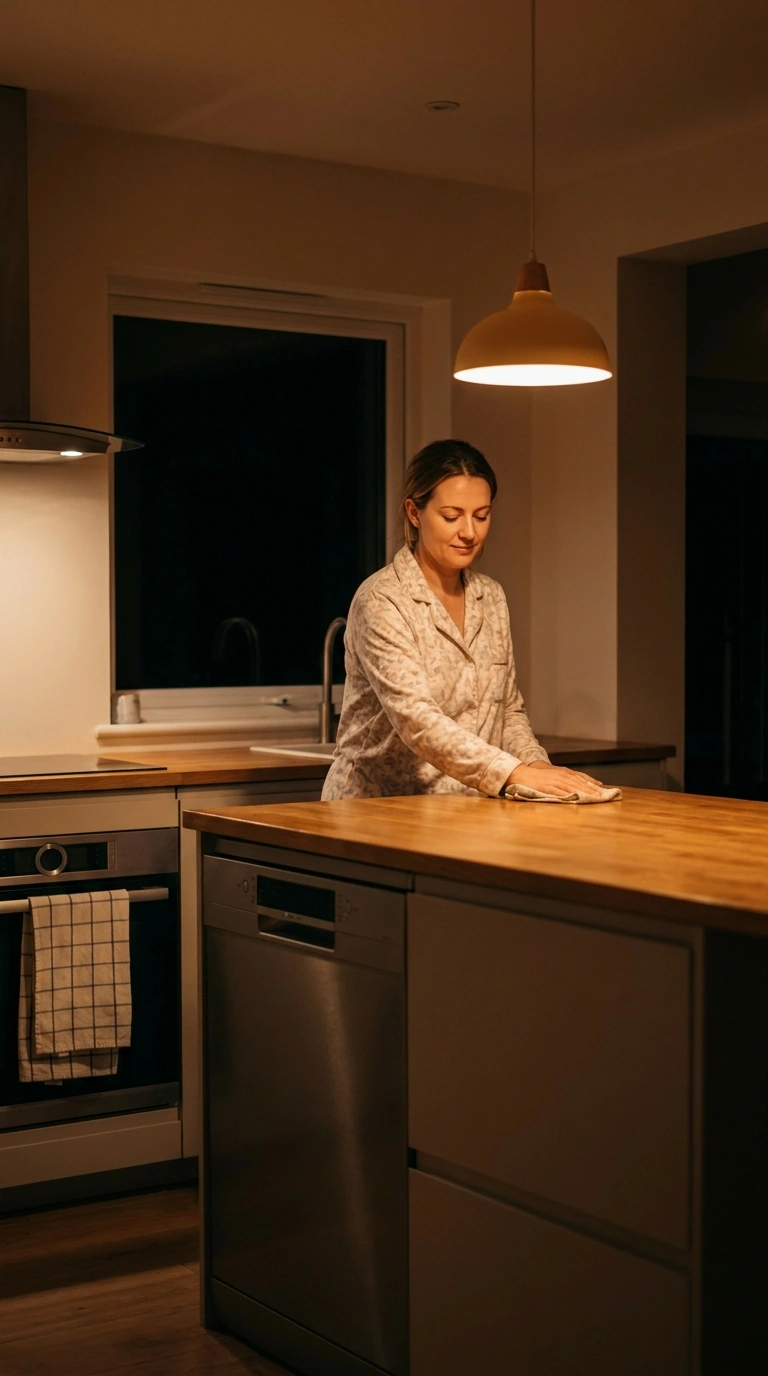
The kitchen is the room that sets the tone for tomorrow morning.
Five minutes, every night, no exceptions and no negotiating with yourself about it:
- Dishes into the dishwasher or washed
- Counters wiped down
- Stovetop quickly cleaned
- One thing put back where it belongs
Waking up to a clean kitchen is worth more than the five minutes costs. Waking up to Tuesday’s dishes makes the whole day feel like you are already behind, and that feeling follows you into your shift.
7. Do a 5-Minute Version on Shift Days
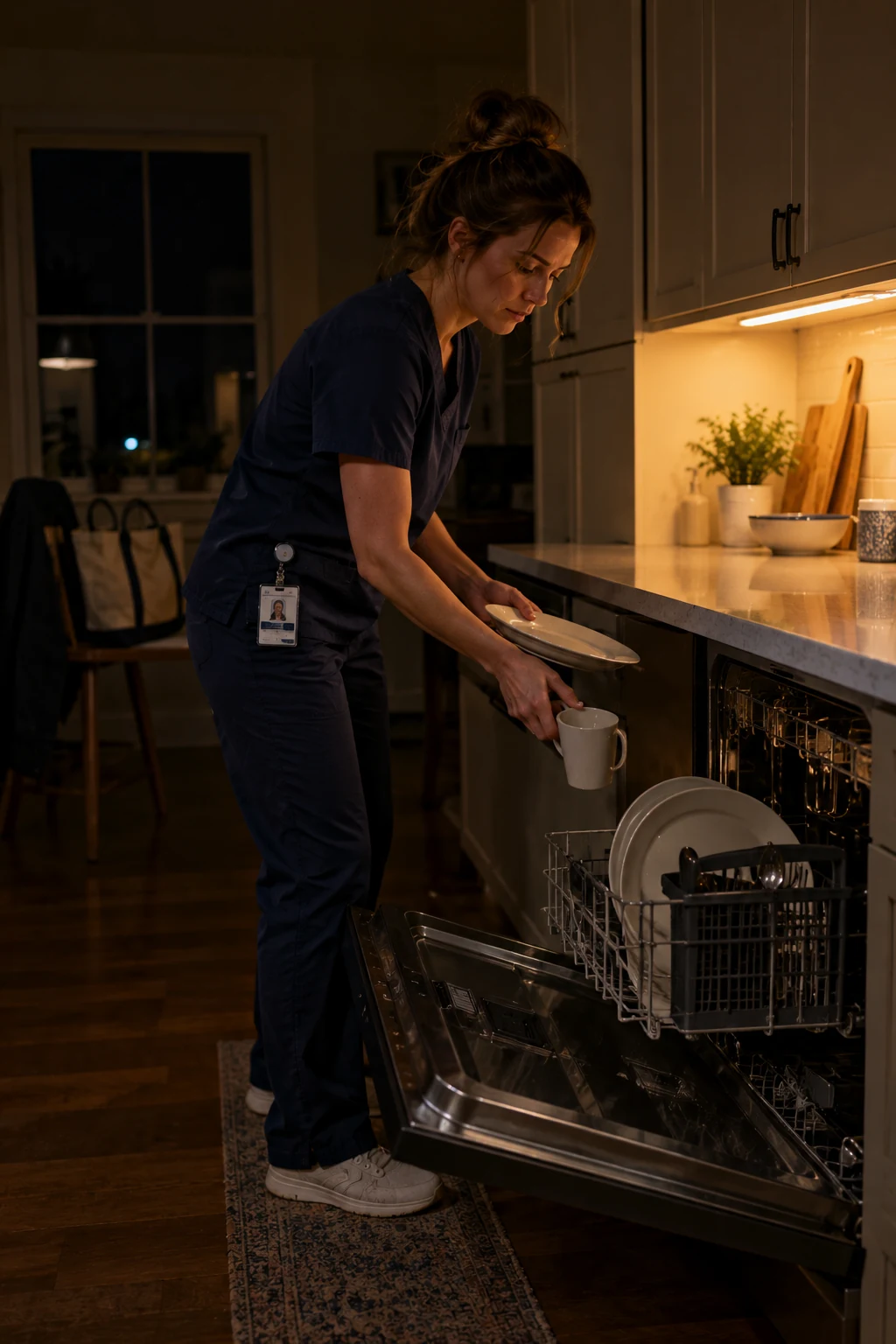
Fifteen minutes after a twelve-hour shift is not happening. Pretending otherwise is how systems get abandoned entirely.
So shift days get a smaller version. Five minutes, and only the things that stop rot from setting in:
- Dishes from today into the dishwasher
- Kitchen counter wiped
- Anything you dropped on the floor picked up
That is it. No laundry. No bathroom. No floors.
The point is not progress on shift days. The point is that you do not fall backward, so your next day off starts from neutral instead of from a disaster.
On night shift the clock shifts but the rule holds, and pairing it with a solid wind-down routine means the five minutes happens before you crash rather than never.
8. Never Go to Bed With a Full Sink
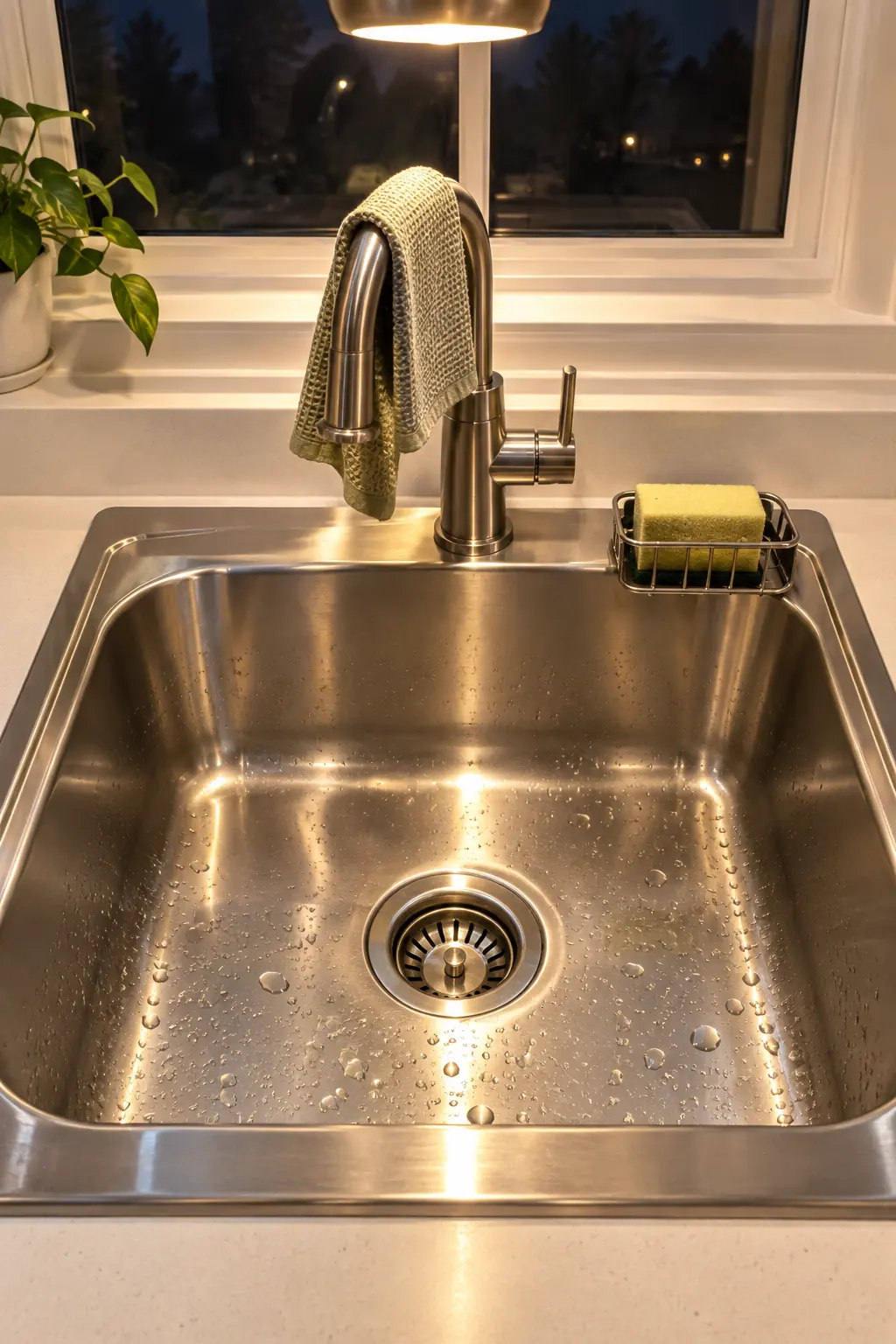
One rule that survives everything.
Even at 8pm after a brutal shift, even when the five-minute version feels like too much, the sink gets emptied. Dishes in the dishwasher or washed and in the rack.
A full sink in the morning changes the entire shape of your day. It is the first thing you see, it makes the kitchen unusable, and it makes every other mess feel bigger than it is.
9. Add One Deeper Task on Each Day Off

Days off are where the house moves forward instead of holding steady.
Do your regular 15 minutes, then add one deeper task. Not three. One.
Rotate through a list so nothing goes more than a month:
- Bathroom deep clean, including the shower
- Vacuum under the furniture in one room
- Wipe out the fridge and toss expired food
- Change the sheets and wash them
- Clean the microwave and stovetop properly
Four days off means four deeper tasks per stretch. Over a month that covers everything a house actually needs, and none of it ate a day.
Pin this to the errand day in your split rather than your recovery day. Day One is for sleep, and a proper reset day has a different job than a cleaning day.
10. Keep a Clean House as a Nurse by Protecting the Reset

The system survives on one thing: the daily 15 minutes happening even when it does not feel necessary.
It will feel unnecessary. There will be days the house looks fine and skipping seems harmless. Those are the exact days that matter, because the system is preventing the mess rather than responding to it.
Two things protect it. Keep the timer anchored to a habit you already have. And keep the supplies where you use them so starting costs nothing.
Your come-home routine does a lot of the work here without counting as cleaning. Shoes at the door, scrubs into the hamper, gear in one spot. If your entryway and bathroom are set up well, half the daily mess never happens in the first place.
In a smaller place the whole thing moves faster, though clutter shows up sooner too, which is where small space systems earn their keep.
Questions That Come Up About This
When the System Starts Slipping
Move one laundry load
Dishes and counters
Sweep one floor
Plus one deeper task
Kitchen counter wiped
Floor items picked up
Sink empty before bed
Nothing else
Fifteen Minutes, Broken Down
Fifteen minutes is the whole thing. Not a trick, not a hack, a small amount of consistent time pointed at three rooms.
Knowing how to keep a clean house as a nurse comes down to accepting that the house will never be spotless and deciding that it does not need to be. It needs to never get bad.
Set the timer tonight, wherever the house currently stands. Tomorrow it will be slightly better, and the day after that slightly better again.
Pin this so the card is there when the timer goes off.
