
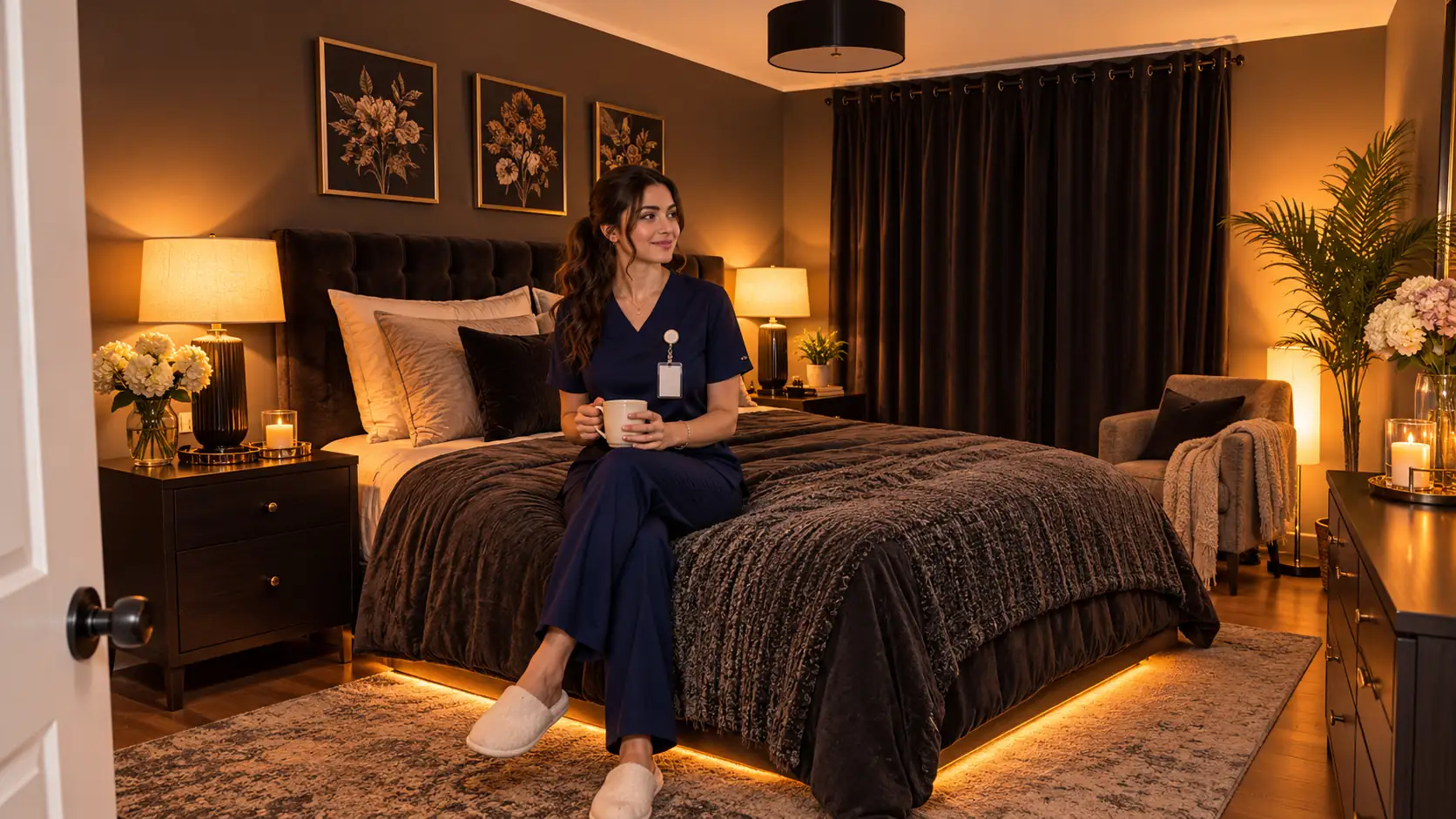
You get home at 8 a.m., flip the switch, and the ceiling light hits you like a code alarm. Now you are wide awake, and you have to fall asleep in an hour.
Overhead lights are made for people who sleep at night. For night shift nurses, they are too bright for winding down and too harsh for a 3 p.m. wake-up. Most of us end up stumbling around in the dark instead.
These 20 bedroom lighting ideas for nurses give you a better option for every part of your day. You will find lamps and sconces that glow instead of glare, motion night lights for noon bathroom trips, and smart bulbs timed to your shift. There is also a sunrise light for your afternoon alarm and a bright corner to wake your body up before work. Many are renter-friendly, and most cost less than a new set of scrubs.
Start with the quick tool below to find the right light for each moment of your day.
Start Here: Which Light, When?
SMALL TOOL
Which Light, When?
Tap the moment you need light for
3 P.M.Waking up for a shift+
5 P.M.Getting ready for work+
8 A.M.Coming home and winding down+
NOONBathroom trip mid-sleep+
IN BEDReading before sleep+
1. Swap the Ceiling Light for Two Bedside Lamps
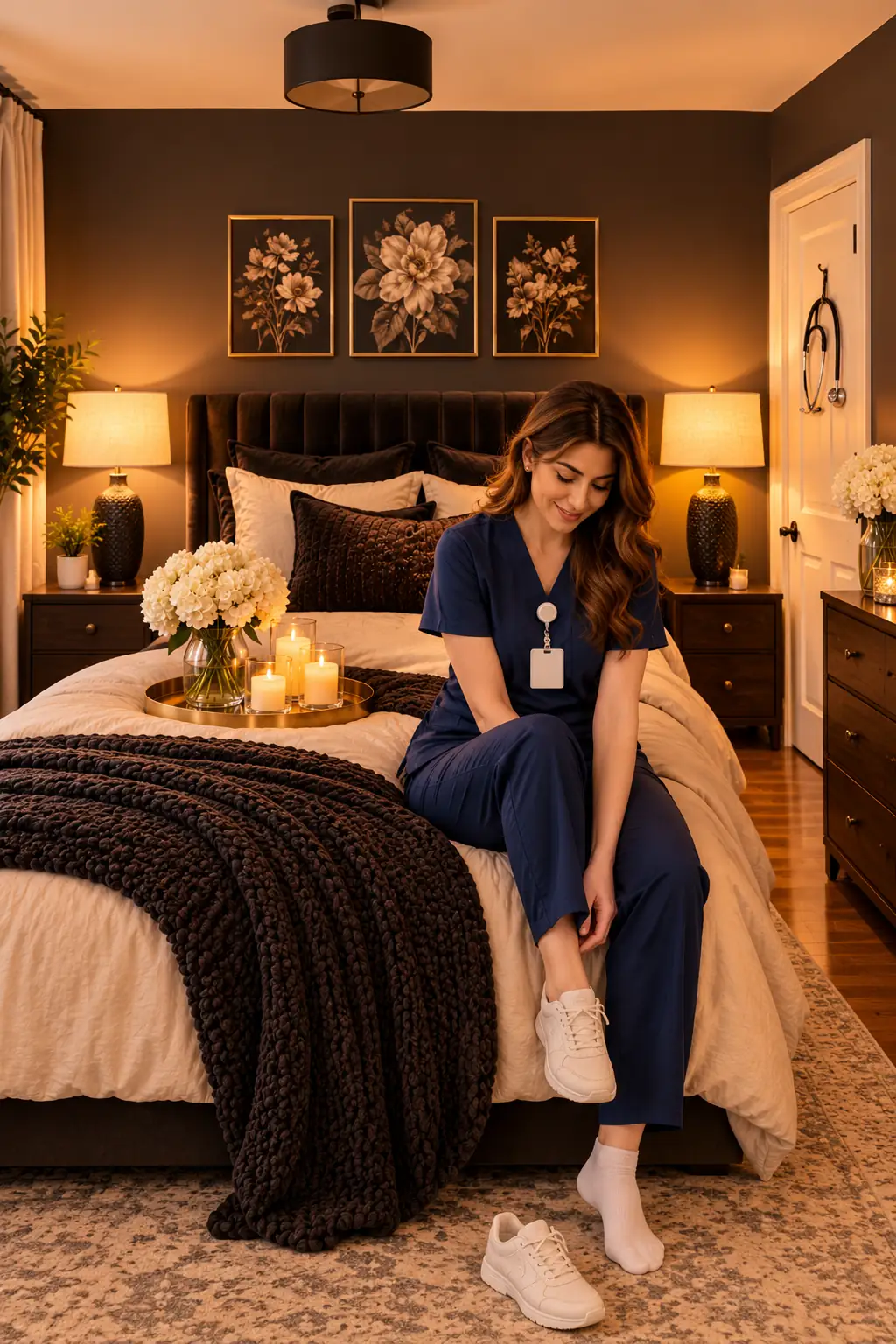
The fastest fix is also the cheapest one. Leave the overhead light off for good, and put a matching lamp on each side of the bed.
Size them so the light falls where you need it:
| Check | Aim for |
|---|---|
| Shade height | Bottom of the shade near your chin when you sit up in bed |
| Shade type | Fabric or linen, not clear glass |
| Bulb | Warm white, 2700K or lower |
| Switch | Within reach without sitting up |
Two lamps spread a soft glow across the room. One lamp alone leaves a dark side where you stub your toe. These nightstand setup ideas for night shift nurses show what else belongs next to them.
Best moment: winding down after your shift.
2. Hang Plug-In Wall Sconces Instead of Hardwiring
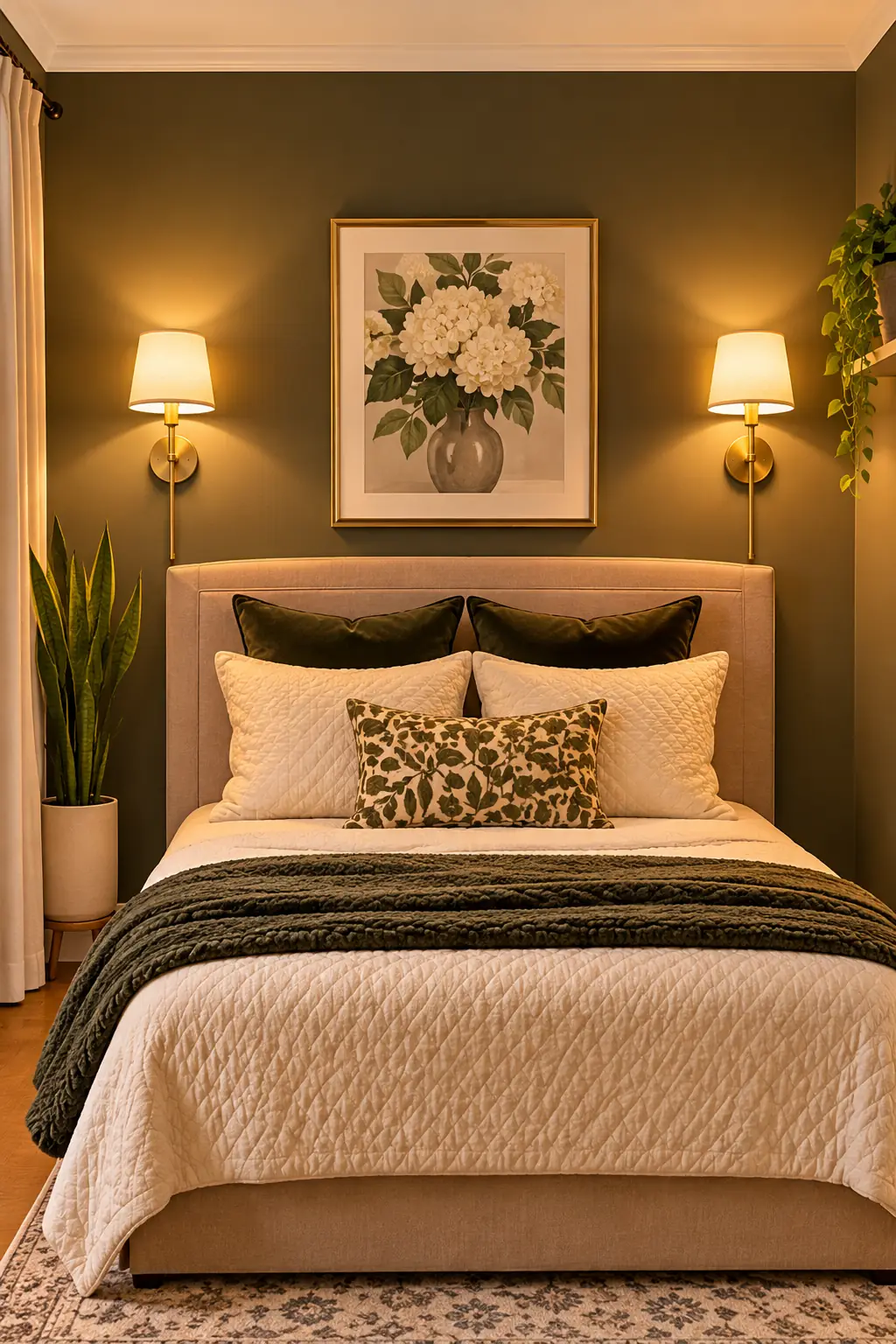
No nightstand room? Wall sconces free up surface space and look built-in, even in a rental. Plug-in versions need no electrician.
To make them look finished:
- Mount them about 30 inches above the top of your mattress
- Run the cord straight down inside a paintable cord cover
- Paint the cover to match the wall so it disappears
- Pick sconces with an on/off switch on the cord or base
They work well in small bedrooms where every inch counts, like the layouts in these small space ideas for nurses.
Best moment: reading in bed without a lamp taking up the nightstand.
Cord covers painted to match the wall
3. Add Swing-Arm Lamps for Light You Can Aim
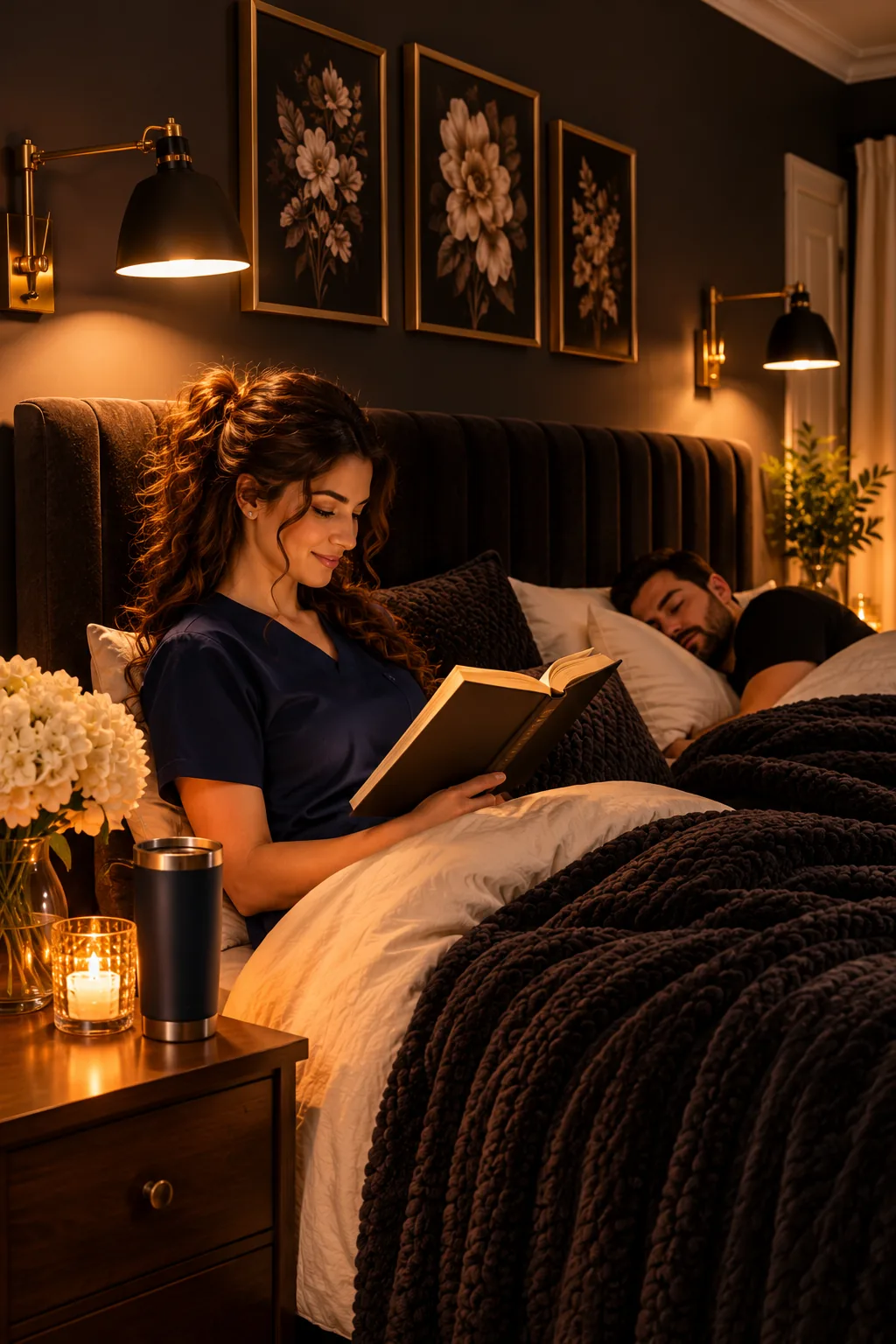
If you share a bed with someone on a different schedule, light that points straight at your book and nowhere else changes everything.
How they help. A swing-arm lamp pulls out over your side of the bed and turns to aim the light down. Your partner stays in the dark.
Where to mount. On the wall beside the headboard, or on a clamp attached to the headboard if you rent.
What to choose. A small shade that faces down, an arm that moves without wobbling, and a dimmable warm bulb.
For more ways to share a room on opposite shifts, see these bedroom ideas for nurse couples who work opposite shifts.
Best moment: reading while your partner sleeps.
4. Bounce Light Off the Ceiling With a Corner Floor Lamp
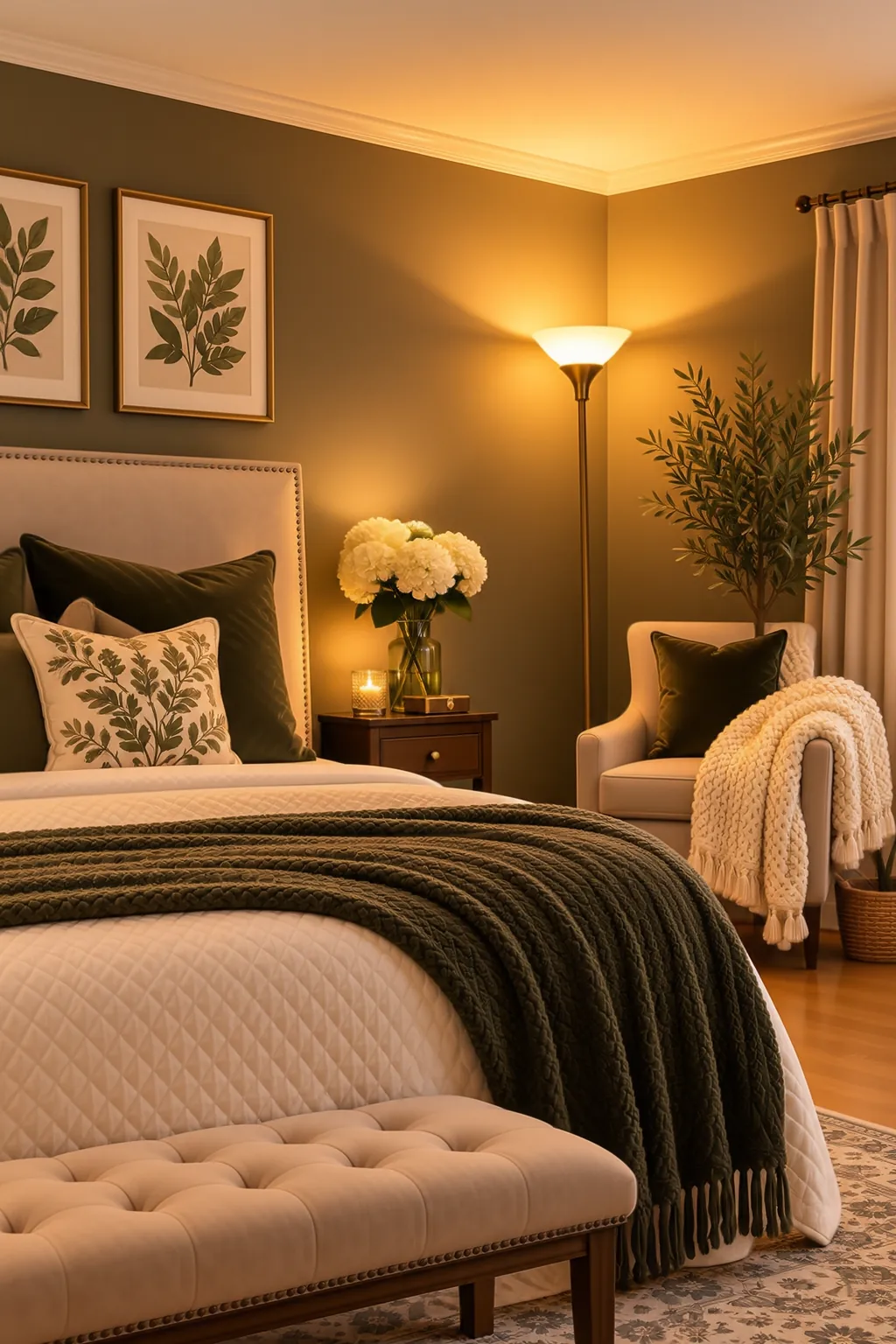
An uplight in the corner lights the room without anyone looking at a bulb. Light hits the ceiling and spreads out soft and even, the opposite of a harsh overhead fixture.
To set one up:
- Pick the darkest corner of the room.
- Use a torchiere-style floor lamp that points up.
- Put a warm bulb in it, and a dimmer if the lamp does not have one.
- Turn it on when you wake, so the room feels like evening, not noon.
A light-colored ceiling bounces the most light. If your ceiling is painted dark, an uplight will glow more gently, which still works well for winding down.
Best moment: waking up at 3 p.m. when you want the room bright but not harsh.
Light up, never in your eyes
5. Choose Fabric Shades That Soften Every Bulb
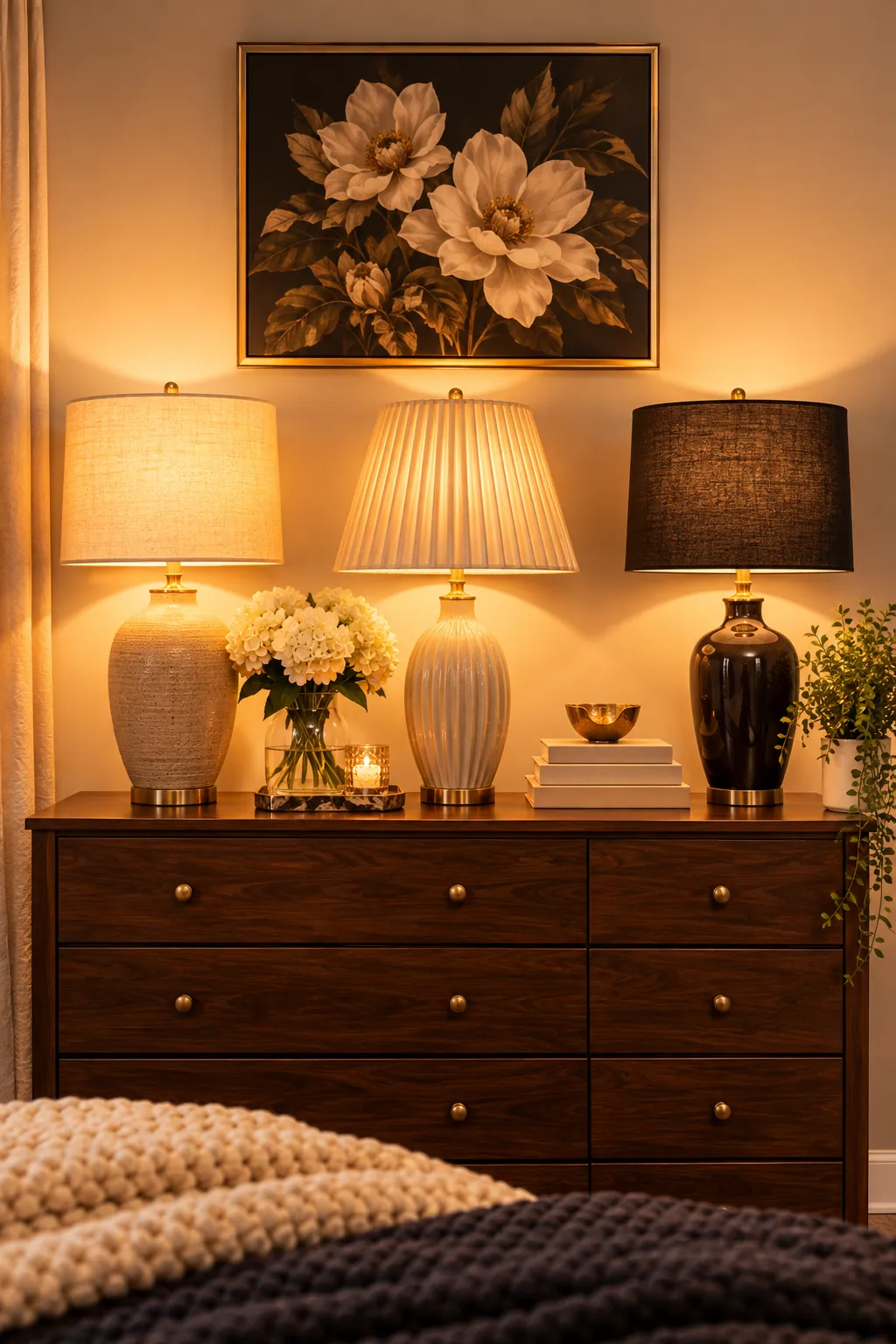
The shade decides how a lamp feels. The same bulb can look cozy or harsh depending on what it shines through.
| Shade | How the light looks | Good for |
|---|---|---|
| Linen in cream or oatmeal | Soft, warm glow | Bedside lamps |
| Pleated fabric | Even, gentle light | Reading corners |
| Dark fabric drum | Light only up and down | Moody rooms |
| Rice paper | Very soft, diffused | Floor lamps |
| Clear glass | Bare and bright | Skip it in the bedroom |
Already own lamps you like? A new shade is a cheap fix. Bring the old shade to the store, or check the fitter type, so the new one sits right.
Best moment: any time the lamp is on, since every bulb looks better behind fabric.
LINEN
PLEATED
DARK DRUM
CLEAR GLASS
6. Use a Clip-On Reading Light With an Amber Setting
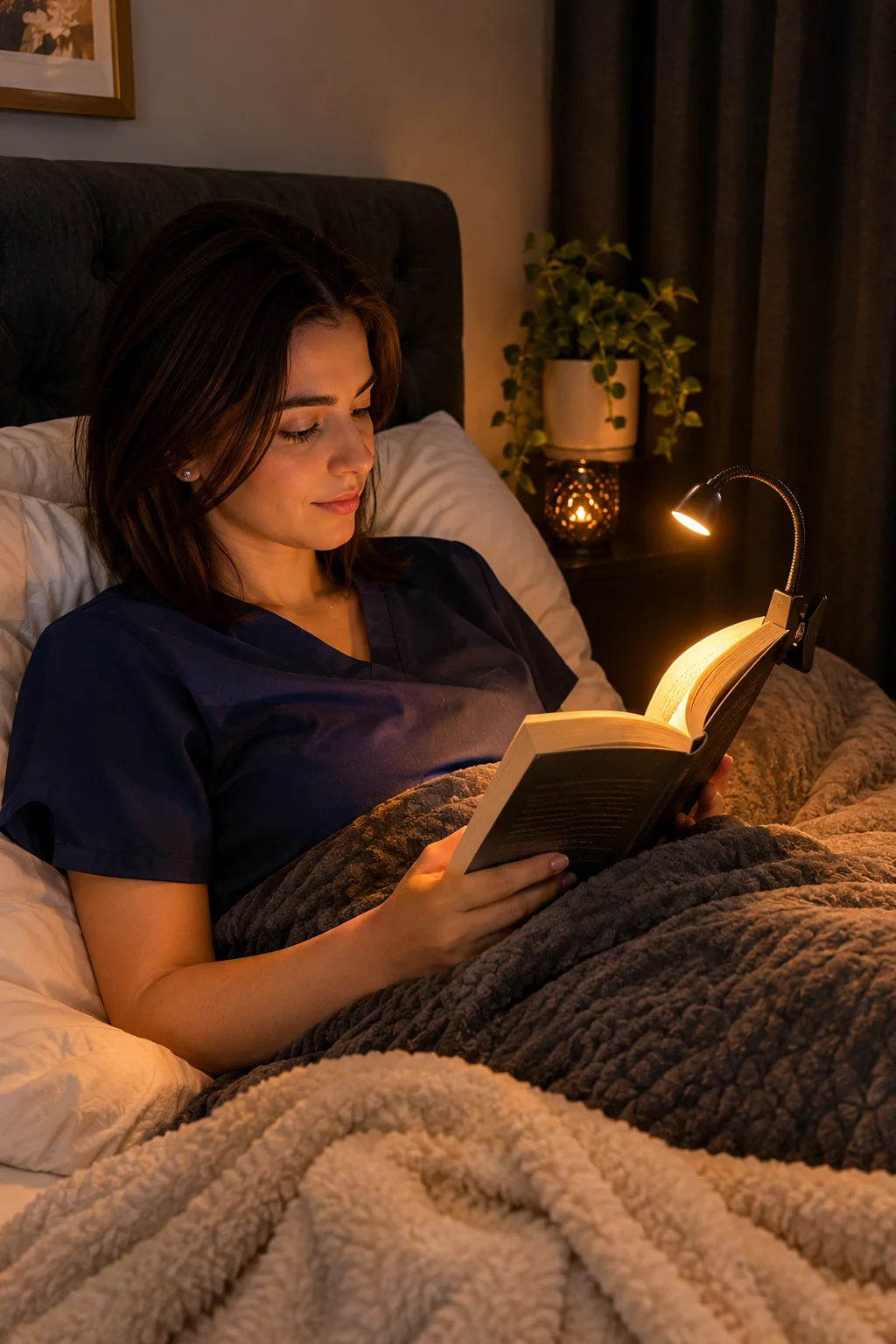
Ten pages before day sleep can help you settle. A bright lamp right before bed works against you, and so does a phone.
Look for a book light with:
- An amber or warm setting, not only cool white
- A low brightness level you can dim way down
- A flexible neck to aim it at the page
- A rechargeable battery, so there is no cord on the bed
- A clip that grips both a book and a headboard
The light should cover the page and not much else. The light, dark and body clock guide for night shift nurses explains why dim, warm light matters before sleep.
Best moment: the last few minutes before you close your eyes.
7. Keep a Cordless Rechargeable Lamp You Can Carry
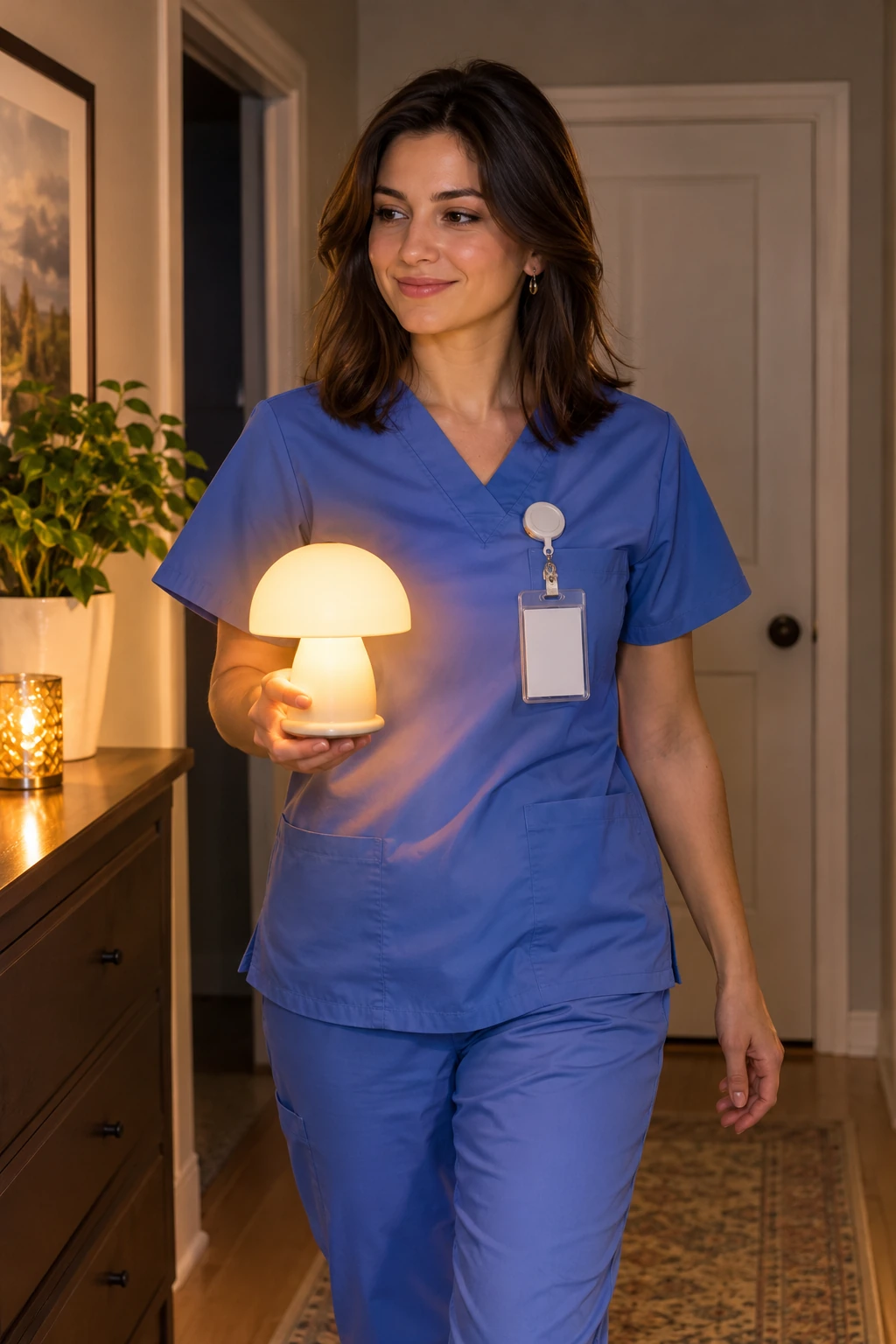
A small battery lamp goes wherever you need it: the nightstand, the dresser while you change, the bathroom counter, or the floor by the bed.
Why it helps. No cords means nothing to trip over in a dark room at noon, and no outlet hunting.
Where it shines. Getting dressed for a shift while your partner sleeps, or a quick trip to the kitchen without turning on the big lights.
What to look for. A touch dimmer, a warm white or amber glow, USB-C charging, and enough battery to last several evenings.
Charge it on your day off so it is always ready when you get home.
Best moment: moving around the house while someone else sleeps.
BATTERY
8. Stick Motion Puck Lights Inside Your Closet
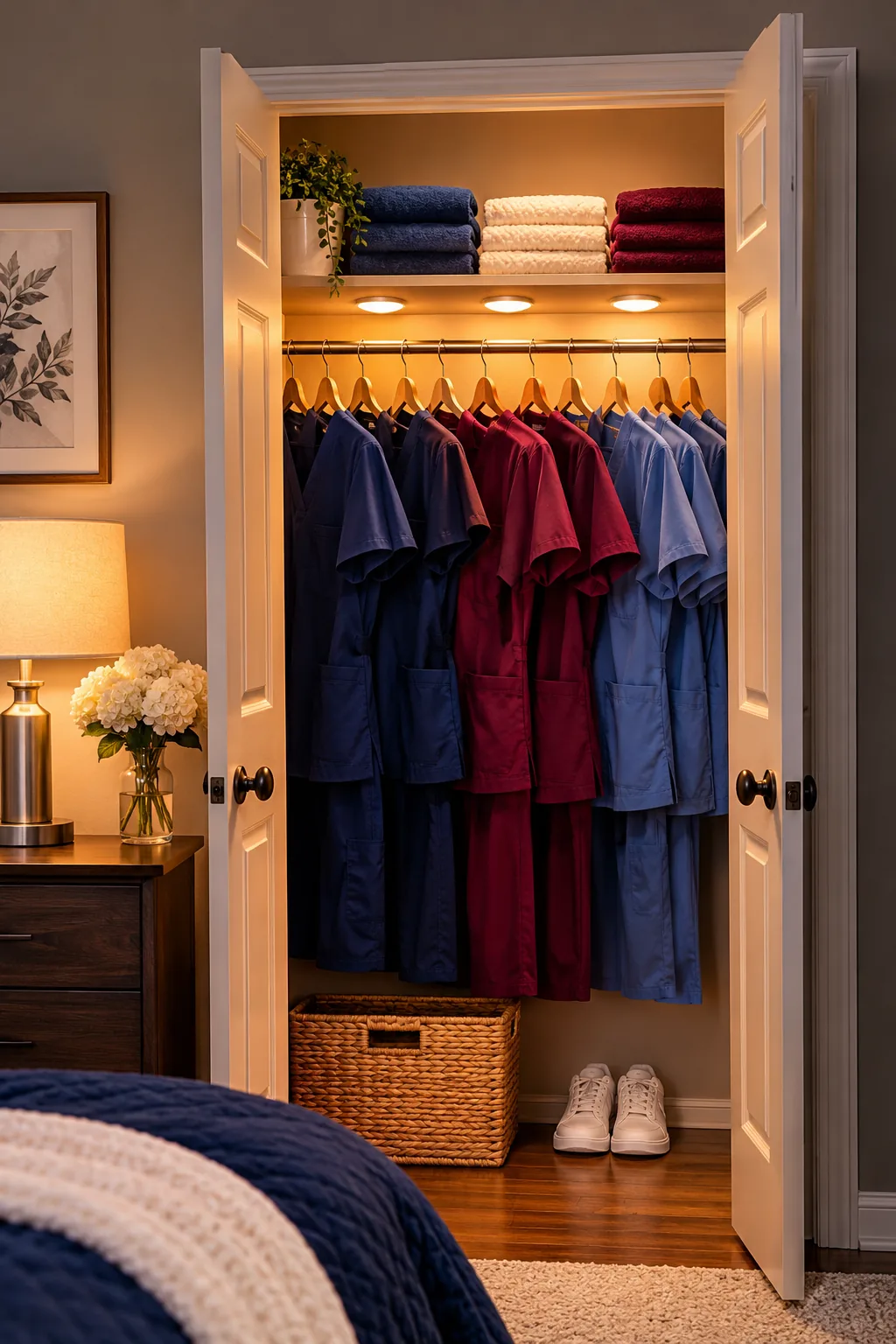
Getting dressed for a 7 p.m. shift should not mean flipping on the brightest light in the house. Small battery puck lights inside the closet light only what you need.
Set them up in a few minutes:
- Pick warm white motion-sensor puck lights.
- Stick one above the hanging rod and one over the shelf.
- Set them to turn off after about 30 seconds.
- Check the batteries on the first of each month.
The closet door opens, the lights come on, and you grab your scrubs without waking anyone. These ideas to organize a nurse’s uniform closet make the grab even faster.
Best moment: getting dressed for work while others sleep.
Door opens, lights on. Auto-off in 30 seconds.
9. Light the Mirror for Getting Ready, Not for Bedtime
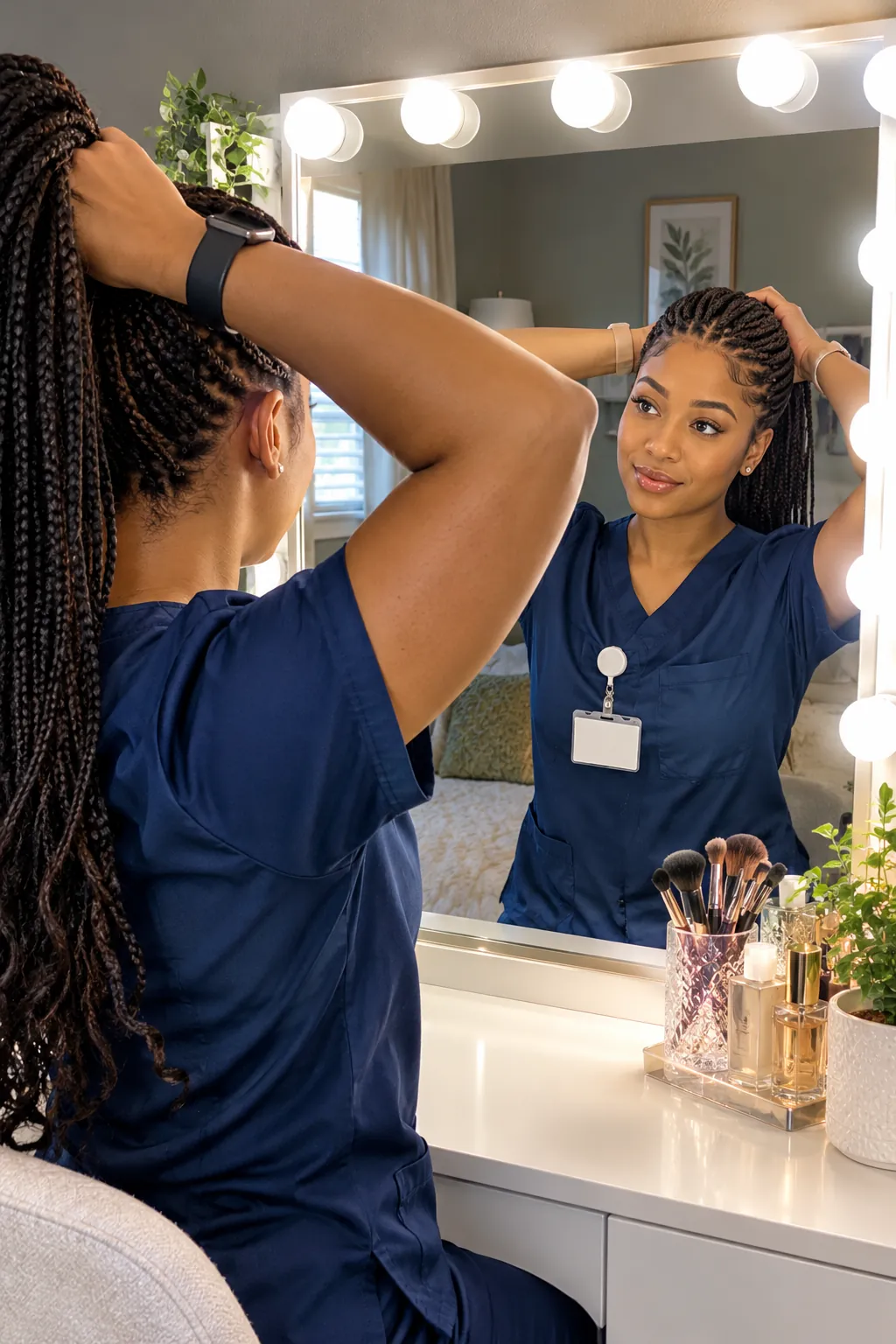
Before a night shift, bright light actually helps. It wakes you up for the drive. A light around the mirror gives you that boost right where you do your hair and makeup, without lighting the whole room.
| When | Brightness | Bulb color |
|---|---|---|
| Getting ready for a night shift | Bright | Neutral white, about 3000K to 4000K |
| Getting ready for a day shift | Bright | Neutral white |
| Brushing teeth before day sleep | Off | Use a lamp or night light instead |
A plug-in LED mirror strip or a lighted vanity mirror works in a rental. Turn it off the second you are done. For the reason bright light before work helps, see the light, dark and body clock guide for night shift nurses.
Best moment: the 15 minutes before you leave for a shift.
10. Plug In Motion Night Lights Along Your Path
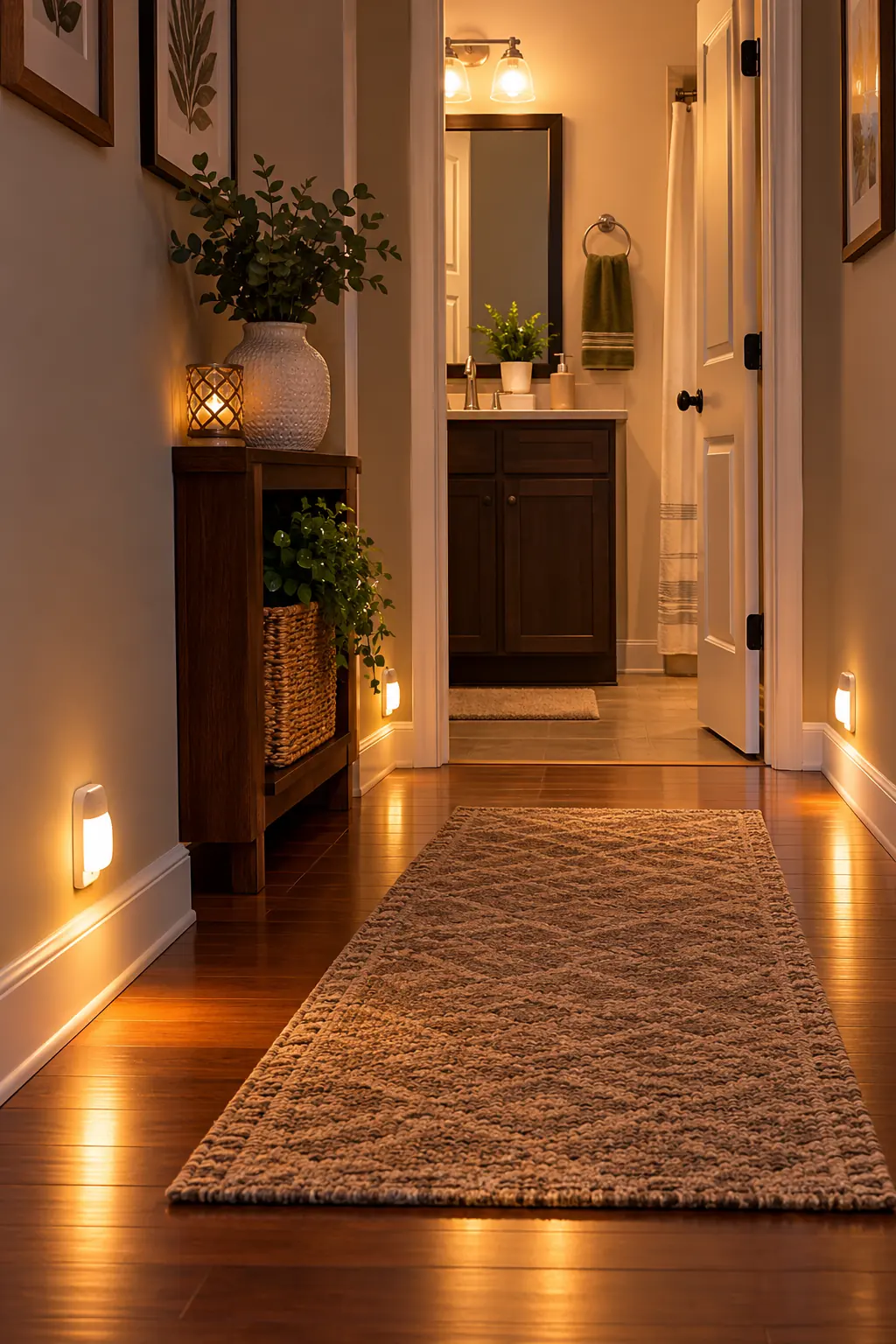
Waking up at noon for the bathroom should not mean squinting into a bright hallway. Low motion night lights turn on only when you walk by, then fade back off.
Place them along your real path:
- Beside the bed, low on the wall, on your side
- On the hallway baseboard
- Inside the bathroom, near the floor
- At the top and bottom of any stairs
Choose warm or amber night lights and mount them low, so the light lands on the floor and not in your eyes. Battery versions work anywhere, even where there is no outlet.
Best moment: the bathroom trip in the middle of your day sleep.
Your Noon Bathroom Path
Low, warm, motion only
11. Run an Amber LED Strip Under the Bed
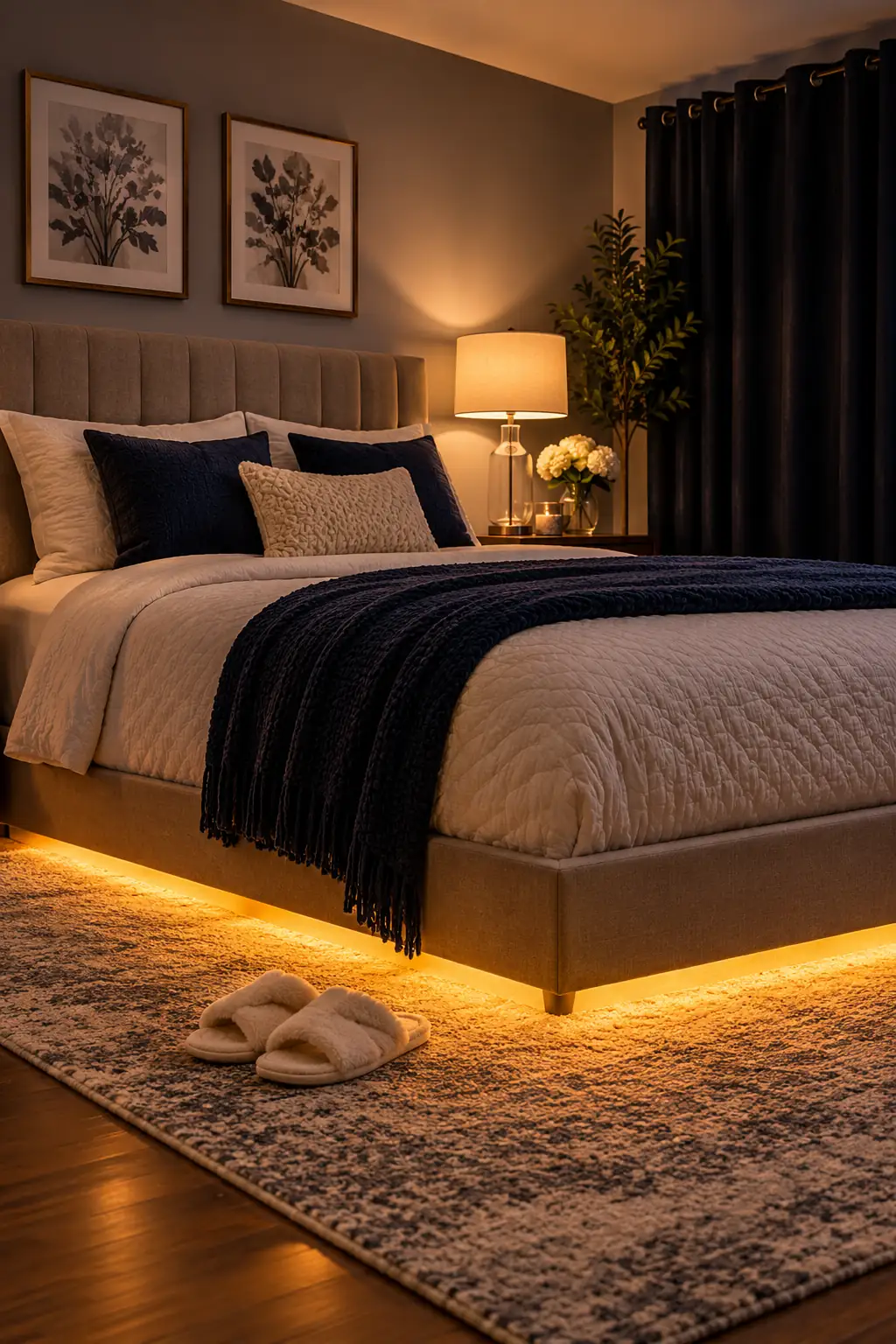
A soft glow under the bed frame lights the floor without lighting the room. It looks a little like a hotel, and it is one of the gentlest ways to see in a dark bedroom.
What it is. A thin, stick-on LED strip along the underside of the bed frame or the base of the headboard.
Why it works. The light points down at the floor, so you see the rug and your slippers, not a bulb.
How to set it. Choose a strip that can go amber or warm white, set it to its lowest level, and add a motion sensor so it turns on when your feet touch the floor.
Renters. Most strips use adhesive backing that peels off the frame, not the wall.
Best moment: getting out of bed at noon or 3 p.m. without breaking the dark.
Floor glows, room stays dark
12. Keep an Amber Night Light in the Bathroom
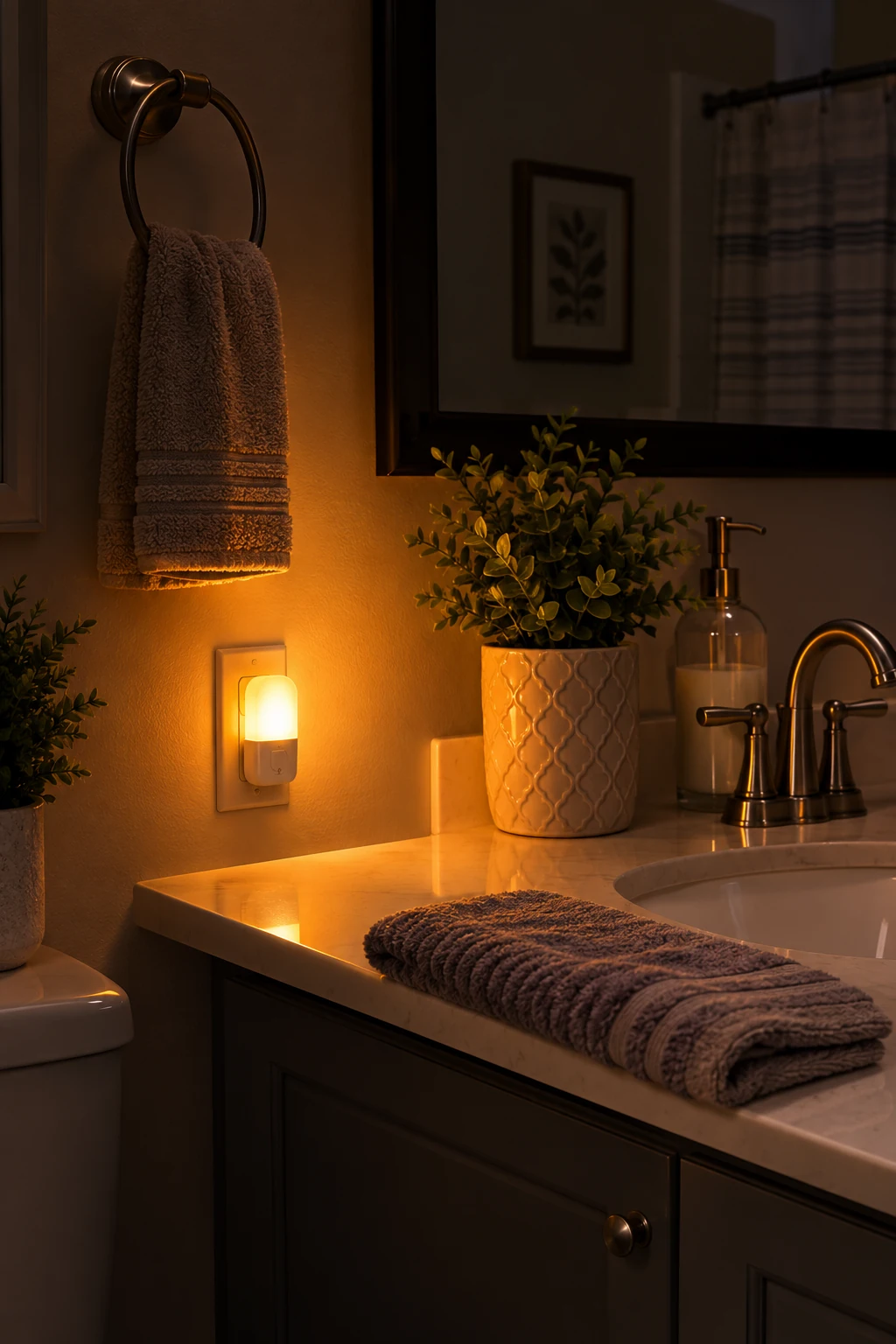
The bathroom is where most day sleepers get blasted awake. One flip of the vanity switch at 1 p.m., and your brain thinks it is morning.
Make the mid-sleep bathroom trip dim:
- Plug an amber night light into the outlet nearest the sink.
- Choose one that sits low, below the counter if you can.
- Leave the vanity and shower lights off for day sleep trips.
- Tape a small note on the switch for yourself, if habit wins.
Amber light gives you enough to see without the wake-up jolt of bright white light. These bathroom reset ideas for nurses cover the rest of the room.
Best moment: the noon bathroom trip.
Vanity light: wakes you up
Amber night light: back to sleep
13. Put Every Lamp on a Dimmer
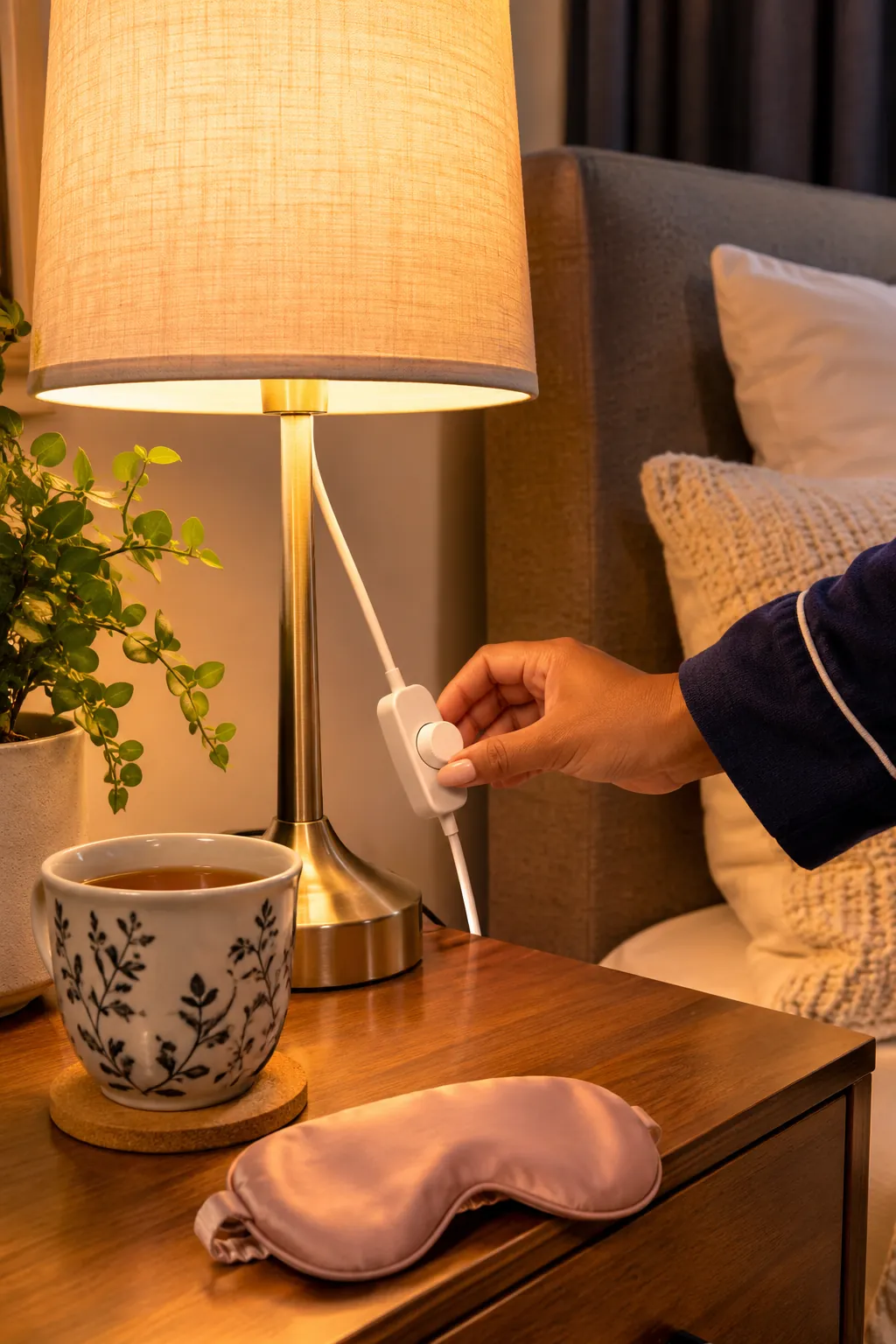
A lamp that only has “on” is too bright half the time. A dimmer lets the same lamp work for waking up, getting ready, and winding down.
| Dimmer type | How it works | Good for |
|---|---|---|
| Inline cord dimmer | A small slider on the lamp’s cord | Bedside lamps |
| Plug-in dimmer | Sits between the lamp and the outlet | Floor lamps |
| Smart plug with dimming | Dims from your phone or a schedule | Lamps you control in bed |
| Smart dimmable bulb | The bulb dims itself | Any lamp |
Check that your LED bulbs say dimmable on the box. A regular LED on a dimmer can flicker or buzz.
Best moment: winding down, when full brightness feels like too much.
One Lamp, Three Jobs
Look for “dimmable” on every LED box.
14. Set Smart Bulbs on a Schedule That Matches Your Shift
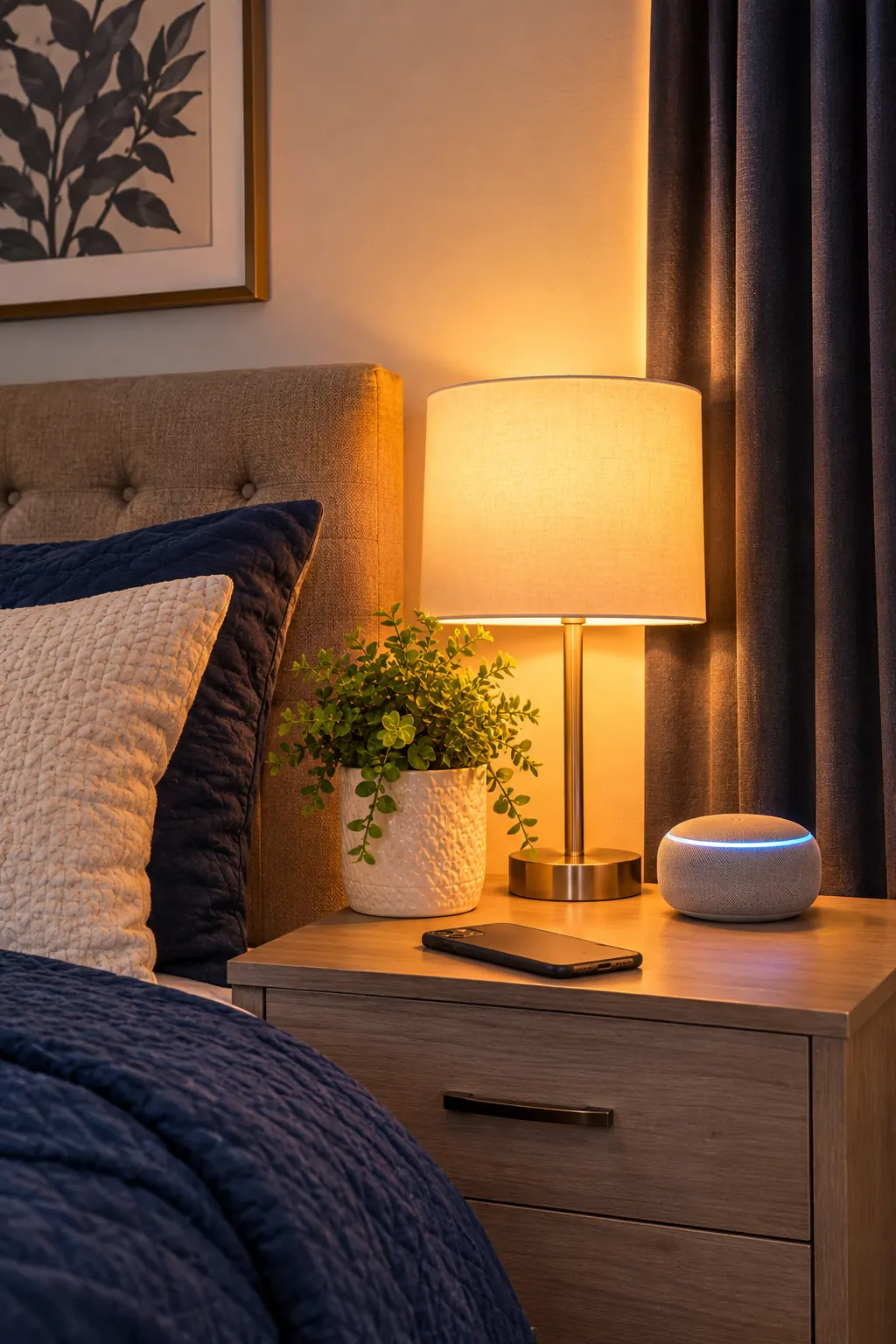
Smart bulbs can change brightness and color on their own, timed to your sleep, not to the sun. Set them once, and the room does the work.
Useful schedules for a night shift week:
- Lamps fade to their dimmest at your post-shift bedtime
- All lights shut off when you lie down
- Lamps slowly brighten 20 to 30 minutes before your afternoon alarm
- A bright, neutral setting turns on while you get ready for work
- A “days off” schedule that shifts everything earlier
Put smart bulbs in lamps, not the overhead fixture, so the soft light is what changes. Change the schedule whenever your rotation changes.
Best moment: every day, without having to think about it.
A Night Shift Light Schedule
15. Make a One-Tap “Sleep” Button by the Bed
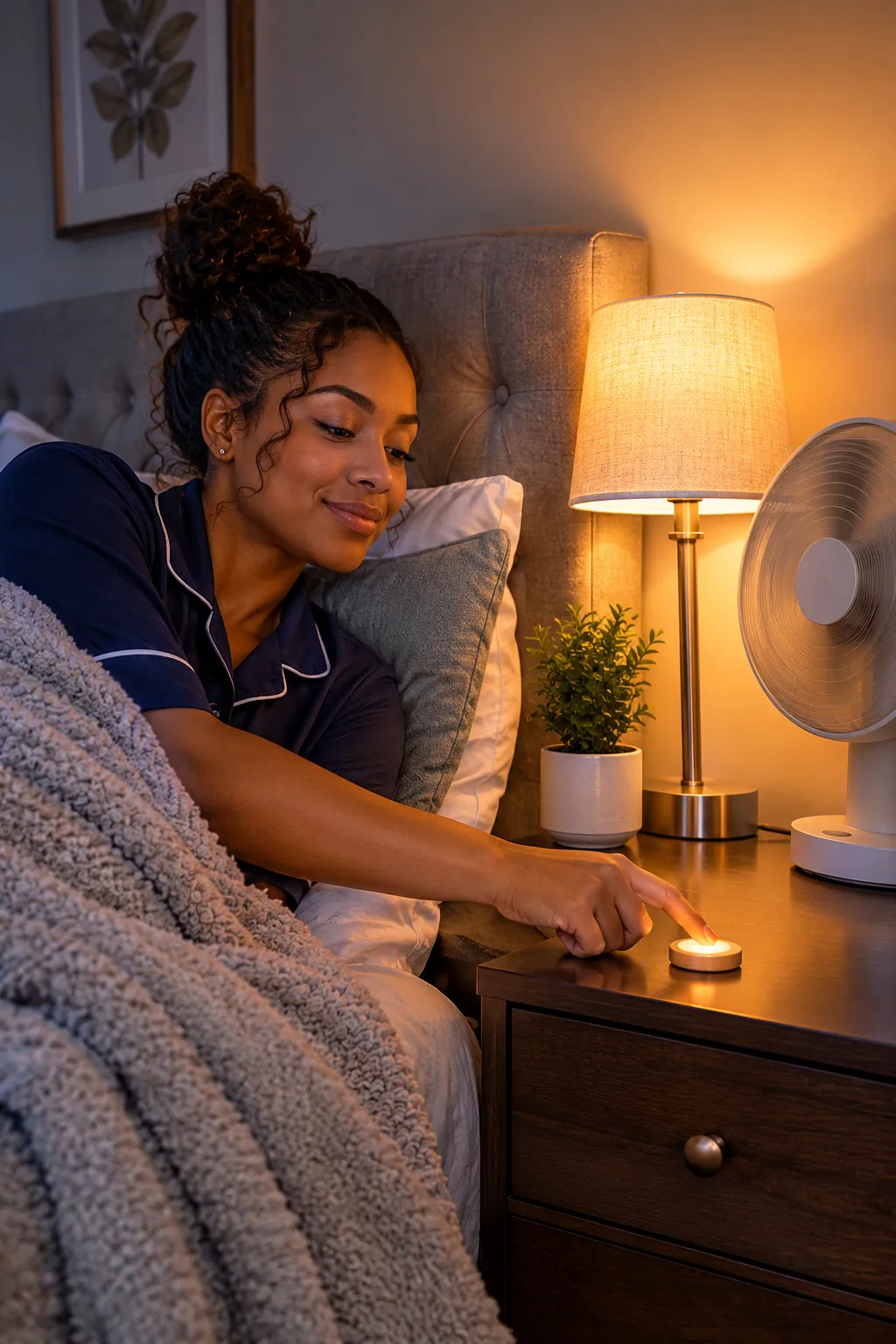
Turning off three lamps, a strip light, and a fan one by one is the last thing you want after a shift. A single button by the bed can do it all.
What it does. One tap turns off every lamp, turns on the low night lights, and starts the fan or sound machine through a smart plug.
How to set it up. Most smart bulb and smart plug apps let you build a “scene,” then link it to a small wireless button or a remote.
Where to put it. Stick the button on the nightstand or the headboard, where you can reach it lying down.
Bonus. Make a second scene called “Awake” that brings the lamps up for your afternoon alarm.
Best moment: the second your head hits the pillow.
16. Cover the Overhead Switch So Nobody Flips It On
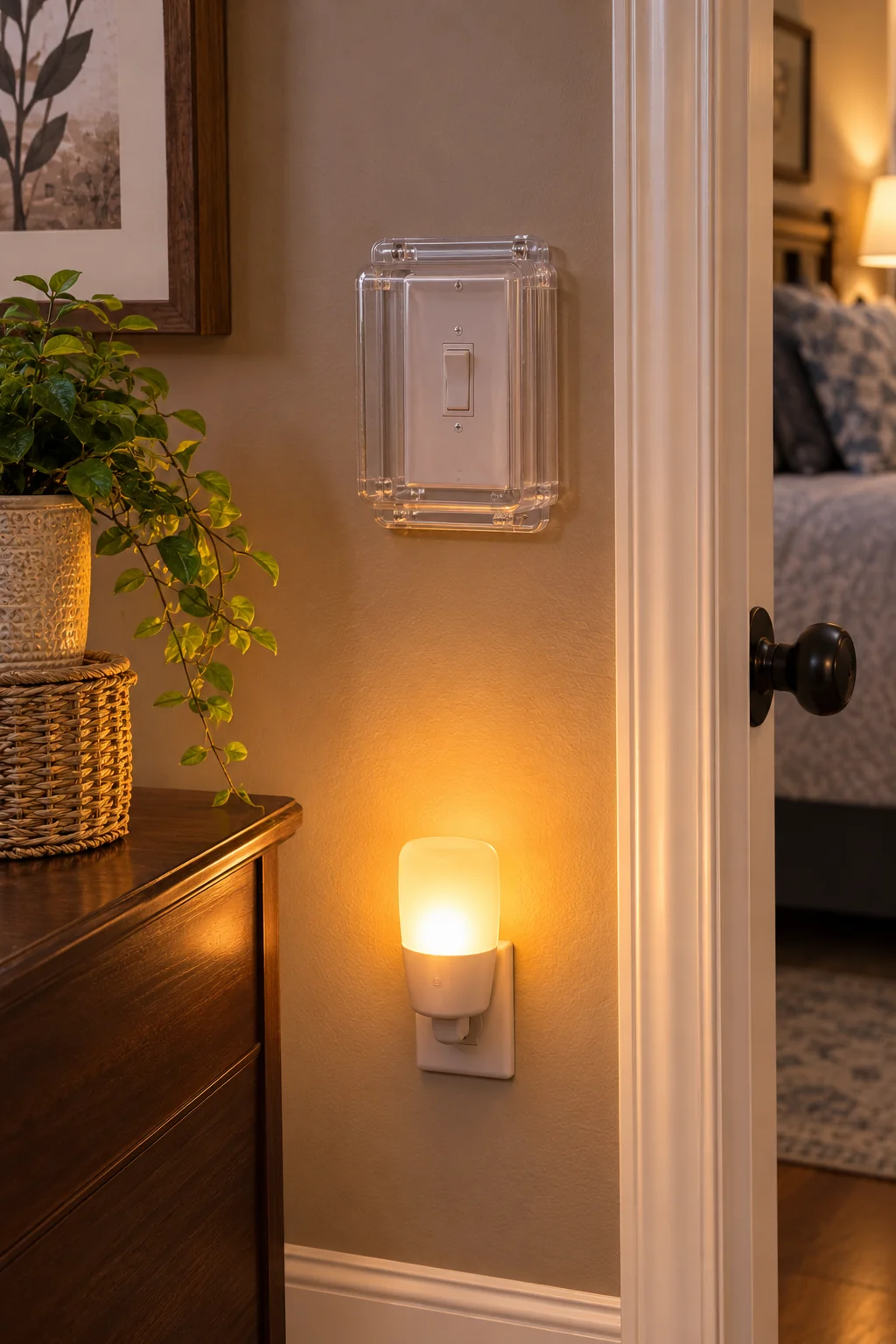
Even if you never use the ceiling light, someone else might. A partner grabbing socks or a child looking for you can flood the room with light at noon.
Make the switch hard to hit by accident:
- Buy a clear switch guard that fits over a standard light switch plate.
- Screw it on with the existing plate screws, or use a no-screw version if you rent.
- Tell everyone in the house that the bedroom uses lamps only.
- Leave a small lamp or night light by the door so nobody needs the big light.
For the talk with your household, use these scripts on how to tell your family not to wake you after a night shift.
Best moment: every time someone else walks in while you sleep.
Guarded switch, lamps only
17. Swap Real Candles for Flameless Ones on a Timer
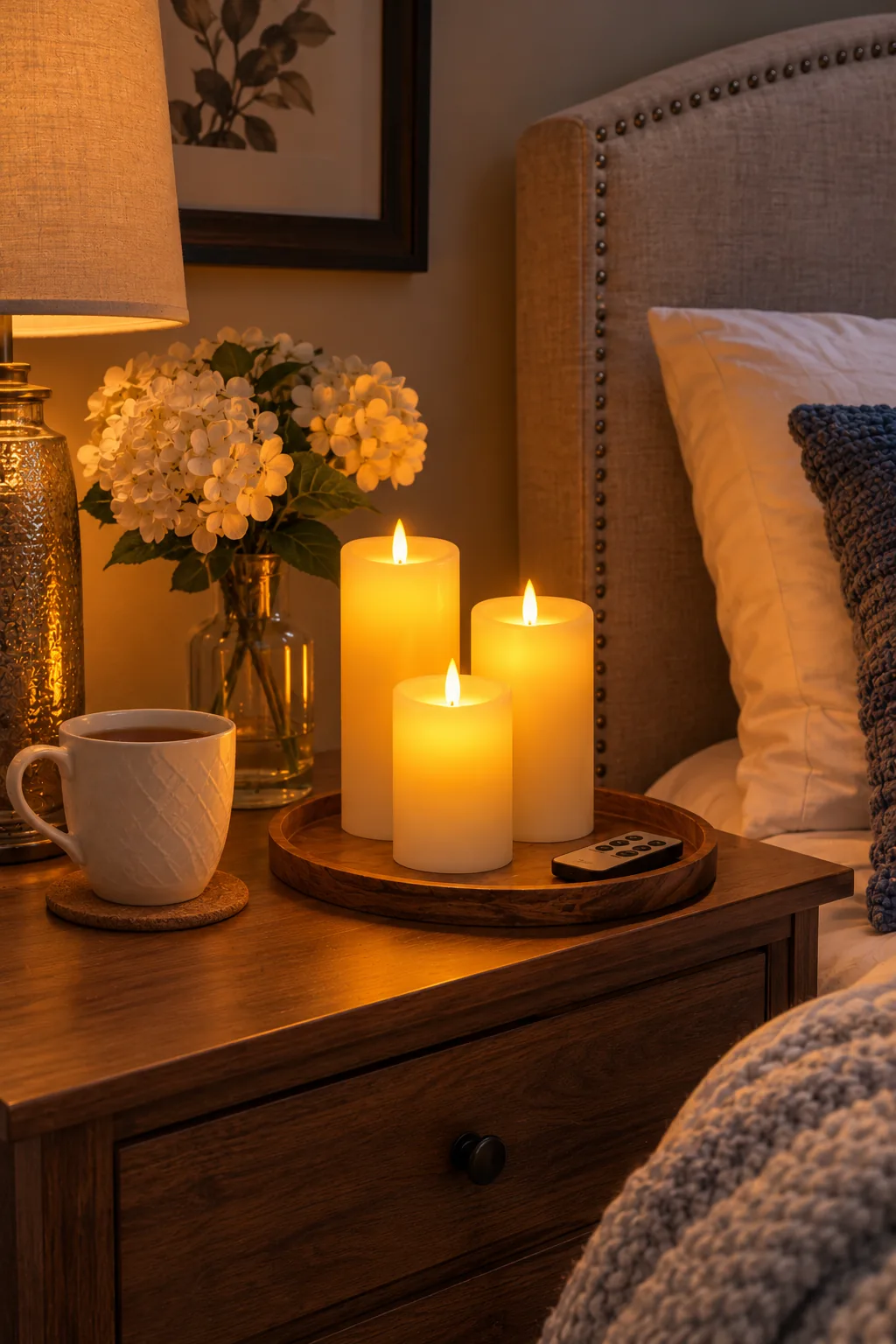
A candle on the nightstand feels cozy after a hard shift. It is also hard to remember to blow out when you are this tired.
| Real candle | Flameless candle | |
|---|---|---|
| Glow | Warm, flickering | Warm, flickering |
| If you fall asleep | A fire risk | Turns itself off |
| Timer | None | Often 4 to 6 hours built in |
| Smoke or soot | Yes | None |
Fire safety experts warn against falling asleep with a candle burning. Flameless candles give you the same soft flicker, and many come with a remote. Group three on a tray for a glow that reads like real candlelight.
Best moment: the wind-down after a rough shift.
No flame, built-in timer
18. Add a Glow Lamp for Color, Not for Brightness
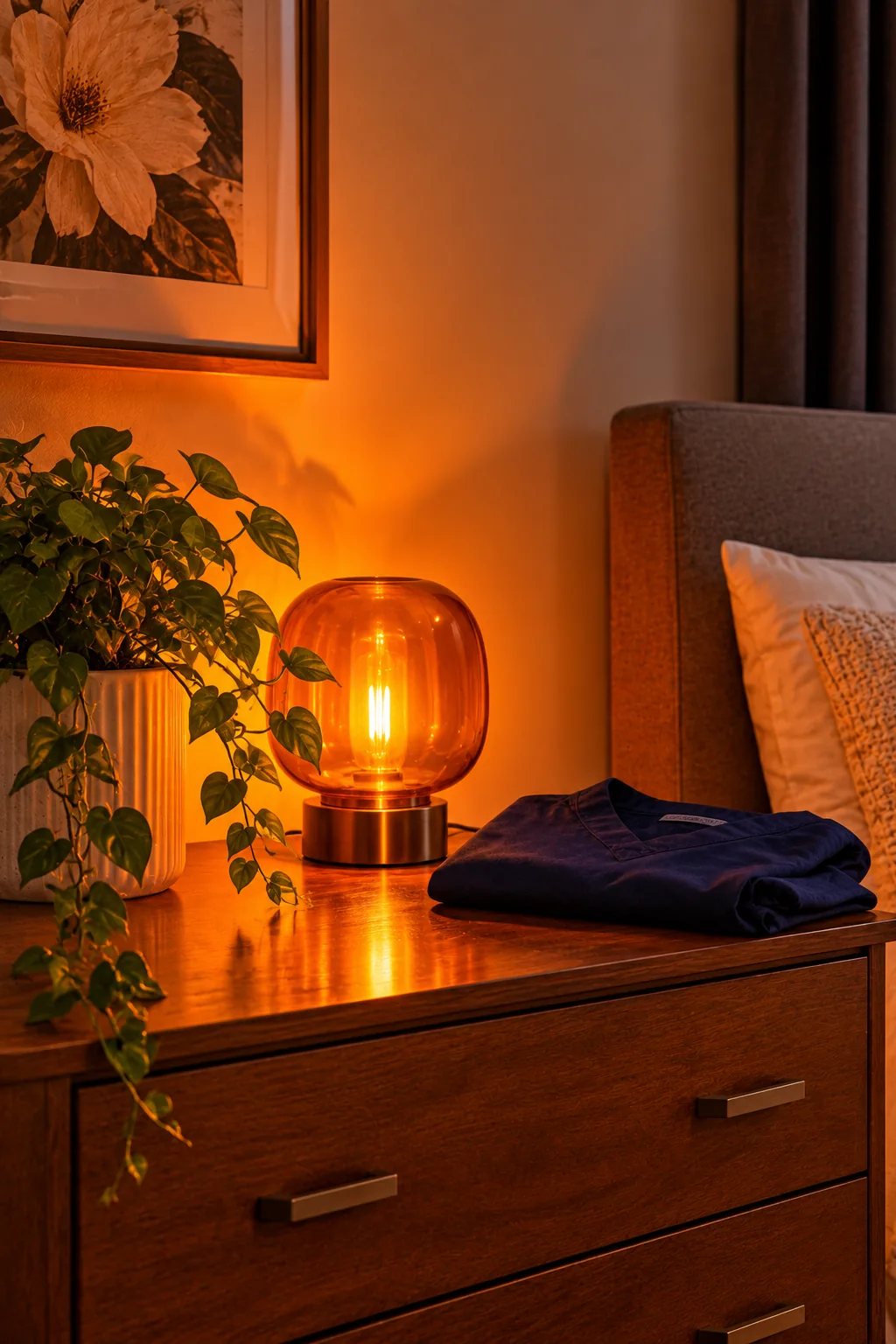
Salt lamps, amber glass lamps, and little mushroom lamps give off a deep orange glow that makes a room feel calm. Think of them as decor that happens to light up.
What to know before you buy:
- Their warm, low light suits the hour before day sleep
- Claims that salt lamps clean the air are not proven, so buy one for the glow only
- Salt lamps can be harmful to cats and dogs that lick them, so keep them out of reach
- Amber glass or ceramic glow lamps give the same look with no pet worries
- Put the lamp on a smart plug so it turns off on its own
One glow lamp on a dresser across the room is enough to make the space feel like evening.
Best moment: the first few minutes after you walk in from a shift.
SALT LAMP
Keep from pets
MUSHROOM
Pet friendly
AMBER GLASS
Pet friendly
19. Wake Up to a Sunrise Light at 3 P.M.

In a truly dark bedroom, your afternoon alarm goes off in what feels like the middle of the night. A wake-up light fixes that by slowly brightening before the alarm, like a sunrise you schedule.
How it works. The light starts glowing 20 to 30 minutes before your alarm and slowly gets brighter, so you wake to light instead of a jolt.
Why day sleepers love it. Your blackout room stays dark all day, and the light gives your body a “morning” signal on your schedule.
How to set it. Match the end of the sunrise to your alarm time, keep the sound low, and place it on the nightstand facing you.
Pair it with. A short walk to a bright room or window right after you get up.
Best moment: waking up for your shift.
2:30
2:40
2:50
3:00
Alarm rings when the sunrise ends
20. Set Up a Bright Corner for the First 30 Minutes After You Wake

Your bedroom stays dim for sleep, but your body still needs a strong “day has started” signal after you wake. A bright corner outside the bed area gives it one.
Build yours:
- Pick a chair by a window or in the living room, not next to the bed.
- Add a light box rated at 10,000 lux, or sit by the brightest window you have.
- Sit 16 to 24 inches from the light box for 20 to 30 minutes after waking.
- Have your coffee there, so it becomes a habit.
- Never use it in the 3 hours before your next sleep.
If you have bipolar disorder, an eye condition, or take medicine that makes you sensitive to light, talk to your provider before using a light box. This guide for nurses working through the dark months shows where a light box fits into a winter home.
Best moment: right after you wake for a night shift.
BRIGHT CORNER RULES
10,000 lux light box
16 to 24 in away
20 to 30 min after waking
Never within 3 hours of sleep
The Bulb Cheat Sheet
SPECIAL GUIDE
The Bulb Cheat Sheet
Screenshot this before you go bulb shopping
COLOR (KELVIN)
2200K
Night lights
2700K
Bedside lamps
3000K
Closet
4000K
Mirror, pre-shift
5000K+
Bright corner only
BRIGHTNESS (LUMENS)
ON THE BOX, LOOK FOR
Frequently Asked Questions
Lighting Questions, Answered
Bedroom Lighting FAQ
What color light is best for a bedroom?
Warm white, around 2700K or lower, for lamps. Use amber for night lights and save cool white for getting ready.
Are LED strip lights bad for sleep?
Not when they are warm, dim, and pointed at the floor. Bright, cool, or color-changing strips near your eyes are the problem.
How do I light a bedroom with no overhead light?
Layer it: two bedside lamps, one floor uplight, low night lights, and a bright mirror light for getting ready.
Do salt lamps help you sleep?
Only as a soft, warm glow. Other health claims are not proven, and they should stay out of reach of pets.
What light should I use when I wake at 3 p.m.?
A sunrise wake-up light in the bedroom, then 20 to 30 minutes in a bright corner or by a sunny window.
Soft Light, Better Sleep
You do not need the ceiling light at all. A few warm lamps, low night lights, and one bright spot for waking up cover every part of a night shift day.
These bedroom lighting ideas for nurses all follow one rule: bright when you are waking up and getting ready, warm and low when you are winding down, and dark when you sleep.
Start with two lamps, warm bulbs, and a bathroom night light this week. Then pair your new lighting with these blackout bedroom ideas for nurses for a room that stays dark all day.
Save this to your bedroom ideas board for your next lighting swap.
SLEEP
Dark
WIND DOWN
Warm and low
WAKE UP
Bright
The right light at the right time
