

It is 3:40 a.m. You have charted, turned, and medicated all night, and now your eyes are burning and your brain feels packed in cotton. Then you drive home into a sunrise and lie in bed wide awake at 9 a.m. This light, dark and your body clock guide for night shift nurses is for exactly that loop.
I worked nights for years before anyone told me the problem was not my willpower. It was my light.
Your body clock does not read your schedule. It reads light. Bright light tells it “day,” and darkness tells it “night.” Most night nurses get both signals at the wrong hours, so the clock never settles.
By the end of this guide, you will have your own 24-hour light plan. You will know when to chase bright light, when to dim it, and when to go fully dark, for one full shift cycle.
You do not need fancy gear to start. A notebook, a pair of wraparound sunglasses, and your blackout curtains cover most of it. Plan on 30 minutes to map your day, then follow the plan for one week and adjust.
How does light affect a night shift nurse’s body clock?
Light is the main signal your body clock uses to tell time. Bright light in the hours after you wake pushes your clock later, which helps you stay alert on shift. Darkness in the hours before sleep lets melatonin rise. Morning sun on the drive home does the opposite and makes day sleep harder.
What You Need
Start With
Add Later
At a Glance: 13 Steps in 6 Phases
1. Write Your Shift and Sleep Hours on One 24-Hour Line

Every light choice in this guide hangs on your hours, not mine. Grab a notebook and draw one line from noon to noon. Mark these five times on it:
- When you wake up
- When you leave for work
- When your shift ends
- When you get home
- When you fall asleep
Use the time you really fell asleep after your last shift, not the time you wish you did. If you work three 12s, the 3×12 Hour Map Calculator for Nurses lays out your whole week in one view.
To
Know Rotating between shift times? Map the shift you work most often first. One clear plan beats three half-finished ones.
2. Mark Your Bright Window and Your Dark Window on the Line

For a night nurse, “evening” is the hours after you wake, and “morning” is the drive home. Your clock moves later when it gets bright light in that evening and darkness in that morning.
Shade the hours from waking to about halfway through your shift as bright. Shade the last 2 hours of shift through bedtime as dim. Shade your whole sleep block as dark. Here is how that looks on a 7 p.m. to 7 a.m. shift.
Sample: 7 p.m. to 7 a.m. Shift
Your Light Clock
Different shift? Slide every slot by the same number of hours.
Get Your Own Light Clock in 30 Seconds
Type in your shift times and drive home. The Night Shift Light Plan Generator maps your bright, dim, and dark windows, plus the exact times for sunglasses and lights out.
Build My Light Plan3. Get Bright Light Within 30 Minutes of Waking

At 4 p.m., your brain still thinks it is the middle of the night. Bright light is the strongest signal that tells it your day has started.
Step outside for 15 to 30 minutes while the sun is up. Gray skies still count, since a cloudy afternoon is often 10 times brighter than a lit room. In winter, when it is dark by 5, sit 16 to 24 inches from a 10,000 lux light box for 20 to 30 minutes instead, with the light off to one side of your face. The box setup is covered in this guide for nurses working through the dark months.
Light Dose Cheat Sheet
How Bright Is It, Really?
Sunny day outside50,000+ lux
Light box at 16 inches10,000 lux
Cloudy day outsideabout 5,000 lux
Hospital hallwayabout 500 lux
Living room lampsabout 100 lux
Phone screen up closeabout 40 lux
Numbers are rough averages. A lit room feels bright to your eyes, but your body clock reads it as dusk.
4. Keep Your Home Bright Until You Leave for Work

If the house is dim and cozy at 5 p.m., your body takes that as a cue to wind down before you have even clocked in.
Open every blind and switch on the overhead lights in the rooms you use. Cook, shower, and pack your bag under the brightest light you have. Save the warm lamps for after your shift.
Your Home Before Work
Blinds
All Open
Overhead Lights
On
Warm Lamps
Save for Later
5. Stay Near Bright Light for the First Half of Your Shift

About 500 lux is all most hospital hallways give you. That is enough to see by, but it barely registers with your body clock. From clock-in to about 1 a.m., look for extra light wherever you can:
- Chart at the brightest station on the unit
- Take your first break in a bright break room, not your dark car
- Keep a small light box at the desk for 20 to 30 minutes, if your unit allows it
- Turn room lights fully on for early assessments while your patient is awake
Light in these hours pushes your clock later, so the 3 a.m. crash hits softer.
Pro Tip
Ask your charge nurse before you bring a light box in. Many units say yes once they hear it sits at the desk and stays off by 1 a.m. A clip-on model fits on a monitor and takes no counter space.
When should night shift nurses use a light box?
Use a light box in the hours after you wake or during the first half of your shift, for about 20 to 30 minutes at a time. That timing helps push your body clock later. Stop using it at least 3 to 4 hours before your planned sleep, since bright light late in your night makes day sleep harder.
6. Dim Your Light in the Last 2 Hours of Your Shift
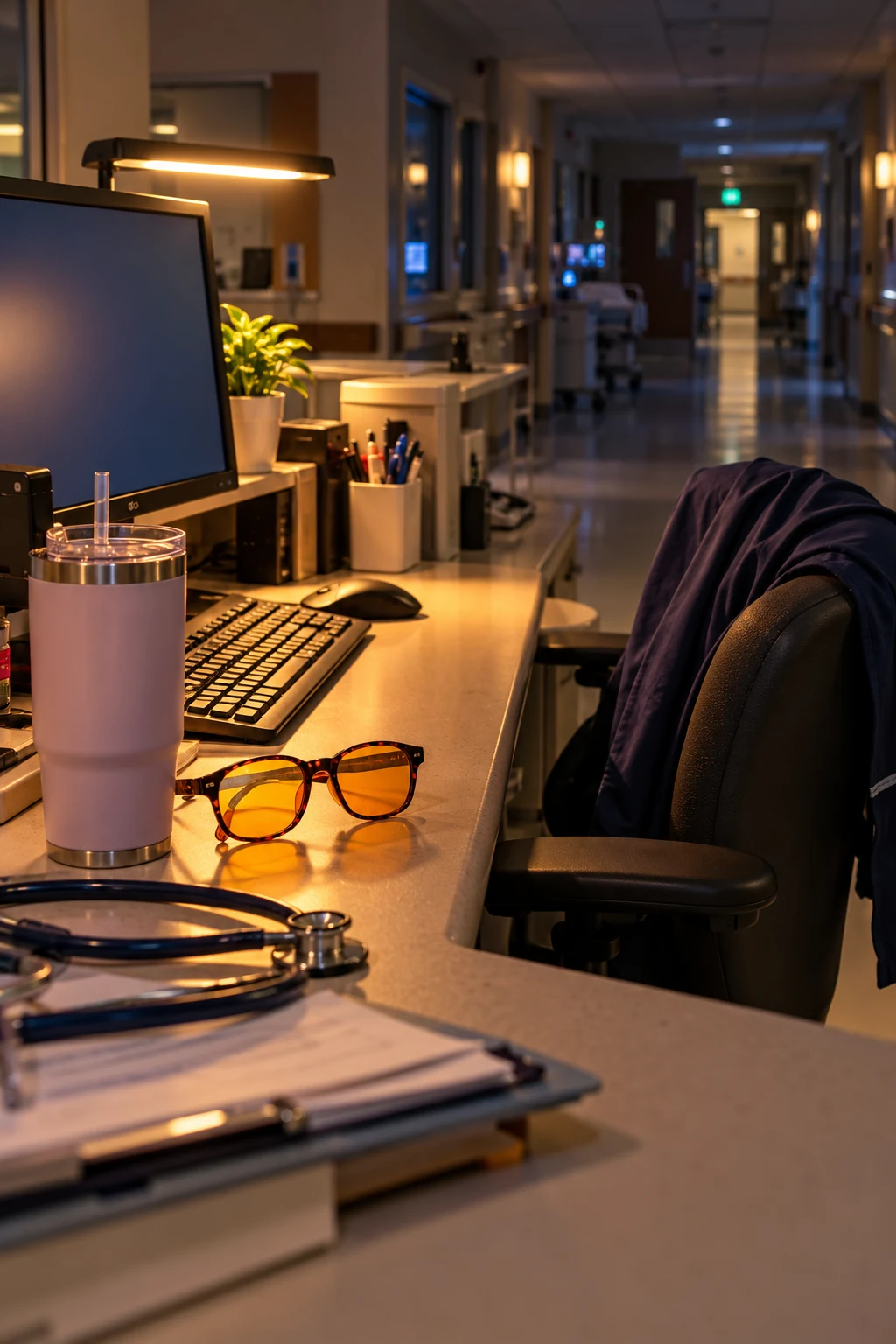
Two hours before clock-out, start lowering the light that reaches your eyes. You still need to see clearly to work, so this is about the extras around you.
Turn your computer screen down to the lowest level you can read comfortably. Skip the brightest break room and pick the dimmer hallway when you have a choice. Some nurses wear amber-tint glasses for the last hour of charting. Your body reads this drop as dusk, and melatonin starts to rise.
7. Put On Wraparound Sunglasses Before You Step Outside

Why does a 20-minute drive home wreck a whole day of sleep? Morning sun is the strongest “wake up” signal your clock gets, and it hits you right when you need to wind down.
Put the sunglasses on inside the building, before the doors open. Wraparound frames block the light that sneaks in from the sides. Dark gray or amber lenses work best. Keep a pair in your work bag so you never leave without them.
One warning: in winter, it may still be dark when you clock out. Never wear dark lenses to drive in the dark. Put them on once the sky is light.
Which Lenses Block the Most?
More dots = more morning light kept away from your eyes
Do blue light glasses work for night shift?
Clear “blue light” glasses for screens filter very little and will not do much for your body clock. For the drive home, dark wraparound sunglasses or amber-tint glasses block far more of the light that keeps you awake. Wear them from the hospital door until you are inside your dim house.
8. Switch to Dim, Warm Light the Moment You Get Home

Bright overhead lights at 8 a.m. undo everything the sunglasses did on the drive. A few small changes keep the house in “dusk” mode:
- Set a lamp on a timer so it glows when you walk in
- Use warm white bulbs, 2700K or lower, in every lamp you use after shift
- Keep lamps at eye level or lower, never overhead
- Plug a dim nightlight into the bathroom for your shower
Leave the ceiling lights off until you wake up. Your come-home routine and the amber nightlight from these bathroom reset ideas for nurses both fit right into this dim stretch.
Read the Bulb Box
The Kelvin Scale, Made Simple
9. Turn Your Phone to Night Mode and Low Brightness Before Bed
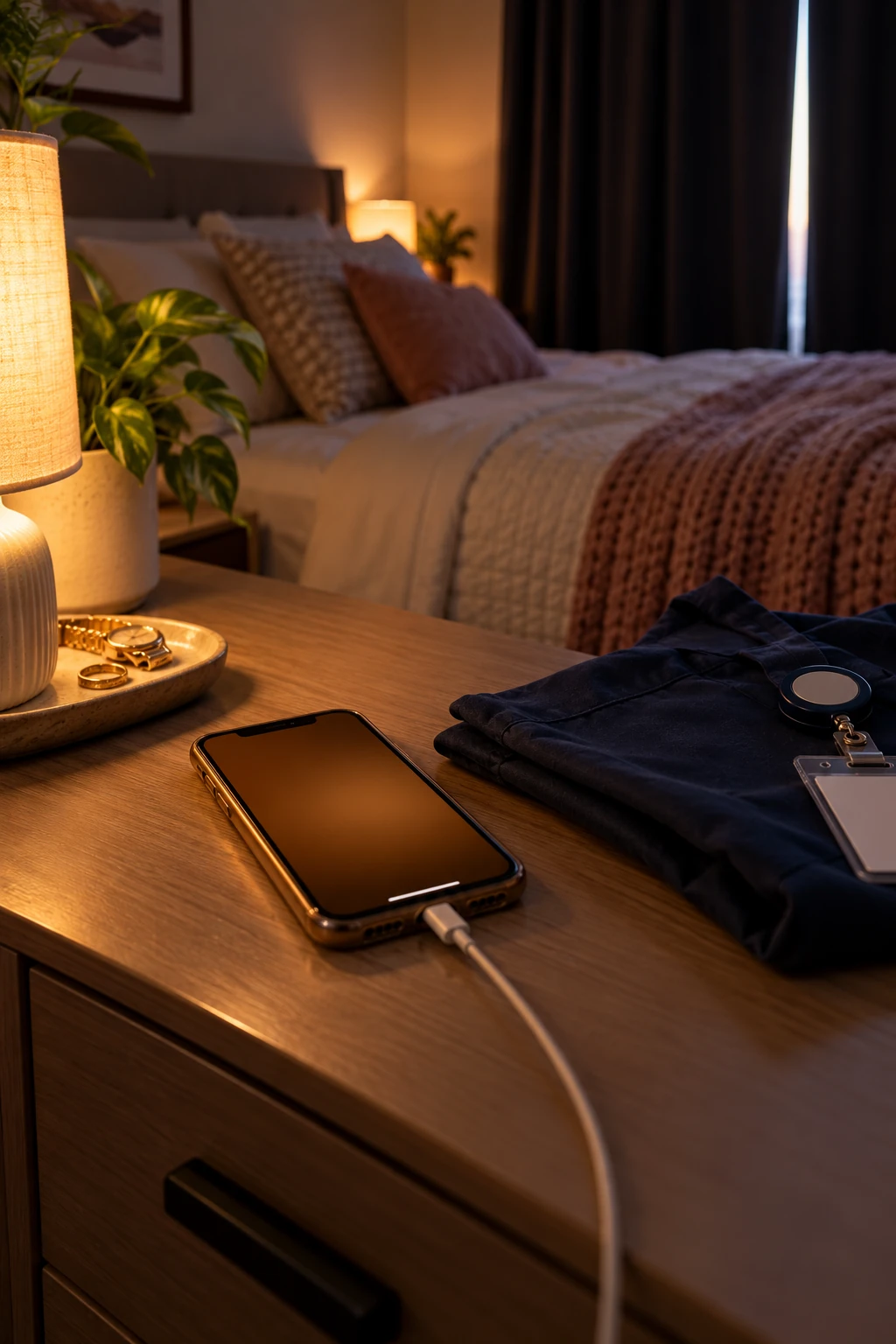
Picture it: lights off, eyes heavy, and then a bright screen 6 inches from your face. That glow is small, but it lands right on your eyes.
Turn on Night Shift on an iPhone or Eye Comfort on Android. Schedule it to run from your clock-out time until you wake. Drop brightness to the lowest level too. Better yet, park the phone across the room as part of your wind-down routine after night shift.
10. Seal Your Bedroom Into Full Darkness Before You Lie Down
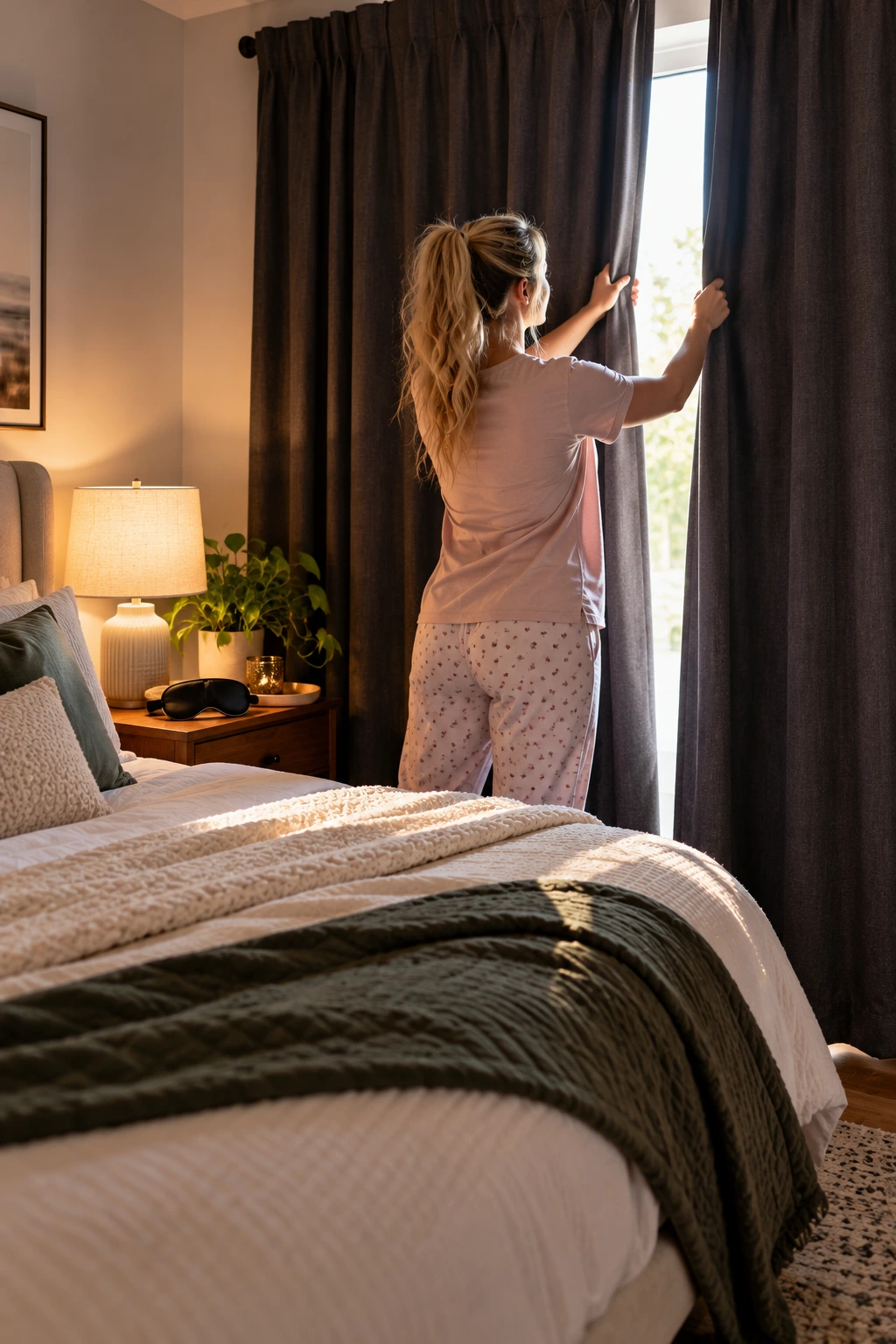
Try this test at 2 p.m. on a sunny day. Stand in your bedroom with the curtains closed and hold your hand out at arm’s length. If you can see it, light is getting in, and your clock can feel it even with your eyes shut.
Close the gaps one by one:
- Hang blackout curtains 3 to 4 inches past every side of the window frame
- Cover glowing charger and TV lights with black electrical tape
- Roll a towel against the gap under the door
- Wear a contoured eye mask as a backup layer
For room-by-room fixes, these blackout bedroom ideas for nurses cover every window type.
2 p.m. Hand Test
What Your Result Means
How dark should a bedroom be for day sleep?
Dark enough that you cannot see your hand at arm’s length with the lights off at midday. Even small amounts of light through closed eyelids can make sleep lighter and shorter. Blackout curtains that overlap the frame, taped device lights, and an eye mask together get most bedrooms close to night-level darkness.
11. Light Mid-Sleep Bathroom Trips With a Red Nightlight
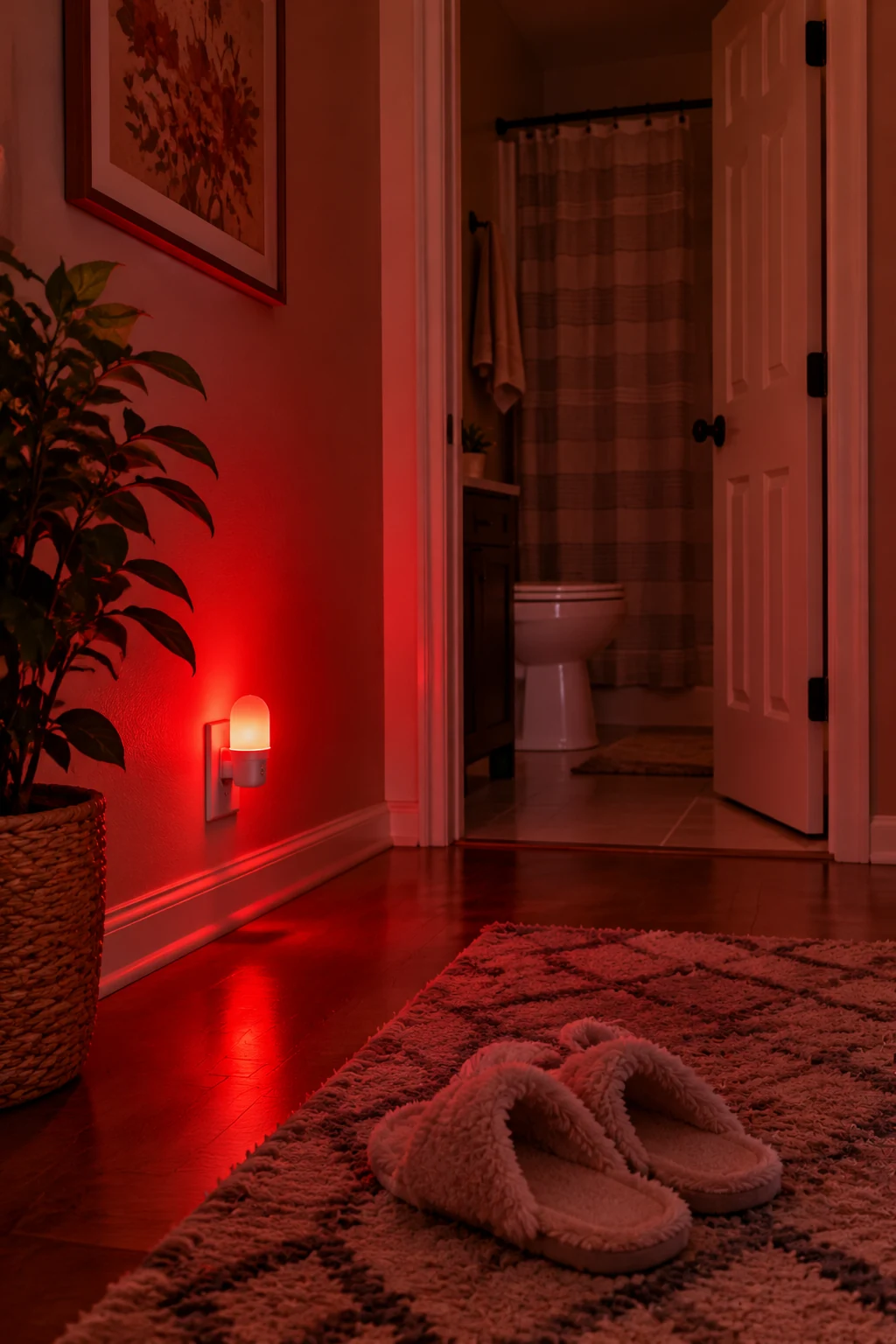
One flip of a bright bathroom switch at noon can leave you staring at the ceiling for an hour.
Red and deep amber light affect your body clock the least of any color. Plug a low red motion nightlight near the floor between your bed and the toilet, so it glows only when you move. Keep your eyes half-closed and the main switch off. Your nightstand setup is a good spot for a second one.
Pick Your Nightlight Color
Red
Best choice
Deep Amber
Good backup
White or Blue
Skip it
12. Shift Your Light Plan on Your First Day Off

If you want normal evenings with your family on days off, your light plan has to flip too. Light is the fastest tool you have for that switch.
After your last shift, try this:
- Sleep a short block, about 4 hours, instead of your full sleep
- Get outside in daylight for at least 30 minutes after you wake
- Dim the house after sunset, the same way you would after a shift
- Go to bed close to a normal night bedtime, around 10 or 11 p.m.
Before your next stretch of nights, flip it back by staying up later the night before. This guide on how to flip your sleep schedule walks through the full switch, and this one shows how to split your days off around it.
13. Track Your Energy for One Week and Adjust Your Windows

Most nurses feel a difference by night 3 or 4, but a plan on paper is still a guess until you test it.
Rate your energy at 3 a.m. on every shift, from 1 for “fading fast” to 5 for “wide awake.” Then rate how fast you fell asleep after the shift. After 7 days, look for the pattern. Crashing at 3 a.m. means your bright window needs to start earlier or run longer. Lying awake at 9 a.m. means your dim window needs to start sooner, so try sunglasses and screen dimming 30 minutes earlier. New to nights? This first-month timeline for nurses shows what to expect week by week.
Print or Screenshot
7-Day Body Clock Tracker
Circle your 3 a.m. energy, 1 (fading) to 5 (wide awake)
When the Plan Slips
Body Clock Troubleshooting
Tap a Question
Body Clock Questions Night Nurses Ask
What Changes After One Week
Before and After Your Light Plan
Your Light Plan Is Ready
You now know when to chase light, when to dim it, and when to go fully dark, mapped to your own shift.
That is the whole idea behind this light, dark and your body clock guide for night shift nurses: work with the signal your body already listens to.
Pair it with the full night shift sleep guide for nurses to round out the rest of your day sleep.
Pin this to your night shift board so your plan is one tap away before your next stretch of nights.
Remember Three Words
