

You pull into the driveway at 7:40 a.m. The sky is still gray, the house is cold, and the bed you need to be asleep in by 8:30 feels like a block of ice. This guide for nurses working through the dark months fixes the house side of that problem.
Winter is hard on every nurse, but night shift makes it harder. You leave in the dark, come home in the half-dark, and sleep through the few warm, bright hours the day has.
Over one weekend, you will find where your home loses heat, seal it, and set your heat around your sleep instead of a 9-to-5. Then you will build small warm spots for the moments that feel the coldest: the walk in the door, the climb into bed, and the wake-up in the dark.
The method starts with drafts for a reason. Heat you pay for is wasted if it leaks out a window.
Most of this work is renter-safe and peels off in spring. Plan on 4 to 5 hours of hands-on time, spread across Saturday and Sunday. Grab a notepad and a cheap thermometer, and start with the cold.
What is a winter home comfort setup for nurses?
A winter home comfort setup for nurses is a short list of changes that keep the house warm, quiet, and dim during day sleep, and warm and bright during waking hours in the dark. It covers drafts, heat timing, bedding, humidity, and light, all planned around a night shift schedule instead of a daytime one.
At a Glance: 14 Steps
1. Walk Your Home at Dawn and Mark Every Cold Spot
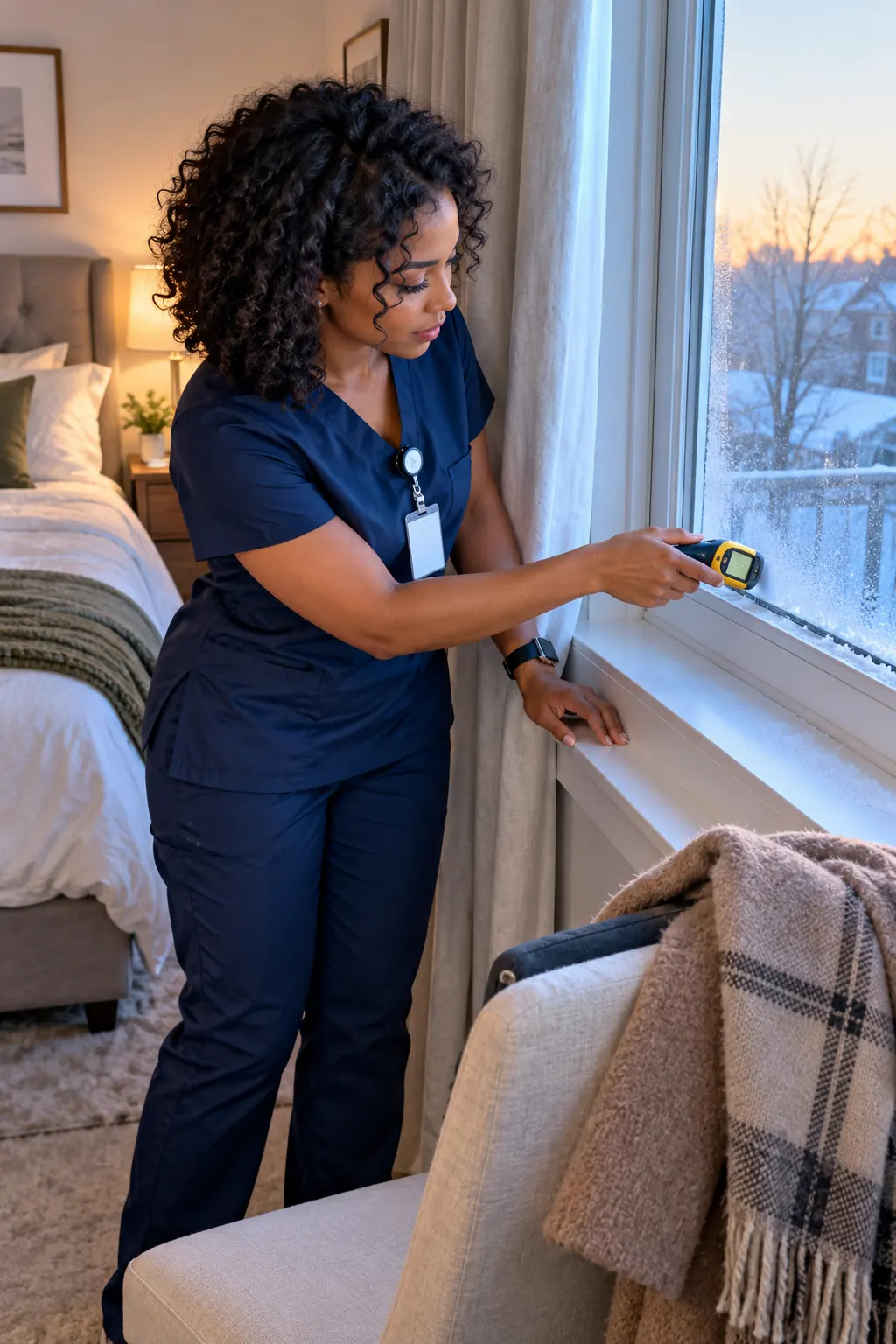
Dawn is the coldest hour of the day, and it is also the hour you walk in from work. That makes it the best time to find leaks.
Carry your thermometer room by room. Hold it near each of these spots for 2 minutes:
- Window edges and sills
- The bottom of every outside door
- Outlets on outside walls
- The floor beside your bed
Write down any spot that reads 3°F or more colder than the middle of the room. Those are your targets for the next two steps.
No thermometer? Hold a strip of tissue paper near each edge. If it flutters, air is getting in.
2. Seal Drafty Windows With Renter-Safe Insulation Film
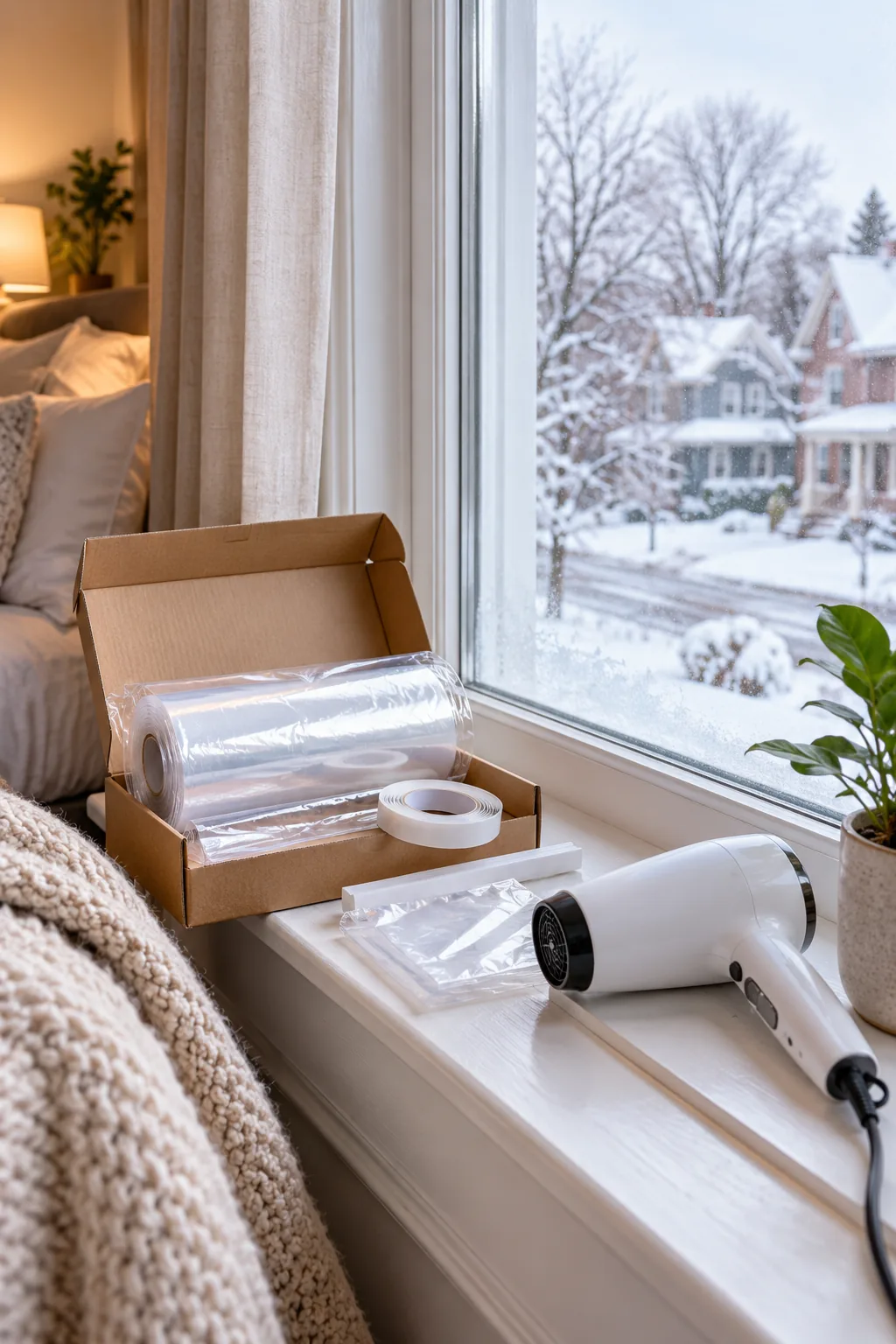
If a window made the tissue flutter, film is the cheapest fix that needs no landlord’s okay. It traps a thin layer of still air, which works like a second pane of glass.
Wipe the inside frame dry, press the double-sided tape around it, and lay the film over the tape. Then hold a hair dryer about 1/2 inch from the film and keep it moving. The wrinkles pull tight in about 2 minutes per window.
Film pairs well with the heavy curtains from these blackout bedroom ideas for nurses, since the curtain catches what the film misses.
Pro Tip
When spring comes, warm the tape with the hair dryer for 20 seconds before you peel it. Warm tape lets go of the frame without pulling paint, which keeps your deposit safe.
3. Block the Cold Air Under Your Bedroom Door
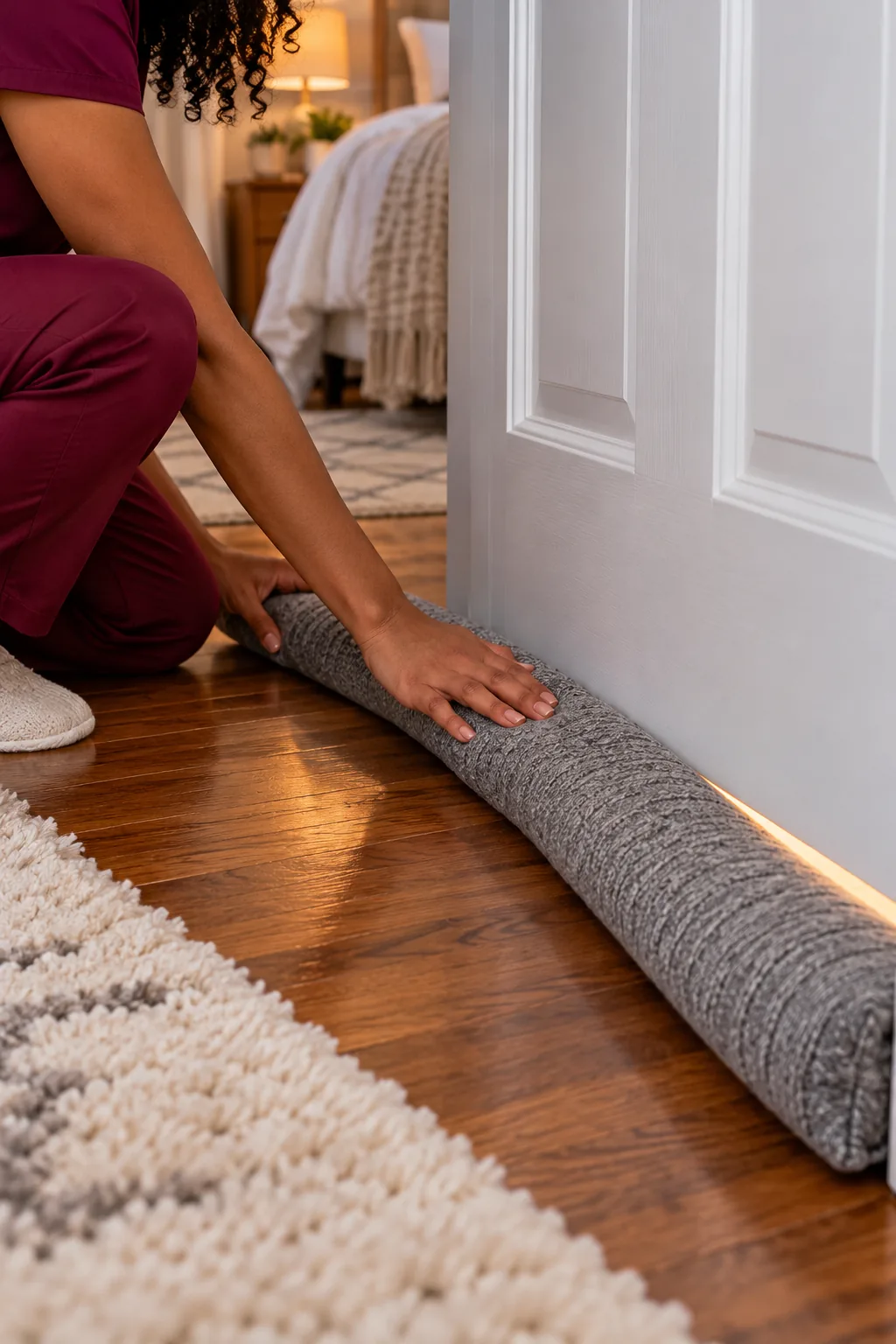
A 1/2-inch gap under a door pulls hallway air across your floor all day long.
Lay a weighted draft snake against the base on the bedroom side. A rolled bath towel works the same way for free. Bonus: it also cuts hallway noise, one of the fixes from this guide on how to soundproof a bedroom for nurses.
4. Test Your Smoke and Carbon Monoxide Detectors Before Heating Up
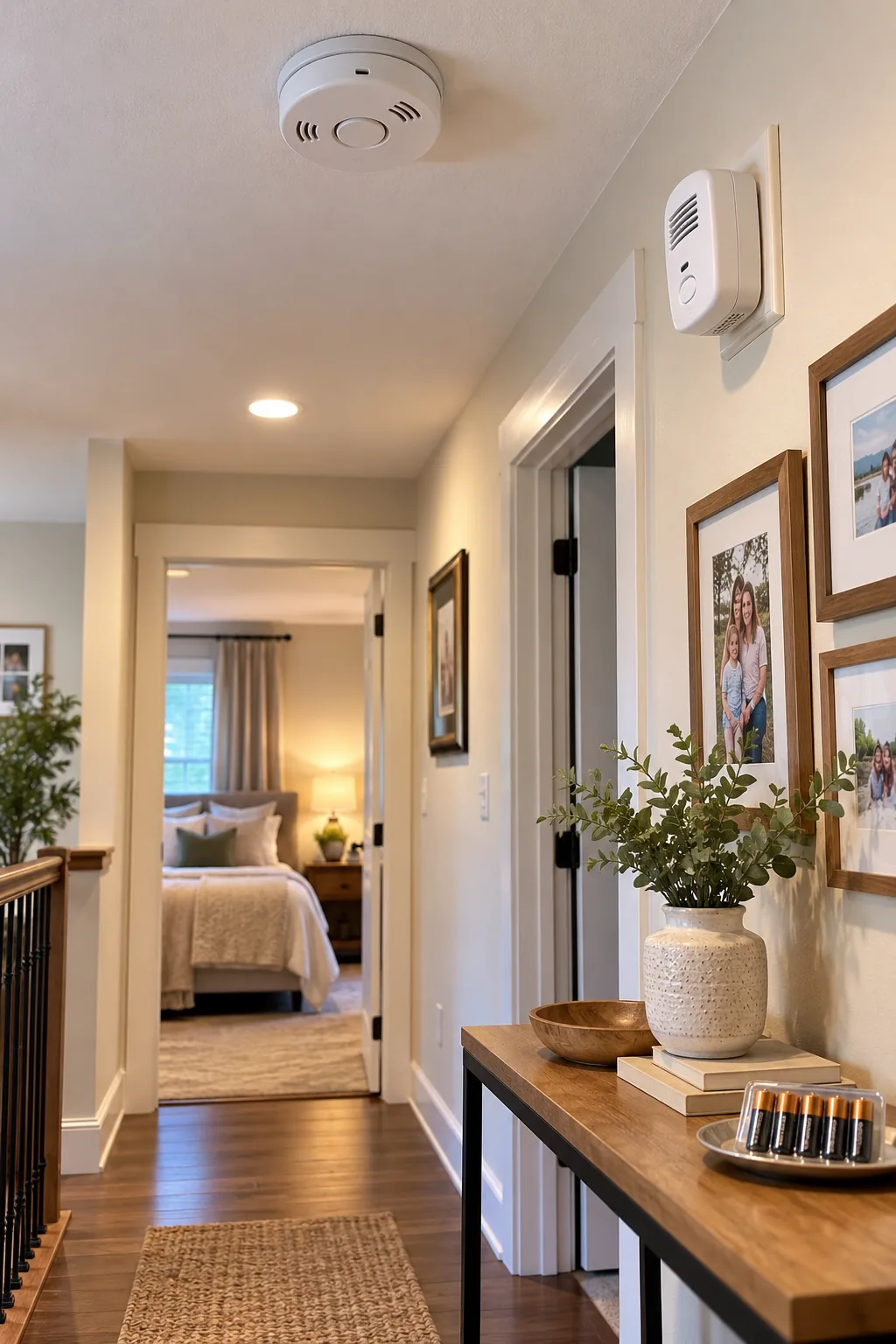
Furnaces and space heaters work their hardest in winter. A cracked furnace part can leak carbon monoxide with no smell and no warning.
Press and hold the test button on every alarm until it sounds, about 5 seconds each. Swap the batteries while you are there, even if they still work. You want one carbon monoxide alarm on each floor and one right outside the room where you sleep.
Heads Up
Earplugs and a white noise machine can drown out an alarm in the hallway. Test it with your door closed and your noise machine on. If you cannot hear it from bed, add a second alarm inside the bedroom.
5. Program Your Thermostat Around Your Sleep Hours, Not a 9-to-5
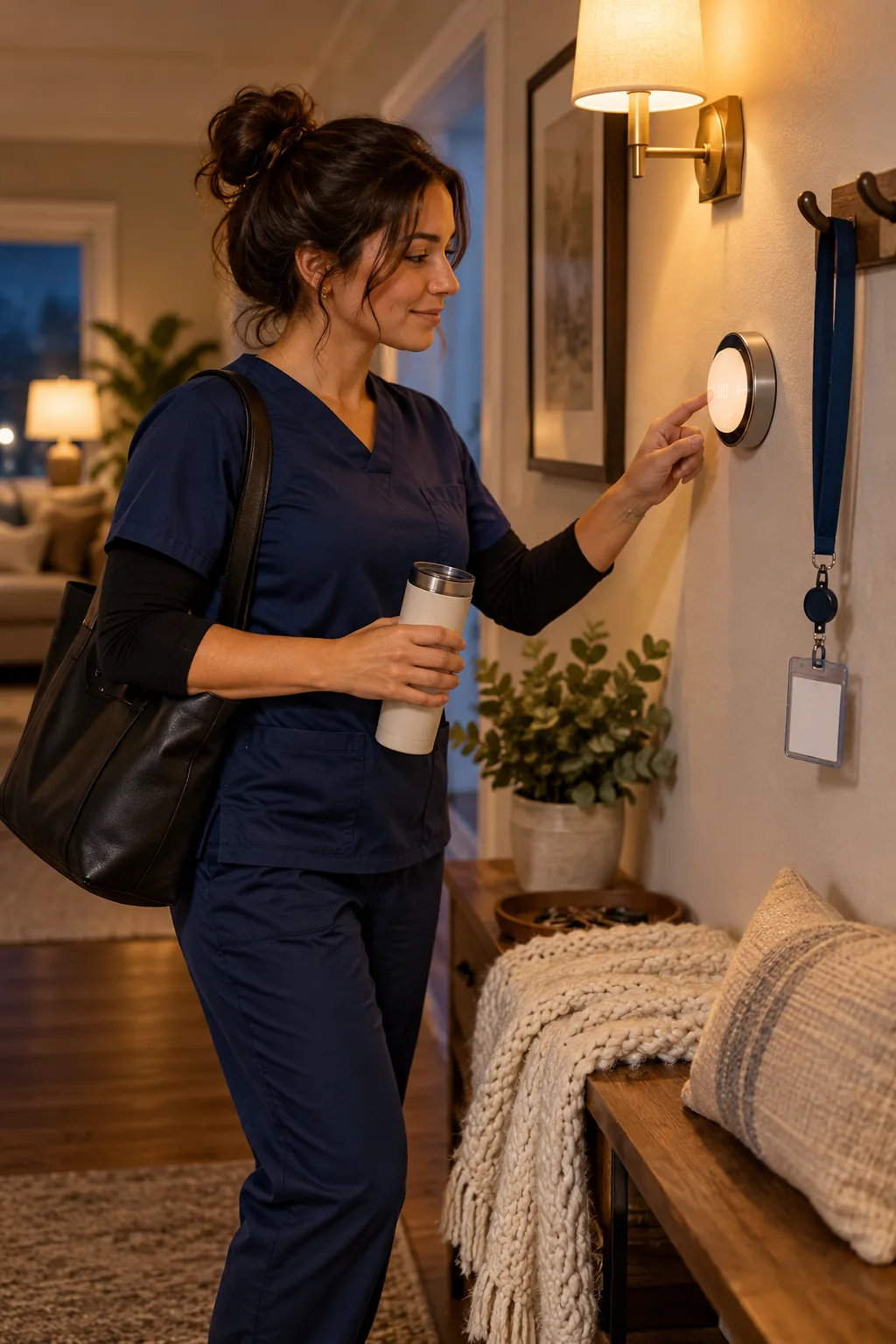
Most thermostats ship set for a daytime worker. They warm the house at 6 a.m. and cool it at night, which is backwards for you.
Open the schedule and build it around your sleep block instead:
- Sleep hours (for example, 8 a.m. to 3 p.m.): set it to 65°F
- 30 minutes before your alarm: raise it to 68°F
- At work overnight: drop it to 62°F, never below 55°F so pipes stay safe
No programmable thermostat? Tape a sticky note to it with your three numbers, and change it by hand when you walk in and before you leave.
Here is what that schedule looks like next to the little daylight winter gives a night shift nurse.
A Night Nurse’s Winter Day
Your 24 Hours, Your Heat, Your Daylight
Your Day
Thermostat
Daylight in December
What temperature should a nurse’s bedroom be for day sleep?
Most sleep experts suggest a bedroom between 60°F and 67°F. For a night shift nurse, that range matters during the day, not at night. Aim for about 65°F during your sleep block, then let the house warm up 30 minutes before your alarm so you do not wake up shivering in the dark.
6. Layer Your Bed With Flannel Sheets and a Heavy Blanket
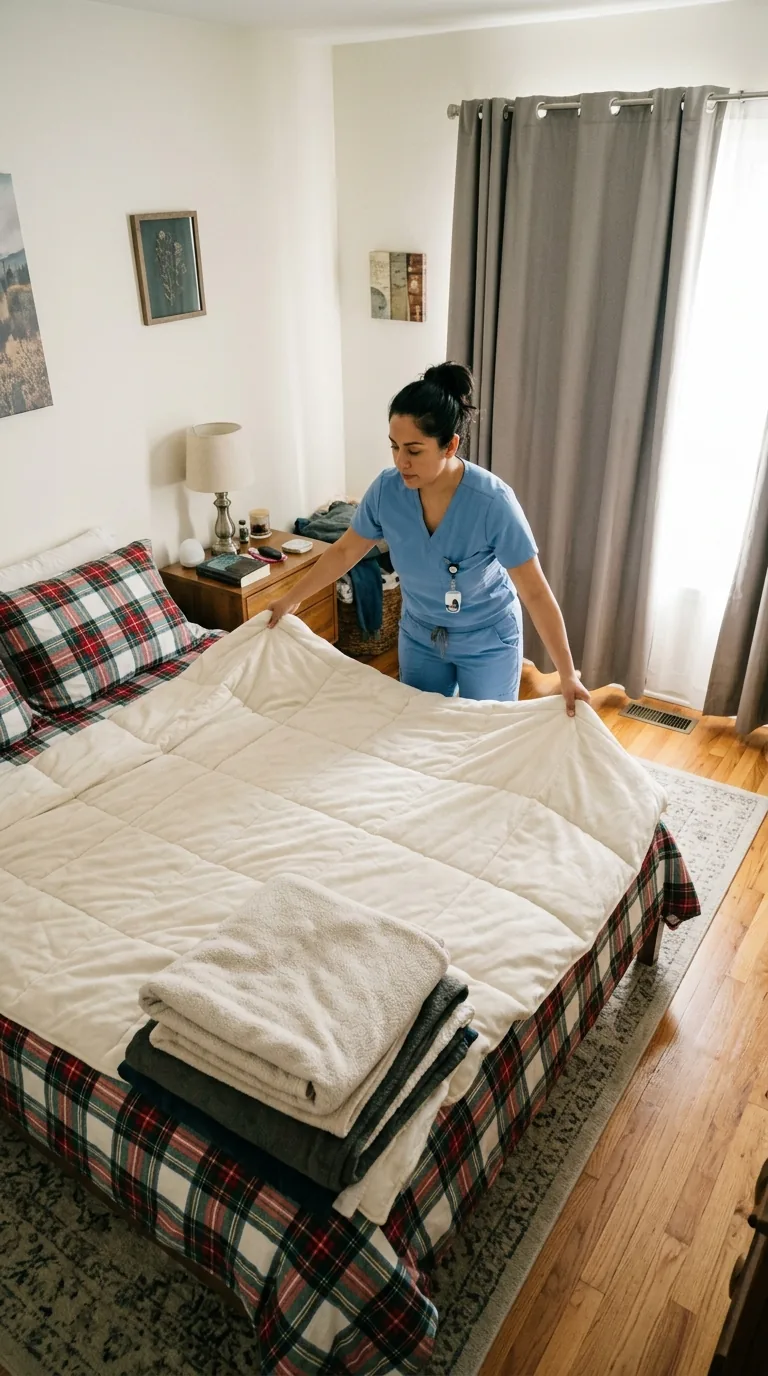
Crisp cotton sheets feel cool on purpose, and that works against you in January.
Look for flannel marked 5 ounces per square yard or heavier, since thin flannel pills fast. Stack it in layers: flannel sheet, a light blanket, then a heavy duvet on top. Layers let you kick one off when the heat comes on mid-sleep, without waking all the way up. Pick a shade from these calming bedroom color palettes for nurses so the room still feels restful.
7. Warm Your Bed 20 Minutes Before You Lie Down
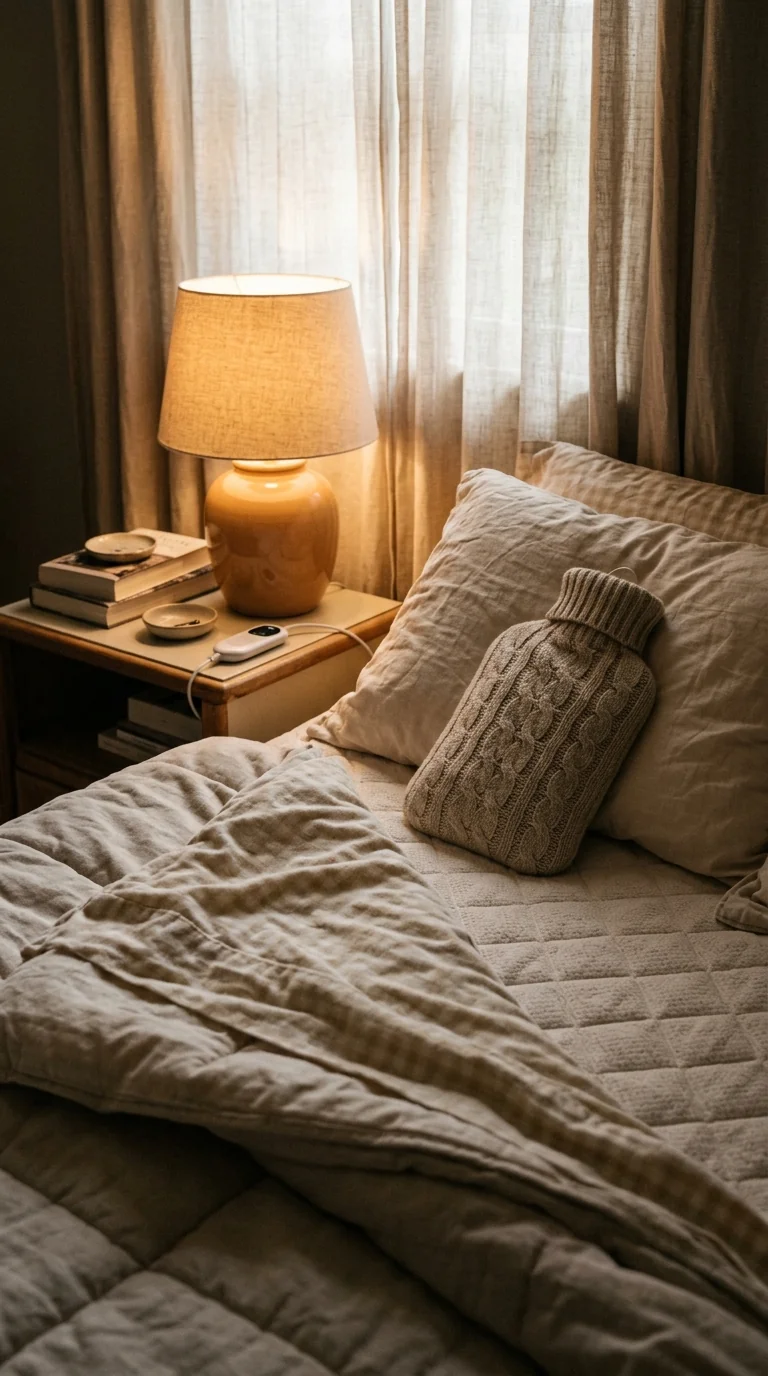
Twenty minutes on low is all a heated mattress pad needs. Switch it on the moment you walk in the door, then turn it off when you climb in, so you fall asleep warm and stay at a steady temperature.
Pick a pad with an auto shut-off of 10 hours or less. Lay it flat under the fitted sheet, since a folded or bunched pad can overheat in one spot.
No pad? A hot water bottle filled with hot tap water, never boiling, warms the foot of the bed the same way.
8. Run a Cool-Mist Humidifier to Fight Dry Winter Air
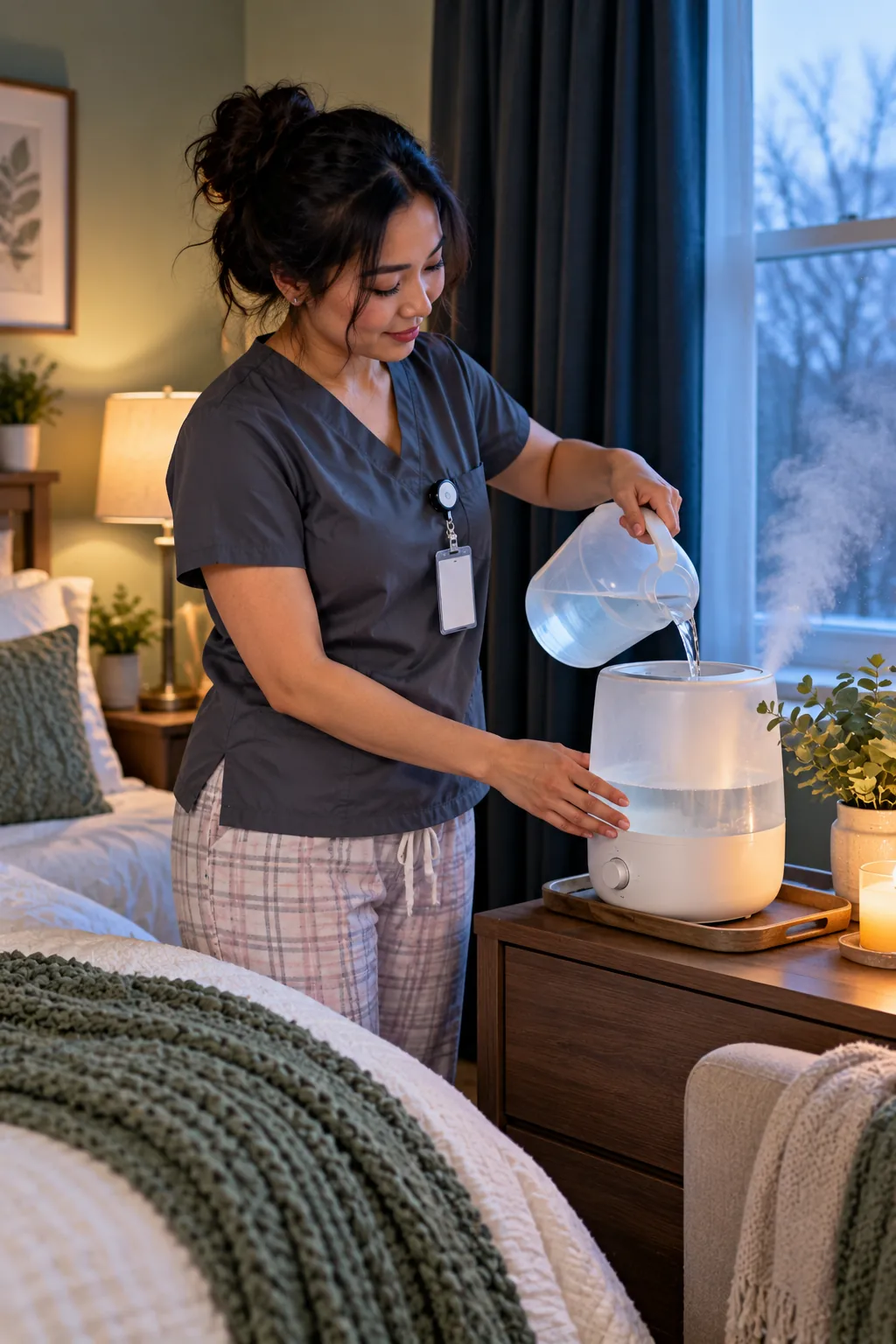
If your lips crack and your throat feels like sandpaper when your alarm goes off, the heat is drying out your room. Twelve hours of hospital air plus a furnace at home is rough on skin that is already raw from sanitizer.
Set the humidifier up so it helps without making a mess:
- Place it 3 feet from the bed, on a tray or towel
- Fill it with distilled water to stop white dust on your nightstand
- Check the hygrometer and aim for 40 to 50% humidity
- Empty and rinse the tank every morning before bed
Cool mist is the safer pick over warm mist, since there is no hot water to spill in a dark room. Your hands will thank you too, especially with the barrier tray from these bathroom reset ideas for nurses.
What humidity level helps with dry winter air?
Indoor humidity between 40% and 50% is the sweet spot for most homes in winter. Below 30%, skin cracks, lips split, and noses dry out. Above 50%, mold and dust mites grow fast. A small hygrometer costs less than $15 and tells you exactly where your bedroom sits.
9. Cover Cold Floors on the Path From Bed to Bathroom
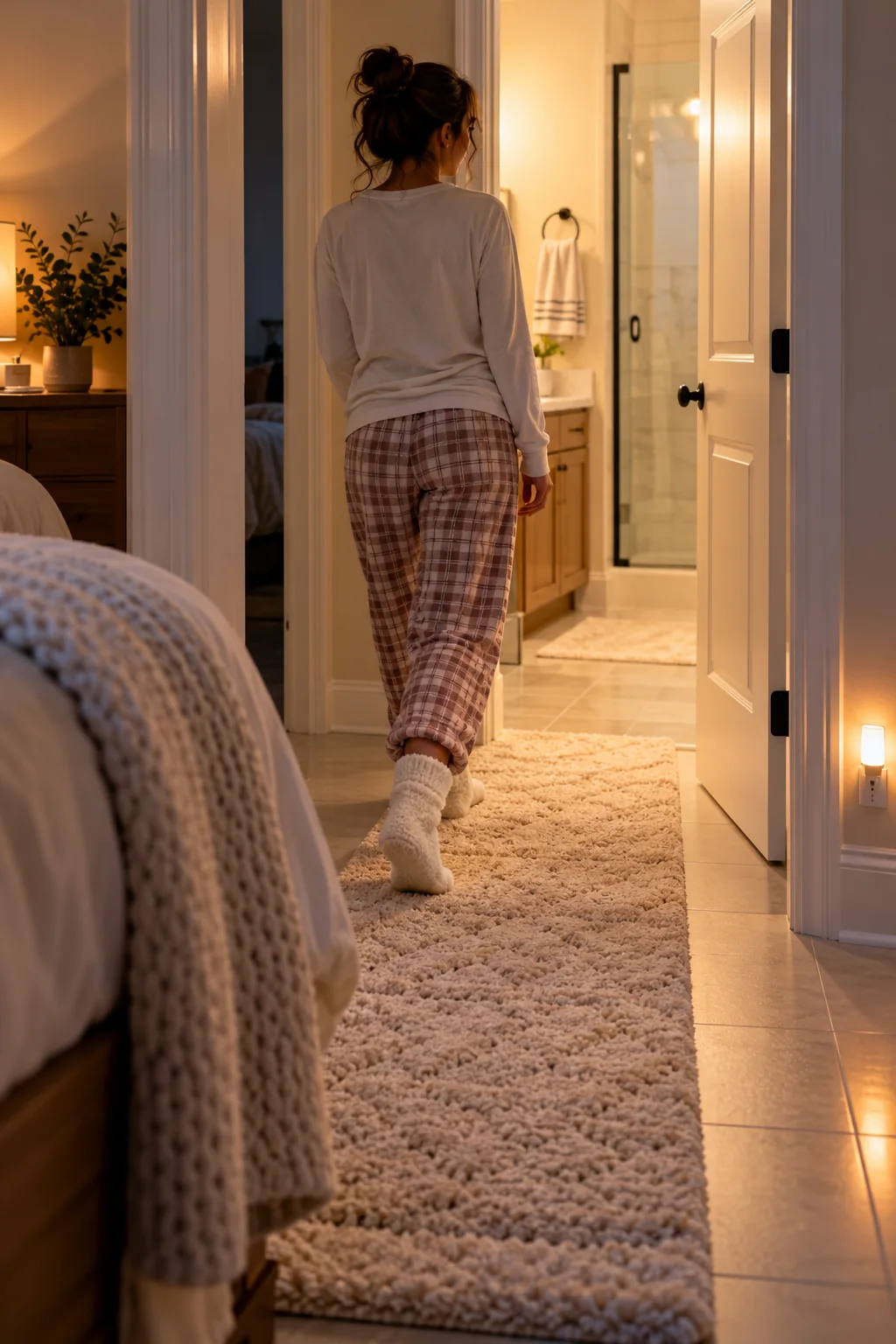
How cold is your floor when you get up at 1 p.m. to pee? Tile and laminate pull heat from bare feet fast, and the shock can wake you up all the way.
Lay a washable runner along that path with a non-slip pad underneath. The pad matters, because half-asleep feet slide.
10. Set Up a Warm Landing Spot at the Door for Your Dawn Return
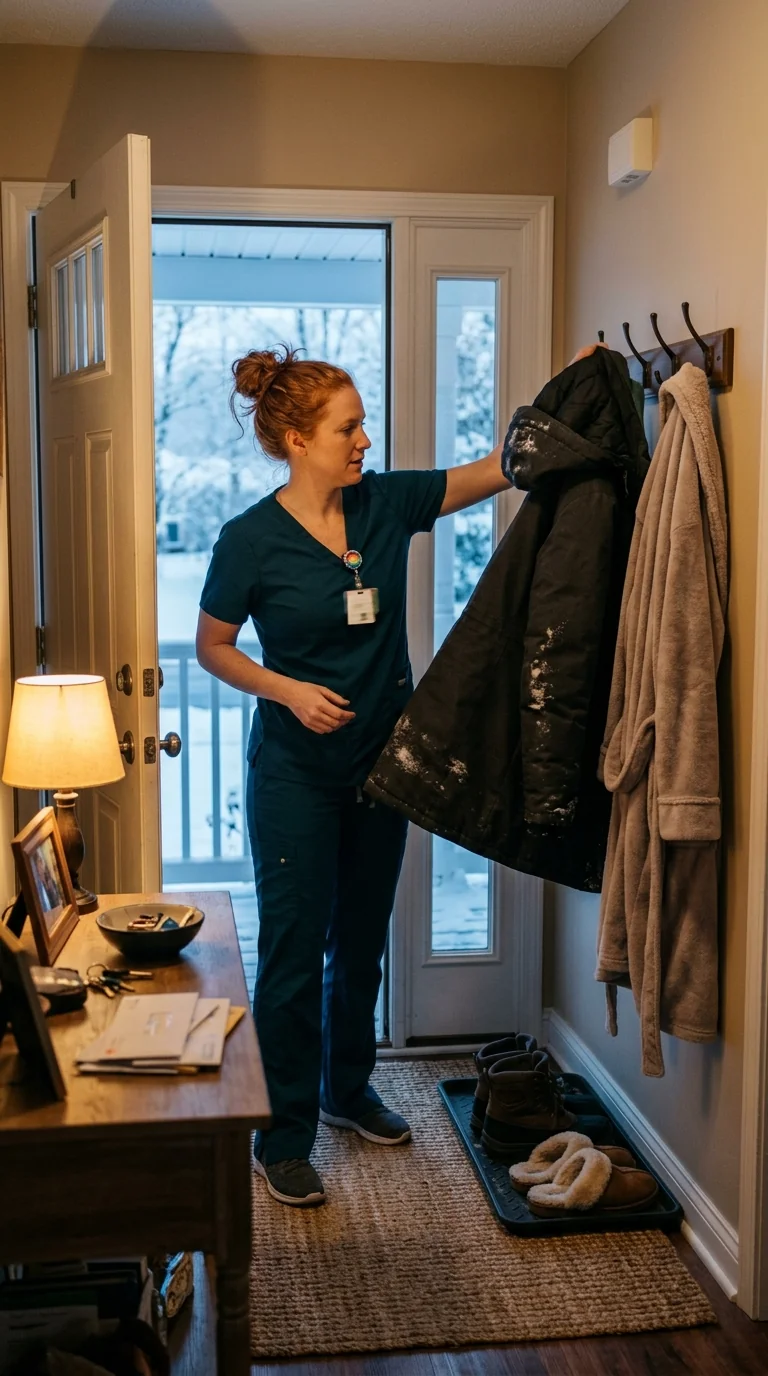
At 7:30 a.m. in January, the first thing you touch is a cold doorknob and a colder floor. A small landing spot right inside the door makes those first 2 minutes feel like home instead of a walk-in fridge.
Keep these four things within one arm’s reach of the door:
- A hook with a fleece robe you can pull on over your scrubs
- Lined slippers on a boot tray
- A basket for wet gloves and hats
- A small lamp on a plug-in timer set to switch on at 7 a.m.
Pair it with your entryway drop zone so scrubs, shoes, and badge land in one place, and follow your come-home routine from there.
11. Swap Harsh Overhead Light for Warm Lamps in the Dark Hours
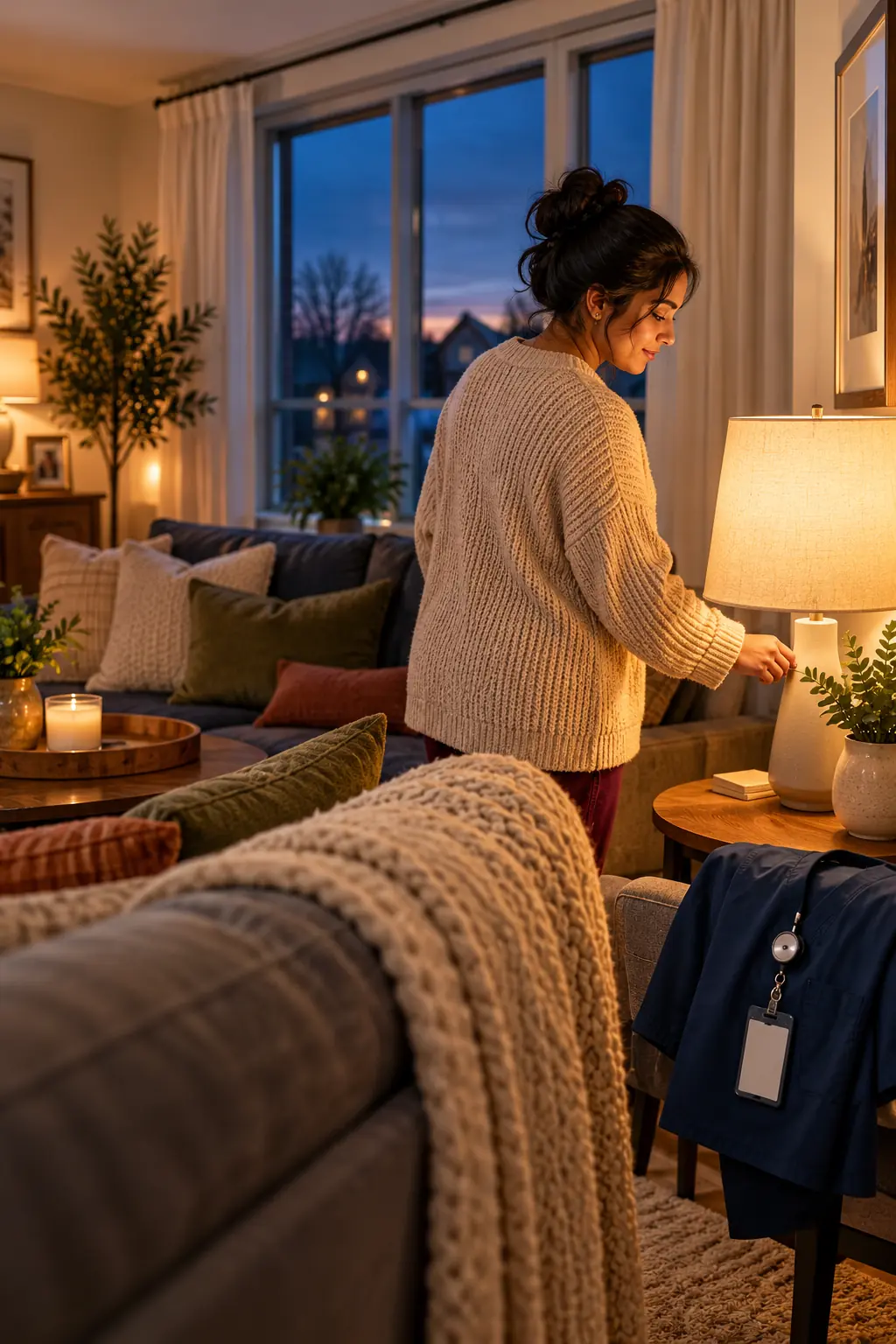
Ceiling lights feel like the unit. Lamps feel like home.
Winter means you wake at 3 p.m. and it is dark by 5. Put warm white bulbs, 2700K or lower, in the lamps where you relax, and keep them at eye level or below. Bright light stays in the kitchen for pre-shift cooking. Use those warm lamps during the last hour of your wind-down routine after night shift, too, so your body gets the “rest now” signal.
12. Place a Light Box Where You Start Your Day
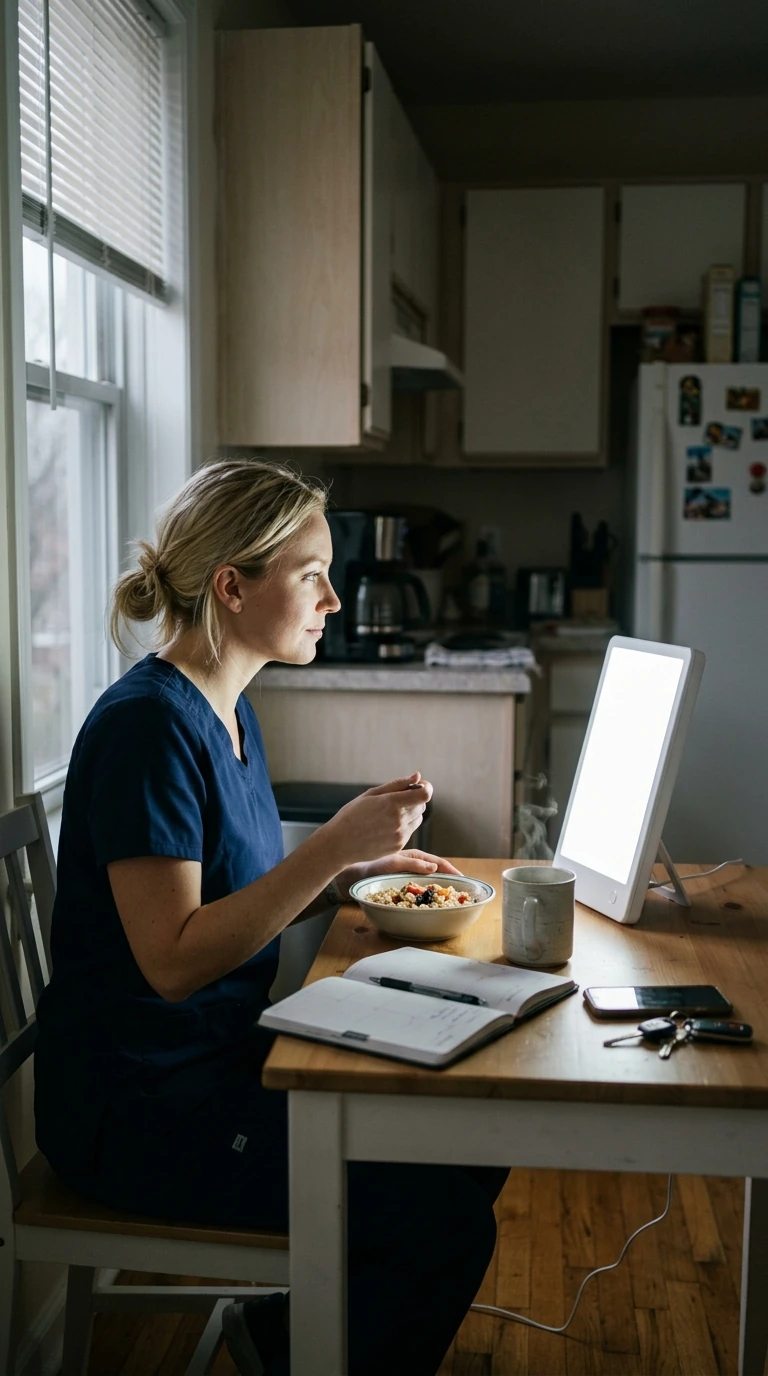
Timing is everything with a light box. Used right after you wake, it tells your body the day has started. Used in the hours before sleep, it pushes sleep away.
Set a 10,000 lux box on the table where you eat your first meal after waking. Sit 16 to 24 inches away, with the light off to one side, not straight in your eyes. 20 to 30 minutes is a typical session. You can eat, read, or scroll while it runs. This guide to night shift sleep for nurses explains more about using light to protect your day sleep.
Can night shift nurses use a light therapy box?
Yes, many night shift nurses use a light therapy box, but timing decides whether it helps or hurts. Use it soon after you wake up, before your shift, for about 20 to 30 minutes. Avoid it in the hours before you sleep. Check with your own provider first if you have eye problems or a mood condition.
13. Stock a Caffeine-Free Warm Drink Station for After Shift
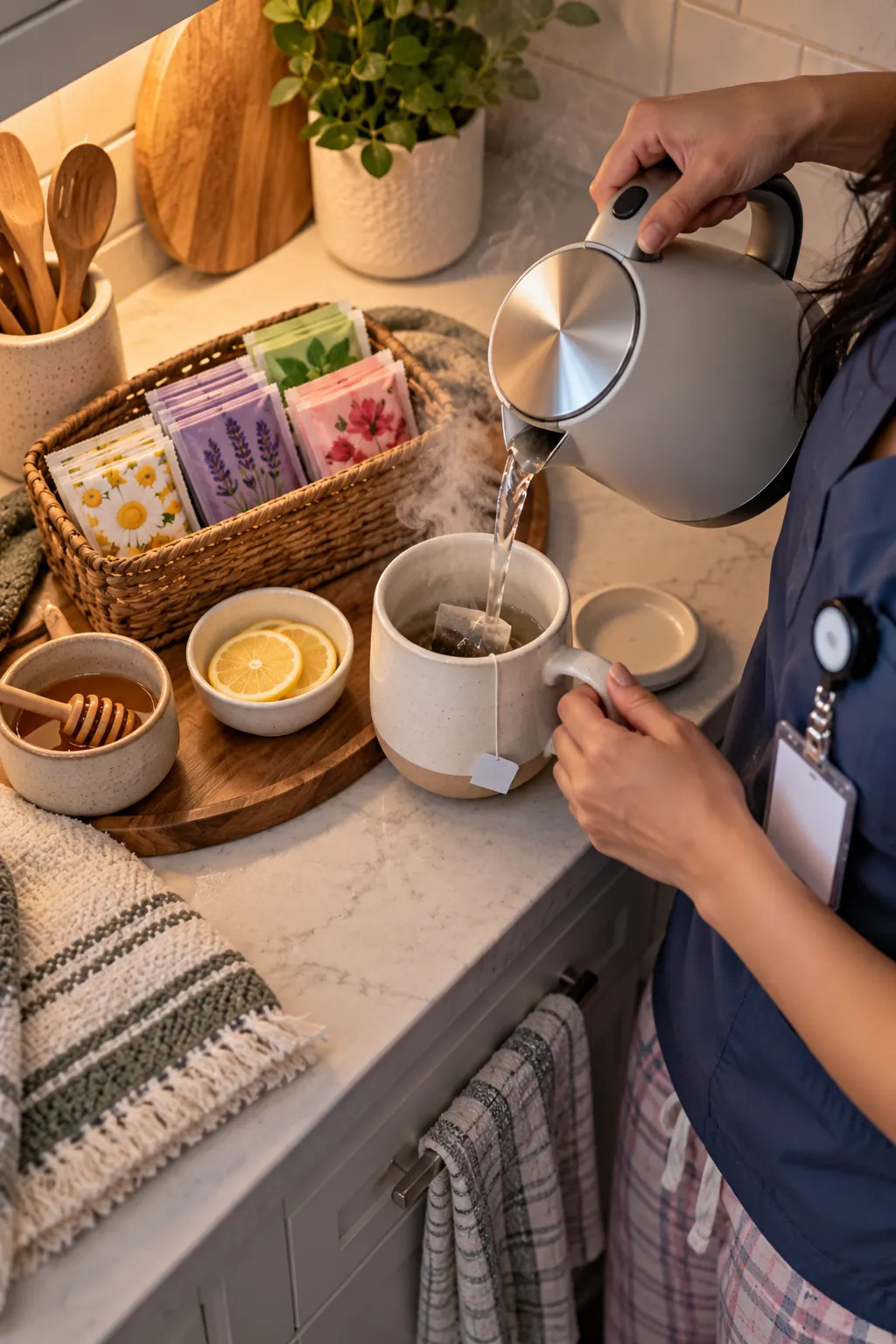
Nothing warms cold hands faster than a hot mug. The catch is that coffee within 6 hours of sleep keeps a tired brain buzzing, so this station skips it.
Set it up on one corner of the kitchen counter:
- An electric kettle with auto shut-off
- Chamomile, rooibos, or peppermint tea
- A lidded mug that keeps heat in
- Decaf or warm milk for nights you crave something richer
Carry the mug to your decompression corner and give yourself 10 minutes before bed.
14. Recheck Your Setup After the First Cold Week
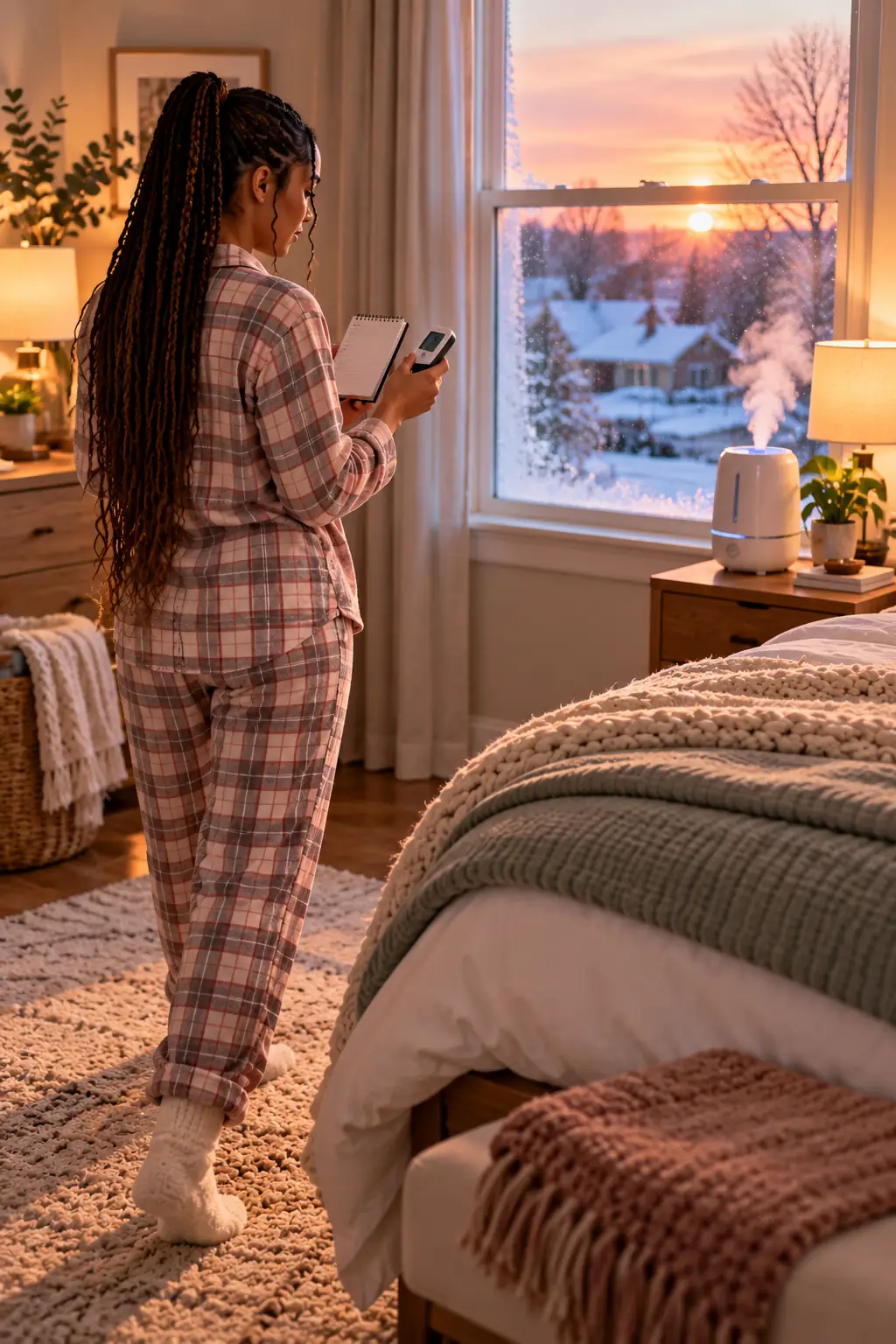
One cold week tells you more than any checklist. After your first 3 shifts, walk the house at dawn again with the thermometer and compare it to your notes from Step 1.
Look for film corners that lifted, a humidifier reading off target, or a night you woke up cold. Fix one thing at a time on your next reset day.
Use this score card on that walk-through. Count your checks and see where your house stands.
Week One Check
Your Winter Comfort Score
No spot in the house reads 3°F colder than the room center
Window film is still tight with no lifted corners
You can hear the CO alarm from bed with the door shut
The thermostat follows your sleep hours on its own
You fell asleep within 20 minutes on most days
You did not wake up cold once this week
Bedroom humidity stayed between 40 and 50%
Your lips and hands feel less dry than last week
A lamp was on and a robe was waiting every time you walked in
You got light, from the sun or a box, within an hour of waking
Winter-ready. Enjoy it.
Close. Fix one gap a week.
Redo Saturday’s steps first.
Skip These
5 Winter Comfort Mistakes Night Nurses Make
Buying a heater before fixing drafts
Heat pours straight out of a leaky window. Seal first, then decide if you still need more warmth.
Cranking the heat during day sleep
A hot room wakes you up halfway through your sleep block. Keep it near 65°F and let your bedding hold the warmth.
Leaving the heated pad on all day
Its job is to pre-warm the bed. Running it through your whole sleep leaves you sweaty and restless by noon.
Refilling the humidifier on top of old water
Standing water grows mold fast. Empty the tank each morning and start fresh.
Turning on bright lights right before bed
Bright ceiling light at 8 a.m. tells your brain the day is starting. Stick to warm lamps after you get home.
FAQ
Winter Questions Night Nurses Ask
Is it safe to run a space heater while I sleep?
It is safer to warm the room before bed and turn the heater off. If you do run one, pick a model with tip-over and overheat shut-off, plug it straight into the wall, and keep 3 feet of clear space around it.
Will window film block my view?
No. Once it shrinks tight, the film is clear, with a slight blur at most. Daylight still comes in, so pair it with blackout curtains for sleep.
Can I do all of this in a rental?
Yes. Every step here peels off, plugs in, or sits on the floor. Nothing needs a drill or your landlord’s approval.
How much does the whole setup cost?
Buying everything new runs about $200 to $400, with the heated pad and light box costing the most. Start with a thermometer, window film, and a draft snake for under $50, then add the rest over the season.
Save or Print
Winter Comfort Quick Reference
Grab These
- Thermometer and hygrometer
- Window film kit and hair dryer
- Draft snake
- Flannel sheets and heavy blanket
- Heated mattress pad
- Cool-mist humidifier
- Runner with non-slip pad
- Robe, slippers, and timer lamp
- 2700K bulbs
- Light box (optional)
- Kettle and caffeine-free tea
Do These in Order
- Find cold spots at dawn
- Film drafty windows
- Block the door gap
- Test smoke and CO alarms
- Set thermostat to your sleep
- Layer flannel bedding
- Pre-warm the bed 20 min
- Humidity at 40 to 50%
- Rug on the bathroom path
- Warm landing at the door
- Warm lamps after dark
- Light box after waking
- Caffeine-free drink station
- Recheck after 3 shifts
A Warmer House for the Darkest Shifts
Your home now holds its heat, keeps your sleep hours warm and quiet, and greets you with light when the sky will not.
That is what this guide for nurses working through the dark months was built to do: take one weekend of work and make every cold dawn a little softer.
Next, round out your day sleep with this guide on how to sleep during the day as a night shift nurse.
Save this to your winter home board so it is ready the first time the cold comes back.
Saturday
Seal and Heat
Steps 1 to 7: cold spots, film, door gap, alarms, thermostat, bedding, heated pad.
Sunday
Comfort and Light
Steps 8 to 13: humidifier, rug, door landing, warm lamps, light box, drink station.
After 3 Shifts
Recheck
Step 14: walk the house at dawn and fix one weak spot at a time.
