

For most people, fall back means an extra hour of sleep. For night shift nurses, it means a 13-hour shift, an hour that happens twice, and a bright drive home that makes day sleep harder.
Spring forward brings its own problems: an 11-hour shift, a darker commute when you are already short on sleep, and a body clock that does not want to move.
This daylight saving time survival guide covers both. You will find out how your extra hour gets paid, what to ask your charge nurse before report, and how to chart the hour that repeats. You will also learn which clocks at home will not update themselves, how to keep the earlier sunlight out of your bedroom, and how to shift your sleep before spring forward so Sunday does not knock you flat.
The next change is Sunday, November 1, 2026. Most of these tips take less than 10 minutes, and many are things you set up once and use every year.
1. Put Both Clock Changes on Your Calendar Today

Fall back sneaks up on night shift nurses because it happens in the middle of a shift, not during sleep. Most people get an extra hour in bed. You get an extra hour at the bedside.
Add these dates to your phone now, each with a reminder one week before:
- Fall back: Sunday, November 1, 2026, at 2 a.m.
- Spring forward: Sunday, March 14, 2027, at 2 a.m.
- Next fall back: Sunday, November 7, 2027
Then check if you are scheduled for either Saturday night. That one shift shapes the rest of this plan.
FALL BACK
Sunday, November 1, 2026
A 7 p.m. to 7 a.m. shift runs 13 hours
SPRING FORWARD
Sunday, March 14, 2027
A 7 p.m. to 7 a.m. shift runs 11 hours
Most of Arizona and all of Hawaii do not change their clocks.
2. Find Out How Your Extra Hour Gets Paid

The clock says 7 a.m., and you have been on the floor for thirteen hours. Will your paycheck show twelve?
Ask payroll or your manager these questions before the weekend:
| Ask this | Why it matters |
|---|---|
| Is the extra hour paid at my regular rate or as overtime? | It can push you over 40 hours that week |
| Do I clock the hour, or does payroll add it? | Some time clocks need a manual fix |
| How is the 11-hour spring shift handled? | Some hospitals ask you to cover it with PTO |
In the US, hourly workers have to be paid for every hour they actually work. How that hour shows up on your check depends on your hospital, so screenshot your time card the next day.
3. Ask Your Charge Nurse How the Repeat 1 a.m. Hour Works

Every hospital handles the time change a little differently. The nurse who asks at 7 p.m. avoids the scramble at 1:58 a.m.
Get these three answers at or before report:
- How does our charting system label the hour that repeats?
- Who checks scheduled meds, drips, and timed labs at the change?
- Does anyone leave at the original 7 a.m., or does the whole crew stay the extra hour?
Write the answers on your report sheet. You will be glad you did at 2 a.m., when everyone is asking the same thing.
Saturday Night, Fall Back
The Night That Repeats an Hour
At 1:59 a.m., the clock jumps back to 1:00 a.m. That is your thirteenth hour.
4. Chart the Repeated Hour So No Entry Gets Lost

Two different 1:15 a.m. vital signs can look like a duplicate, or like one of them never happened. Clean charting on this night protects you and your patient.
Use the system’s label. Many charting systems mark the second hour differently. Use that label for anything you chart in the repeated hour.
Add a short note when timing matters. For a PRN, a pain reassessment, or a change in condition, a one-line note saying which hour it was clears up any confusion later.
Recheck your 24-hour totals. On fall back day, the “day” has 25 hours. Make sure intake and output totals account for the extra hour.
DO
Use your system’s label for the second hour
Add a note when timing matters
Check totals for a 25-hour day
SKIP
Guessing which 1 a.m. an entry was
Changing a time to make it look neat
Charting from memory at 6 a.m.
Your hospital’s policy always comes first.
5. Walk the Room at 2 a.m. to Check Clocks, Pumps, and Med Times

The hospital network may update the computers on its own. The IV pump, the bedside monitor, and the wall clock in Room 12 often do not.
Make a quick round right after the change:
- Compare each pump and monitor time to your charting system
- Report any device that shows the wrong time instead of guessing
- Remember that a med due every 4 hours is due 4 real hours later, whatever the clock says
- Ask pharmacy or your charge nurse before shifting any scheduled dose
Follow your unit’s time change policy first. This round only takes about 10 minutes, and it catches problems before day shift does.
Right After the Change
The 2 a.m. Room Round
IV pumps match the charting time
Bedside monitors show the new time
Wall clocks in patient rooms
Timed labs and meds still line up
Anything wrong gets reported, not guessed
6. Pack Food and Coffee for 13 Hours, Not 12
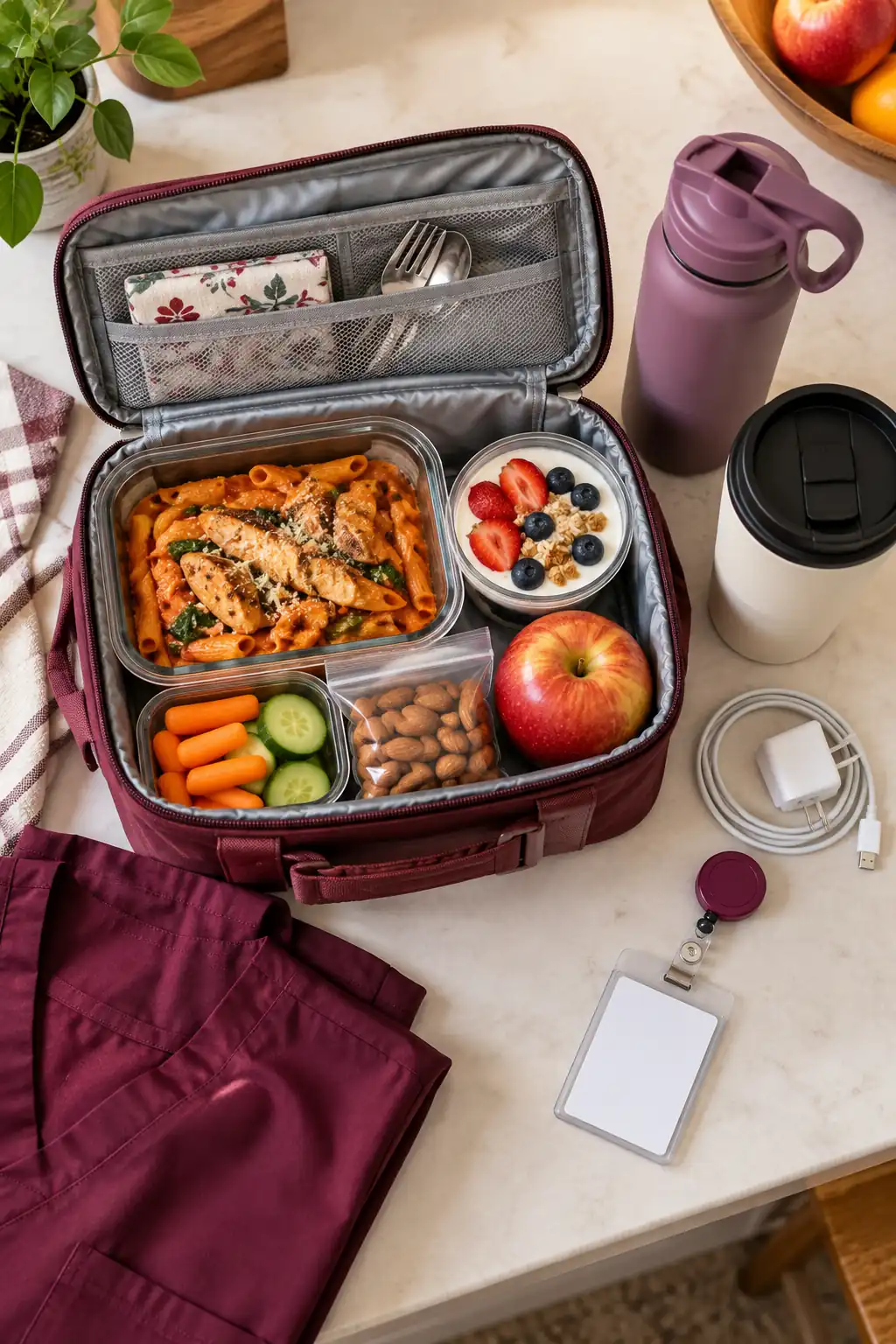
Hour thirteen hits hardest around 6 a.m., when the snacks are gone and the vending machine is out of everything good.
Plan your fuel around the longer night:
| When | What to have |
|---|---|
| Before you leave | A real meal, not only coffee |
| Around midnight | A snack with protein and a full water bottle |
| By 3 a.m. | Your last cup of coffee |
| The extra hour | One small packed snack, like nuts or yogurt |
The 3 a.m. coffee cutoff matters more than usual. You still need to fall asleep after you get home, and that is an hour later than you planned.
Pack for 13, Not 12
Last coffee by 3 a.m.
7. Shade Your Eyes on the Brighter Drive Home

After fall back, the sun comes up about an hour earlier by the clock. Your 7 a.m. drive goes from dim to full daylight overnight, and that bright light tells your brain it is morning, right when you need to sleep.
Protect your sleep on the way home:
- Keep wraparound sunglasses in the car, not in your locker.
- Put them on once the sky is light, never while it is still dark.
- Skip the coffee run and the drive-through line, and go straight home.
The light, dark and body clock guide for night shift nurses explains why that morning light works against you.
Your 7 a.m. Drive Home
Sunglasses on when the sky is light. Never in the dark.
8. Run a Light Leak Test on Your Bedroom Window

Curtains that worked in October can let light in all of a sudden. The sun now hits your window an hour earlier in your sleep, so small gaps you never noticed start to glow.
Lie in bed at 9 a.m. on a day off and look for light here:
| Leak spot | Quick fix |
|---|---|
| Top of the curtain rod | A valance or a wraparound rod |
| Sides of the window | Curtains wider than the frame by 4 inches a side |
| Under the door | A door draft stopper |
For bigger fixes, these blackout bedroom ideas for nurses cover every budget.
Where Light Sneaks In
9. Push Your Alarm One Hour Later After the Long Shift

You walk in the door an hour later than your body expects, after the longest shift of the year. This is not the day to fold laundry.
Make this one sleep count:
- Skip chores and screens, and go straight to your wind-down
- Set your alarm 1 hour later than usual, for this sleep only
- Keep the room cool, around 65°F, because the sun is already up
- Go back to your normal wake time before your next shift
If your post-shift routine needs work, this wind-down routine after a night shift gets you to bed faster.
Your Sleep, Shifted One Hour
A NORMAL POST-SHIFT DAY
FALL BACK SUNDAY
Same 7 hours of sleep. One hour later, for one day only.
10. Give Your Body 3 Days to Catch Up

The clock changes in one second. Your body clock takes a few days to follow. Feeling foggy on Tuesday is normal, not a sign you did something wrong.
Day 1. Expect to feel off. Keep plans small, and eat meals at your usual clock times.
Day 2. Get bright light soon after you wake up, even 15 minutes outside or by a window.
Day 3. Most people feel close to normal again by now. If you work this night, keep your usual pre-shift routine and skip the extra coffee.
Save big decisions and long drives for after day 3 when you can.
The 3-Day Recharge
11. Reset Every Manual Clock When You Get Home

Your phone changed itself at 2 a.m. The lamp timer in your bedroom did not, and on Sunday afternoon it may click on an hour early, right in the middle of your sleep.
Before bed, fix the clocks that do not update on their own:
- Lamp timers and outlet timers
- Bedside alarm clock
- Coffee maker and oven
- Car dashboard
- Thermostat schedules
A 5-minute sweep now saves you from a surprise wake-up later. Do the same sweep every spring.
CHANGES ITSELF
YOU CHANGE IT
Start with the bedroom. That is the one that can wake you.
12. Start Moving Your Sleep 4 Days Before Spring Forward

Spring forward is the harder change. You lose an hour, and your body has to fall asleep “earlier” than it wants to.
If you have days off before the change, move a little each day instead of all at once:
| Day | Go to sleep and wake up |
|---|---|
| Wednesday | 15 minutes earlier than usual |
| Thursday | 30 minutes earlier |
| Friday | 45 minutes earlier |
| Saturday | 1 hour earlier |
By Sunday, your body is already on the new time. For bigger schedule switches, read how to flip your sleep schedule as a nurse.
Spring Forward Prep
Four Small Steps, Not One Big Jump
13. Take a 90-Minute Nap Before Every Shift That Week

The week after spring forward, most night nurses go into every shift short on sleep. A planned nap fills the gap before it turns into a 4 a.m. crash.
How to time it:
- Lie down 3 to 4 hours before you leave for work.
- Set an alarm for 90 minutes. That is about one full sleep cycle, so you wake up less groggy.
- Get up when it rings, open the curtains, and drink a full glass of water.
- Leave at least 1 hour between waking and driving.
A 20-minute nap works too if 90 minutes will not fit. Anything in between can leave you foggier than when you lay down.
The Pre-Shift Nap Window
Example for a 7 p.m. shift.
14. Know the Signs of a Drowsy Drive Home After Spring Forward

Spring forward flips the morning drive the other way. Your 7 a.m. commute is suddenly darker, and you are already short an hour of sleep.
Watch for the warning signs. Heavy eyelids, yawning over and over, missing your exit, drifting over the lane line, or not remembering the last few miles.
Pull over if even one shows up. Find a safe, lit parking lot, lock the doors, and nap for 20 minutes.
Line up a backup before the shift. Save a rideshare app on your phone or ask a partner to be on call for a pickup. Turning the radio up or opening the window does not fix tiredness.
WATCH OUT
Pull Over If You Notice Any of These
15. Text Your Family the New Quiet Hours

Your family’s clocks changed too, and nobody remembers that your sleep moved with them. One message on Saturday heads off a Sunday afternoon of doorbells and vacuums.
Put these in a family group text:
- Your new sleep window for Sunday and Monday
- The quiet hours for the house, in the new time
- Who handles school drop-off on Monday morning
- That kids’ bedtimes move with the clock too
Pin the message, or stick a copy on the fridge. For more ways to protect day sleep at home, read this guide to night shift sleep for nurses.
Family Group
Clocks change tonight. I am sleeping 9:30 a.m. to 4:30 p.m. Sunday.
Quiet house until 4:30, new time. Dad has school drop-off Monday.
Got it. Kids are on new bedtime too.
Sleep well!
Two Changes, One Plan
The clock changes twice a year, and now you have a plan for both. Fall back is about protecting your sleep from early light and a long night. Spring forward is about protecting your drive home and easing your body into the lost hour.
Pick three tips to try this weekend: ask about pay, check the room clocks at 2 a.m., and fix the lamp timer before you sleep. Bring this daylight saving time survival guide back out in March.
To keep your days off from disappearing after the change, see where your hours go with the 3×12 Hour Map Calculator for Nurses.
Save this to your night shift board so it is ready the next time the clocks change.
Same plan, every November and every March.
