
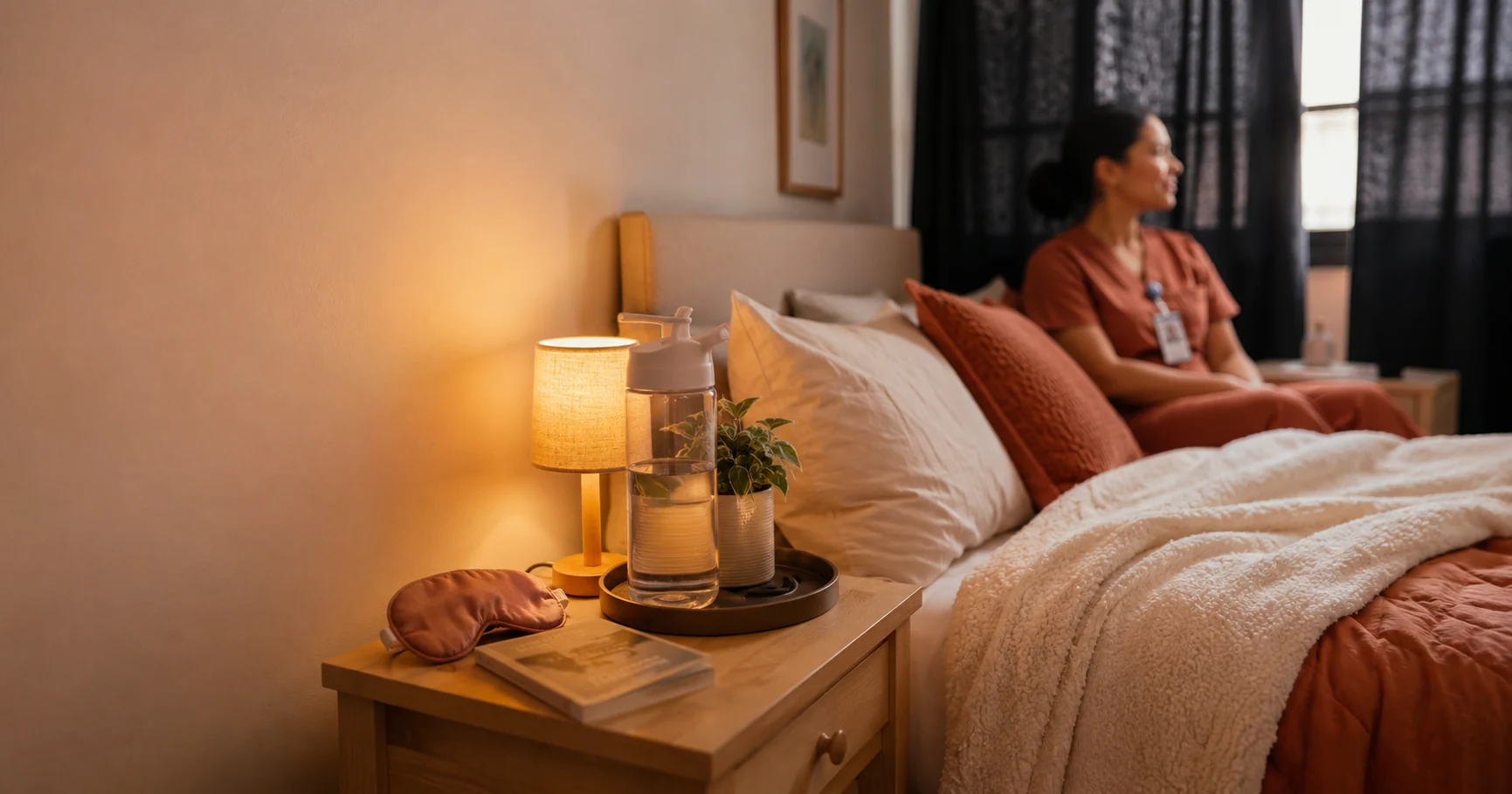
Your nightstand is the last thing you touch before a few hard-won hours of daytime sleep, and the first thing you reach for when the alarm pulls you back into another shift.
For night shift nurses, that small surface does a big job. It has to help you fall asleep when the sun is up, keep your essentials within a groggy arm’s reach, and get you out the door twelve hours later without a scramble.
Most bedside setups are built for people who sleep when it’s dark. Yours can’t be.
Think of it as one piece of the bigger picture in how to sleep during the day.
These nightstand setup ideas for nurses are built around the real problems of the job: light that won’t quit, a house that forgets you’re sleeping, cracked hands, aching feet, and a mind that keeps replaying the shift.
Some are five-minute swaps. Some rethink the whole corner for a tight bedroom or a rental.
None of them ask you to have a big space or a big budget. Pick the few that fit your room and your routine, and let the rest wait until you need them.
1. An Amber Lamp Setup That Won’t Wreck Your Morning Sleep
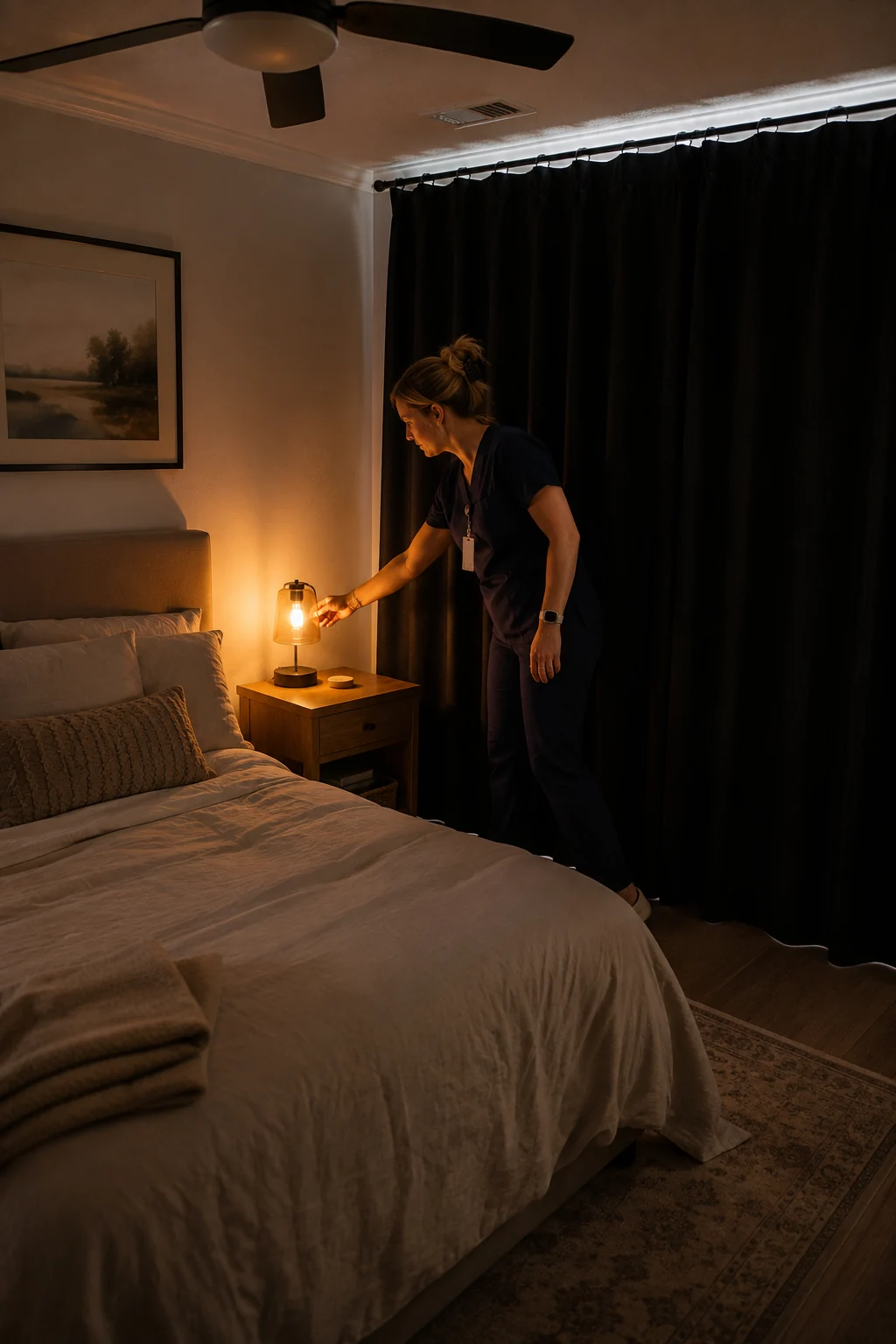
Bright white light tells your brain it’s daytime, which is the last signal you want after a twelve-hour shift.
Swap the bulb for a warm amber or red-toned light and your body stays in wind-down mode.
Red-toned bulbs are cheap and last for years, so it’s a one-time swap.
Paired with a full blackout bedroom setup, the low glow gives your brain no reason to think it’s noon.
Here’s how to set it up so the glow works with you:
Pick a bulb in the 1800K to 2200K range, or a lamp with a built-in amber setting.
Aim the light down toward the table, never up at your face.
Set it on the lowest brightness you can still read by.
Dimmable models let you drop the light lower as you get sleepier.
2. A White Noise Corner That Masks the Daytime World
Daytime brings mail trucks, lawn mowers, and a doorbell that doesn’t know you worked all night.
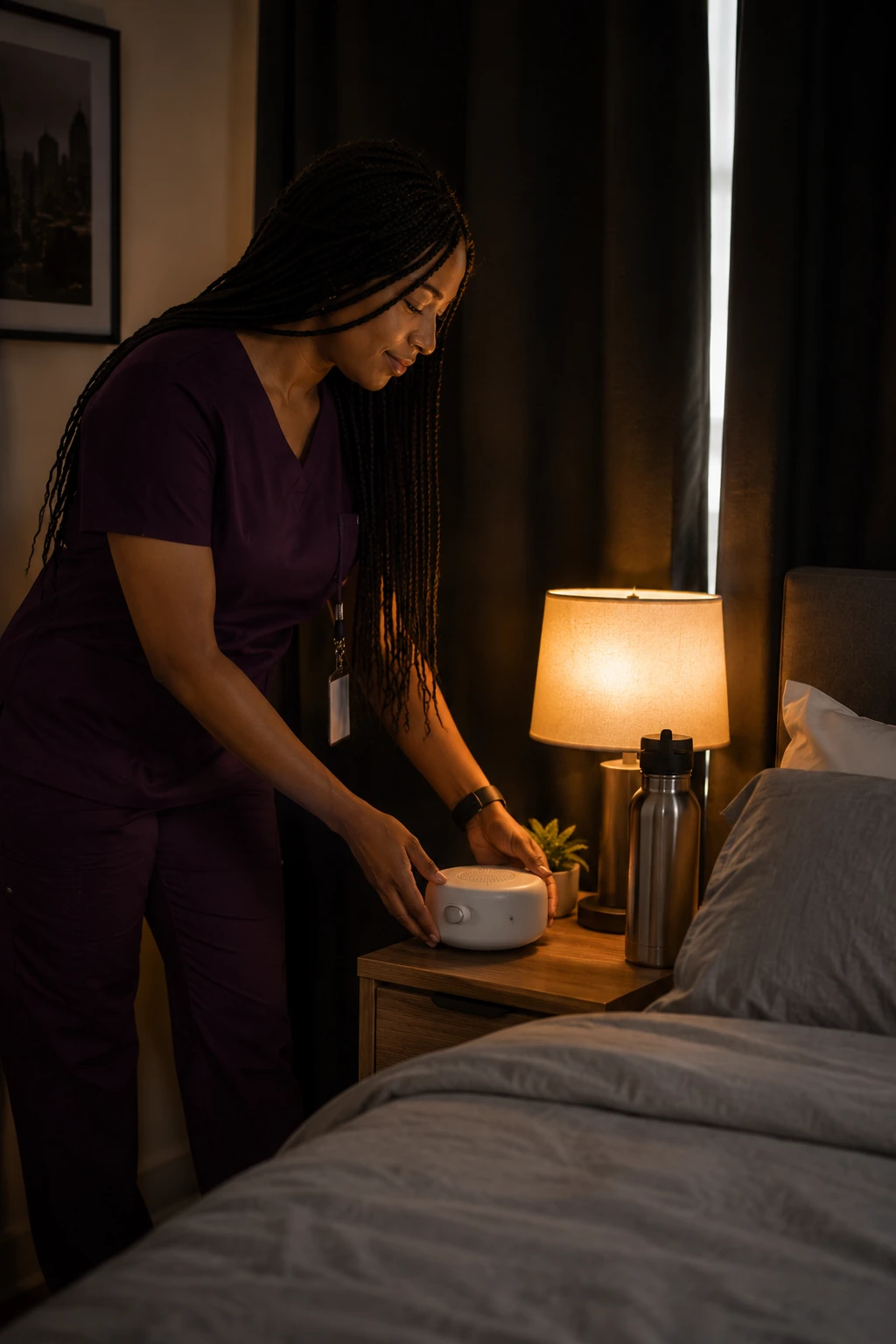
A small white noise machine on the nightstand turns that patchy racket into one steady hum your brain can sleep through.
Set it near the head of the bed, low enough to blanket sound without blaring.
It quietly covers the things that jolt you awake:
- Street traffic and car doors
- Neighbors and TVs through the wall
- Deliveries and the doorbell
- Kids or pets in the next room
A model with a backup battery keeps working if the power blips mid-morning.
3. A Quiet Bedside Fan for Warm-Room Sleep
Sleeping through the day often means sleeping through the warmest hours.
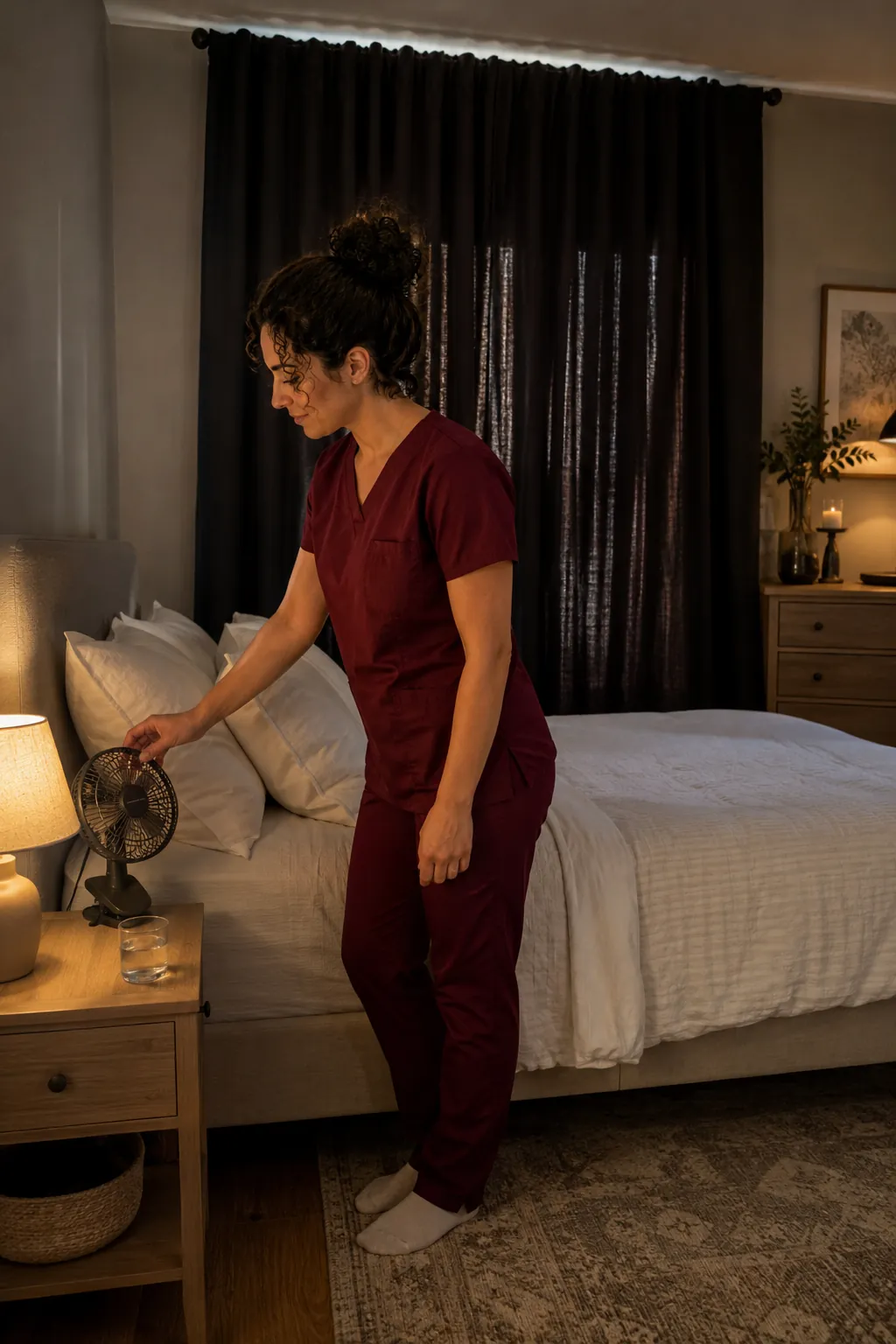
A small, quiet fan on or beside the nightstand cools you and adds a soft hum at the same time.
Point it across the bed, not straight at your face, so you don’t wake up stuffy.
Set it up in three quick moves:
- Place it low and angled across the mattress
- Run it on the lowest speed that still moves air
- Aim it away from any loose papers on the table
A rechargeable model with a clip lets you move it wherever the room runs hot.
- ▸Cools the room during peak daytime heat.
- ▸Adds steady low noise that softens outside sound.
- ▸Runs on battery when you nap somewhere new.
4. A Small Humidifier for Dry, Hospital-Air Throats
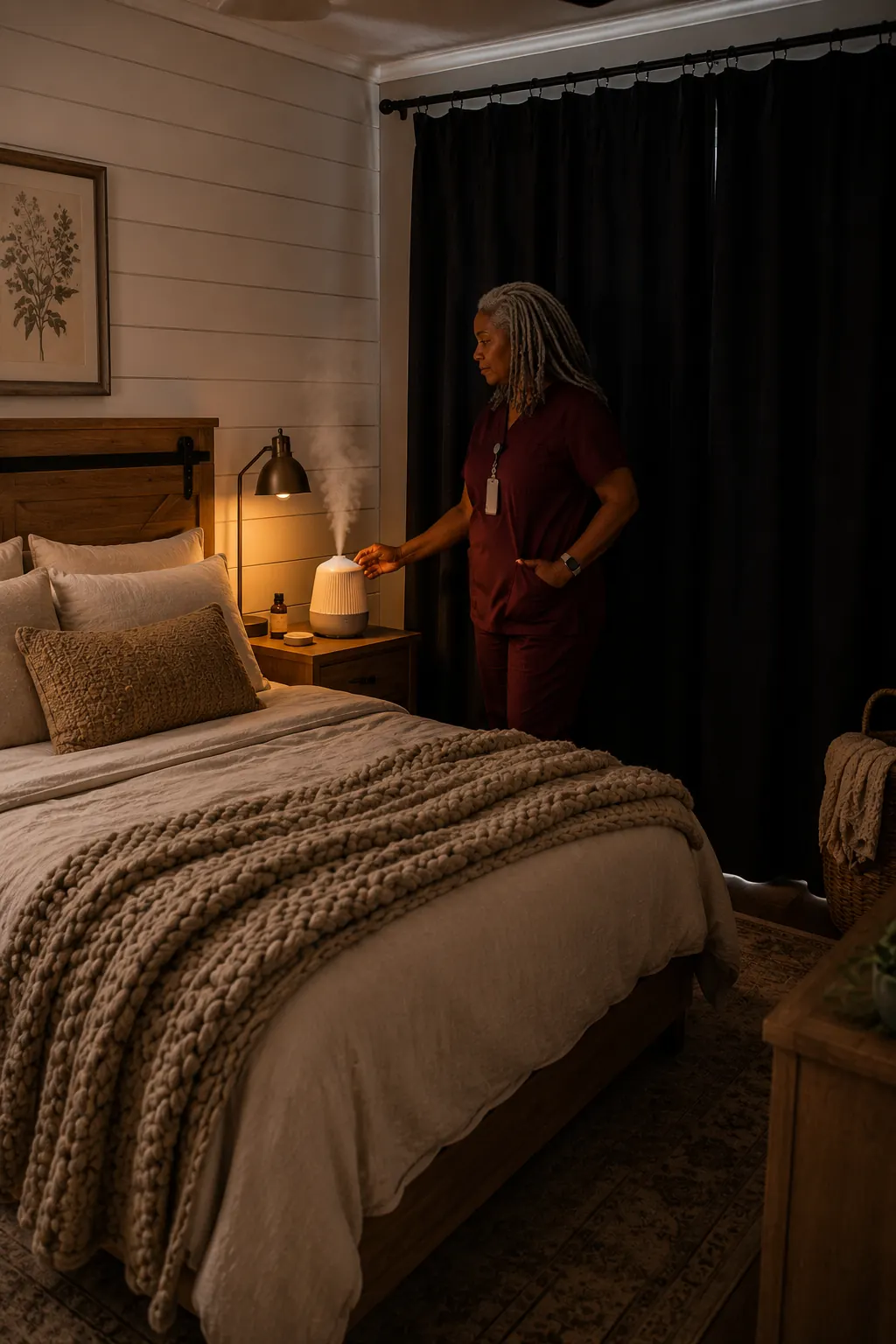
Air-conditioned units and masks leave your throat scratchy and your skin tight by the time you clock out.
A compact humidifier on the nightstand puts moisture back in the air while you sleep through the day.
Run it low and keep it clean so you’re breathing damp air, not stale water.
Here’s what it quietly helps with:
- A dry, scratchy throat after a masked shift
- Tight skin and cracked lips from AC air
- A stuffy nose that keeps waking you up
- Static that makes the room feel harsh
You wake mid-morning with a dry throat and reach for water again.
The air stays soft and you sleep straight through without the tickle.
Empty and rinse it between uses so it stays a help, not a source of must.
5. A Do-Not-Disturb Signal So the House Lets You Sleep
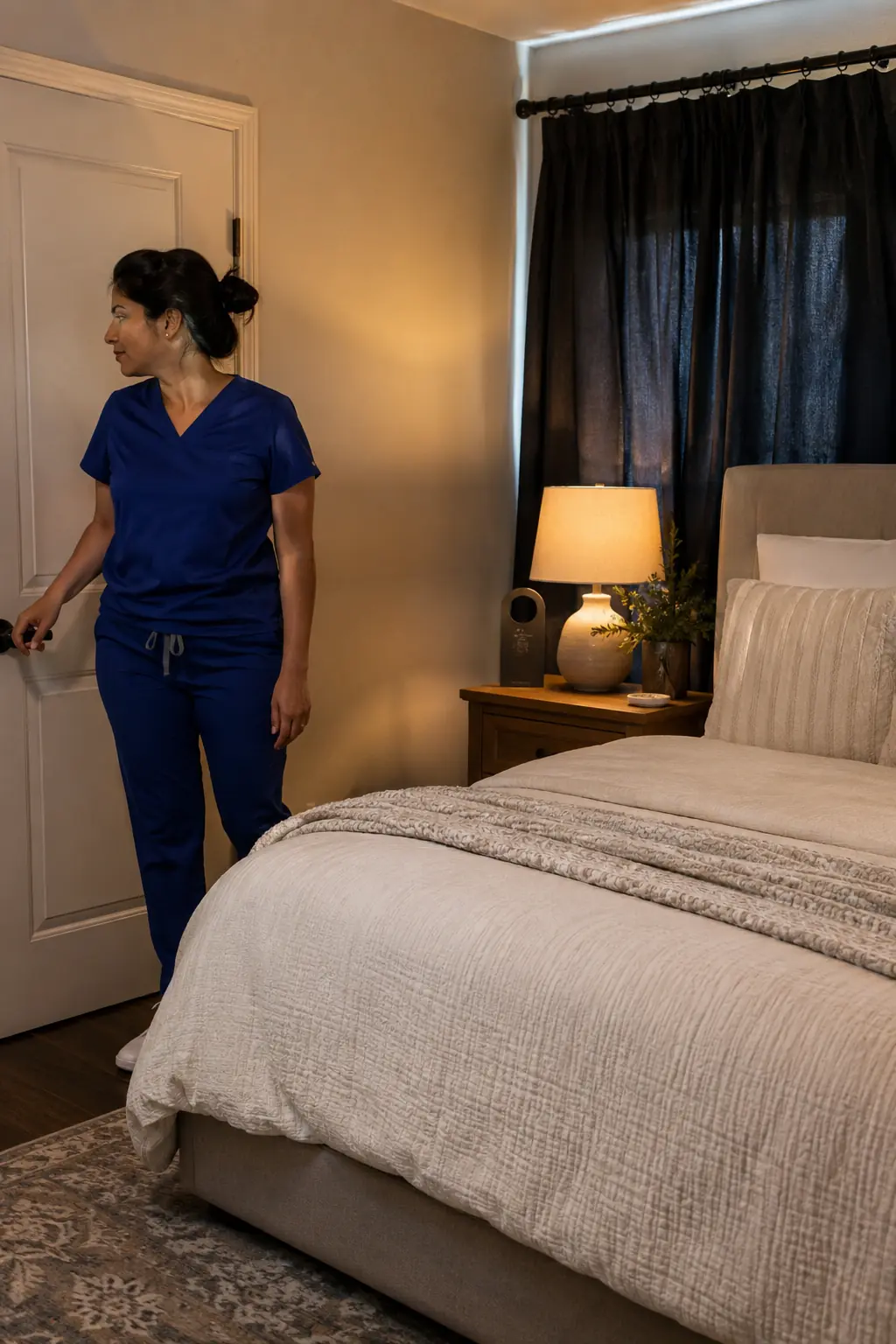
Family forgets you’re sleeping when the sun is up, and one knock undoes two hours of rest.
A small sign or light by the bed sets a clear signal without you having to explain again.
Flip it on as you head to bed and everyone knows the rule at a glance.
Set the system up once so it runs itself:
- Pick a clear signal, a little sign, a door hanger, or a soft LED
- Agree with the household what it means, no knocks, no vacuuming
- Turn it on every time you sleep, even for a short nap
- Turn it off the moment you’re up so the signal keeps its meaning
Make the signal stick
A signal that means the same thing every day is one the house actually respects.
6. A Floating Shelf That Frees Up the Floor
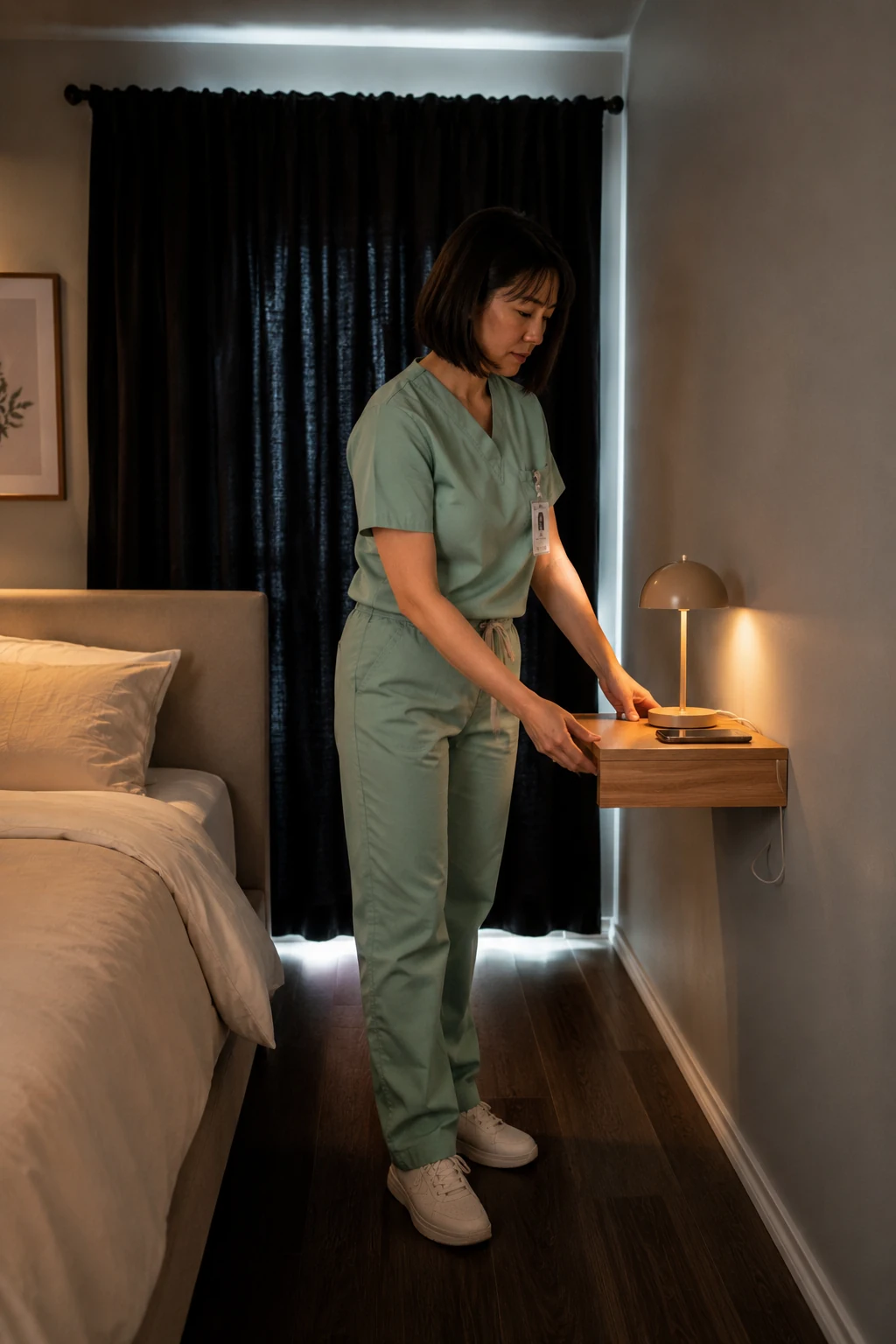
Not every bedroom has floor space for a table beside the bed, a common squeeze in the small-space setups many nurses work with.
A floating shelf mounts to the wall and holds your lamp, phone, and water without touching the ground.
Keep it level with your mattress so a half-asleep reach lands where you expect.
Mount it right the first time:
- Find the studs, or use rated wall anchors
- Set the shelf level with the top of your mattress
- Anchor both brackets, then check that it sits straight
- Load light items first to test the hold
Renters, a shelf with removable adhesive brackets skips the drill holes.
A bulky table crowds the walkway and traps dust underneath.
A slim shelf floats at bed height with clear, open floor below.
7. A Two-Tier Rolling Cart for Tight Bedroom Corners
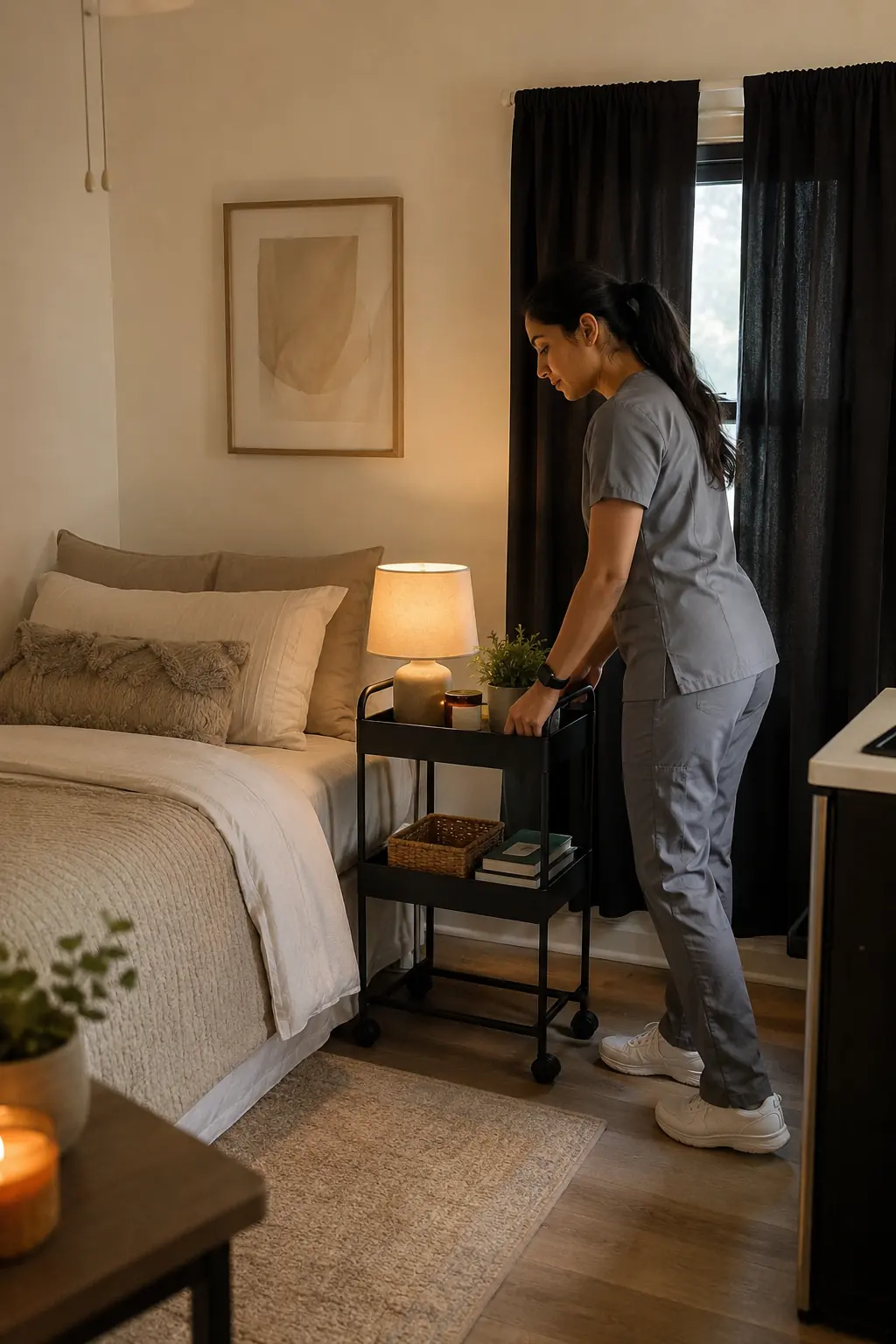
Small bedrooms make a bulky nightstand feel like a wall you keep bumping into.
A slim two-tier cart on wheels holds the same essentials in half the footprint.
Roll it close at bedtime, tuck it away when you wake.
The open tiers also mean nothing hides where you can’t see it.
Not sure a cart beats a real nightstand? Here’s the quick trade-off:
| Rolling Cart | Traditional Nightstand |
|---|---|
| Rolls out of the way in seconds. | Stays put in one spot. |
| Two open tiers, easy to grab from. | A drawer hides clutter from view. |
| Light and easy to reposition. | Feels sturdier and more finished. |
For rentals and tight corners, the cart usually wins.
8. A Tidy Drawer System That Ends the Morning Scramble
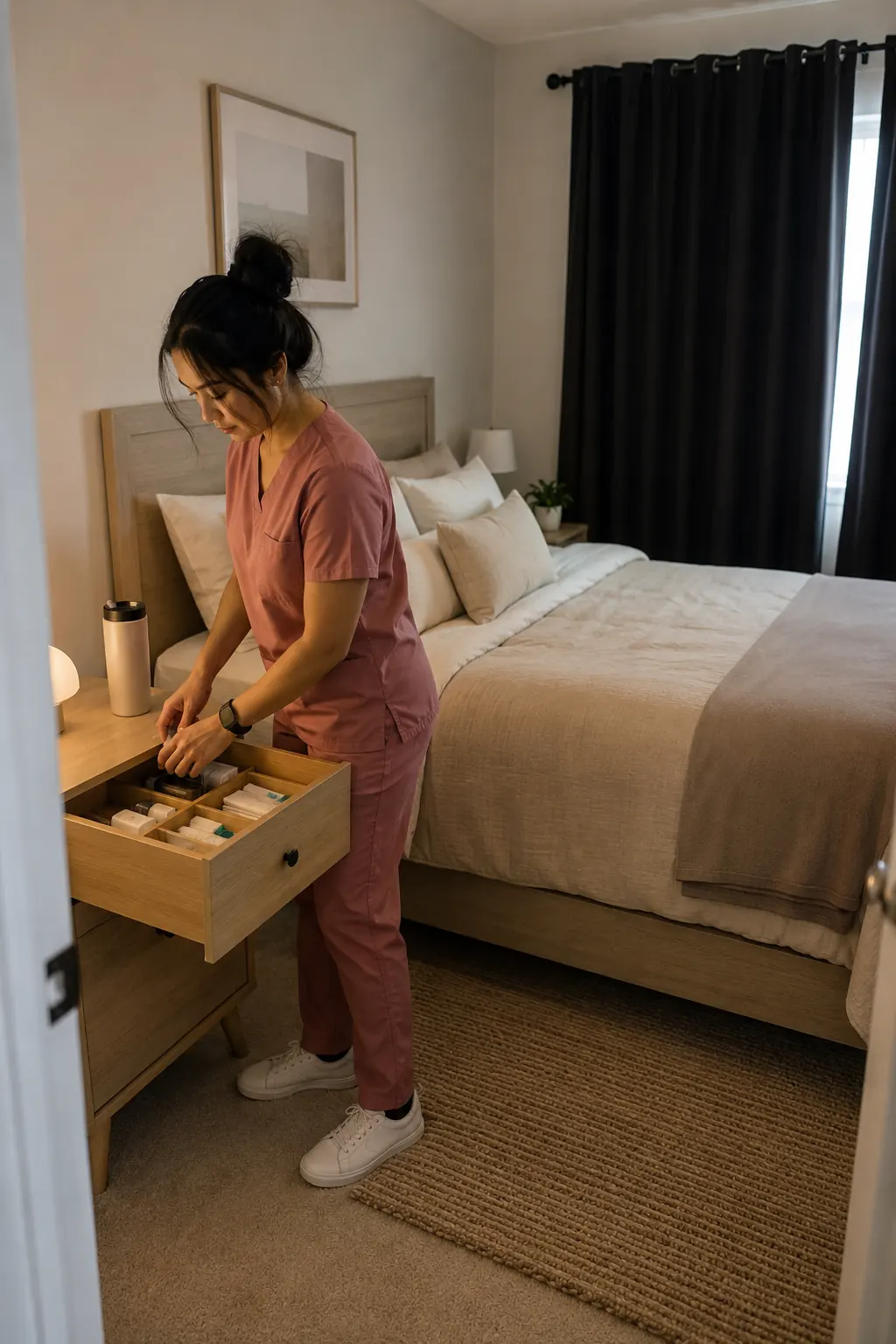
An open nightstand pile means you’re shoving things around at 6 a.m. looking for one small item.
A few dividers inside the drawer give every essential a slot, so nothing hides.
Group by when you use it, not by what it is, and the drawer starts working for your schedule.
A simple split that fits most nurses:
- Front slot: what you grab leaving for a shift
- Middle slot: sleep aids like your mask and earplugs
- Back slot: backups, spare charger, extra meds, batteries
When each thing has one home, a half-asleep hand finds it by memory instead of hunting, and your last waking minutes stay calm.
Reset the slots once a week and the system never drifts back into a pile.
9. A Grab-First Sleep Tray for Faster Wind-Downs
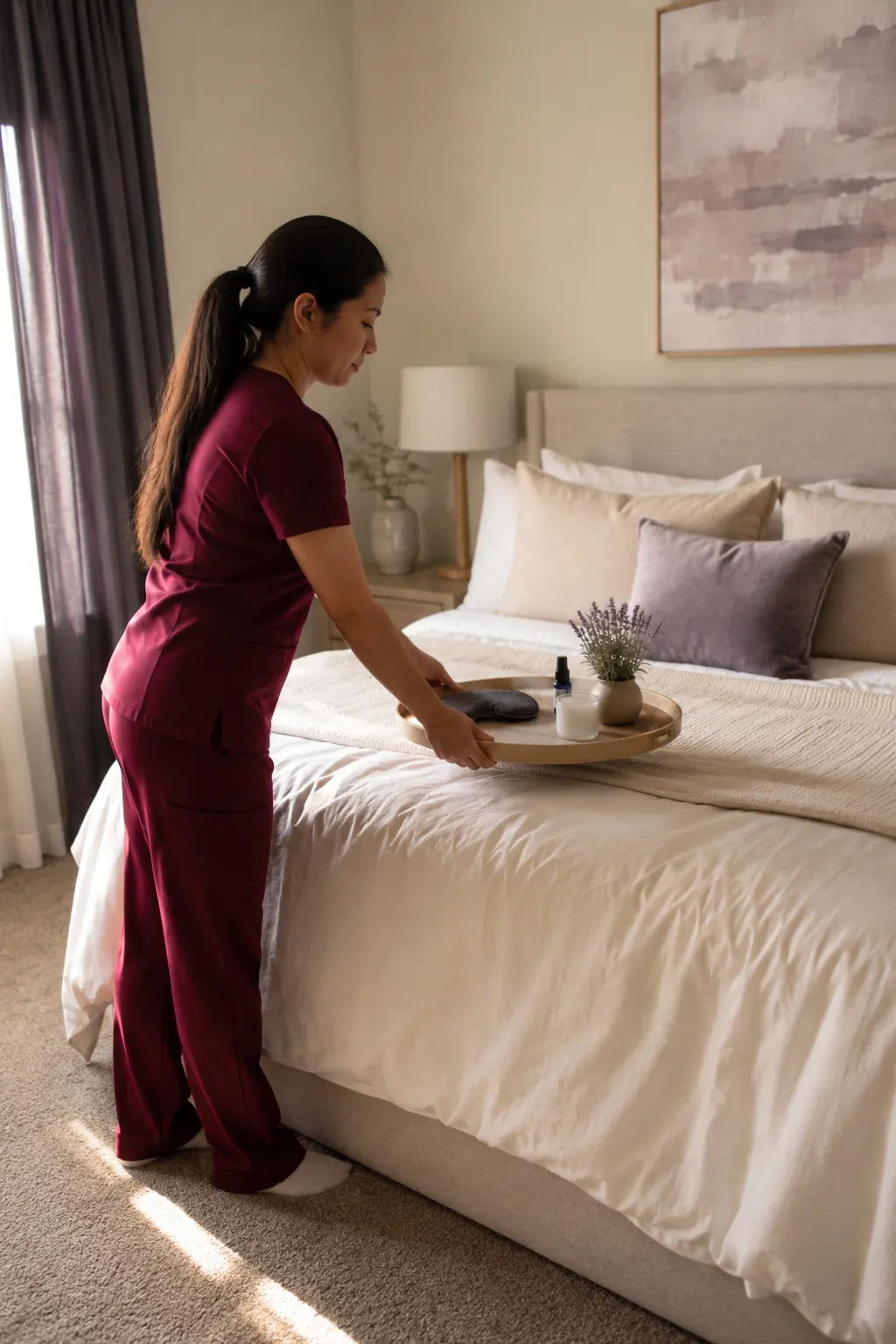
Everything you reach for in the dark should live on one small tray, not scattered across the table.
Corral your mask, earplugs, lip balm, and water in a single spot so a groggy hand finds them fast.
The tray earns its space at cleanup too.
Lift it, wipe the surface, set it back down.
Pick a tray with a raised lip so nothing rolls off when you’re half asleep.
Keep meds in a small labeled case.
Use a lidded bottle so spills can’t reach your charger.
Loose pills rolling around the tray.
An open glass of water by the pillow.
10. A Charging Dock That Keeps Every Device Alive Overnight
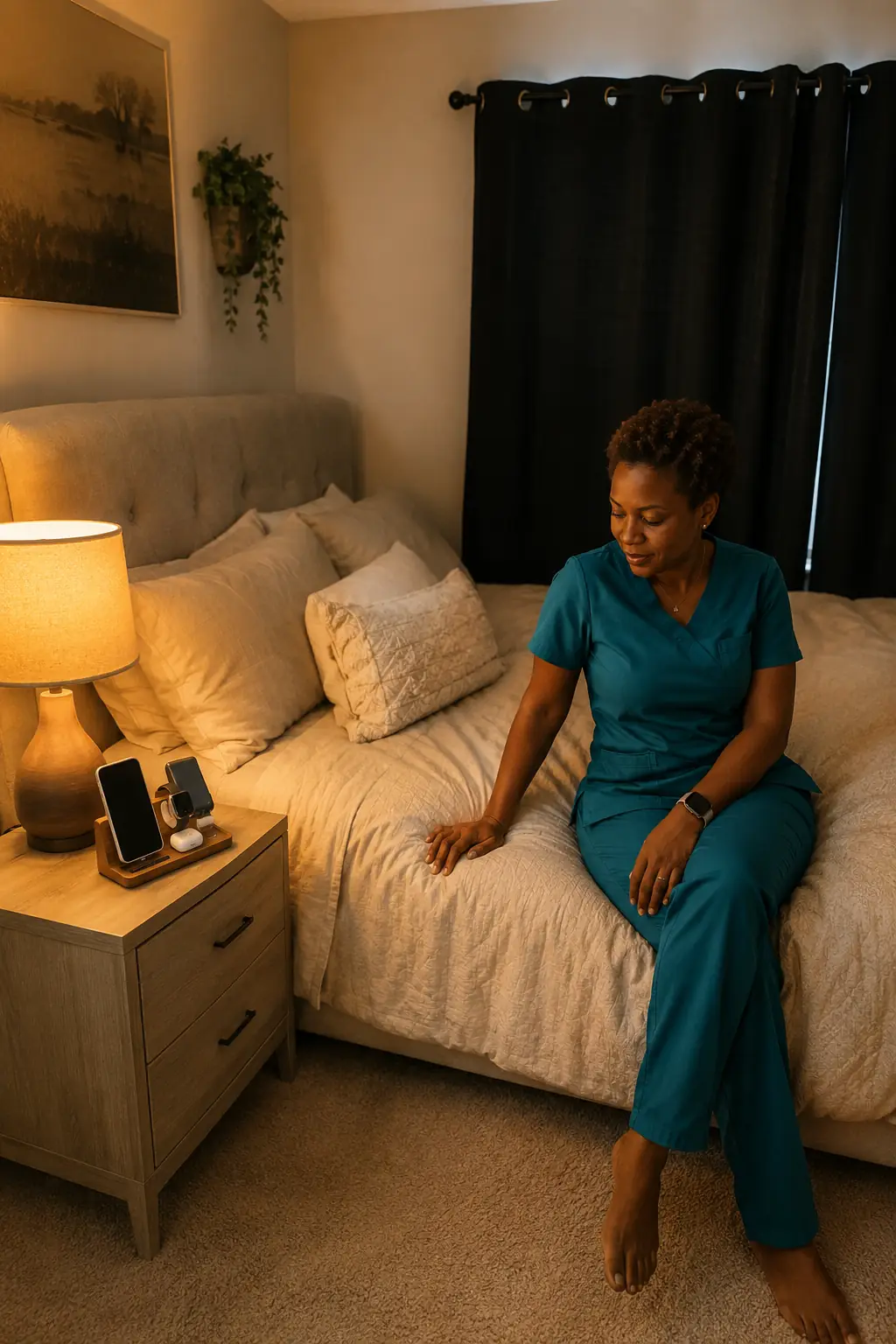
Night shift runs your phone, smartwatch, and pager down to nothing by the time you get home.
A small docking zone on the nightstand fixes that while you sleep.
Keep three cords anchored in one spot so you never fumble for them at 7 a.m.
The goal is simple: everything charges, nothing tangles, and your alarm phone stays within arm’s reach of the pillow.
A weighted cable clip or a shallow tray keeps cords from sliding behind the table.
11. An Analog Clock That Gets Your Phone Off the Pillow
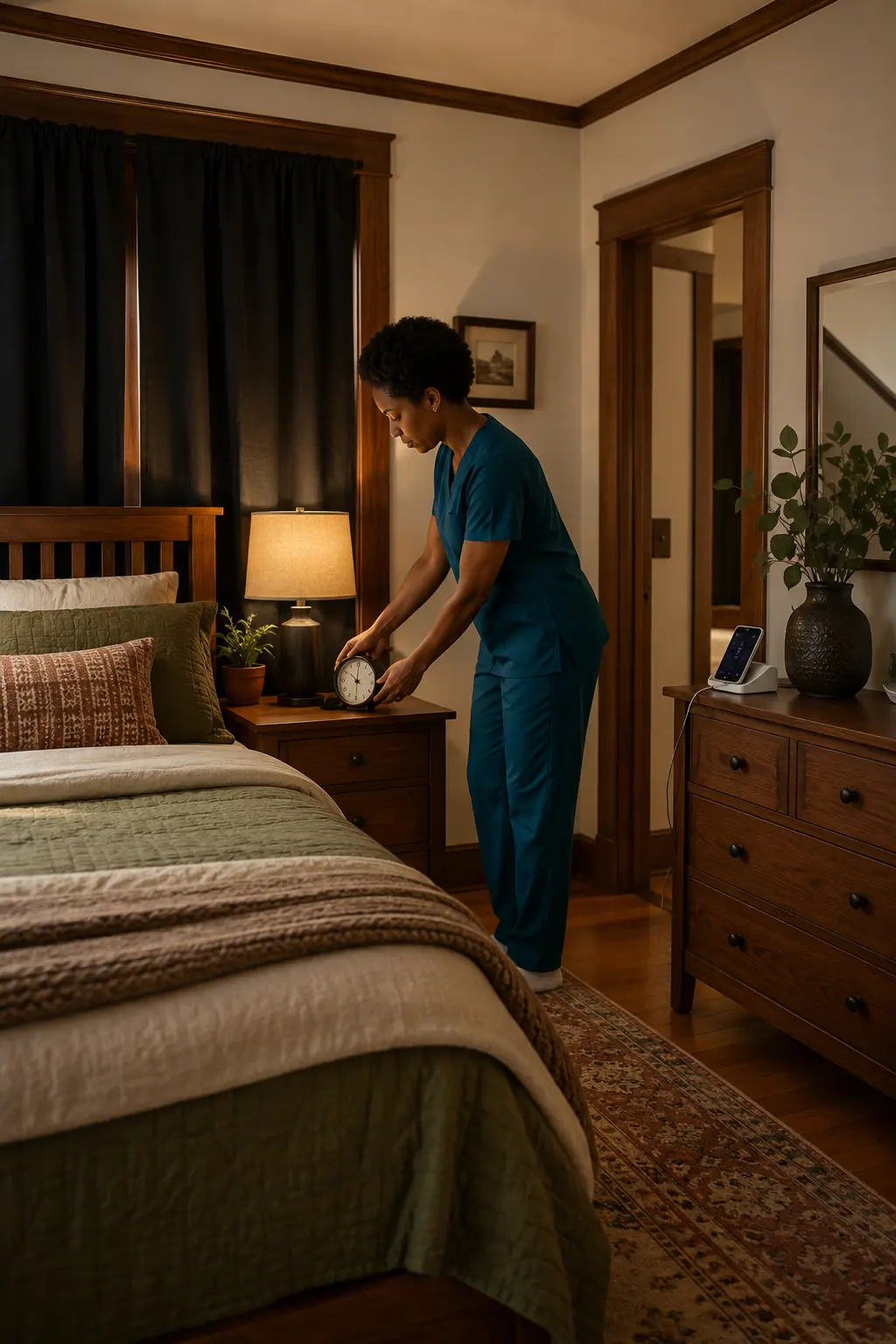
Using your phone as an alarm means it sleeps next to your head, buzzing and glowing all day.
A simple analog or low-glow digital clock lets you charge the phone across the room instead.
Look for a dim, non-ticking face so the light and sound don’t become the new thing keeping you up.
A few features worth checking before you buy:
- A dimmable or auto-dimming display
- A silent sweep movement, not a loud tick
- A battery backup so a power cut won’t erase your alarm
- Buttons you can find by feel in the dark
Set it up right
The walk to shut off the phone also gets you upright when it’s actually time to wake.
12. A Badge-and-Keys Landing Pad You’ll Never Search For
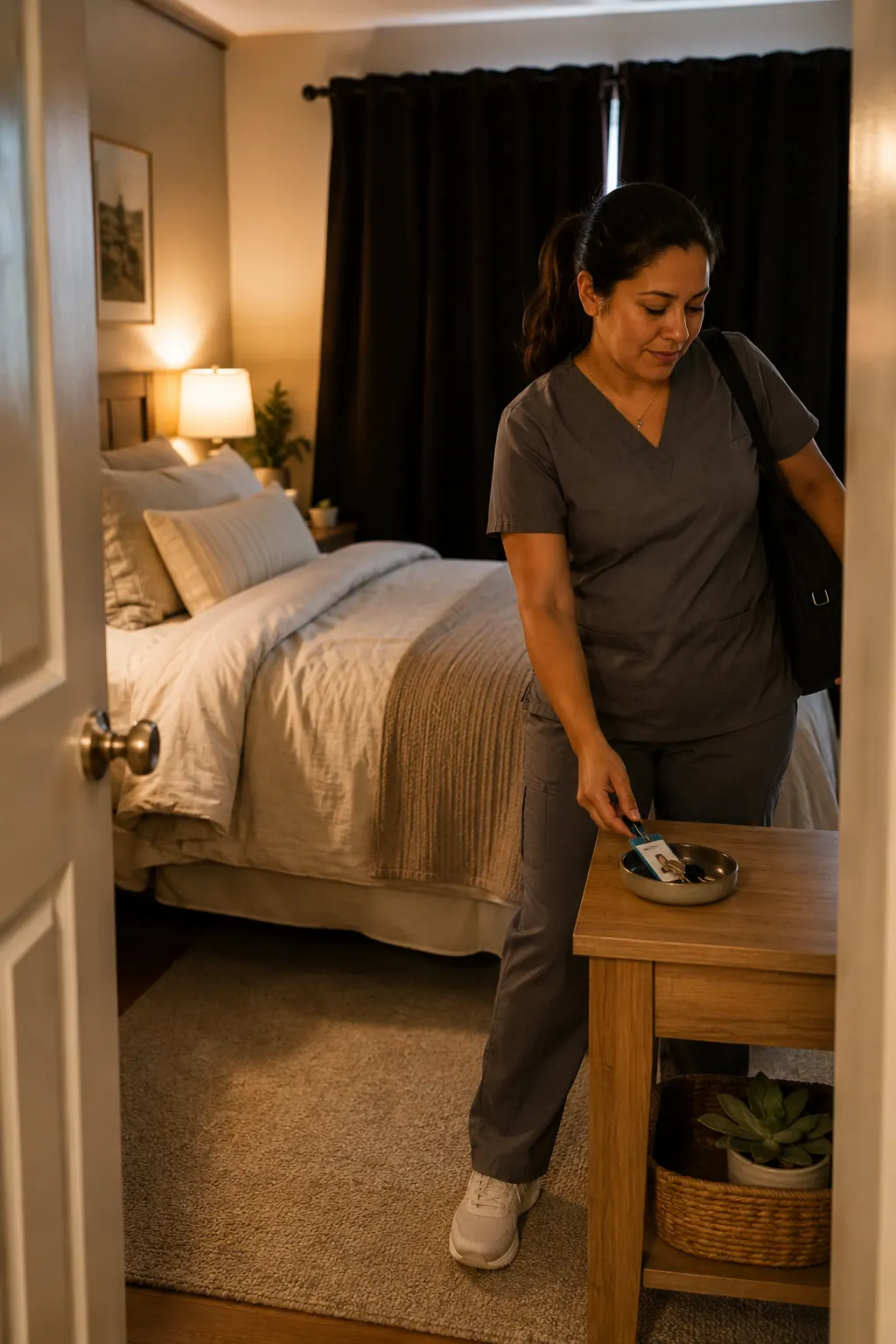
Rushing out for a shift and hunting for your badge is a bad way to start twelve hours.
A small dish or hook zone on the nightstand gives your work essentials one home.
Empty your pockets into it the second you get in, and everything’s waiting when you leave.
If a spot by the front door fits your routine better, the same catch-all idea scales up into a full entryway drop zone.
Keep these four together so nothing goes missing:
- Your ID badge and lanyard
- Keys and car fob
- A pen that actually works
- Loose change or a parking pass
A shallow dish with a soft base keeps the badge from sliding and the fob from rattling.
13. A Post-Shift Hydration Station That Rebuilds You
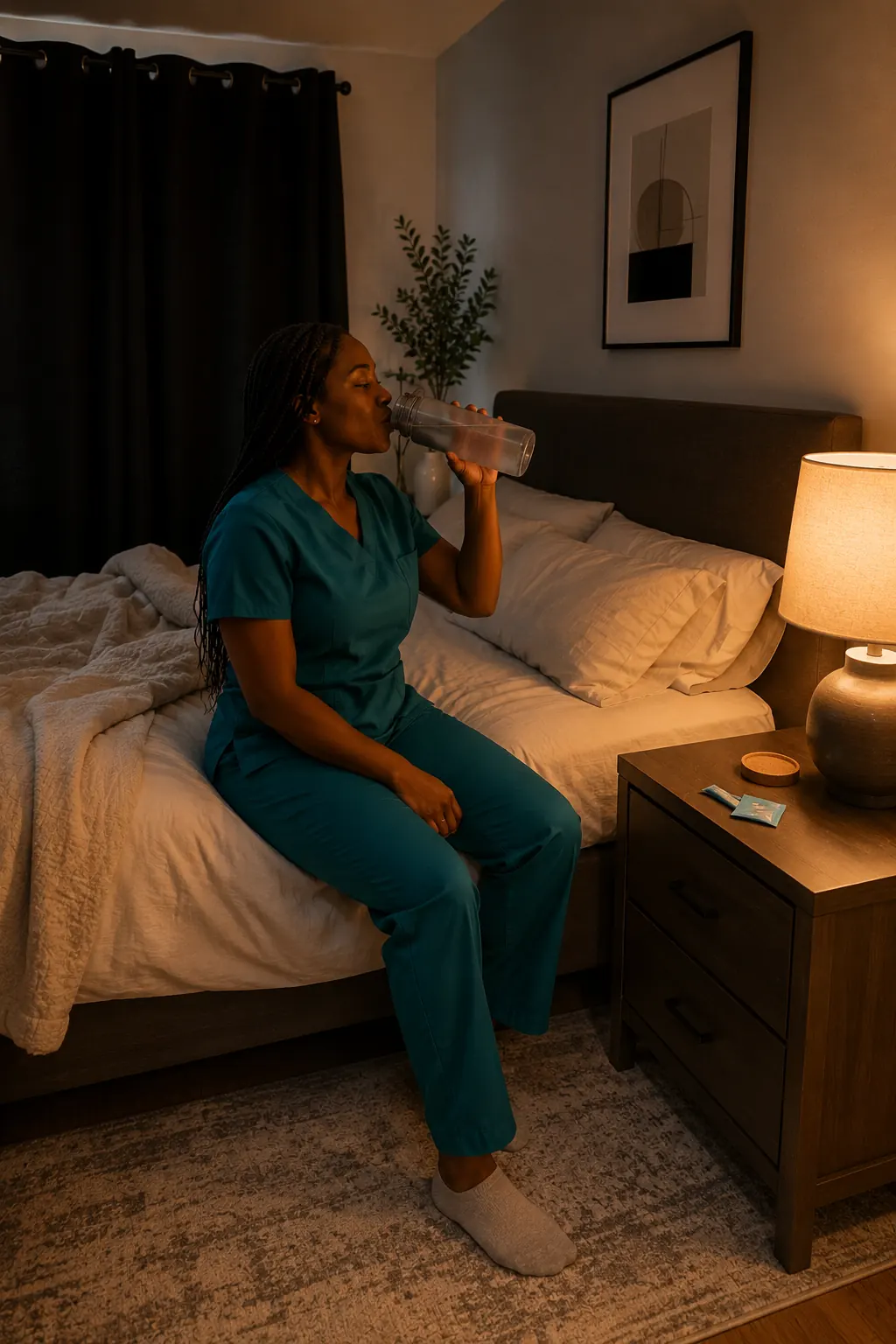
Twelve hours on your feet with barely a sip leaves you dragging by the time you’re home.
A dedicated water spot on the nightstand makes rehydrating the first thing you do before you crash.
Fill the bottle before your shift so it’s cold and waiting, not a chore at 8 a.m.
Keep three things in this little station:
- A large lidded bottle you can drink lying down
- An electrolyte tab or packet for the days you sweated through scrubs
- A coaster or tray so condensation never reaches your charger
Prep a full bottle before you leave for your shift.
Drink a real glass the moment you walk in, before sleep.
Keep the lid closed so a groggy reach can’t knock it over.
Rehydrating before you sleep beats waking up parched three hours in.
14. A Blood-Sugar Snack Spot for the Meals You Skipped
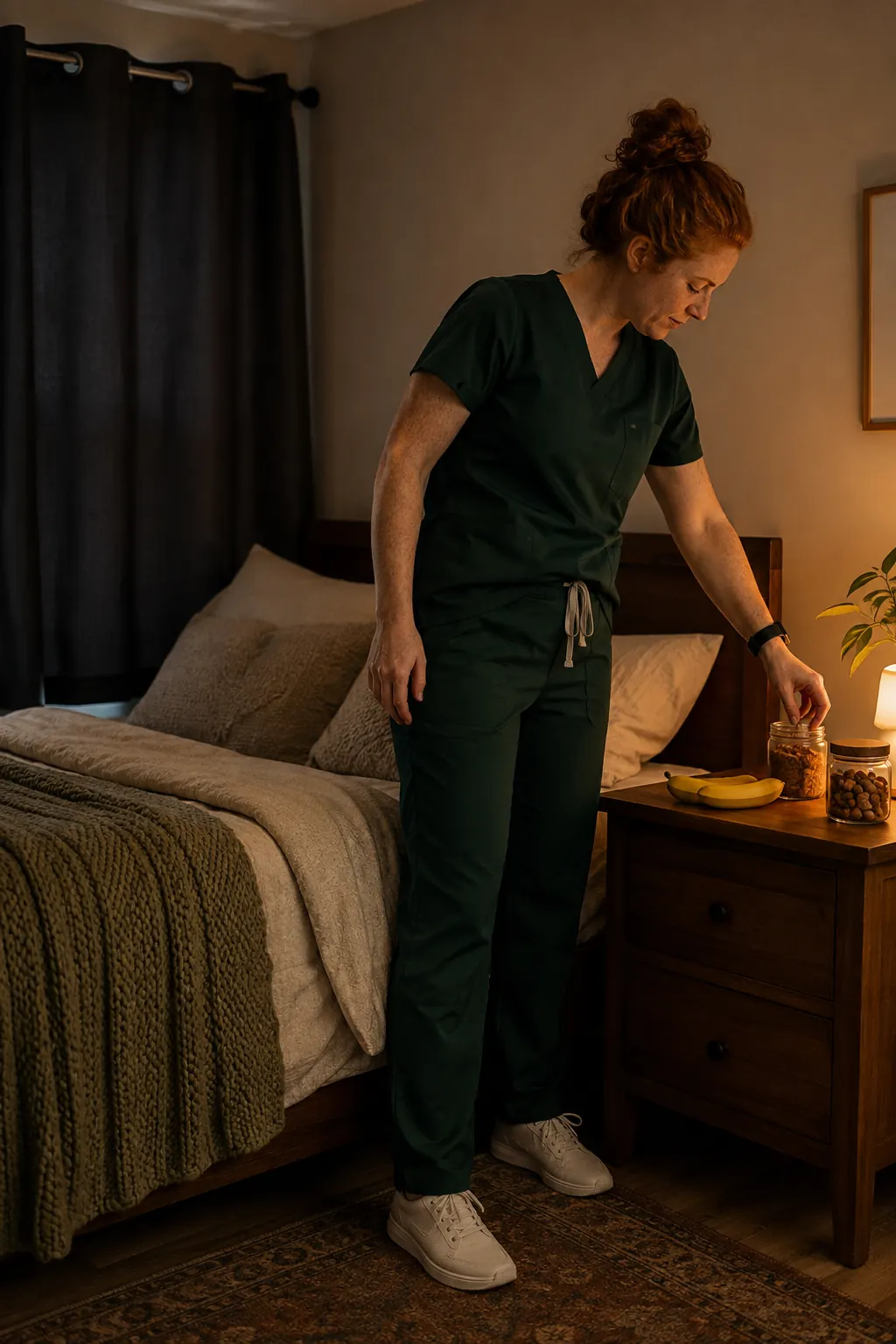
Some shifts you barely eat, and then you’re home, wired and shaky, unable to settle.
A small no-mess snack spot on the nightstand steadies you enough to actually fall asleep.
Keep it light and non-messy so you’re not fully waking your stomach back up.
Good picks versus ones that backfire:
| Reach for | Skip |
|---|---|
| A few plain crackers | Anything sugary and sharp |
| A small handful of nuts | Chocolate that melts on the tray |
| A banana or a date | Chips that leave crumbs in bed |
Portion it into a little lidded jar so a tired hand grabs enough, not the whole bag.
15. A Leg-Recovery Corner for Aching Nurse Feet
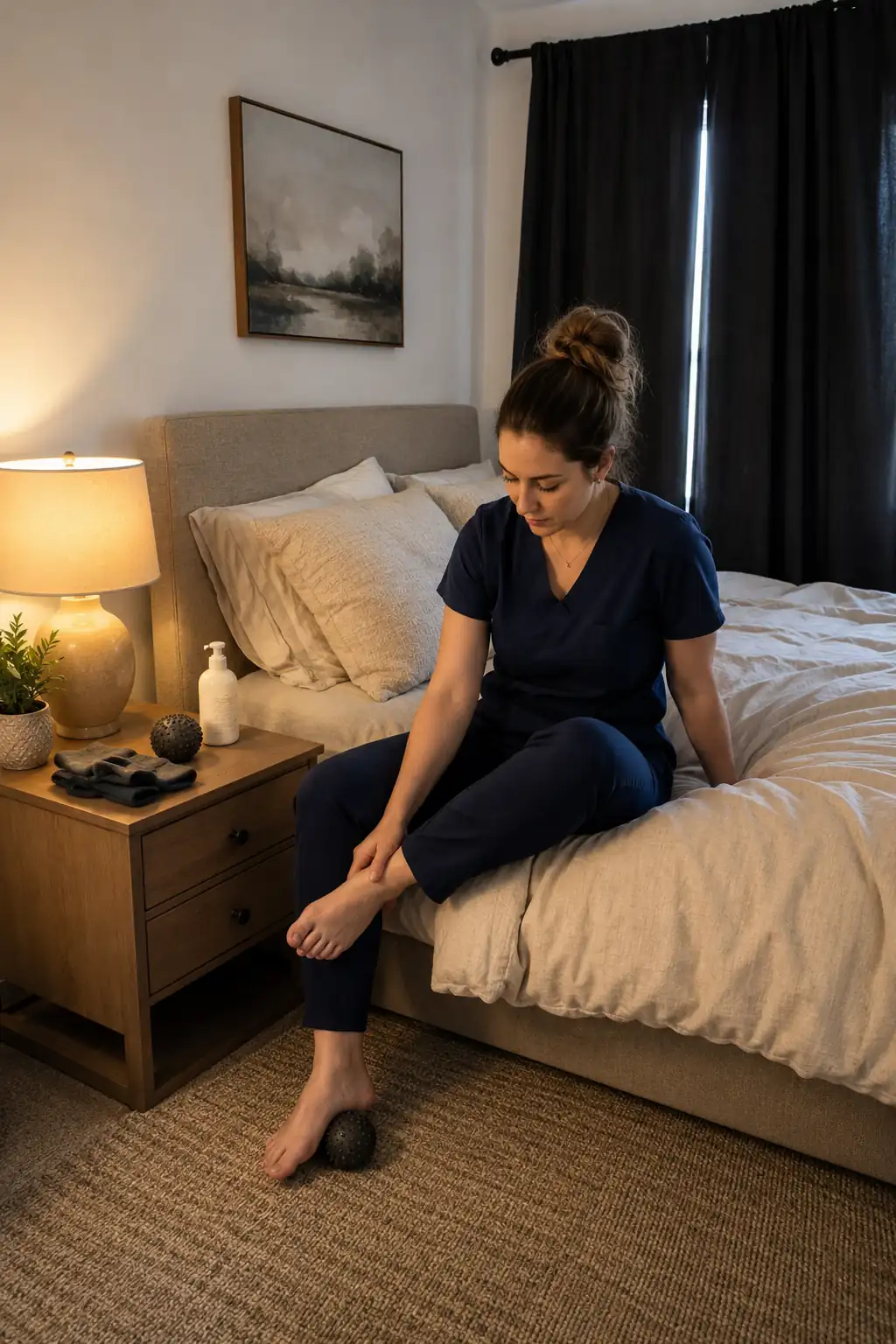
Standing all night leaves your calves and feet swollen and sore long after you sit down.
A small recovery kit on the nightstand lets you treat them right where you land.
Everything stays within reach so you can wind down without getting back up.
Here’s what earns a spot and why:
| Item | What it does |
|---|---|
| Fresh compression socks | Eases overnight swelling |
| A mini massage ball | Rolls out tight arches |
| Magnesium lotion | Soothes cramping calves |
Roll one foot at a time while you drink your water and the whole routine takes five minutes.
16. A Hand-Repair Spot for Sanitizer-Cracked Skin

Constant washing and gel leave nurse hands raw, tight, and splitting by the end of a run of shifts.
A small hand-care spot on the nightstand turns overnight into repair time.
Slather on a thick cream right before sleep, when there’s no chart to grab for hours.
Keep the good stuff, skip the rest:
- Reach for a thick, fragrance-free hand balm
- Reach for cuticle oil for split fingertips
- Reach for cotton gloves to lock the cream in overnight
- Skip thin, watery lotions that soak in and do nothing
Apply a heavy balm as the last step before sleep.
Wear thin cotton gloves to hold it in.
A runny lotion that leaves hands tight again.
Heavy fragrance that stings cracked skin.
By your next shift your hands feel like they belong to you again.
17. A Weekly Medication Station You Can Trust Half-Asleep
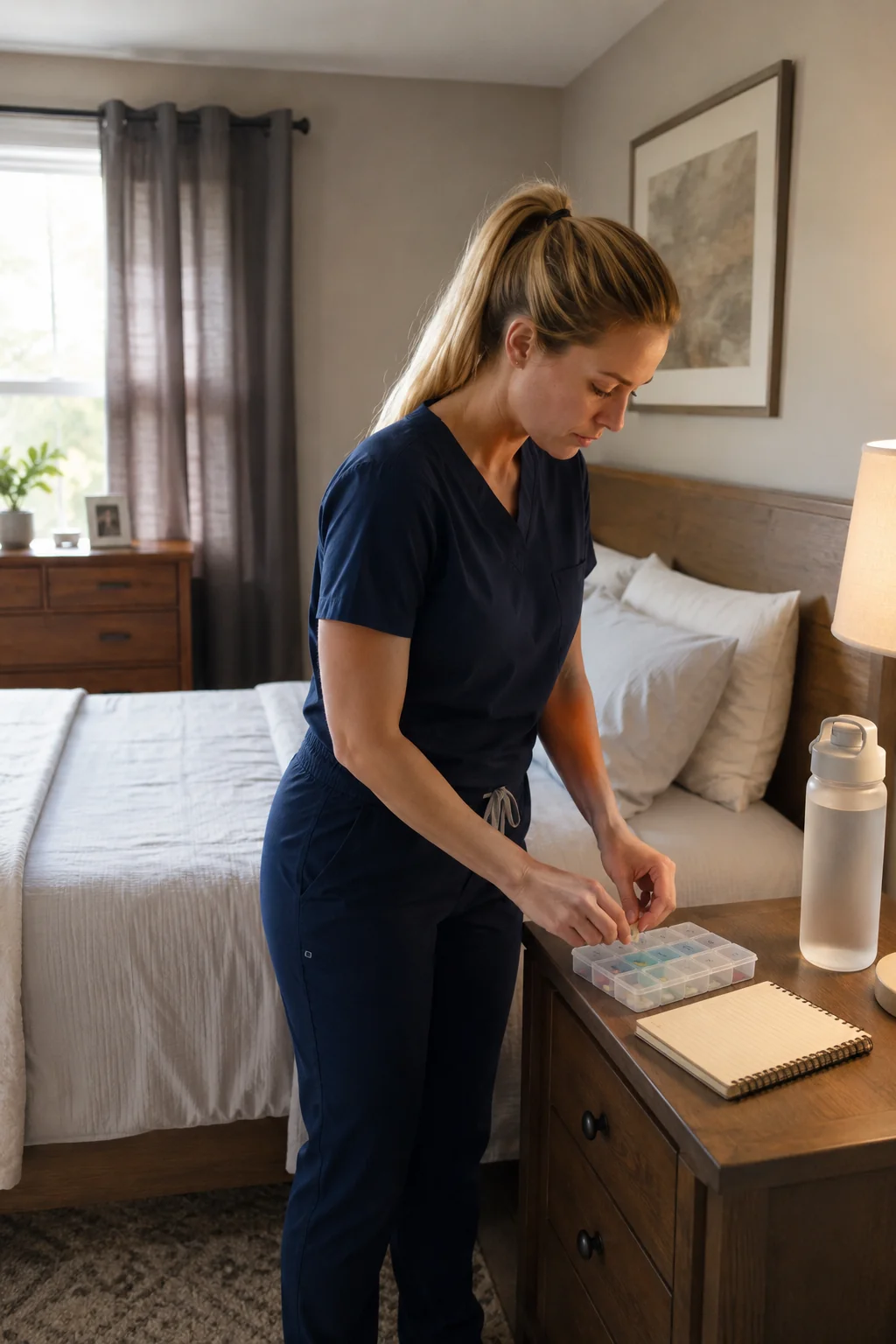
Odd sleep hours make it easy to lose track of what you took and when.
A small pill organizer plus a written cue on the nightstand keeps it clear even on foggy mornings.
Sort the whole week in one sitting so a tired you never has to count.
Here’s a simple layout that works for most schedules:
| Slot | What goes in it |
|---|---|
| Morning (post-shift) | Anything for sleep or recovery |
| Evening (pre-shift) | Anything that keeps you sharp |
| As-needed | Pain relief, allergy, spares |
Keep it out of direct sun and away from your water bottle so nothing gets damp.
18. A Brain-Dump Pad to Park the Shift’s Worries
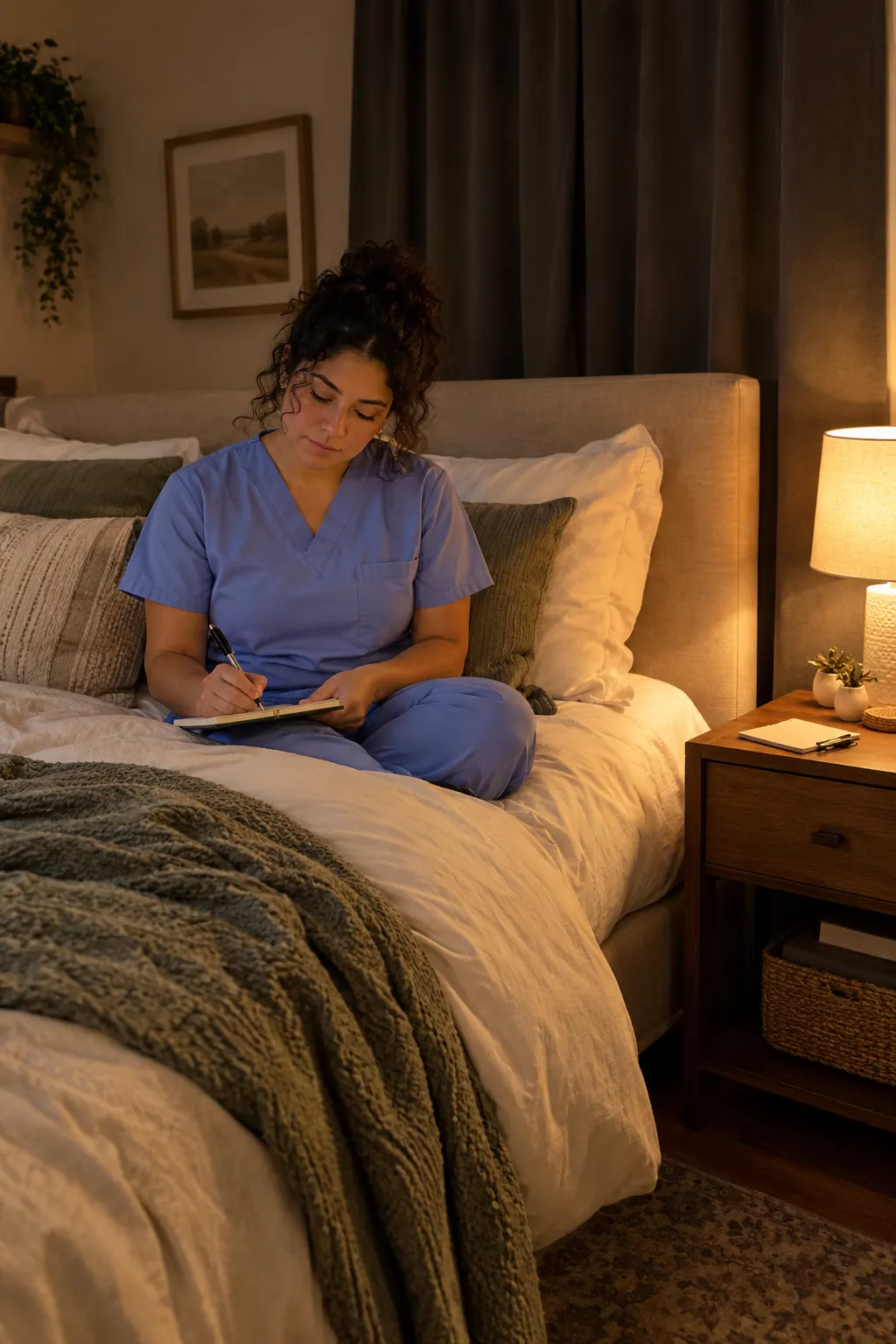
Some shifts follow you home.
You’re finally in bed and your mind keeps replaying the one patient, the one call.
A plain notepad on the nightstand gives those thoughts somewhere to go so they stop circling.
Write it down, close the pad, and let sleep have the rest.
A three-line format keeps it fast and stops it becoming homework:
- One thing that’s still on my mind
- One thing I’ll deal with after I sleep
- One thing that actually went right tonight
📌 Good To Know
Ending on the thing that went right, even a small one, sends you into sleep on a steadier note than the hard moments.
Keep the pen clipped to the pad so the thought never waits on a search.
19. A Screen-Free Wind-Down Stack by the Bed
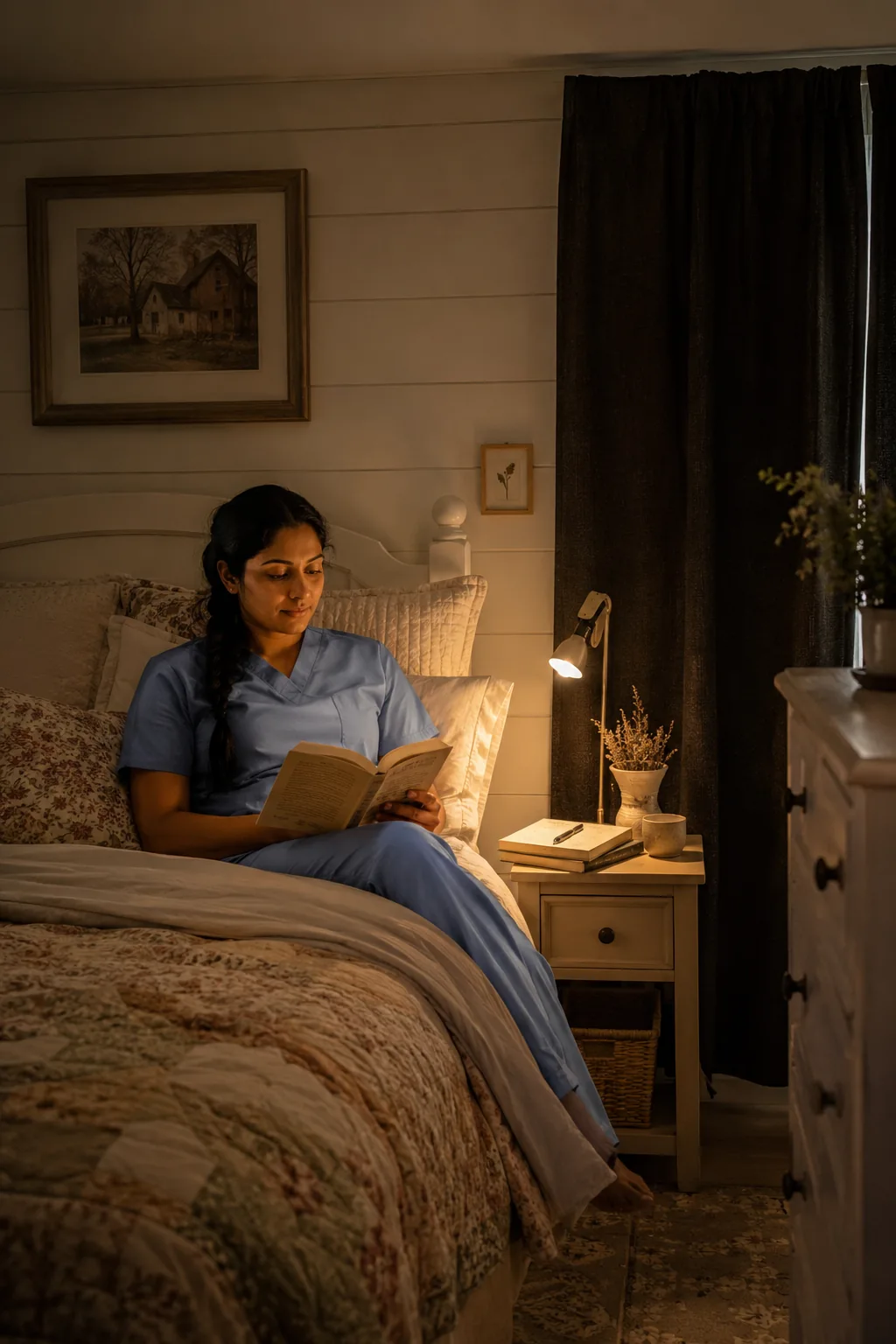
Scrolling in bed feels relaxing while quietly keeping you wired.
A short stack of paper on the nightstand gives your hands something to do that won’t light up your face.
Keep it to two or three things so the pile stays a wind-down, not a to-do list.
Here’s the swap that helps most:
| Instead of | Reach for |
|---|---|
| A phone news feed | A slow paperback |
| Late-night texts | A one-line journal |
| A bright screen | A folded magazine |
Some nurses clip a pen to the journal for the thought that always shows up at lights-out.
Phone in hand at lights-out, mind still racing through the shift.
A few paper pages, then lights out with a slower, quieter head.
20. A Calm Scent Corner That Signals Sleep
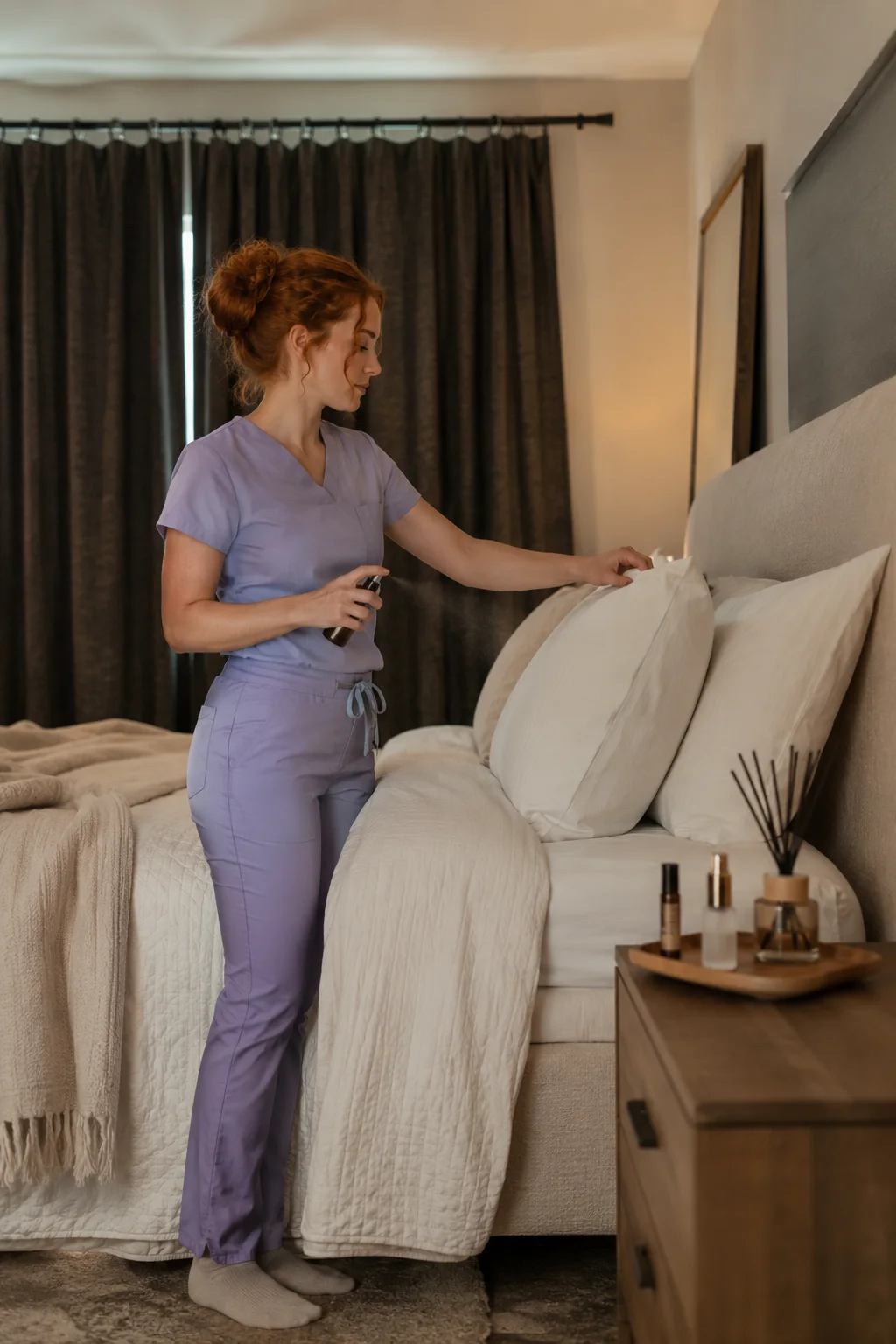
Your body links a scent with sleep faster than you’d expect.
Keeping one calming smell by the bed gives your brain a cue that the shift is finally over.
Go light. One scent, not a shelf of competing bottles.
Build a tiny scent corner with:
- A pillow spray for the linens
- A roller oil for your wrists or temples
- A small unlit reed diffuser for steady, low scent
- A lidded jar so the smell stays off your scrubs
Skip anything sharp or citrusy, since those tend to wake you up instead.
Repeat the same scent each time you sleep and your brain starts treating it as a switch that means rest, even at 9 a.m.
21. A Grounding Object to Steady You After a Hard Shift
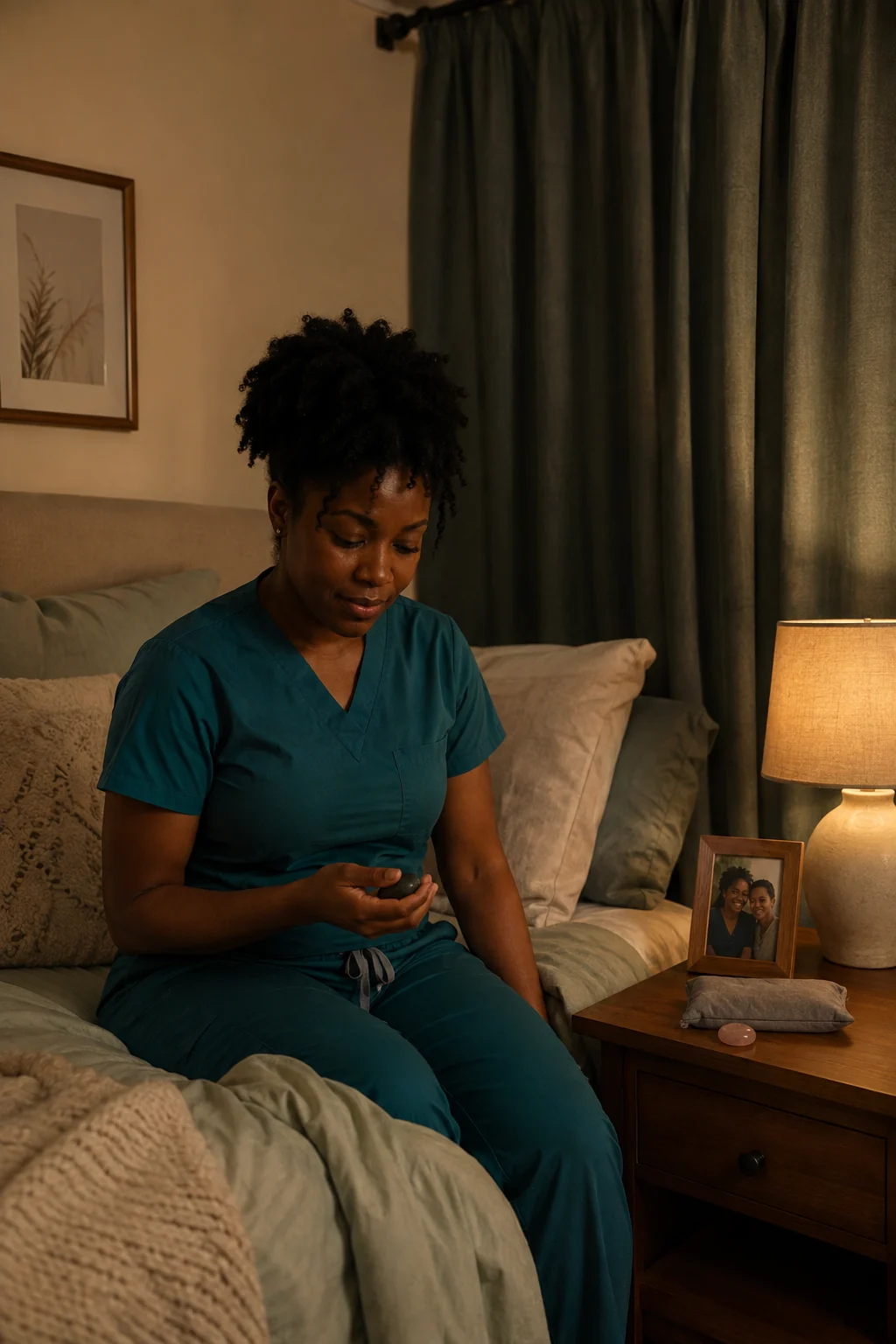
Some nights end heavy, and lying down doesn’t switch off what your hands and mind are still holding.
One small grounding object on the nightstand gives you something calm to focus on before sleep.
Hold it, breathe slow, and let your body register that the shift is actually over.
For the shifts that need more than a small object, a full decompression corner gives those heavy nights somewhere to land.
Pick whatever settles you fastest:
- A smooth worry stone that fits your palm
- A small weighted eye pillow for gentle pressure
- A soft textured cloth or a cool metal piece to hold
- A tiny framed photo of someone or somewhere that calms you
💡 Quick Tip
Pair the object with four slow breaths, in for four counts and out for six, so your body has a signal and a rhythm to follow down into sleep.
The point isn’t the object itself, it’s the pause it gives you before your head hits the pillow.
22. A Seasonal Refresh So the Setup Grows With You
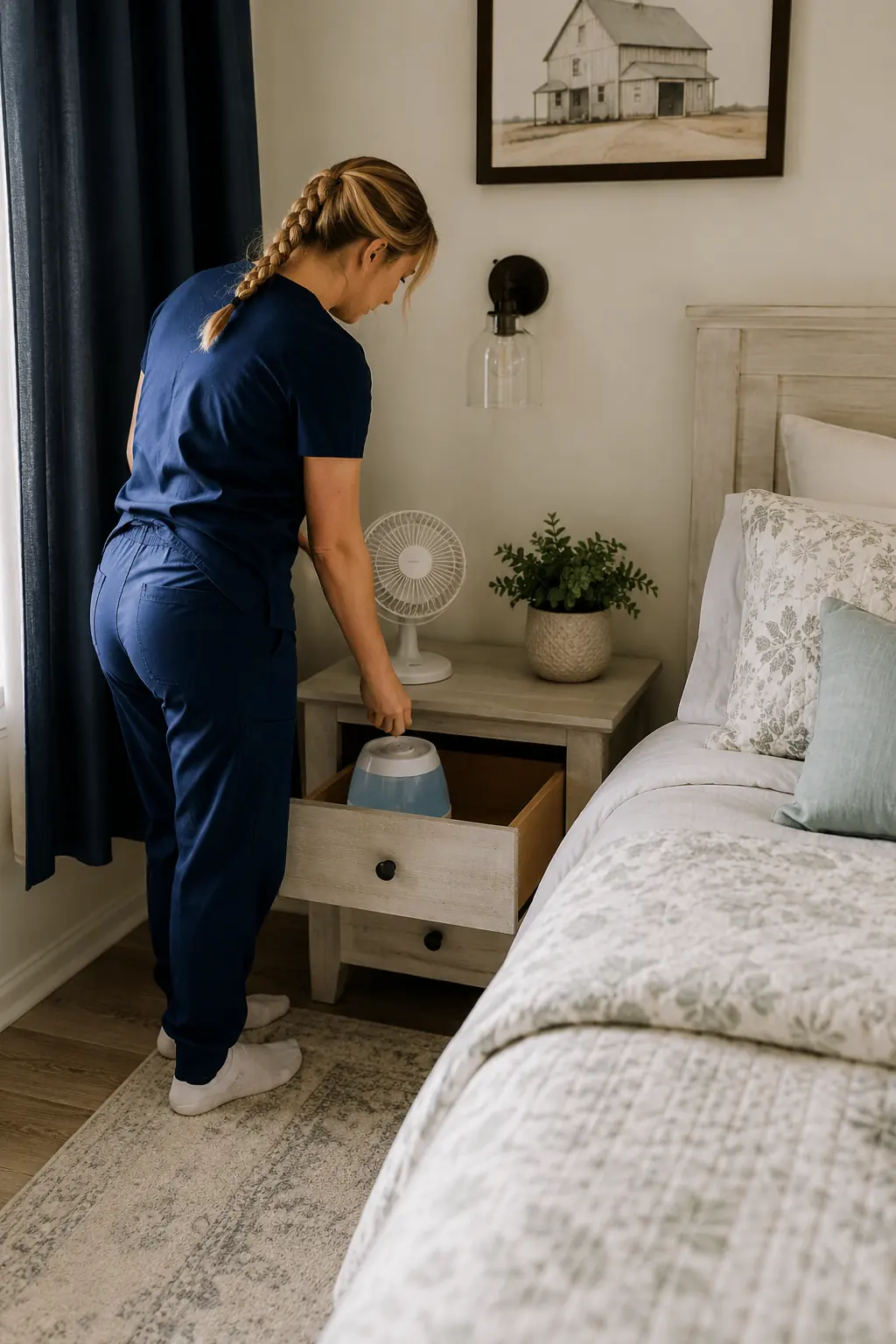
The setup that carried you through winter nights isn’t the one you need come summer.
A quick seasonal swap keeps your nightstand matched to how the shifts and the weather actually feel.
Twice a year, clear the whole surface and rebuild it for the months ahead.
Here’s roughly what shifts with the seasons:
| Warm months | Cold months |
|---|---|
| The fan takes priority | The humidifier earns its spot |
| Lighter linens and a cooling spray | A warm balm and thicker socks |
| Electrolytes for sweatier shifts | Extra vitamin D and lip care |
Keep the off-season items in the back drawer so the swap is a five-minute reset, not a shopping trip.
While you’re refreshing things, it’s a good moment to rethink your shift look too, like the scrub colors trending for nurses this year.
Clear the surface fully and give it a real wipe-down.
Swap in what the season calls for, tuck the rest away.
Restock anything running low before the busy stretch hits.
A setup that changes with the year keeps earning its place instead of quietly going stale.
The Nightstand That Works as Hard as You Do
Your nightstand doesn’t need every idea on this list. It needs the handful that solve the problems your shifts actually hand you.
Start with one. Maybe it’s the amber lamp so mornings stop feeling like noon, or the badge dish so you never hunt at 6 a.m. Live with it for a week, then add the next.
A setup that fits your real hours is one you’ll actually keep, and better daytime sleep starts with the small corner right beside your pillow. When you’re ready to carry that calm across the whole room, these calming bedroom color palettes are a good next step.
Save the ideas that fit your room to your sleep and sanctuary board, and come back to this pin when you’re ready to build the next piece.
