

Your alarm goes off at 5:15 p.m. Your partner’s goes off at 5:45 a.m. In between, one of you is always tiptoeing, and the other is always half awake.
When you work nights and your partner works days, the question of separate bedrooms vs sharing a bed comes up fast. Maybe it starts as a joke. Maybe it comes up at 2 p.m., when the garage door wakes you for the third time this week.
No one answer is right for every couple. The right answer depends on your two schedules, your two bodies, and your relationship.
This guide helps you find it. You will track how you both sleep, list what keeps waking you up, and talk about what the bed means to each of you. Then you will test your choice for two weeks before you buy anything. After that, you will set up the room, or rooms, so you both rest well and still feel close.
Plan on 2 weeks from start to finish. Only about 3 hours of that is hands-on work, and most of it is talking.
What is a sleep divorce?
A sleep divorce is when a couple chooses to sleep in separate beds or rooms so both people get better rest. It is not a breakup. Many couples on opposite shifts use it on work nights and share a bed on their days off.
Most of the active time is two honest conversations.
What You Need
A notebook or sleep log for each of you
One shared phone calendar
Two pens and 30 quiet minutes
A smartwatch or sleep tracker (optional)
Foam earplugs
White noise machine
Two separate duvets
Vibrating alarm or smartwatch
Blackout curtains
A small clip-on reading light
A second bed, daybed, or air mattress for the trial
At a Glance
11 Steps in 4 Phases
OBSERVE
1 Track sleep
2 Map shifts
3 List disruptors
DECIDE
4 Talk it out
5 Score it
6 Test 2 weeks
SET UP
7 Shared bed
8 Second room
KEEP IT CLOSE
9 Together window
10 Door rules
11 Recheck
1. Track How You Both Really Sleep for One Week

Before you talk about beds, you need real numbers. Guessing does not work here, because most people are wrong about how often they wake up.
For 7 days, each of you writes down a few things after your main sleep:
- What time you fell asleep
- What time you woke up for good
- How many times you woke up
- What woke you, if you know
- How rested you feel, from 1 to 5
Keep the logs separate, and do not compare until the week is over. A smartwatch helps, but a notebook on the nightstand works fine.
Daily Sleep Log
Fill one in every day for 7 days. Screenshot it or print it.
2. Map Your Shifts on One Shared Calendar

Two separate schedules hide the real problem. Put both on one calendar in two colors, and the pattern shows up right away.
Add work hours, drive time, and sleep blocks for the next 4 weeks. Then look for three things:
| Look for | What it tells you |
|---|---|
| Hours you both sleep at the same time | How much a shared bed is really shared |
| Hours one sleeps while the other is home | Where noise and light cause trouble |
| Hours you are both awake | Your built-in time together |
Many nurse couples with opposite shifts find they share the bed for only a few hours a week. That number matters in Step 5. To see the full picture, run a 3×12 schedule breakdown for both of you.
Example
A Typical Opposite-Shift Day
NURSE (7 p.m. to 7 a.m.)
PARTNER (8 a.m. to 5 p.m.)
3. List Every Sleep Disruptor Between You

Open your sleep logs side by side. The “what woke you” line is where the answer usually hides.
Sit down together and put every problem on one list. Be honest, and keep it kind. “Your 5:30 alarm wakes me” is a fact, not an attack.
Mark who each problem affects and how often it happens. If loud snoring comes with gasping or pauses in breathing, ask a doctor about it. That can be a health issue, not a bed issue.
Then score your list with the guide below. Save the number for Step 5.
Add Up What Applies
Your Disruptor Score
Alarms at opposite times+3
Loud snoring+3
Getting in or out of bed while the other sleeps+3
Light from lamps or phones+2
Room too hot or cold for one of you+2
Tossing and turning+2
A pet in the bed+1
TV or scrolling in bed+1
0 to 4
Sharing can work
5 to 9
Look at a hybrid
10 or more
Test separate rooms
4. Talk About What the Bed Means to Each of You

For some people, a bed is only for sleep. For others, it is the one place they feel close to their partner all week. You need to know which one each of you is before you change anything.
Have this talk on a day off, not in the hour after a shift, when you are both tired and short-tempered. Ask each other:
- What do you miss most when we sleep apart?
- What part of sharing a bed costs you the most sleep?
- Is it the bed you want, or the time together?
- What would make sleeping apart feel okay, not lonely?
Listen more than you defend. You are trying to learn what each of you needs, not trying to win. If one of you had a hard night, wait a day, and use this guide to wind down after a rough shift first.
Same Feeling, Better Words
How to Say It Kindly
“You keep waking me up.”
“I sleep so much better when it is quiet around 2 p.m.”
“You don’t want to sleep with me anymore.”
“I miss falling asleep next to you.”
“Fine, I’ll sleep on the couch.”
“Can we try a new setup for two weeks and see?”
5. Choose Between Separate Bedrooms vs Sharing a Bed With a Simple Score

You have three options, not two. Many couples skip the middle one and argue about the other two.
| Setup | Best fit | Watch out for |
|---|---|---|
| Share every night | Score 0 to 4 and plenty of shared sleep hours | One early alarm costs two people sleep |
| Hybrid | Score 5 to 9: apart on work nights, together on days off | You need a clear rule for which nights |
| Separate rooms | Score 10 or more and few shared sleep hours | Can feel lonely without set time together |
Look at three things: your score from Step 3, your shared sleep hours from Step 2, and what you heard in Step 4. If two of the three point the same way, start there. This is only a starting point. Step 6 tests it.
Tap Each One
Which Setup Fits You?
Share Every Night SCORE 0 TO 4
The Hybrid SCORE 5 TO 9
Separate Rooms SCORE 10+
Is it normal for couples to sleep in separate rooms?
Yes. Many couples sleep apart some or all of the time, and it is common when one partner works nights. Sleeping apart does not say anything about how much you love each other. What matters is that you both rest well and still make time to be close.
6. Run a 2-Week Sleep Trial Before You Commit

If you buy a second bed before you test the idea, you could end up with a guest room full of regret. Borrow first. An air mattress, a daybed, or the guest room is enough for a trial.
Live with your choice for 14 nights. Keep filling in the same sleep log from Step 1, so you can compare it to your first week.
On Day 7, check in for 10 minutes and change one thing if something feels off, like a different alarm or the other room. On Day 14, compare your average “rested” scores to week one. If either of you went up by 1 point or more and nobody feels pushed away, keep the setup. If not, try the next option on the list.
Cross Off Each Night
The 14-Night Sleep Trial
WEEK 1: TRY IT
WEEK 2: ADJUST ONE THING
7. Set Up the Shared Bed for Split Schedules

A shared bed can work on opposite shifts if you stop the movement, light, and sound of one sleeper from reaching the other. If you went with sharing or the hybrid, set it up this way:
- Use two separate duvets, so getting up does not pull the covers off your partner
- Swap loud alarms for a vibrating smartwatch or an under-pillow alarm
- Put a clip-on reading light on each side, aimed down at the book
- Run a white noise machine on the day sleeper’s side
- Keep the blackout curtains closed until the day sleeper is up
A memory foam mattress can cut down on bounce, but try the cheaper fixes first. For more help with light and noise, use these blackout bedroom ideas for nurses, this guide on how to soundproof a bedroom for day sleep, and these nightstand setup ideas for night shift nurses.
Top View
One Bed, Two Schedules
DAY SLEEPER
Own duvet
White noise
Eye mask
NIGHT SLEEPER
Own duvet
Vibrating alarm
Clip-on light
Each side has its own covers, light, and alarm.
Try the Scandinavian sleep method: two twin-size duvets on one queen or king bed. When you get up at 5:30 a.m., your partner’s covers stay right where they are.
8. Turn the Second Room Into a Space That Still Feels Like “Ours”

Two rooms do not have to mean two separate lives. If the trial pointed to separate rooms, start by choosing who sleeps where.
| Room | Who sleeps there | What it needs |
|---|---|---|
| The darker, quieter room | The day sleeper, usually the nurse | Blackout curtains, white noise, around 65°F |
| The second room | The night sleeper | A comfy bed, a lamp, regular curtains |
The day sleeper gets the better room because they are fighting sunlight and daytime noise. The night sleeper has the dark on their side already. This light, dark and body clock guide explains why that light matters so much.
Keep one shared touch in both rooms, like matching bedding or a photo of the two of you. Short on space? A daybed in the office or a good sofa bed works. These small space ideas for nurses and bedroom ideas for nurse couples who work opposite shifts have more layouts to try.
Two Rooms, One Home
ROOM 1
Day sleeper
Dark, cool, quiet
ROOM 2
Night sleeper
Cozy, lamp-lit
SHARED IN BOTH
Matching bedding, a photo of you two, a goodnight note
UP If one of you starts sleeping in the other room without talking about it, stop and have the Step 4 talk again. A silent move feels like rejection, even when it is only about sleep.
9. Protect a Daily Together Window

When are you two actually awake at home together? Your calendar from Step 2 already shows you, and for many nurse couples it is only about 2 hours a day.
Treat that window like a shift you cannot skip. Eat one meal together with phones in another room. Before the day sleeper goes to bed, lie down next to them for 10 minutes and talk, even if you get up after.
If you chose the hybrid, put one full night together on the calendar every week of days off. These tips on how to split your days off as a nurse help you find it.
Your Together Window
Eat one meal together, phones away
Tuck in for 10 minutes before sleep
Share one full night on days off
The dark slice is your overlap from Step 2. Guard it.
10. Agree on Wake-Up and Door Rules
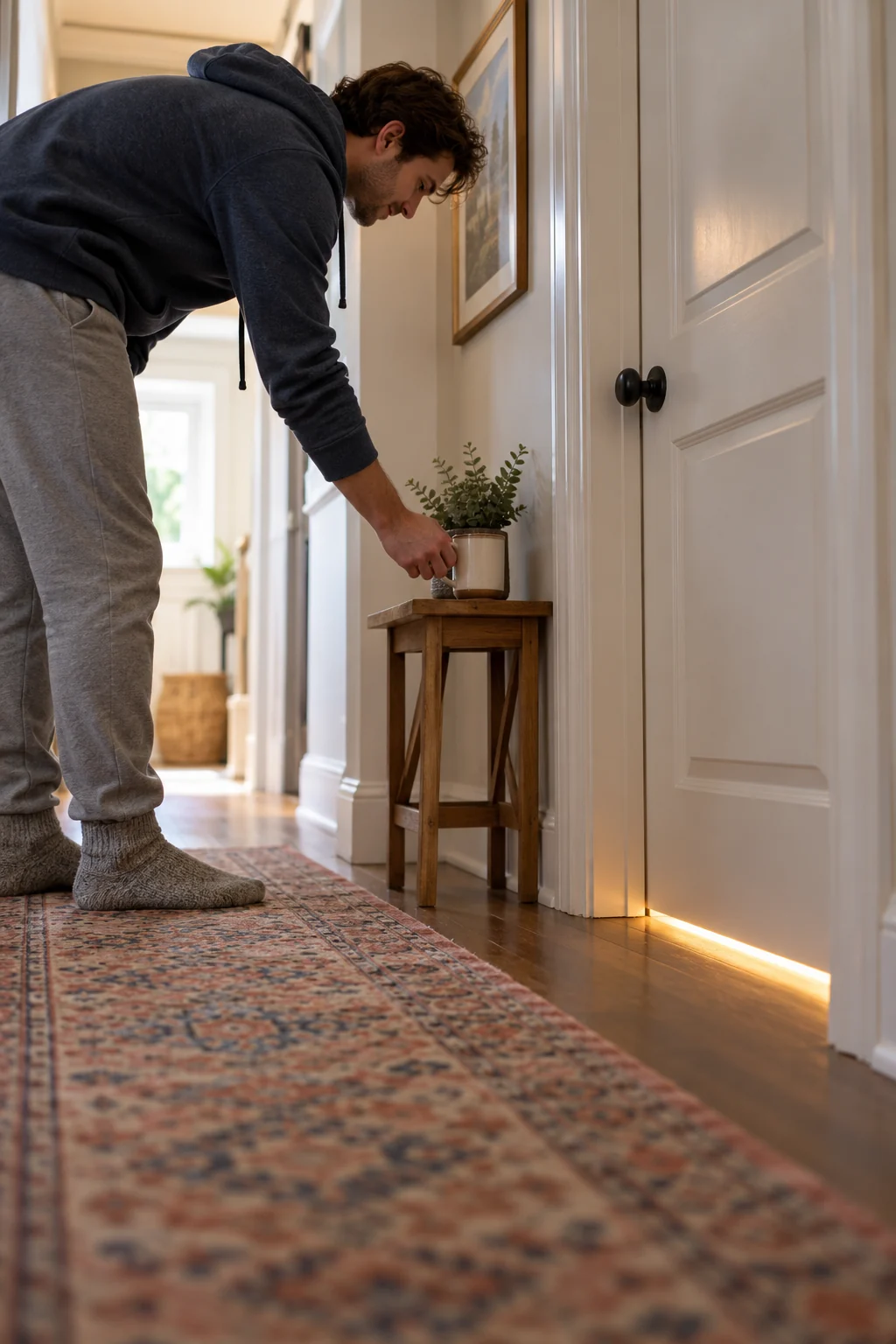
At 1 p.m., one opened door can cost a day sleeper the rest of their sleep. A few clear rules, agreed ahead of time, stop most of those wake-ups before they happen.
Write these down together:
- No knocking on a closed door unless it is an emergency
- Text instead of calling, and keep the sleeper’s phone on Do Not Disturb with favorites allowed
- Grab clothes and chargers from the room before the sleeper goes to bed
- Pick a gentle wake-up signal, like a lamp on a timer or coffee left at the door
- Come to bed in the dark, with your phone light off
Stick the list on the fridge where both of you see it. If kids or relatives need the same message, here is how to tell your family not to wake you after a night shift. For more ways to protect your day sleep, read this guide to night shift sleep for nurses.
STICK ON THE FRIDGE
Our Sleep Agreement
1Closed door means asleep
2Text, do not call
3Grab your things before bedtime
4Wake me with light, not noise
5Come to bed in the dark
SIGNED
SIGNED
11. Recheck Your Setup Every Time the Rotation Changes

What works on straight nights may fall apart the month you pick up days. Your bed choice is not forever. It is a setup for the schedule you have now.
| When this happens | Do this |
|---|---|
| Your shift pattern changes | Redo Steps 2 and 5 |
| A new baby, pet, or roommate joins the home | Redo Steps 3 and 6 |
| One of you sleeps worse for 2 weeks | Run a new 14-night trial |
| Nothing changes | Hold a 10-minute check-in every 3 months |
Put the next check-in on your shared calendar right now, so it does not depend on anyone remembering.
Your Recheck Loop
Every 3 Months
Lots of couples move back and forth over the years. Separate rooms during a hard rotation and a shared bed again later is normal. It means the plan is doing its job.
Frequently Asked Questions
Real Questions From Nurse Couples
Sharing a Bed FAQ
Is sleeping apart bad for a relationship?
Not when you both agree and protect time together. Trouble usually comes from silent moves and lost time, not from the second bed.
How do I bring it up without hurting my partner?
Start with the schedule, not their habits. Say what you miss as well as what you need, then offer a two-week trial.
What do we tell our kids?
Keep it simple: “Mom works nights, so she sleeps in the quiet room on work days.” Kids get used to a routine fast.
What if we only have one bedroom?
Start with the shared bed setup from Step 7. A daybed or sofa bed in the living room can cover work nights.
Does a sleep divorce have to be permanent?
No. Many couples sleep apart only during a hard rotation, then go back to one bed when the schedule changes.
Same Couple, Same Shifts
Two Weeks Apart
BEFORE
Times woken per sleep
Rested score
Real time together
Tiptoeing, snapping at each other, and arguing about the alarm.
AFTER
Times woken per sleep
Rested score
Real time together
A setup you both picked, a protected together window, and nobody on the couch.
SAVE OR PRINT
Bed Decision Cheat Sheet
2 Map both shifts
3 Score your disruptors
4 Talk about what the bed means
5 Pick share, hybrid, or separate
6 Test it for 14 nights
8 Give the day sleeper the dark room
9 Guard your together window
10 Sign the sleep agreement
11 Recheck every 3 months
Rested, and Still Close
You now have real sleep numbers, an honest talk behind you, and a setup you both tested before you committed to it.
Choosing between separate bedrooms vs sharing a bed was never about how much you love each other. It is about giving two tired people on two different clocks the rest they need to keep showing up for each other.
Next, make the hours after work calmer for both of you with this wind-down routine after a night shift.
Save this pin to your night shift life board so you have it ready the next time your rotation changes.
Every path leads to the same goal: rested and close
