
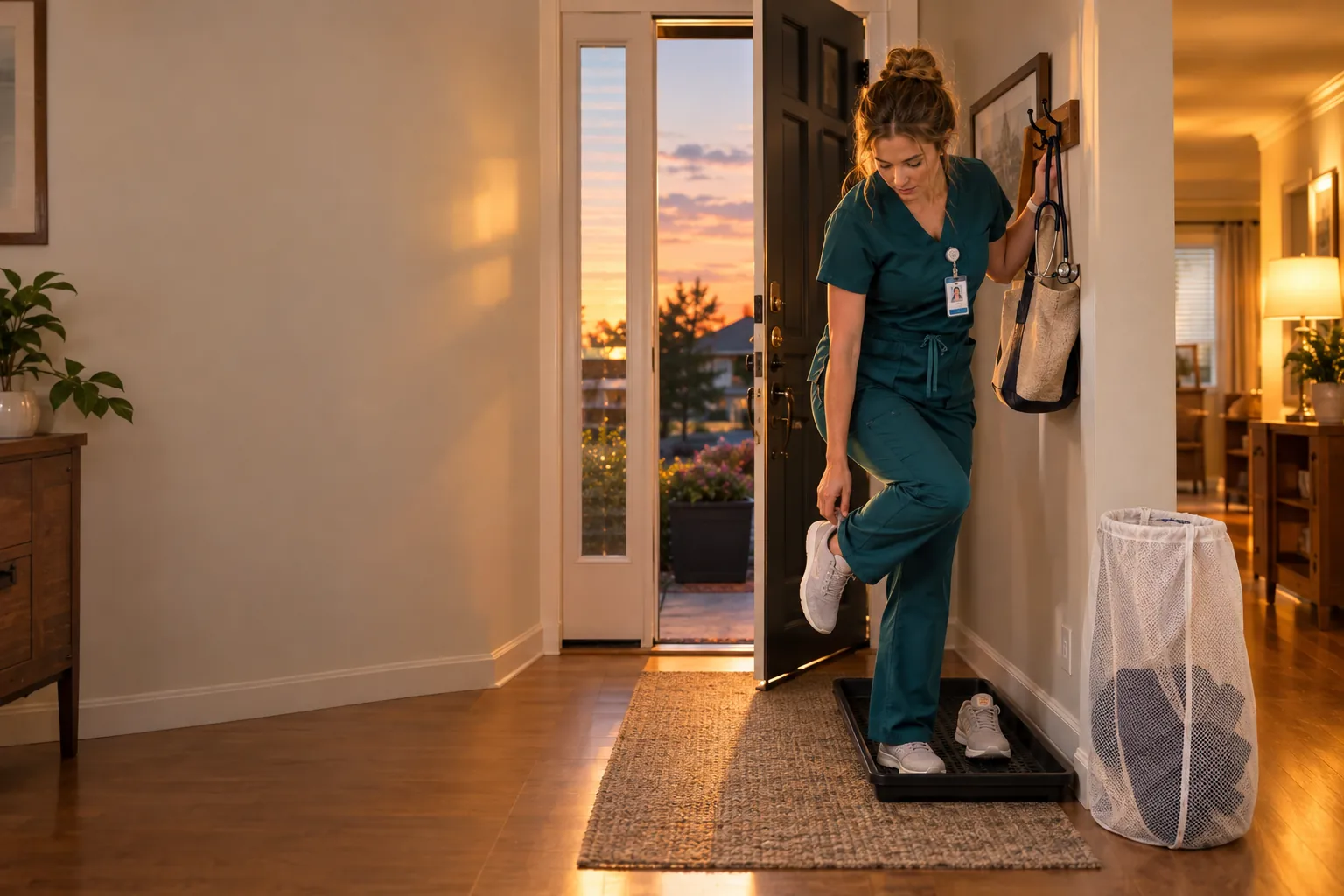
You clocked out. You drove home. And now you are sitting on the couch in the same scrubs you wore through a code blue, a bed bath, and three rounds of hand sanitizer.
The hospital is still on you. On your phone. On your shoes. In the fabric pressed against your skin. And every surface you touch between the car and the couch carries a little of it further into your home.
Most nurses know they should change when they get home. But knowing and having a real system are two different things. Without a set routine, the scrubs end up on the bedroom floor, the shower gets skipped because you are too tired, and the mental weight of the shift follows you straight into bed.
A nurse’s come-home routine fixes that. Not by adding a long list of chores to a body that already gave twelve hours. But by building a short, repeatable sequence that draws a hard line between work and home.
This guide walks you through exactly what to do from the moment you reach your car to the moment your head hits the pillow. Every step is specific. Every step has a reason. And the whole thing takes less than 45 minutes, including the shower.
If your night shift sleep has been rough, this is where the fix starts. Not in the bedroom. At the front door.
- Antibacterial phone wipes or alcohol wipes
- A shoe tray or boot mat by the front door
- A dedicated hook or bin for your work bag
- A separate hamper or wet bag for scrubs only
- Comfortable change of clothes (set out before your shift)
- Body wash and shampoo (nothing fancy needed)
- A quick post-shift snack (prepped ahead)
- A quiet sit spot (couch corner, chair, porch)
- Your phone charger near your bed
- Earplugs or a white noise machine (if sleeping during the day)
- Wipe down your phone and badge before you leave the parking lot
- Kick off your shoes in the entryway, not inside the house
- Drop your bag and work gear in one dedicated spot
- Strip off your scrubs and put them straight into a separate hamper
- Shower before you touch anything else
- Wash your hands one more time after you get dressed
- Eat something small within 30 minutes of getting home
- Sit in a quiet spot for 10 minutes before you do anything else
- Put your phone on Do Not Disturb and set your alarms
- Run your wind-down routine and get into bed
1. Wipe Down Your Phone and Badge Before You Leave the Parking Lot
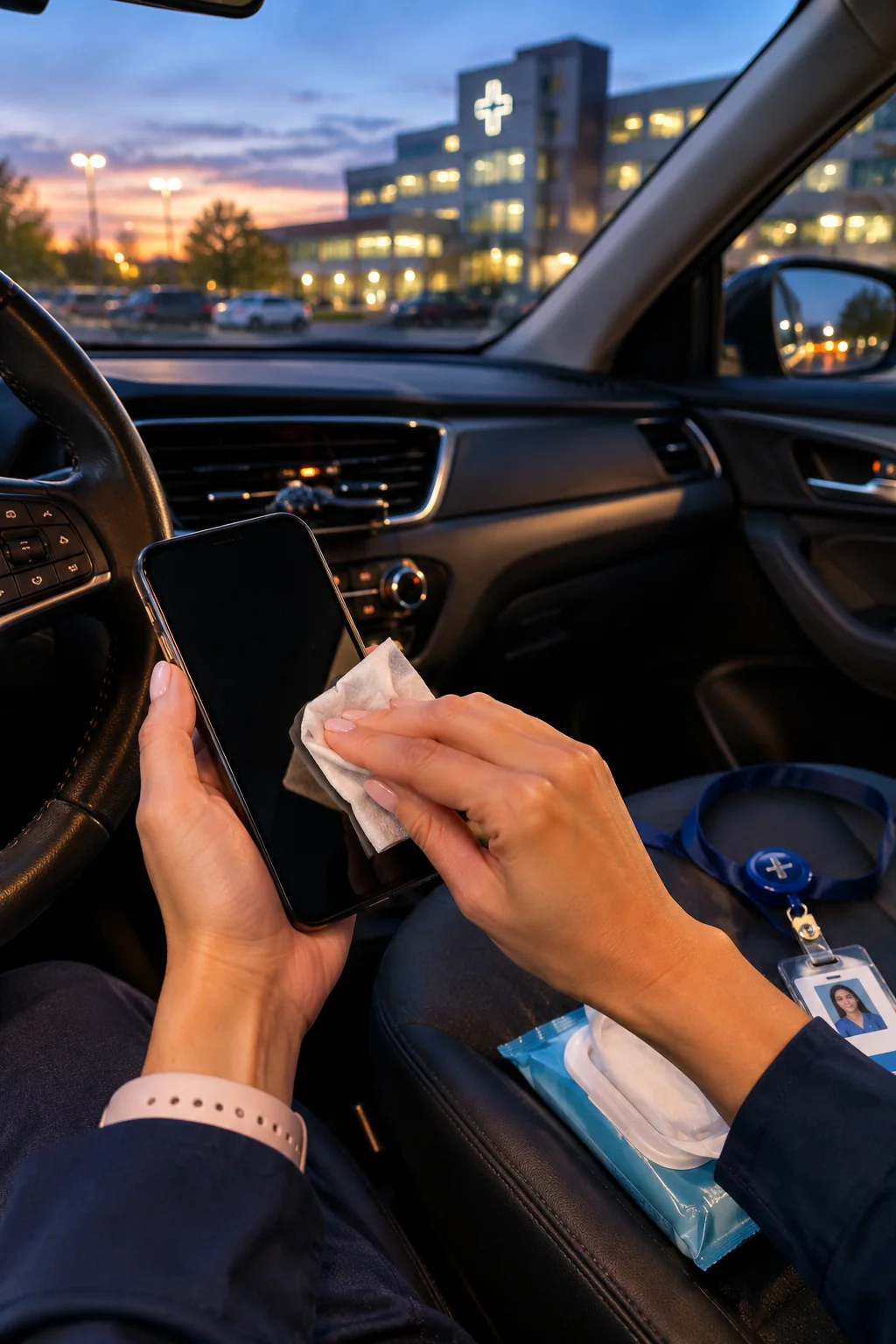
Your phone went everywhere with you today. The nurses’ station. The med room. Your pocket while you repositioned a patient. It is one of the dirtiest things you carry home, and it is the one thing you will keep touching all night.
Before you start the car, take 30 seconds and wipe it down. Front, back, case edges, and the charging port area.
Do the same with your badge and lanyard. One alcohol wipe or antibacterial wipe handles both. Keep a small pack in your glove box or center console so you never have to think about it.
2. Kick Off Your Shoes in the Entryway, Not Inside the House
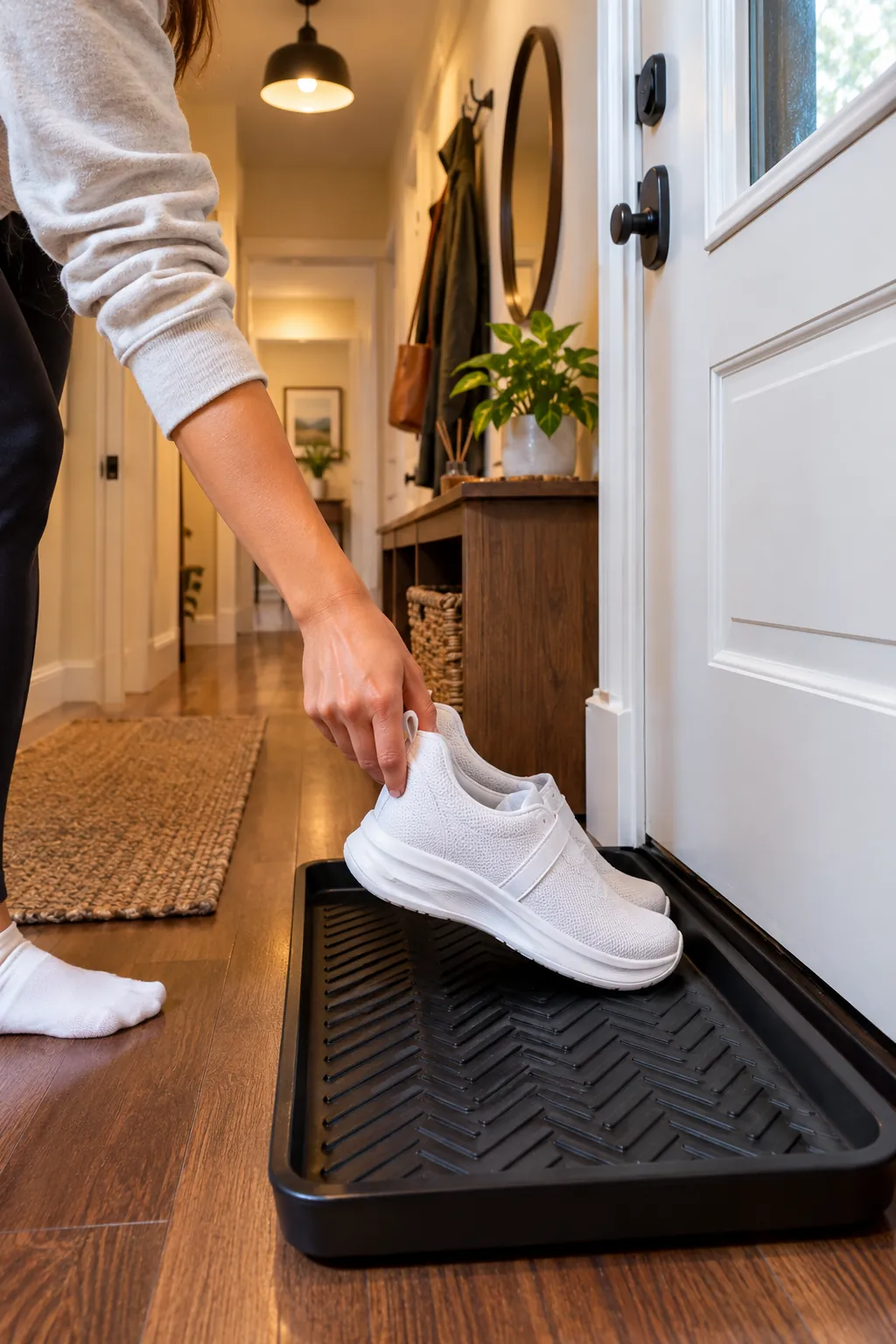
Hospital floors are some of the most contaminated surfaces you walk on all day. Every step past the front door tracks that further into your home.
Stop at the door. Shoes off. Onto a tray or mat that stays right there.
If you have a proper entryway drop zone set up, this is already automatic. If not, a cheap boot tray from any home store does the job. Wipe your shoes down with a disinfectant wipe once a week and let them air out between shifts instead of sealing them in a closet.
3. Drop Your Bag and Work Gear in One Dedicated Spot
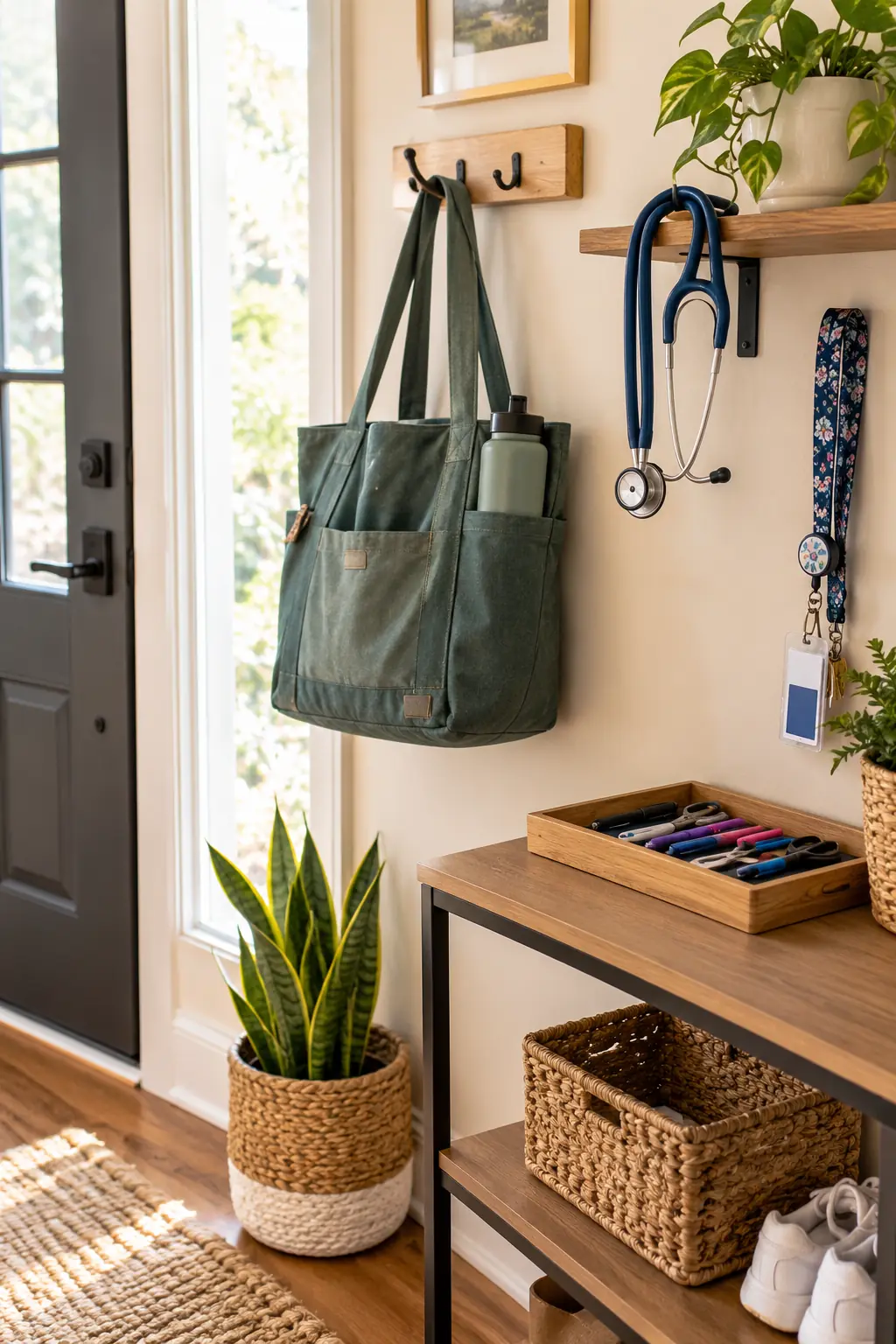
Your stethoscope, badge lanyard, pens, and tote bag all touched the same surfaces your scrubs did. Scattering them across the kitchen counter and the bedroom dresser spreads contamination to every room.
Pick one spot. A hook by the door, a shelf in the entryway, or a bin on the floor. Everything from work lives there until you are ready to deal with it.
If your apartment is tight on space, a small space entryway setup can still give you a clean work zone without eating up your living area. The point is containment. One spot, every shift, no exceptions.
4. Strip Off Your Scrubs and Put Them Straight Into a Separate Hamper

Zero detours. Walk from the entryway to wherever your hamper lives and take your scrubs off there. Do not sit on the bed first. Do not stop at the couch. Every surface you touch in scrubs is a surface that needs cleaning later.
Drop them straight into a hamper or wet bag that holds scrubs only. Mixing them with your regular laundry spreads the same contaminants you are trying to leave at the door.
If you do not have a dedicated scrub hamper yet, your laundry room setup is the place to add one. And when those scrubs go in the wash, follow the right method to wash them so they come out clean, soft, and free of hospital smell.
5. Shower Before You Touch Anything Else

This is the hard line between hospital and home. Everything before the shower belongs to the shift. Everything after belongs to you.
Your skin, hair, and nails have spent 12 hours collecting aerosolized medications, cleaning chemicals, and bacteria that a hand wash alone cannot reach. A full shower resets all of it.
Keep it efficient:
- Wash your hair, even if it looks clean
- Scrub your hands and under your nails with soap for 20 seconds
- Pay attention to your neck, behind your ears, and your forearms
- Rinse fully before stepping out
If your bathroom doubles as your post-shift decompression space, a proper bathroom reset setup turns this step from a chore into the first good moment of your night off.
6. Wash Your Hands One More Time After You Get Dressed

Sounds redundant after a full shower. It is not.
You touched the towel, the faucet handles, your dresser drawers, and the clothes themselves. If any of those surfaces picked up traces from your pre-shower self, your hands carry them again now.
One final wash. Soap, warm water, 20 seconds. Dry with a clean towel. This is the last decontamination step, and everything you touch from here forward stays clean.
7. Eat Something Small Within 30 Minutes of Getting Home

Your body ran on adrenaline and vending machine snacks for the past twelve hours. By the time you walk through the door, your blood sugar is either crashing or already crashed. That is why you feel wired and exhausted at the same time.
You do not need a full meal. A small snack with protein and carbs is enough to signal your body that the crisis is over and it is safe to wind down.
Good options that take zero prep if you make them ahead:
- A banana with peanut butter
- Yogurt and a handful of granola
- A couple of cheese sticks and crackers
- A small bowl of overnight oats
- Toast with avocado
Eat it sitting down, not standing over the counter. That small shift tells your brain the rushing is done.
8. Sit in a Quiet Spot for 10 Minutes Before You Do Anything Else

Ten minutes. Not scrolling. Not catching up on texts. Not watching something. Sitting still, in silence or near-silence, doing nothing on purpose.
This sounds like the most skippable step on the list. It is actually the most important one for your sleep.
Your nervous system is still running in shift mode. Alarms, call lights, rapid responses, constant vigilance. It does not know the shift ended. It needs a signal. Stillness is that signal. 10 minutes of it starts the downshift from alert to calm.
Pick a spot that feels separate from the rest of the house. A chair by the window, a corner of the porch, or a dedicated decompression corner if you have one. The same spot every time trains your body to start winding down the moment you sit there.
9. Put Your Phone on Do Not Disturb and Set Your Alarms
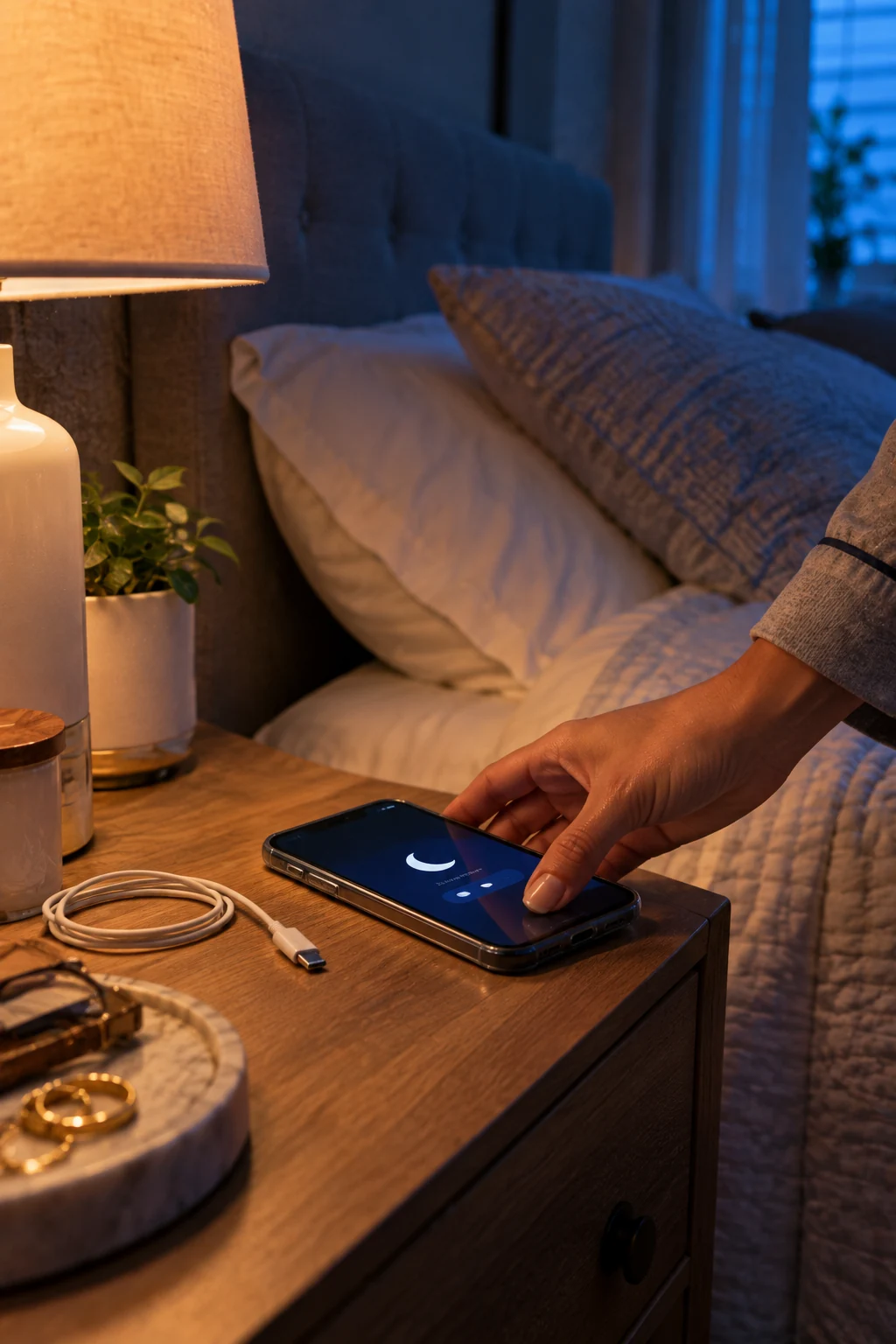
Once the quiet sit is done, your phone gets one last job before it goes silent.
Open your alarm app. Set the alarms you need for your next wake-up, whether that is tonight, tomorrow morning, or before your next shift. Then switch on Do Not Disturb.
This matters more than it sounds. Every buzz, ping, and notification after a shift pulls your brain back into reactive mode. The same mode you spent twelve hours in. Cutting that input is how you protect the calm you built in the last two steps.
Put your phone on the charger and leave it face down. If your nightstand setup keeps the charger within reach but the screen out of sight, you will not be tempted to check it once you are in bed.
10. Run Your Nurse’s Come-Home Routine All the Way to Bed

The decontamination is done. The mental transition is done. Now finish the sequence.
This last stretch is about putting your body to sleep, not your mind. Your mind is already quieter from the steps before. Your body needs darkness, coolness, and a familiar pattern.
If you already have a wind-down routine after your night shift, this is where it picks up. If you do not have one yet, start with three things in the same order every time:
- Dim every light in the bedroom or switch them off entirely
- Put on earplugs or turn on your white noise machine
- Get under the covers and close your eyes
A blacked-out bedroom makes this step twice as effective, especially for day sleepers. If your room still lets light in around the curtains, even a padded eye mask closes the gap until you upgrade. And if the color and feel of your room has never felt restful, a calming bedroom palette is a small change that shifts the whole mood.
The routine is done. You went from parking lot to pillow with a clean body, a quiet phone, and a brain that knows the shift is over.
Avoid These 5 Come-Home Mistakes That Ruin Your Rest
Every surface you sit on in your work clothes becomes a surface you need to clean. The couch, the bed, the kitchen chair. Strip first. Then sit wherever you want in clean clothes without thinking about it.
Twelve hours of hospital air, chemicals, and patient contact sit on your skin and in your hair. Climbing into bed without washing means sleeping in all of it. A fast five-minute rinse is enough. You do not need a spa session.
The quiet sit is designed to let your nervous system downshift. Social media, news, and group chats all demand reaction and attention. That keeps your brain in the same alert mode it ran in on the unit. Sit without the screen for ten real minutes.
A full stomach keeps your digestive system active and your body temperature up. Both make it harder to fall asleep. A small snack with protein and carbs stabilizes blood sugar without overloading your system.
One notification is all it takes to pull you out of a sleep cycle. Even if you fall back asleep, the damage is done. Do Not Disturb with your alarms already set is the only way to guarantee uninterrupted rest.
Frequently Asked Questions
Yes. Your skin and hair absorb aerosolized medications, cleaning chemicals, and bacteria for twelve straight hours. A hand wash does not reach any of that. Even a fast five-minute rinse removes what a wipe-down cannot. Your bed, your partner, and your immune system will thank you.
How long should this whole routine take?
About 30 to 45 minutes from car to bed. The active steps (wipe, strip, shower, eat) take around 20 minutes. The quiet sit adds another 10. The rest is getting dressed and settling in. After a week of doing it, most of it runs on autopilot.
What if I live with family and cannot control the noise?
Earplugs and a white noise machine handle most household noise. If your quiet sit needs to happen in a shared space, noise-canceling earbuds with no audio playing create a bubble of silence wherever you are. The goal is no input, not a silent house.
Does this routine work for day shift nurses too?
Every step applies no matter what shift you work. The decontamination half (steps 1 through 6) is identical. The transition half (steps 7 through 10) adjusts to your evening, your bedtime is later and your light-blocking needs are smaller, but the structure stays the same.
I work rotating shifts. Do I need a different routine for nights vs days?
The come-home steps are the same. What changes is your sleep setup. If you are flipping between nights and days, pair this routine with a proper schedule-flip guide so the sleep side keeps up with the decontamination side.
Your Shift Ends at the Front Door Now
Ten steps. Two phases. Less than 45 minutes from parking lot to pillow.
You now have a nurse’s come-home routine that draws a clean line between the hospital and your home. The germs stay at the door. The stress starts draining in the shower. And by the time your head hits the pillow, your body knows the shift is done.
Start with whichever step you are missing most. For some nurses that is the shower. For others it is the quiet sit. Pick the gap, fill it tonight, and build from there.
If your days off still feel like recovery instead of actual rest, this routine is the first thing to fix. And if you share a bedroom with a partner who works opposite hours, a bedroom setup built for two schedules makes sure your routine does not wake them up.
Pin this to your nurse life board so it is waiting for you after your next shift.
