

Night three is usually when it hits. The first-shift adrenaline is gone. You slept four broken hours, and now it’s 4 a.m. and you’re standing at the med room door wondering where your brain went.
I remember that night clearly. I cried in my car in the parking garage, then drove home with the sunrise stabbing my eyes.
Here’s what nobody told me. Your body can adjust to nights, but it won’t do it by accident. This first-month timeline for nurses gives you a plan for all 28 nights, plus a short prep window before shift one.
You’ll set up your room, shift your sleep on purpose, protect your days off, and check in with your body every week. By night 28, you’ll know what works for you, not just what worked for someone on TikTok.
Why does this work? Your inner clock moves about one hour a day when you give it the right cues. Light, darkness, food, and sleep timing are those cues, and this plan uses all four.
It won’t feel smooth the whole way. Week two is often the roughest. But most steps take about 20 minutes a day, and the biggest ones happen before you ever clock in.
- Blackout curtains or liners (foil + painter’s tape)
- Contoured sleep mask
- Foam earplugs, NRR 32 or higher
- White noise machine (a box fan)
- Small roll of electrical tape for LEDs
- Phone with a bedtime alarm mode
- Paper wall calendar + 2 colored markers
- Wraparound sunglasses, dark lens
- 6 to 8 meal prep containers
- Insulated lunch bag
- Refillable 32 oz water bottle
- Small notebook for your weekly body check
Write Out a First-Month Timeline for Nurses Before Night One

Use paper, not your phone. A calendar on the fridge is something you and everyone you live with will actually look at.
Sit down with your schedule and two colored markers:
- Circle every shift in red.
- Shade your work-day sleep block, for example 9:00 a.m. to 4:30 p.m.
- Mark days off in a second color.
- Write “Week 1” through “Week 4” down the side.
Not sure where your hours go yet? Run the 3×12 schedule breakdown first, or let the 3×12 Hour Map Calculator do the math for you.
Black Out Your Bedroom Before Your First Shift

A room that looks dark at noon usually isn’t. Stand inside at midday with the door closed and hold your hand in front of your face. If you can see your fingers, light is still getting in.
Hang blackout curtains and tape the edges to the wall, because light leaks through the sides more than the middle. No curtains yet? Tape heavy-duty aluminum foil to the glass with painter’s tape. It looks odd, but it works tonight.
These blackout bedroom ideas for nurses show more renter-safe setups. Pairing them with calming bedroom color palettes makes the room feel restful, not like a cave.
Push Your Bedtime 2 Hours Later for 3 Nights

Your inner clock moves later much more easily than earlier, so this step works with your body instead of fighting it.
Start 3 nights before your first shift. Go to bed at midnight, then 2:00 a.m., then 4:00 a.m., and sleep in as long as you can each morning.
Still working days until the day before? Skip this step and lean harder on Step 4. Our guide to night shift sleep for nurses covers what to do on the nights in between.
Take a 90-Minute Nap Before Your First Shift
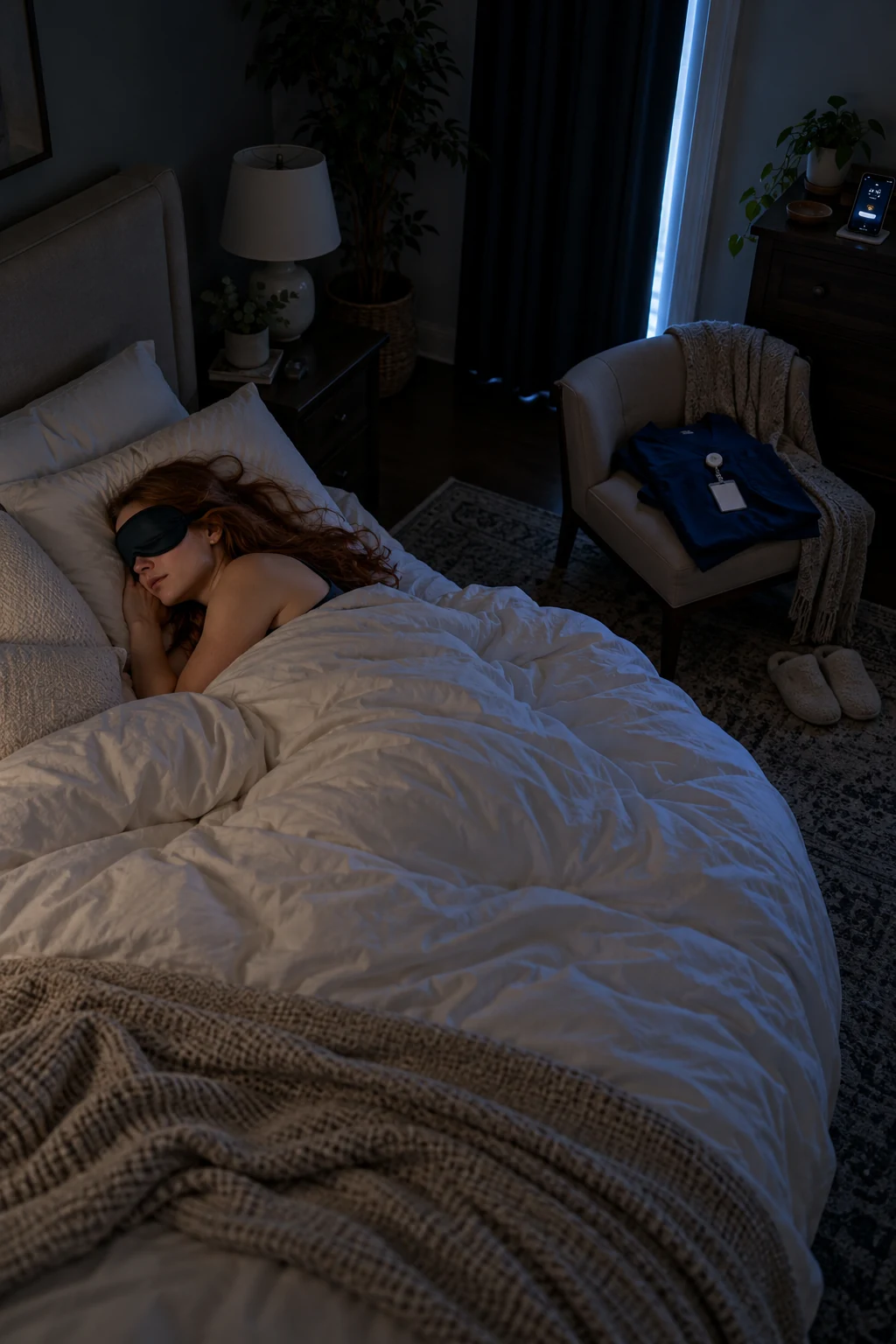
Ninety minutes is about one full sleep cycle. Waking at the end of a cycle leaves you less groggy than waking in the middle of one.
For a 7:00 p.m. start, nap from 2:00 to 3:30 p.m. in your blacked-out room. Put your alarm across the room so you have to stand up to turn it off.
Can’t fall asleep? Lie still in the dark anyway. Resting with your eyes closed still takes the edge off night one.
A good nightstand setup for night shift nurses keeps your mask, earplugs, and water within reach, so you aren’t hunting for them half-asleep.
Stop Caffeine 6 Hours Before Your Planned Bedtime

If your bedtime is 9:00 a.m., your last caffeine is 3:00 a.m. Caffeine stays in your body for hours, and that 5 a.m. latte is still working when your head hits the pillow.
A sample night looks like this:
- 6:30 p.m.: first coffee before you leave home
- 11:00 p.m.: second cup or black tea
- 3:00 a.m.: last caffeine of the shift
- After 3:00 a.m.: water, decaf, or a cold snack
Hit the 4 a.m. wall anyway? Splash cold water on your face or walk two flights of stairs. Both wake you up without wrecking your sleep.
Wear Sunglasses on the Drive Home

Morning sun is the loudest “wake up” signal your body gets. Catching it on your drive home tells your brain the day is starting, right when you need it to wind down.
Put on dark, wraparound sunglasses before you walk out of the building, not once you’re in the car. Keep them on until you’re inside your home.
Cheap gas station shades work fine as long as the lens is dark. For what to do after you walk in the door, see how to sleep during the day.
Repeat One Wind-Down Routine Every Morning

Week two is when my sleep fell apart. I was doing something different every morning, and my brain never knew when the shift was really over.
Pick a 30-minute routine and do it in the same order every time:
- Drop your badge, bag, and shoes at the door.
- Shower and change into sleep clothes.
- Eat a small snack and drink a glass of water.
- Get into bed with the lights off.
The order matters more than the activities, because your brain learns it as a cue. Build yours with this wind-down routine after night shift and a come-home routine. An entryway drop zone and a quick bathroom reset make the first two steps faster.
Tell Your Household Your Exact Sleep Hours

Does everyone at home know that 10 a.m. is your 2 a.m.? Write your sleep block on the fridge calendar from Step 1 in big letters.
If you share a home with a partner on days, these bedroom ideas for nurse couples and this renter-safe soundproofing guide cut down on daytime noise.
Keep One Anchor Sleep Block on Days Off

One normal Saturday can undo a week of progress. An anchor block is 4 hours of sleep that stay the same whether you work or not, so your clock never fully resets.
| Day Type | Sleep Window | Anchor Overlap |
|---|---|---|
| Work day | 9:00 a.m. to 4:30 p.m. | 9:00 a.m. to 1:00 p.m. |
| Day off | 5:00 a.m. to 1:00 p.m. | 9:00 a.m. to 1:00 p.m. |
Switching to days for a stretch? Follow this guide to flip your sleep schedule. To fit errands around the anchor, see how to split your days off.
Prep Scrubs and Meals on One Reset Day

By week three, the excitement is gone and the laundry pile is winning. One planned reset day keeps the rest of your week on autopilot.
Pick your second day off, not the morning after a shift, and knock out four jobs:
- Wash and hang 4 sets of scrubs.
- Batch-cook 2 meals and split them into 6 containers.
- Pack shift snacks for the whole week.
- Restock your sleep kit with fresh earplugs and a clean mask.
These reset day ideas give you a fuller plan. For the laundry side, learn how to wash scrubs so they last, set up your uniform closet for a 3×12 rotation, and borrow a few laundry room ideas. If the rest of the house slips, keeping a clean house on three 12s is doable in small chunks.
Build a 10-Minute Calm Spot at Home

If you come home wired after a hard night, your bed is the wrong place to unwind. Lying there replaying a code teaches your brain that bed means stress.
Instead, set up a chair, a soft lamp, and a blanket somewhere else. Sit there for 10 minutes before you go to the bedroom.
These decompression corner ideas work in any home, and these small space ideas help when you’re living in a studio.
Score Your Month and Adjust for Month Two

Night 28 deserves a review. Grab the notebook from your supply list and rate each area from 1 to 5:
- Falling asleep within 30 minutes
- Staying asleep for 6+ hours
- Energy at 4:00 a.m.
- Mood on your days off
- Eating real meals, not vending machine dinners
Any score of 2 or lower is the first thing to fix in month two. Map the next 28 nights with the 3×12 Hour Map Calculator. Then reward yourself, because a new set of trending scrub colors is a fair prize for surviving month one.
Fix the Snags Most New Night Nurses Hit
Something will go sideways this month, and that’s part of the process. Find what’s happening to you in the left column, then try the fix on the right.
Night Shift Questions New Nurses Text Me
These are the questions that land in my inbox every week, usually at 3 a.m. Here are the real answers, the same ones I’d send back.
You Made It Through Night 28
You now have a first-month timeline for nurses that runs from blacked-out windows on day zero to an honest scorecard on night 28.
Week two tested you. Week four started to feel like yours.
Before your next schedule drops, map month two with the 3×12 Hour Map Calculator and fix your lowest score first.
Pin this to your night shift board so it’s waiting for you, and for the new grad on your unit who needs it next.
